

The 16 Best MCP Servers in 2025
Leveraging Modern TypeScript and AI for Modular Cloud Platform Services
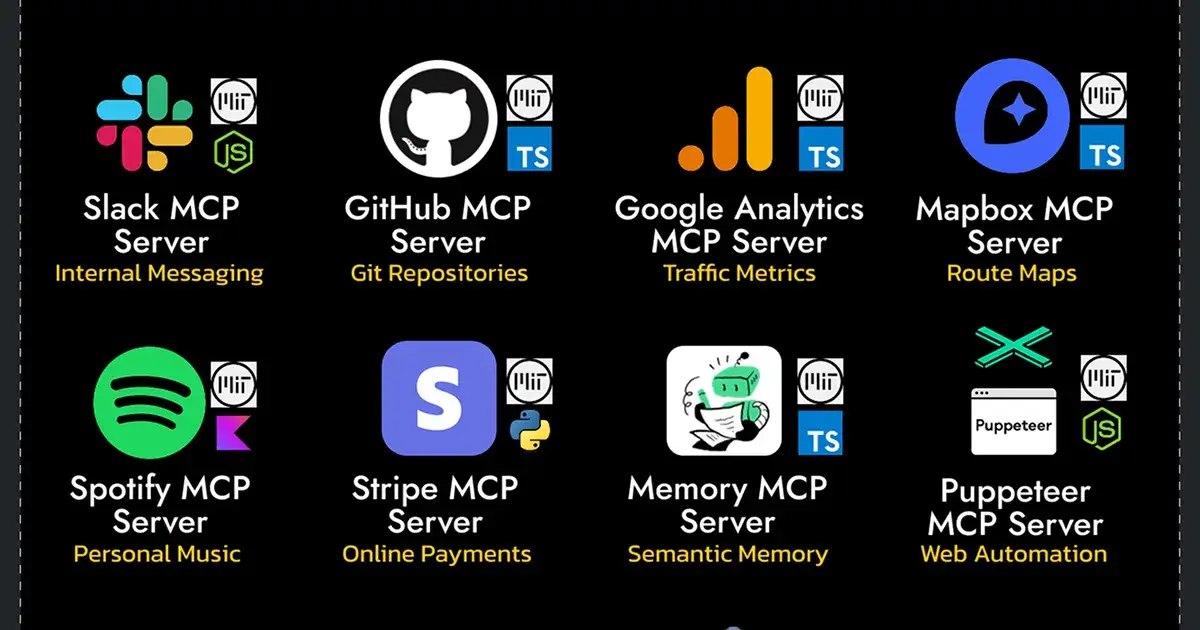
The concept of the Modular Cloud Platform (MCP) Server is rapidly evolving, driving a shift toward highly specialized, single-purpose microservices built on cloud-native principles. In 2025, the top MCP servers focus on integrating AI, providing fast data access, and enhancing internal productivity, often built using modern, type-safe languages like TypeScript (TS).
Best MCP Servers
Here is a look at 16 of the best MCP servers, categorized by their primary function:
A. Data & Database Services
These servers focus on high-performance storage, querying, and vector indexing.
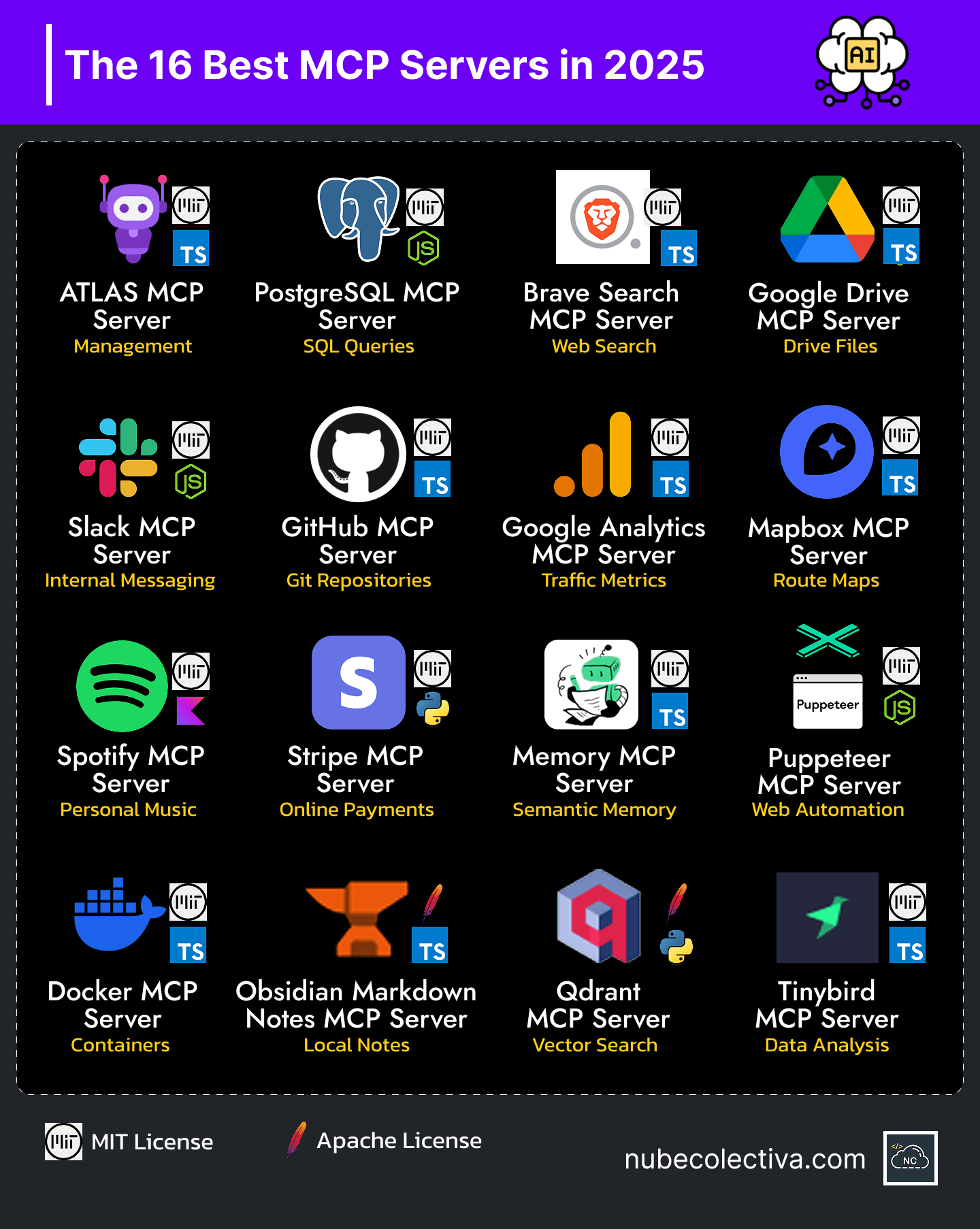
PostgreSQL MCP Server (SQL Queries): Manages complex SQL queries and relational data integrity, acting as the centralized service for structured data retrieval.
Qdrant MCP Server (Vector Search): Specialized in serving vector embeddings and enabling fast similarity searches, crucial for RAG (Retrieval-Augmented Generation) applications and semantic search.
Tinybird MCP Server (Data Analysis): Optimized for real-time analytics and stream processing, allowing immediate analysis of large datasets for dashboarding and internal metrics.
B. Productivity & Internal Tools
These servers integrate with and manage internal enterprise communication and file systems.
ATLAS MCP Server (Management): A management plane service providing centralized control, monitoring, and orchestration across the entire MCP environment.
Slack MCP Server (Internal Messaging): A dedicated service for routing, filtering, and automating actions related to internal communication channels and notifications.
Google Drive MCP Server (Drive Files): Manages file storage, synchronization, and access permissions for documents hosted within Google Drive.
Obsidian Markdown Notes MCP Server (Local Notes): Facilitates secure, cloud-based synchronization and retrieval of local Markdown notes, enabling cross-device access to knowledge bases.
Memory MCP Server (Semantic Memory): A crucial AI component that stores and manages conversational history and long-term memory for intelligent agents and chatbots.
C. Development & Infrastructure
These servers are designed to manage code, containers, and deployment processes.
GitHub MCP Server (Git Repositories): Manages all Git operations, webhooks, and permissions related to code repositories and development workflows.
Docker MCP Server (Containers): Handles the deployment, scaling, and lifecycle management of Docker containers across the infrastructure.
Puppeteer MCP Server (Web Automation): A dedicated service used for running headless browser instances for tasks like end-to-end testing, scraping, and automated UI workflows.
D. External Integrations & API Services
These servers facilitate connectivity with external services and data sources.
Brave Search MCP Server (Web Search): Integrates advanced search capabilities and knowledge graphs into internal applications, often used as a secure RAG data source.
Google Analytics MCP Server (Traffic Metrics): Processes and serves web traffic data and marketing performance metrics to various internal reporting tools.
Mapbox MCP Server (Route Maps): A geospatial service that provides routing, mapping, and location-based APIs for applications requiring geographical context.
Stripe MCP Server (Online Payments): Manages all interactions with the Stripe payment gateway, handling transactions, subscriptions, and billing logic securely.
Spotify MCP Server (Personal Music): A consumer-focused integration that manages user authorization and interaction with the Spotify API for personalized music experiences.
Gift
A picture is worth a thousand words. Below you can see the 16 best MCP servers:
Conclusion
The evolution of the MCP server ecosystem in 2025 emphasizes modularity, specialization, and intelligent integration.
The dominance of TypeScript as a development language highlights the industry's focus on code safety and maintainability at scale.
By leveraging dedicated services for every function—from Vector Search (Qdrant) to Web Automation (Puppeteer)—organizations can create resilient, highly scalable cloud platforms that are quickly adaptable to new AI and business demands.

Join Juan on Peerlist!
Join amazing folks like Juan and thousands of other builders on Peerlist.
0
0
1