

Functional vs Non-Functional Testing: Choosing the Right Testing Approach
The key to creating an application that works is a trade-off between the functionality of the software and the performance under stress. Development teams tend to develop features, yet how those features are performing, scaling and surviving threats are what will make the product successful in the long term.
This difference leads to the center of quality assurance: non-functional and functional testing services. Neither can be done without to please users and gain a competitive advantage.
Defining Functional Testing
Functional testing is concerned with the business needs of the application. It confirms that all functions of the software are performed according to the requirements given. This is done by verifying user interface, API, database, security, client/server applications, and overall functionality of the Application Under Test (AUT).
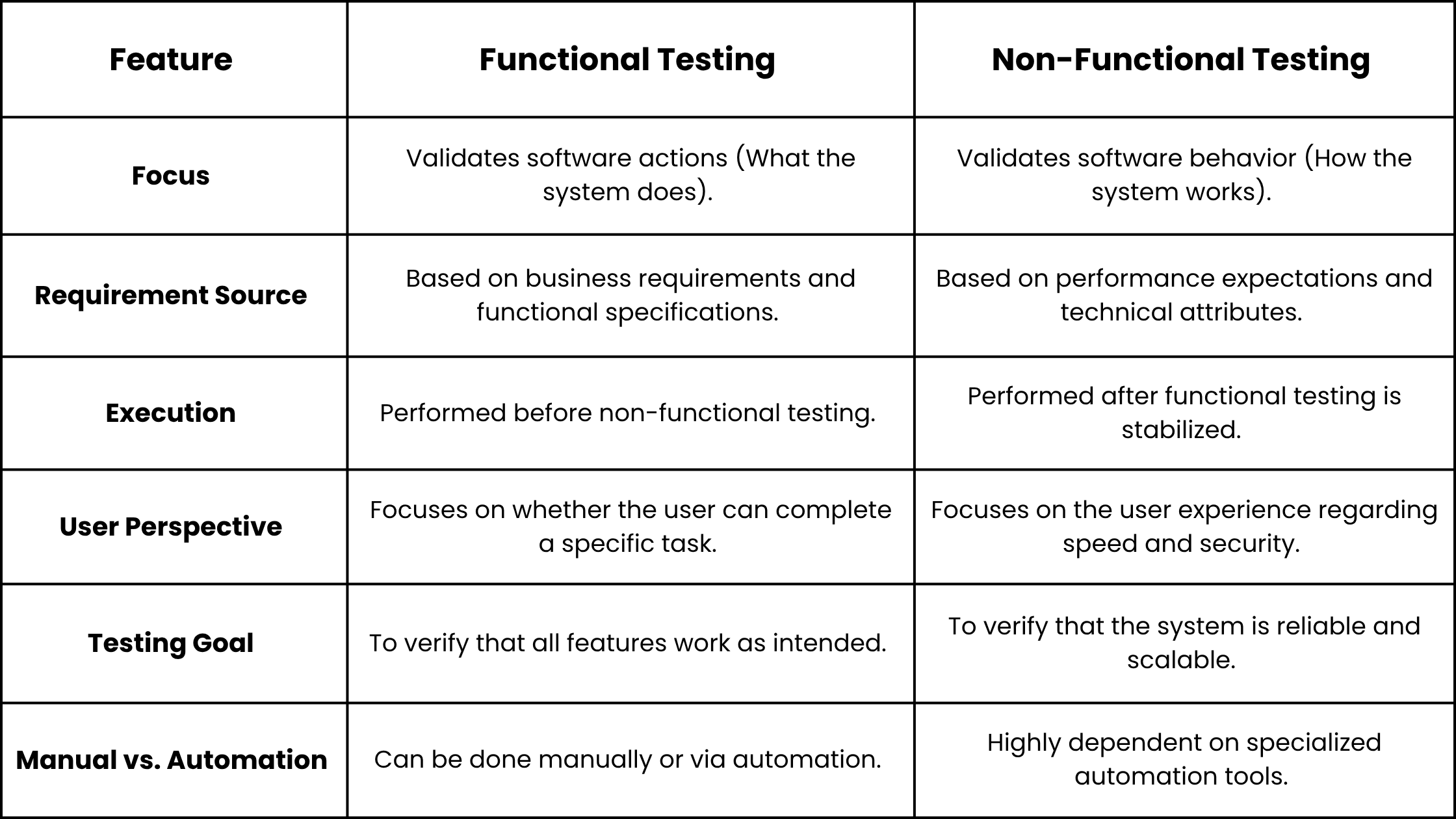
The main aim is to test all the functions by giving the right input and checking the output with the expected results. This type of testing is concerned with "what" the system does.
Different Types of Functional Testing
Unit Testing: Unit and module tests are carried out to ensure that individual components or modules are functioning properly.
Integration Testing: Various modules are integrated and tested together to verify that they interact in the right way.
System Testing: This is the overall testing of the application with the aim of ensuring that the application is in accordance with the functional specifications.
Regression Testing: This is to make sure that the new code modification does not negatively impact on the features held by the existing ones.
User Acceptance Testing (UAT): The last phase the software is put to test in the real world by the target population.
When companies seek a functional testing company, they are seeking the services of people who can confirm that a login page indeed logs a user in or that a shopping cart is able to properly compute the overall price of products.
As an example, a functional testing services team could be assigned to work on a restaurant brokerage site to make sure that search filters correctly show the available properties and that booking forms transfer the data to the back-end correctly.
Understanding Non-Functional Testing
Non-functional testing is concerned with the functioning of the software. It assesses how the system. Although an application may be doing the right job, it can fail anyway, as it may crash during heavy traffic or take an excessively long time to load. These risks are dealt with in non-functional testing.
Categories of Non-Functional Testing
Performance Testing: It establishes the performance of a system under a specific workload with respect to responsiveness and stability. Performance testing services are normally contracted by companies to test load times and stress limits.
Scalability Testing: This is a test of how the application can be scaled up or scaled out as the number of users grows.
Security Testing: This is done to identify vulnerabilities and ensure that data remains secure and is not accessed by unauthorized people.
Usability Testing: This considers the ease of use of the application as viewed by the end-user.
Portability Testing: This will be used to check that the software is compatible with other operating systems or hardware.
Key Differences: What vs. How
Selecting the Right Approach
The selection of a testing strategy is not a matter of making a choice between them. It is a matter of time and allocation of resources. The majority of software testing service providers suggest combining both forms of testing, which are conducted during the entire development lifecycle.
Functional testing is more important in the initial phases. It is impossible to test the performance of a nonexisting feature. With product maturing, non-functional testing gains importance. Performance and security testing must take precedence over functional checks when launching a high-traffic e-commerce site.
QA as a Service is now taking the direction of many businesses. This model enables organizations to utilize specialized testing talent and infrastructure without the cost of having a full in-house team. QAaaS vendors have a wide range of tests that include both non-functional and functional tests.
Real-World Application: Restaurant Brokerage Platform
Think about coming up with a restaurant brokerage platform. This kind of software deals with complicated data, such as property listings, financial documents, and legal documents. This platform would be functionally tested by:
Ensuring the search feature displays relevant results in terms of location and price.
Having the ability to upload and download contract documents.
Ensuring that an email notification is received when a bid is made.
Non-functional testing for the same platform would include:
Checking the webpage load time with hundreds of brokers searching to find property at the same time.
Making sure that sensitive financial information is encrypted and secure.
Determining whether the platform can be used by mobile devices by brokers in the field.
A balance between these needs allows the platform to be valuable and reliable. Read more about this in our detailed case study.
The Role of Automation
In both types of tests, automation is important. With automated functional tests, each time a developer commits new code, those tests can be run, and instant feedback is provided. Non-functional tests, like load tests, can be automated to simulate thousands of users to break points that could not be discovered by manual testing.
An automation framework is used by a professional functional testing company to expand the test coverage and accelerate the release cycle. Likewise, performance testing can frequently be based on specific tools to create synthetic traffic and track response times at the server.
Conclusion
Success in software development requires a holistic view of quality. Features make users visit your application, but performance and reliability make them stay. The testing of a functional nature forms the basis of a workable product, whereas non-functional testing forms the framework around which expansion and user confidence can be established. Through collaboration with highly qualified software testing service providers, companies will have the confidence that their programs are prepared to meet the requirements of an international market.
To deliver a high-quality product, a balanced strategy is the best choice, whether you require functional testing services to test your business logic or performance testing services to test stability. By not just concentrating on what the software does, but also how it does it, the end product will be not only functional, but outstanding. Those organizations that consider this balance first minimize the chances of failures after the launch and offer a truly smooth experience to their customers.

Join Kanika on Peerlist!
Join amazing folks like Kanika and thousands of other builders on Peerlist.
0
4
0