

How to Create Content That Educates, Not Just Advertises
A Founder’s Guide to Building Trust, Demand, and Long-Term Growth
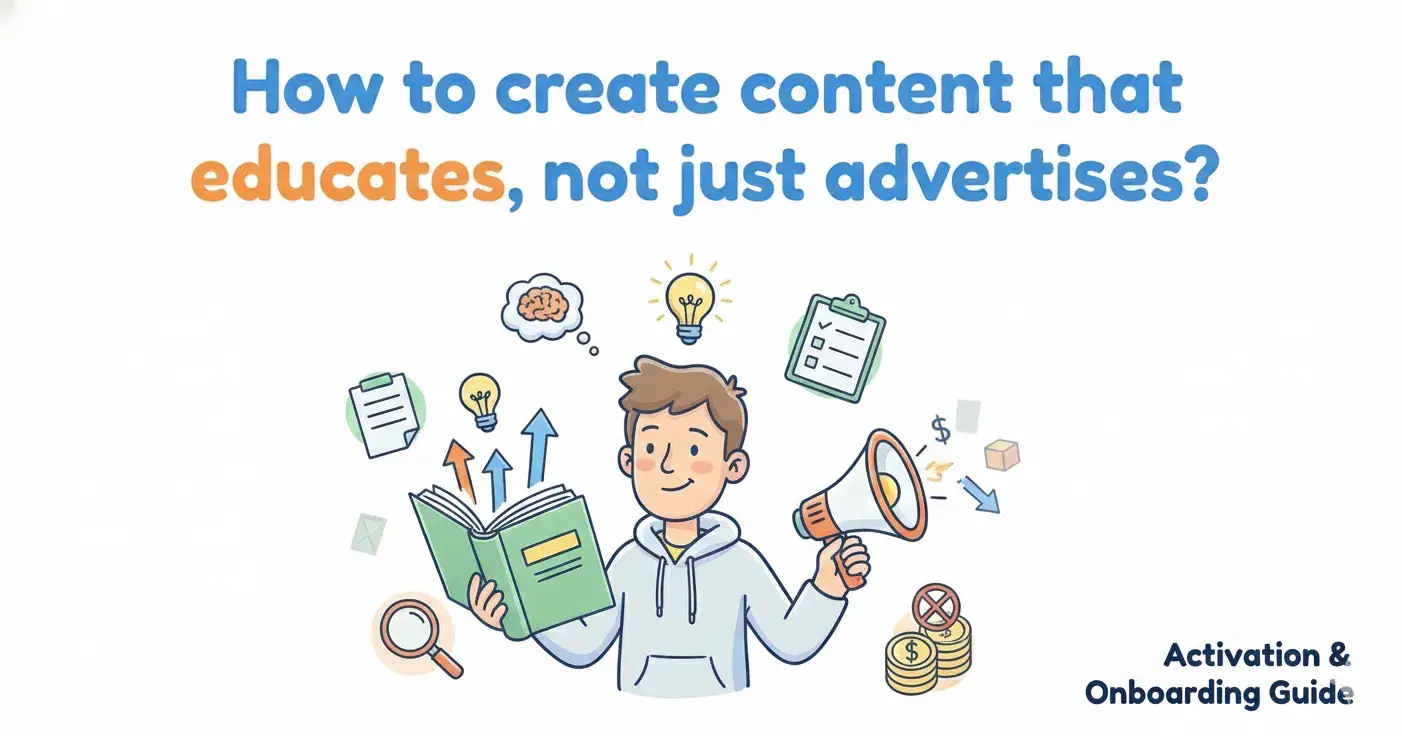
The Real Reason Most Content Fails
Every day, the internet produces over 7 million blog posts, videos, and social media updates.
And yet…
Most of them are ignored.
Why?
Because they try to sell before they serve.
Founders are under pressure:
“We need leads.”
“We need revenue.”
“We need conversions now.”
So content turns into:
Feature lists disguised as blogs
Ads disguised as carousels
Sales pitches disguised as “guides”
The result?
Low trust
Poor engagement
Short-term spikes, zero long-term compounding
Modern buyers don’t want to be sold to.
They want to be:
- Educated
- Empowered
- Understood
This is where educational content marketing wins.
It doesn’t interrupt.
It attracts.
It doesn’t convince.
It clarifies.
It doesn’t manipulate.
It builds belief.
This guide will teach you exactly how to create content that educates, not just advertises, with frameworks, real examples, and step-by-step execution.
What Does “Content That Educates” Actually Mean?
Educational content does three core jobs:
It reduces uncertainty
It increases confidence
It moves people closer to action without pressure
Advertising says:
“Buy this.”
Educational content says:
“Here’s how the world works. Now decide.”
Advertising vs Educational Content
Advertising Content
- Talks about you, Pushes features, Short-term spike, Attention-hungry, Conversion-first
Educational Content
- Talks about the user’s world, Teaches decisions, Long-term compounding, Trust-building, Understanding-first
When you educate first:
Sales become easier
Objections drop automatically
Buyers arrive “pre-sold”
Trust compounds over time
Why Educational Content Wins in 2026 and Beyond
1. Buyers Self-Educate Before They Ever Talk to Sales
Today’s buyer journey:
Google
YouTube
Reddit
LinkedIn
Newsletters
Peer communities
By the time they talk to you, they already:
Know your competitors
Know your pricing
Know your weaknesses
If your content only advertises, you lose relevance.
2. Trust Is the New Currency
People don’t trust:
Ads
Hype
Overpromises
They trust:
- Teachers
- Practitioners
- Builders
- Explainers
Educational content positions you as a guide, not a salesperson.
3. Algorithms Now Reward “Helpful” Content
Google, YouTube, LinkedIn, and even AI prioritize:
Depth over fluff
Original insights over recycled tips
Real experience over generic advice
Education = discoverability.
The Core Framework: TEACH → TRUST → TRANSACT
This is the backbone of successful non-salesy content.
TEACH: Break down complexity
TRUST: Show real-world understanding
TRANSACT: Let the sale happen naturally
If you reverse this (sell → explain → justify), you lose.
Step 1: Start With the Job-to-Be-Done (Not Your Product)
People don’t buy products.
They “hire” solutions for specific jobs.
Example:
People don’t buy:
CRM software
They hire:“A way to stop losing leads”
“A way to track follow-ups”
“A way to forecast revenue”
How to Apply This:
For every content idea, answer:
What problem is the reader trying to solve right now?
What decision are they stuck on?
What confusion is blocking progress?
Only then create content.
Step 2: Use the “Teacher’s Lens,” Not the “Marketer’s Megaphone”
A marketer asks:
“How do I position my product?”
A teacher asks:
“What must they understand before they can even evaluate solutions?”
Your job is not persuasion.
Your job is clarity creation.
Turn This Into a Habit:
Before writing any piece of content, ask:
What do they not yet understand that’s hurting their results?
What would make this topic feel obvious after reading?
Step 3: Structure Every Piece Using the 5-Part Education Framework
Every high-performing educational asset follows this flow:
Context – Why this matters now
Problem – What’s broken or misunderstood
Mechanism – How it actually works
Application – How to use this in real life
Decision Support – What to do next
This works for:
Blog posts
Videos
Carousels
Newsletters
Case studies
Tutorials
Step 4: Teach the “Why” Before the “What”
Most brands jump straight to:
Tactics
Hacks
Tools
Education starts with:
- Mental models
- First principles
- Cause-and-effect logic
Example:
Instead of:
“Post on LinkedIn daily for growth.”
Teach:
Why consistency builds memory
Why algorithms reward predictable cadence
Why audiences trust repetition
Now the tactic makes sense.
Step 5: Replace Features With Outcomes
Educational content translates features into life impact.
1 - Feature
- “AI-powered dashboard”
- “Automated workflows”
- “Analytics engine”
2 - Educational Translation
- “You stop guessing what’s working”
- “You reclaim 5–10 hours a week”
- “You see what’s blocking revenue”
People don’t want tools.
They want relief, speed, confidence, leverage.
Step 6: Teach Through Stories, Not Bullet Points Alone
The human brain remembers:
Stories
Struggles
Transformations
Not specs.
Use This Simple Story Arc:
Problem → Friction → Insight → Shift → Result
Example:
Instead of explaining “onboarding optimization,” tell:
A startup losing 70% of users in the first session
How they fixed one step
And doubled retention in 30 days
Stories educate faster than theory.
Step 7: Show the Trade-Offs, Not Just the Benefits
Advertising hides downsides.
Education explains trade-offs.
This builds instant trust:
“This works best when…”
“This fails when…”
“This is powerful, but only if…”
The moment you show limitations, credibility skyrockets.
Step 8: Use Visual Teaching Wherever Possible
Complex ideas become simple when visualized.
Use:
Flowcharts
Diagrams
Before after snapshots
System maps
Checklists
Playbooks
If it takes 1,000 words to explain something, ask:
“Can I draw this instead?”
Step 9: Turn Objections Into Lesson Topics
Every sales objection is a content opportunity.
Common objections:
“Too expensive”
“Too complex”
“Not sure it’ll work for us”
“We already tried something similar”
Each one becomes:
An educational article
A comparison guide
A myth-busting post
A decision framework
Instead of fighting objections in sales calls, neutralize them in public.
Step 10: Use the “Explain It to a Smart Friend” Rule
If your content sounds like a brochure, it fails.
If it sounds like:
“Let me explain this to you over coffee…”
It wins.
Simple language ≠ shallow thinking
Simple language = respect for the reader’s time.
Real-World Examples of Brands That Teach Instead of Push
HubSpot
Free courses
Free templates
Free certifications
They built inbound before they sold software.
Ahrefs
Teaches SEO better than most universities
Their content converts because it actually helps
Notion
Lets users teach each other via templates and workflows
Product education became growth engine
Canva
Teaches design to non-designers
Sells creativity, not software
Content Formats That Educate Best
How-to guides
Decision frameworks
Playbooks
Teardowns
Case study breakdowns
Mistake analysis
Before-after transformations
Expert interviews
Contrarian takes backed by logic
How to Measure If Your Content Is Truly Educational
Don’t just measure:
Views
Likes
Shares
Measure:
- Time on page
- Saves & bookmarks
- Repeat visitors
- Newsletter replies
- Community discussions
- Sales conversations mentioning content
The real KPI =
“Did this change how someone thinks or acts?”
The Biggest Mistakes Founders Make With “Educational” Content
Teaching too broadly
Avoiding specificity
Hiding the product completely
Turning lessons into subtle ads
Chasing virality over clarity
Recycling generic advice
Talking from theory, not experience
A Simple Weekly System for Founders
If you’re busy, use this:
Monday:
Write 1 teaching insight from your real work
Wednesday:
Turn it into a carousel or short video
Friday:
Turn it into a newsletter lesson
One idea → Three formats → Maximum leverage.
The Long-Term Payoff of Educational Content
When you commit to teaching:
Trust compounds
Sales conversations shorten
Marketing costs drop
Brand equity rises
Audience loyalty deepens
You stop competing on price
You become a category voice
Educational content doesn’t just grow traffic.
It grows:
Authority
Confidence
Decision power
Market gravity
Advertising interrupts, Education attracts.
Advertising rents attention., Education owns trust.
Advertising fights for clicks, Education earns belief.
If you want:
Sustainable growth
Loyal customers
Lower CAC
Higher LTV
Stronger brand equity
Then the future is not louder marketing.
The future is smarter teaching.
Your New Content Question
Before publishing anything, ask:
“Does this make my reader smarter, calmer, or more confident?”
If yes, publish it.
If not, it’s just another ad in disguise.

Join Kishor on Peerlist!
Join amazing folks like Kishor and thousands of other builders on Peerlist.
1
5
0