

How to Make Your Product Your Best Marketer
A Founder’s Guide to Growth Without Ads
Let’s be real…
If you’re a founder, you’ve probably felt that tiny panic when your ad spend stops.(& I felt that, after spending around $425 on Google Ads.)
Traffic drops. Signups slow down.
And you realize… your product isn’t growing on its own.
It’s exhausting, chasing clicks, tweaking funnels, refreshing dashboards.
But here’s the thing: growth gets easier when your product starts doing the marketing for you.
That’s what companies like Dropbox, Figma, and Duolingo figured out early.
They didn’t rely on ad budgets or aggressive sales tactics, they built products that people loved so much they couldn’t help but talk about them.
Let’s deep dive on how they did it, and how you can make your product your best marketer, too.
Why Most Founders Struggle With Growth
Most founders try to sell their product before their product can sell itself.
They spend months running campaigns… but skip the simple question:
“What makes my product worth talking about?”
When users don’t talk about your product, it’s not because they don’t care.
It’s usually because you haven’t given them a moment worth sharing yet.
The magic of product-led marketing isn’t a fancy funnel, it’s the emotion users feel when they achieve something small, fast, and meaningful.
That’s what sparks word of mouth.
That’s what makes growth self-sustaining.
The Shift: From Pushing to Pulling
Let’s compare two ways of growing:
Traditional Growth Product-Led Growth
1) You push ads 1) Your users pull others in
2) You chase attention 2) You build retention
3) You sell first 3) You show value first
4) You buy growth 4) You earn growth
You can’t outspend bigger competitors.
But you can out-experience them.
When your product becomes the message, every user becomes a marketer.
Step 1: Start With the “Aha!” Moment
Every product has that one moment when a user finally “gets it.”
For Dropbox, it’s when they upload their first file and see it appear on another device.
For Calendly, it’s when they share their first scheduling link.
For Duolingo, it’s when they complete their first streak.
That’s your golden moment, the instant when your product delivers undeniable value.
Your job?
Get users there as fast as possible.
Ask yourself:
How many clicks until my user feels success?
Can I make that 3x faster?
Can I show value instead of explaining it?
Pro tip: The quicker a user reaches that “aha!” moment, the higher your word-of-mouth rate.
Step 2: Turn Delight Into a Growth Engine
People don’t share features.
They share feelings.
Think about it, when was the last time you tweeted, “This product has a 14% faster API call!”?
Never.
But when you hit a milestone, unlock something cool, or experience smooth design you tell people.
Example: Duolingo
Duolingo’s streak notifications are tiny dopamine hits.
They make users feel accomplished and more importantly, they make users share.
That’s no accident. It’s smart design psychology.
Here’s how you can use it:
Celebrate small wins: “You just completed your first project!”
Make progress visible: progress bars, confetti, or badges work wonders.
Add a natural “share this” moment right after the win.
Pro Tip - Delight is viral fuel. Design moments your users want to brag about.
Step 3: Make Sharing Effortless
If someone loves your product but doesn’t know how to share it, you lose organic growth.
The best products bake sharing into usage itself.
Example: Calendly
Calendly’s brilliance wasn’t just the scheduler it was the link.
Every time someone used it, they showed someone else how easy it was.
The product literally marketed itself.
Example: Notion
Notion turned user-created templates into a viral ecosystem.
When someone shared a “Notion setup,” they were showing off the product and promoting it.
Ask yourself:
“What part of my product experience can travel on its own?”
Maybe it’s a link, a design, a dashboard, a report, anything that carries your brand into new eyes.
Step 4: Turn Users Into Marketers (Without Asking Them To Be)
Users don’t want to “help you grow.”
But they do want to look smart, useful, and ahead of the curve.
When you align your marketing loop with their incentives, everyone wins.
Example: Dropbox
Dropbox offered free storage to both the inviter and invitee.
Everyone benefited.
That’s why their referral system felt natural, not salesy.
How to apply it:
Reward referrals with something useful, not random.
Make sharing one-click easy.
Avoid “spammy” growth hacks focus on mutual value.
Pro tip - Make advocacy feel like generosity, not promotion.
Step 5: Onboard Like a Story, Not a Setup
Most onboarding screens read like tax forms.
And then we wonder why users drop off before they even start.
The fix?
Tell a story.
When Spotify asks your favorite artists during signup, it’s not collecting data, it’s writing your soundtrack.
You get a personalized playlist within minutes.
That’s onboarding that feels human.
Ask:
Can my first interaction make users feel something?
Am I teaching through doing instead of explaining?
Does the first 60 seconds show what success feels like?
Remember: your onboarding isn’t about teaching features, it’s about showing value.
Step 6: Retain, Don’t Chase
Growth doesn’t come from getting more users.
It comes from keeping the ones you already have.
Retention is underrated marketing.
Because retained users don’t just keep paying they keep spreading.
Example: Figma
Figma’s collaboration tools mean that every time one designer uses it, three more get invited.
Retention and acquisition became the same loop.
That’s the dream.
How the Greats Did It
- Dropbox: The Referral Loop That Built a Billion-Dollar Brand
Dropbox’s biggest campaign was a single sentence:
“Get more storage when you invite friends.”
That’s it.
No ads. No funnels. Just product-driven virality.
They grew 3900% in 15 months.
- Calendly: One Link = Free Marketing
Calendly didn’t advertise scheduling software.
They made every link an ad.
Every person who booked a meeting saw how seamless it was and signed up.
- Figma: Collaboration = Distribution
Figma didn’t market its product. Designers did.
Each shared file introduced new users, creating a self-replicating growth cycle.
Mistakes Founders Make (And How to Avoid Them)
Mistake 1: Asking people to share too early.
👉 Fix: Deliver value before you ask for anything.
Mistake 2: Overcomplicating onboarding.
👉 Fix: One goal, get users to their “aha!” moment fast.
Mistake 3: Separating product and marketing teams.
👉 Fix: Merge them. Marketing is how users experience your product.
Mistake 4: Ignoring feedback loops.
👉 Fix: Turn every review into a story and every issue into an improvement.
Mistake 5: Treating retention as an afterthought.
👉 Fix: Retention is growth it’s what fuels word-of-mouth.
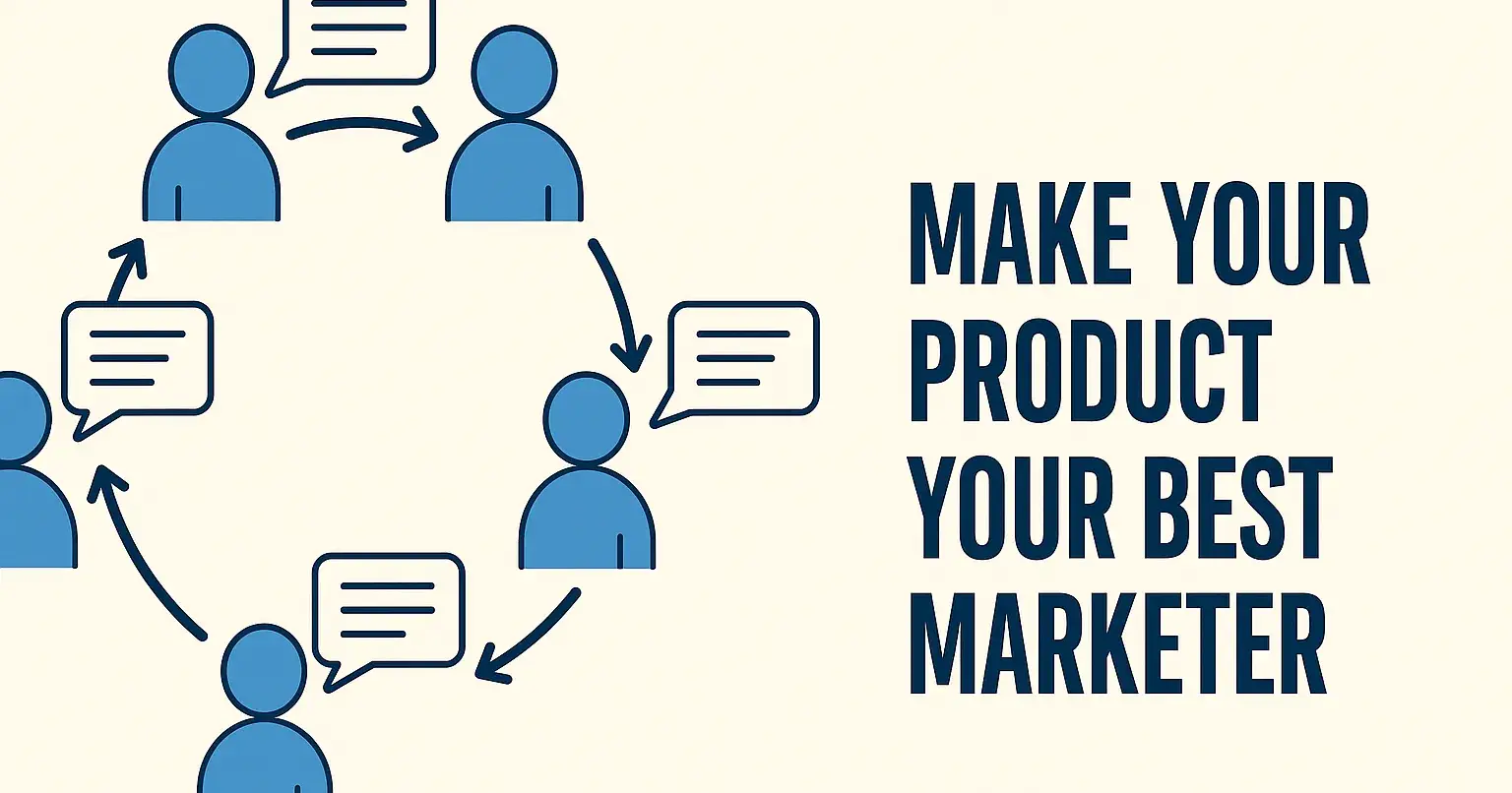
Create Flywheel: When Your Product Markets Itself
Here’s what happens when you do this right:
A user experiences value →
Shares their win →
New users join →
They reach “aha!” faster →
The cycle repeats, faster every time.
It’s not a funnel. It’s a flywheel.
The more it spins, the less you need to push.
You don’t need a bigger marketing team.
You need a better marketing moment inside your product.
When users:
Smile during onboarding,
Brag about their results,
Feel rewarded for using you
...you’ve stopped marketing.
You’ve started multiplying.
That’s what happens when your product becomes your best marketer.
What’s one product you’ve used that marketed itself so well, you told others instantly?

Join Kishor on Peerlist!
Join amazing folks like Kishor and thousands of other builders on Peerlist.
1
27
0