

Why “Loud” Marketing No Longer Works
Quiet brands force the world to lean in.
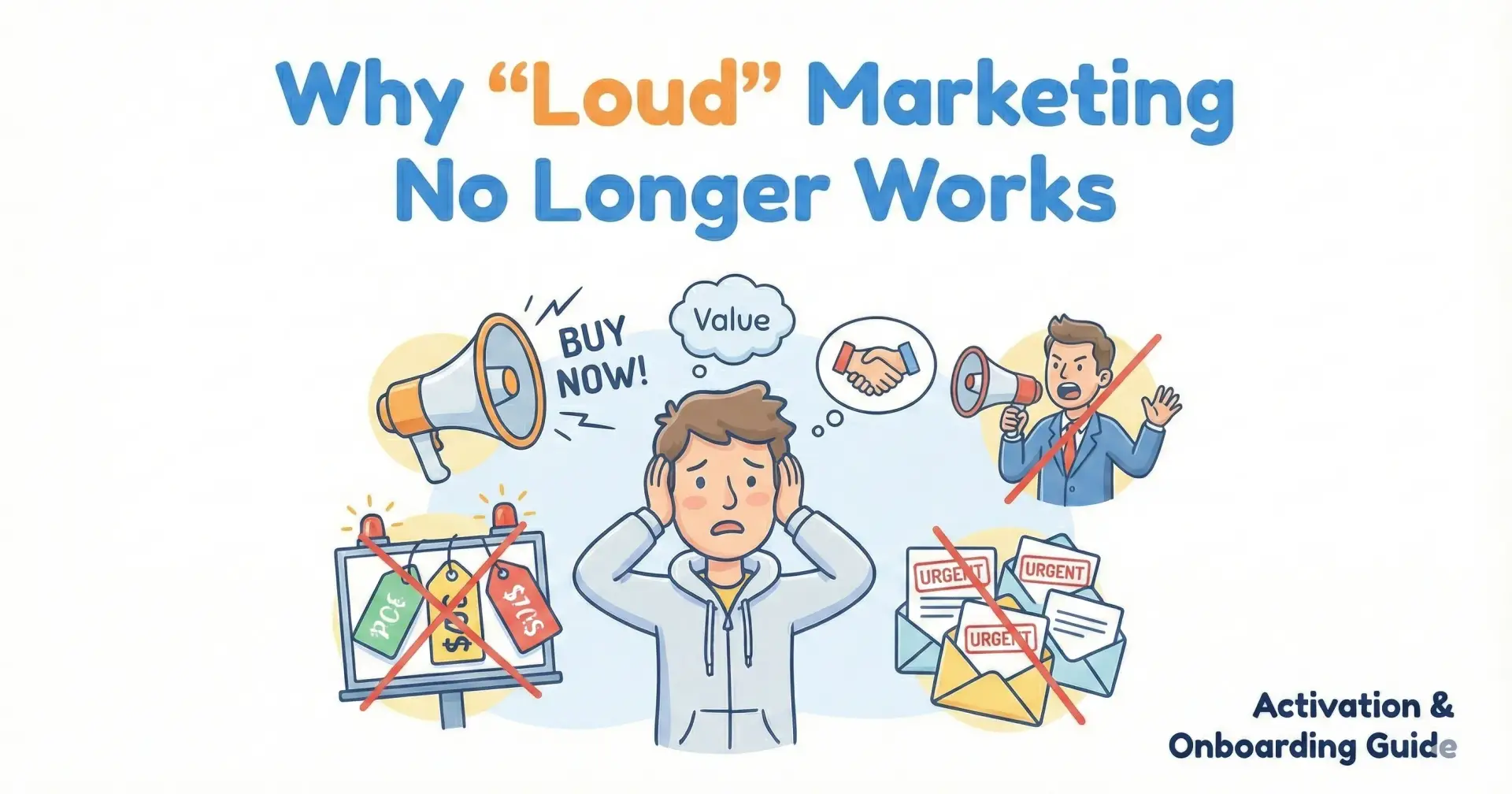
Scroll through any social feed today and you’ll notice the same pattern:
Brands shouting for attention… louder headlines… bigger promises… more urgency… more noise.
But here’s the paradox:
The louder marketing becomes, the more invisible it feels.
Today’s customers don’t reward noise
they reward clarity, confidence, relevance, and resonance.
So the real question isn’t:
“How do I shout louder than everyone else?”
It’s:
“How can my brand stand out even if I whisper?”
This Article breaks down 8 frameworks, psychological principles, and real-world examples to help founders differentiate their brand through substance, not volume.
1. The “Signal vs. Noise” Framework - Become Undeniably Clear
Most brands try to stand out by adding more noise:
more features, more claims, more adjectives, more content.
But customers don’t crave more, they crave clarity.
What creates brand noise?
Complex messaging
Over-explaining features
Trying to appeal to everyone
Inconsistent branding
Talking more than listening
What creates brand signal?
One strong idea
One strong promise
One strong emotion
One strong problem you solve
One strong transformation you deliver
Ask yourself:
If you had only 5 seconds, what would you want your brand to be known for?
Most brands fail this test and that’s why they need to shout.
Example:
Stripe doesn't scream.
Its entire positioning fits in one simple line:
“Payments infrastructure for the internet.”
Clear. Confident. Quietly dominant.
2. The Vibe Positioning Framework - Make People Feel Something
A loud brand tells people what to think.
A standout brand makes people feel something.
“Vibe” is not aesthetics, it’s emotional positioning.
Here’s how to build vibe-led differentiation:
1. Choose your emotional anchor
What should customers feel when they encounter your brand?
Examples:
Calm (Headspace)
Empowered (Nike)
Smart (Notion)
Efficient (Superhuman)
Inspired (Airbnb)
2. Make your vibe consistent everywhere
Tone, visuals, product experience, onboarding everything should reinforce one emotional idea.
3. Remove anything that breaks the vibe
If your vibe is calm, your UX cannot be chaotic.
If your vibe is premium, your copy cannot be messy.
If your vibe is innovative, your designs cannot be outdated.
Why this works:
People remember feelings, not features.
When your vibe is strong,
you don’t need to be loud customers sense you.
3. Category Design - Become the Only One, Not the Best One
Being “better” is loud.
Being “the only” is quiet, but unbeatable.
The Category Design Playbook
Stop competing on features.
Compete on worldview, on philosophy, on how you approach the problem differently.Define the enemy.
Not a competitor, but a problem you stand against.
Example:Notion attacked “tool overload.”
Slack attacked “email fatigue.”
Tesla attacked “boring cars.”
Name your unique solution.
People remember what they can name.Teach the world your language.
Category creators educate more than they advertise.
Example:
Gong didn’t say “We’re a better sales tool.”
They created the category: Revenue Intelligence.
Brand becomes unforgettable without shouting.
4. Resonance Over Reach - Speak to the Few Who Matter
Standing out doesn’t require being seen by everyone.
It requires being deeply understood by the right people.
The Resonance Framework
Narrow your target more than you’re comfortable with.
Depth beats breadth.Mirror their language.
Use the exact phrases your customers complain about.Share their worldview.
Your brand becomes a reflection of who they want to be.Become a part of their daily routine.
Ritual = retention.
Retention = brand power.
Example:
Figma didn’t try to appeal to “everyone.”
They became irreplaceable to designers and designers made them famous.
5. Understated Branding - Quiet Design That Dominates
You can stand out visually without being loud.
Subtlety, when done right, feels premium.
Quiet branding principles:
More space → More confidence
Fewer colors → More memorability
Fewer words → More authority
Clear hierarchy → Instant comprehension
Brands that mastered quiet power:
Apple
Airbnb
Calm
Muji
Google homepage
Minimalism is not emptiness it’s intentional clarity.
Quiet brands force the world to lean in.
6. Product Experience As Marketing - Let the Product Speak
You don’t need to shout when your product whispers,
“Try me once, you’ll never go back.”
Here’s how to make your product do the marketing:
1. Create a magical first moment
The user should instantly understand the value.
Example:
Superhuman’s onboarding shows speed, shortcuts, mastery in minutes.
2. Remove friction ruthlessly
Every unnecessary step takes away from your brand appeal.
3. Build small delight moments
Subtle animations.
Tiny wins.
Smooth transitions.
Human microcopy.
4. Add shareable triggers inside the product
Spotify Wrapped did this perfectly no loud marketing.
Just built-in virality.
If your product creates a feeling, it sells itself.
7. The Trust Stack - Win Trust Quietly, Lose It Loudly
Brands that stand out today do it through layered trust, not noise.
The Trust Stack Approach
Layer 1 - Proof
Reviews
Testimonials
Metrics
Social proof
Layer 2 - Transparency
Why pricing is what it is
Why features matter
How you use customer data
Layer 3 - Consistency
Tone consistency
Visual consistency
Experience consistency
Layer 4 - Reputation
Doing the right thing even when no one is watching
Example:
Basecamp built an entire brand on quiet trust, not loud marketing.
8. Shareability Without Noise - Get Others to Spread Your Brand
Being loud is you pushing.
Being shareable is others spreading you
the ultimate quiet growth engine.
The Shareability Formula
Make users look good when they share you.
Example: Grammarly upgrade screenshots, Spotify Wrapped.Make sharing easy.
One-click referral, templates, scripts.Create moments worth sharing.
Milestones, achievements, streaks, templates.Let users co-create content.
Notion’s template community built its brand more than ads ever could.
Shareability = quiet virality.
The New Era of Branding Belongs to the Quietly Confident
Loud brands fight for attention.
Quiet brands attract attention.
Loud brands chase customers.
Quiet brands make customers chase them.
Loud brands rely on volume.
Quiet brands rely on value, clarity, and emotional resonance.
If you want your brand to stand out without being loud:
Be clearer
Be more confident
Be more consistent
Be more empathetic
Be more aligned with your customer
Be more intentional
Because the truth is:
A whisper with meaning cuts louder than a scream with none.
If standing out quietly feels hard, MyCMO gives founders a clear system to simplify content, messaging, and growth, so your brand stays consistent, memorable, and strategic.

Join Kishor on Peerlist!
Join amazing folks like Kishor and thousands of other builders on Peerlist.
0
10
1