

My app was silently killing checkouts for 3 days. I had no idea.
A story about shipping fast, breaking things, and the AI agent that now watches my back.
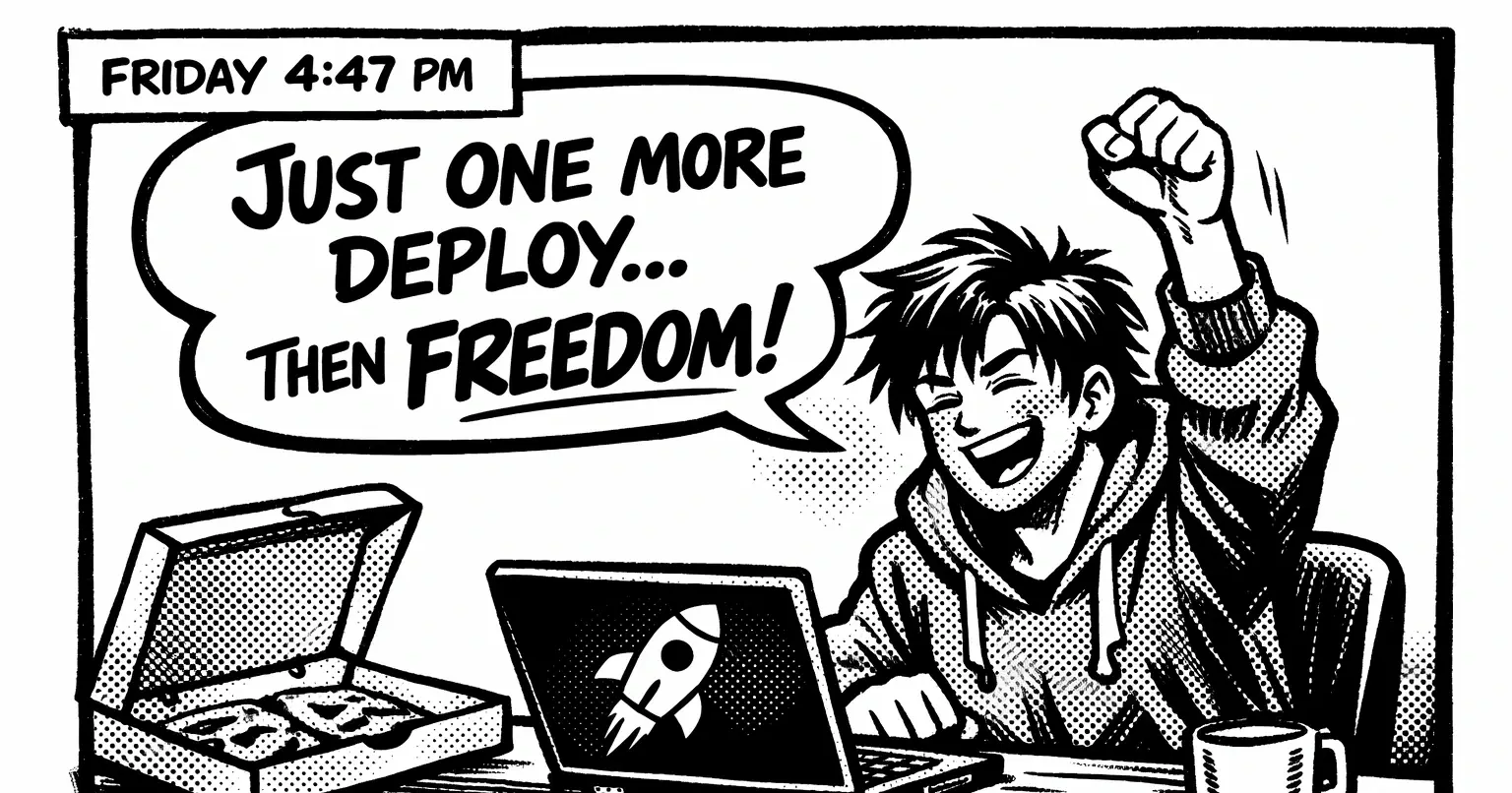
We were talking about how reckless it is to ship to production on a Friday.
A friend said: "Every indie hacker I know has a war story. Something breaking over the weekend. Finding out from a user. The panic."
Storytime: it happened on a Tuesday. And a developer didn't find out for three days.
The Tuesday that aged me 10 years
I shipped a new deploy around noon. Nothing major — a small update to the checkout flow. Tested locally. Looked fine. Pushed it. Moved on.
What I didn't know: somewhere in that deploy, a Stripe webhook environment variable got dropped. Silently. No alarm. No alert. The app kept running. Pages loaded. It looked alive.
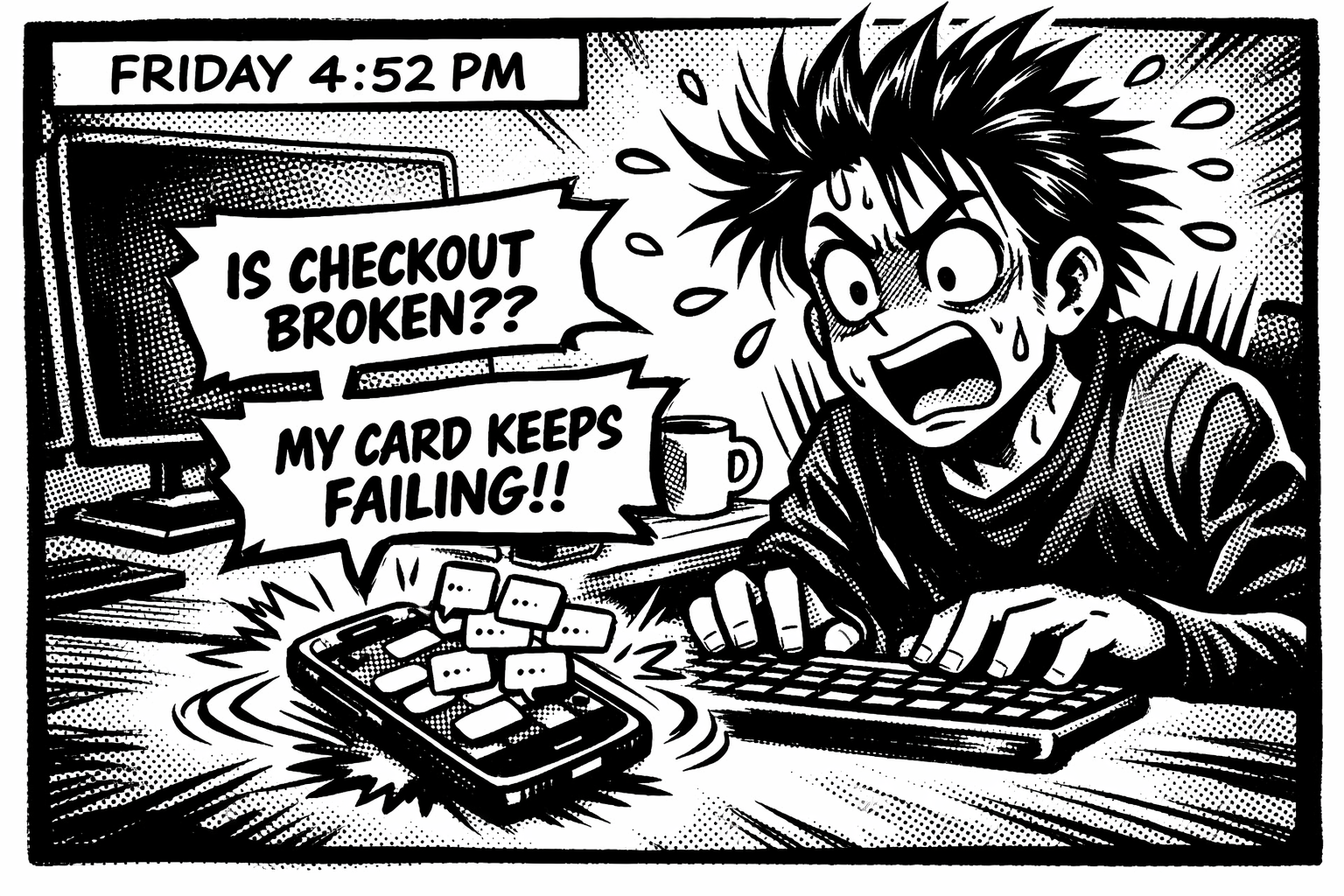
It was not alive.
For three days, every single checkout silently failed. Users hit the buy button. Nothing happened. They assumed the site was broken and left. I was heads-down building the next feature, completely unaware that my biggest conversion moment was a dead end.
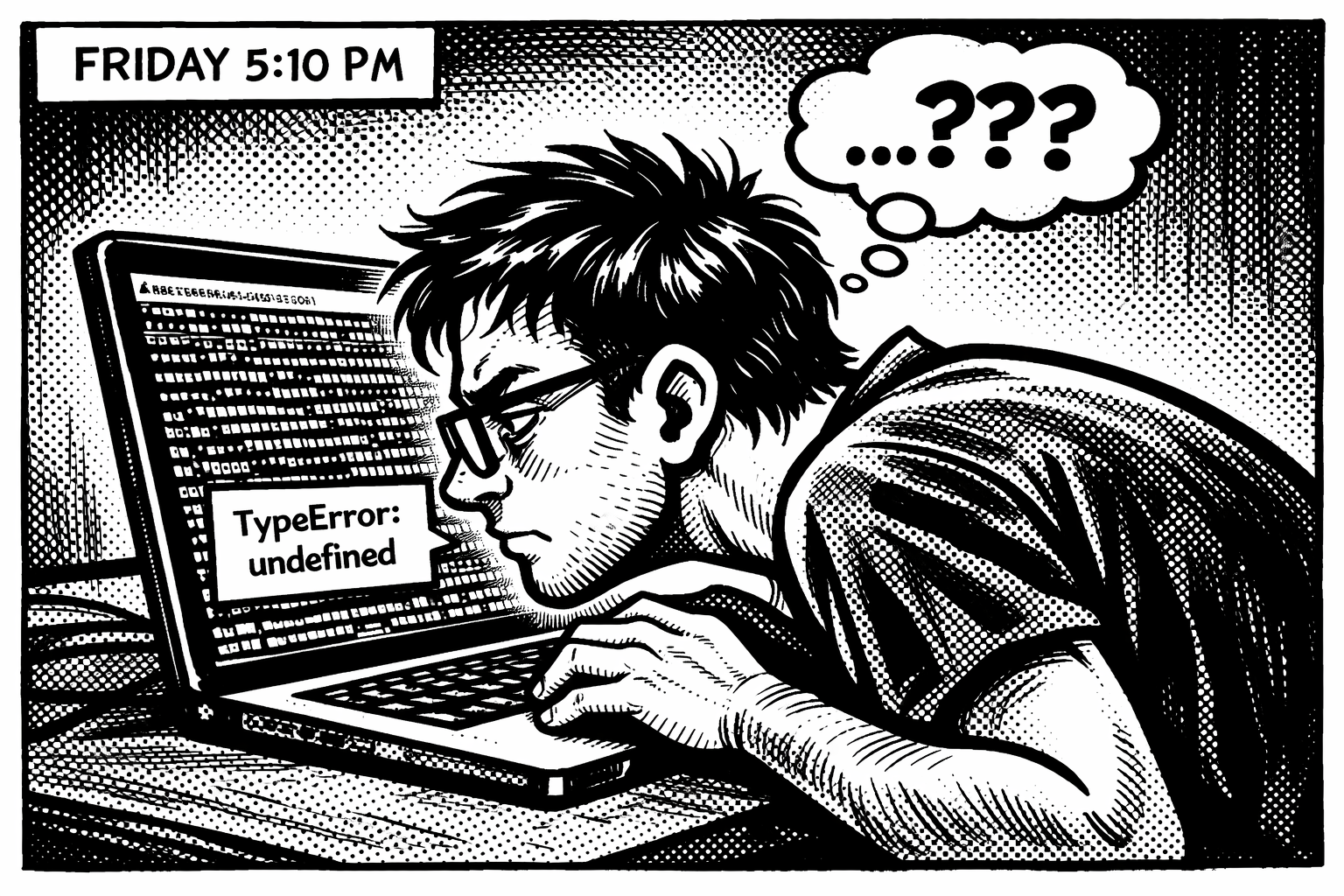
I found out on Thursday. From a reply to a tweet.
"Hey, is your checkout broken? I've tried three times."That sinking feeling. You know the one.
Here's what monitoring looked like before
I opened my error tracking. It showed me errors. Stack traces. File names. Line numbers.
Great. Now I had to be the detective.
→ Error happened
→ Here's the file
→ Here's the line
→ Good luck figuring out why
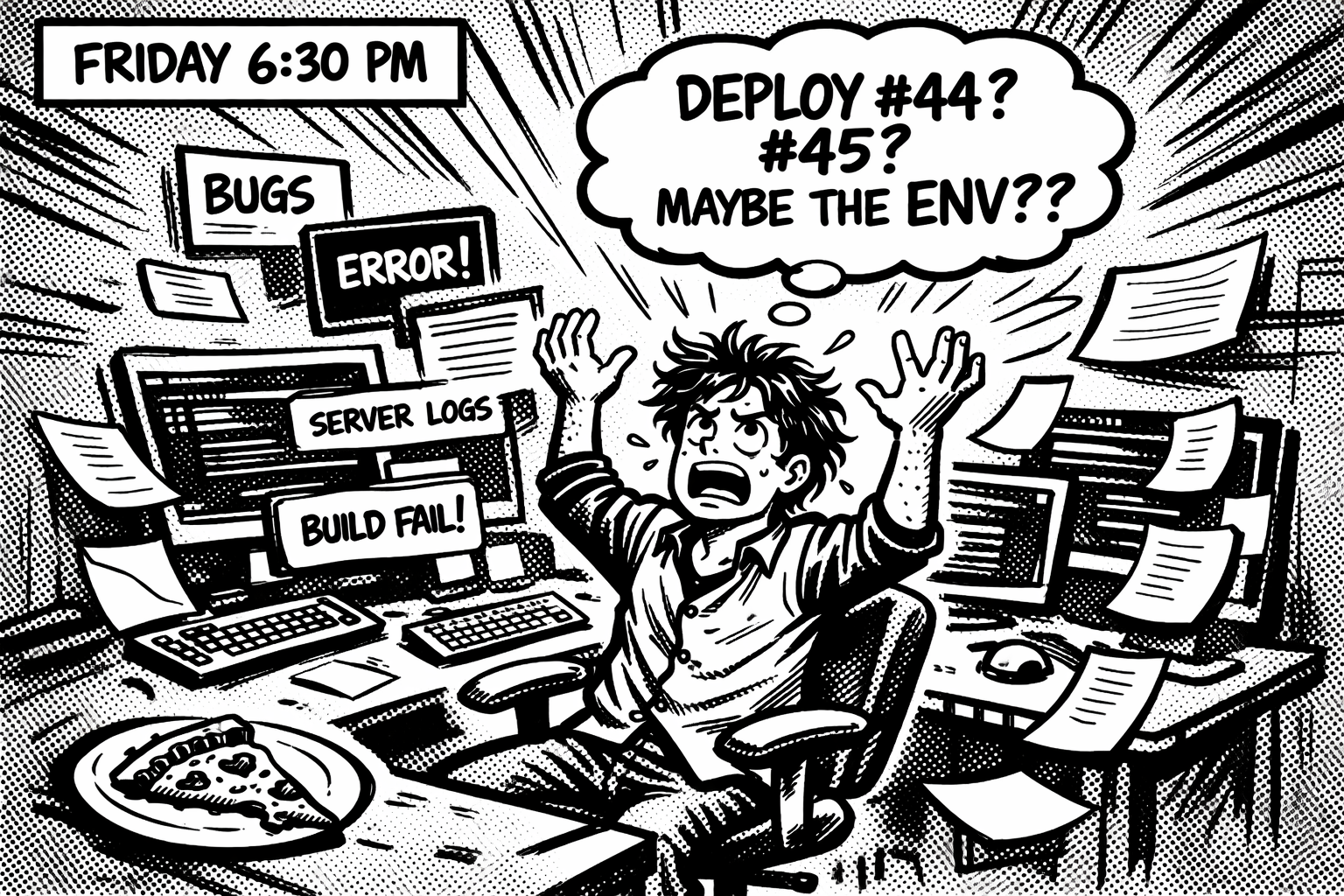
Two hours later — after cross-referencing five deploys, three environment variable configs, and a Slack thread — I found it. A missing STRIPE_WEBHOOK_SECRET. One variable. Three days of silent failure. Dozens of lost checkouts.
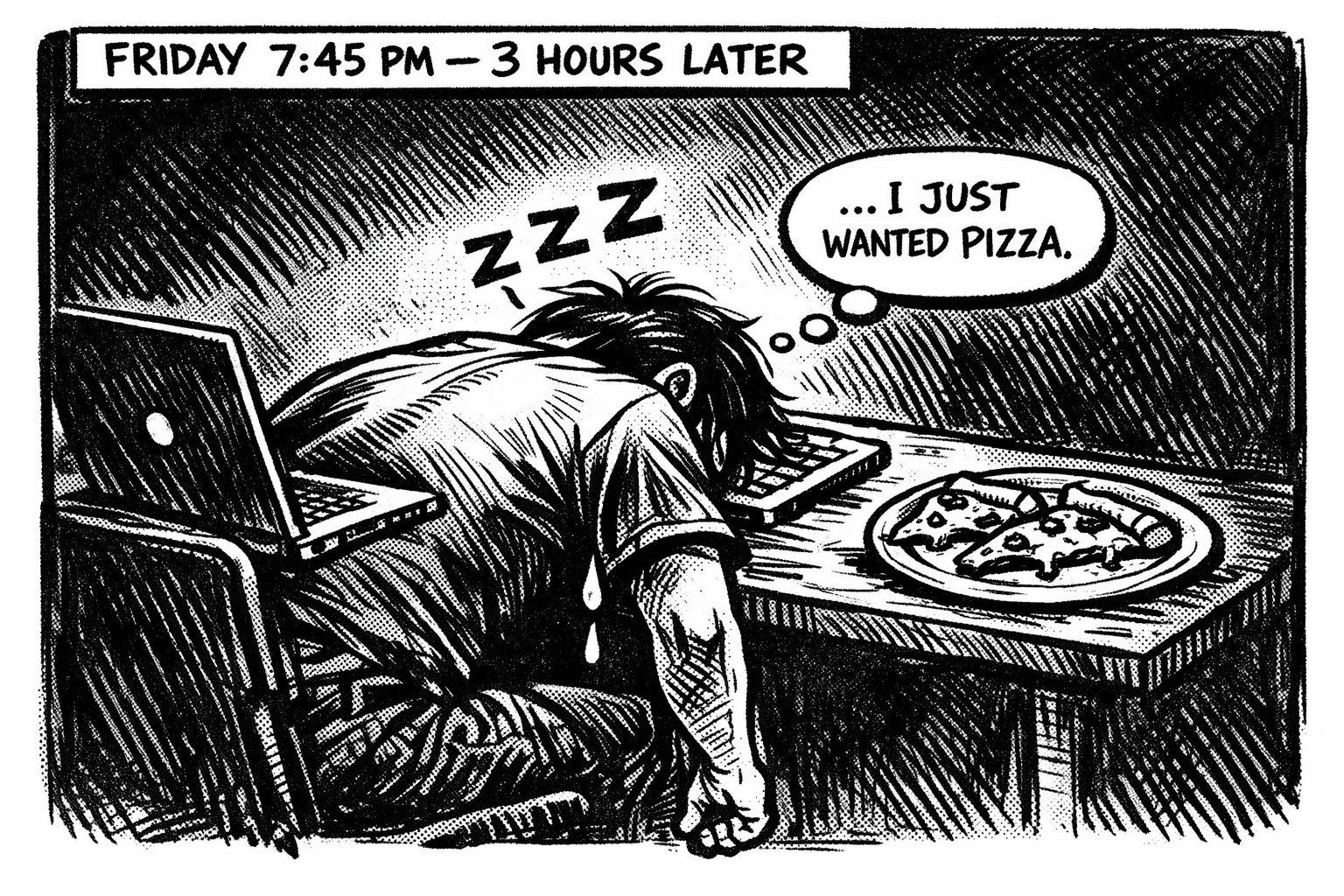
I hadn't said anything publicly because I didn't want to cause panic. That was the wrong instinct. I should have had a system that told me before I had to tell anyone.
Then I found DeepTracer
A friend in a dev Discord dropped a link. "This thing investigated a production error for me while I was asleep." I was skeptical.
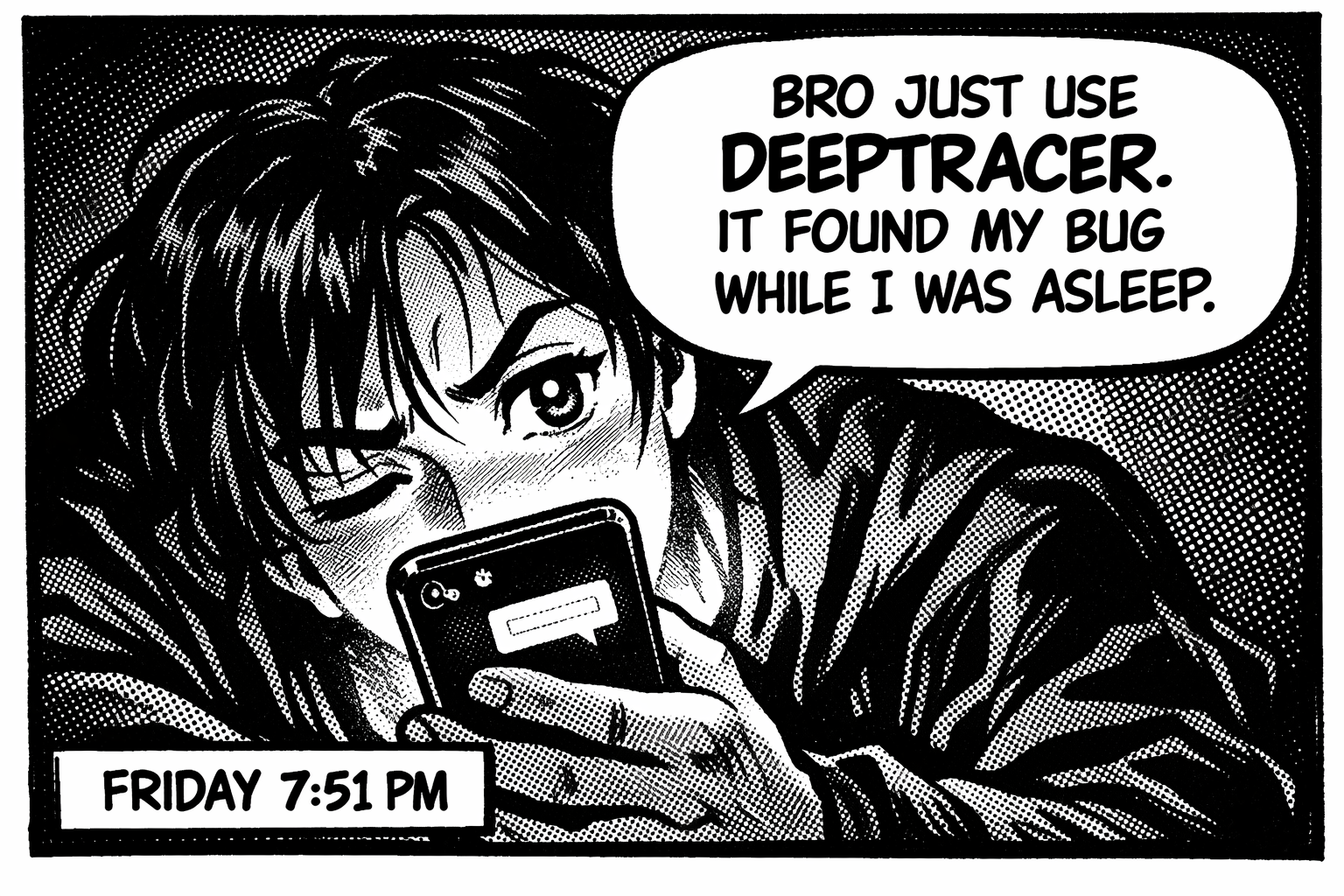
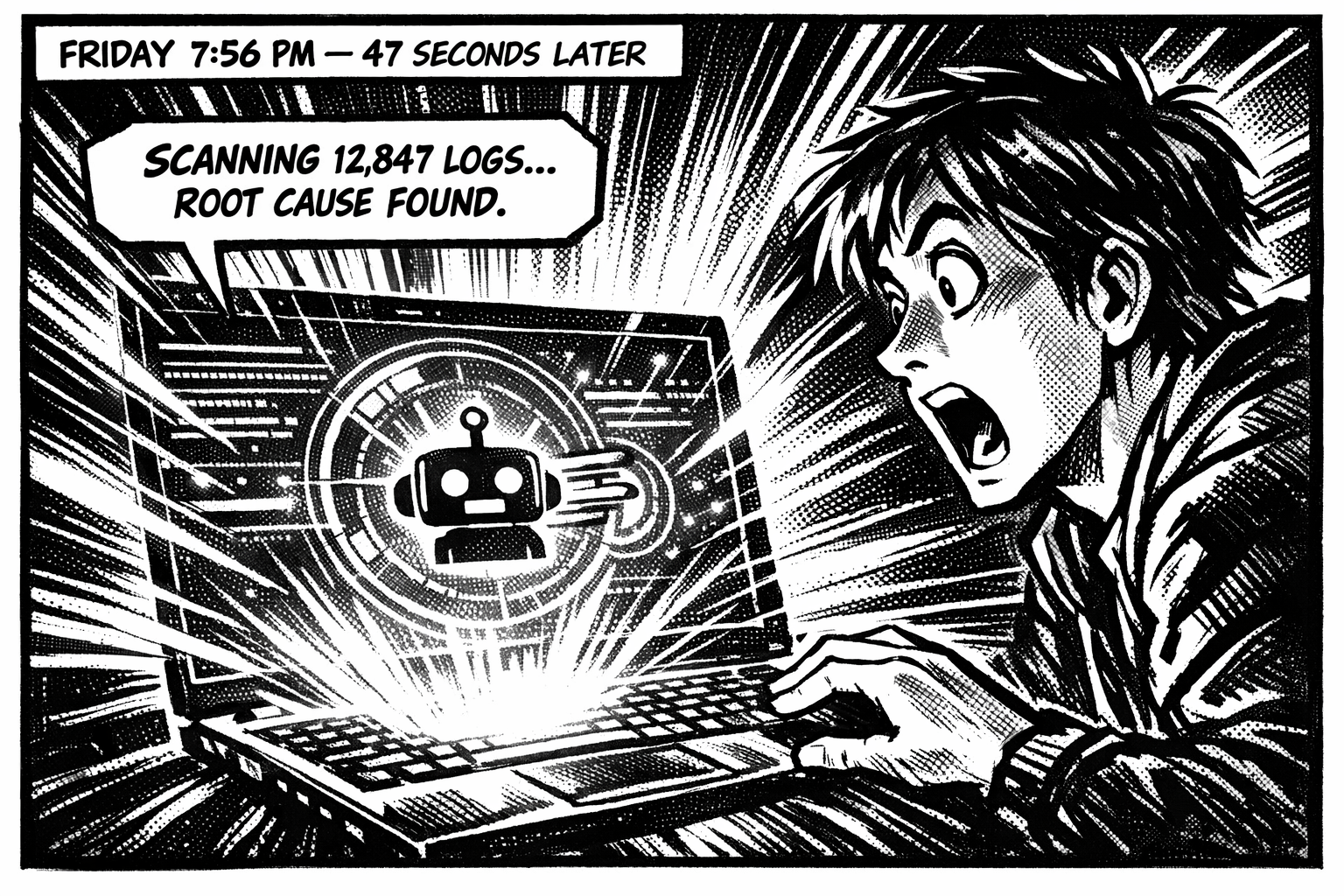
DeepTracer is an AI error monitoring agent. Not just a tracker an investigator. When something breaks in your production app, it doesn't just log the error. It pulls the logs, checks your recent deploys, checks your environment variables, correlates everything, and returns the root cause. In plain English. In under a minute.
Root cause: missing STRIPE_WEBHOOK_SECRET since deploy #47 at 2:41pm. 23 checkouts affected. Here's the suggested fix.
That's not a stack trace. That's an answer.
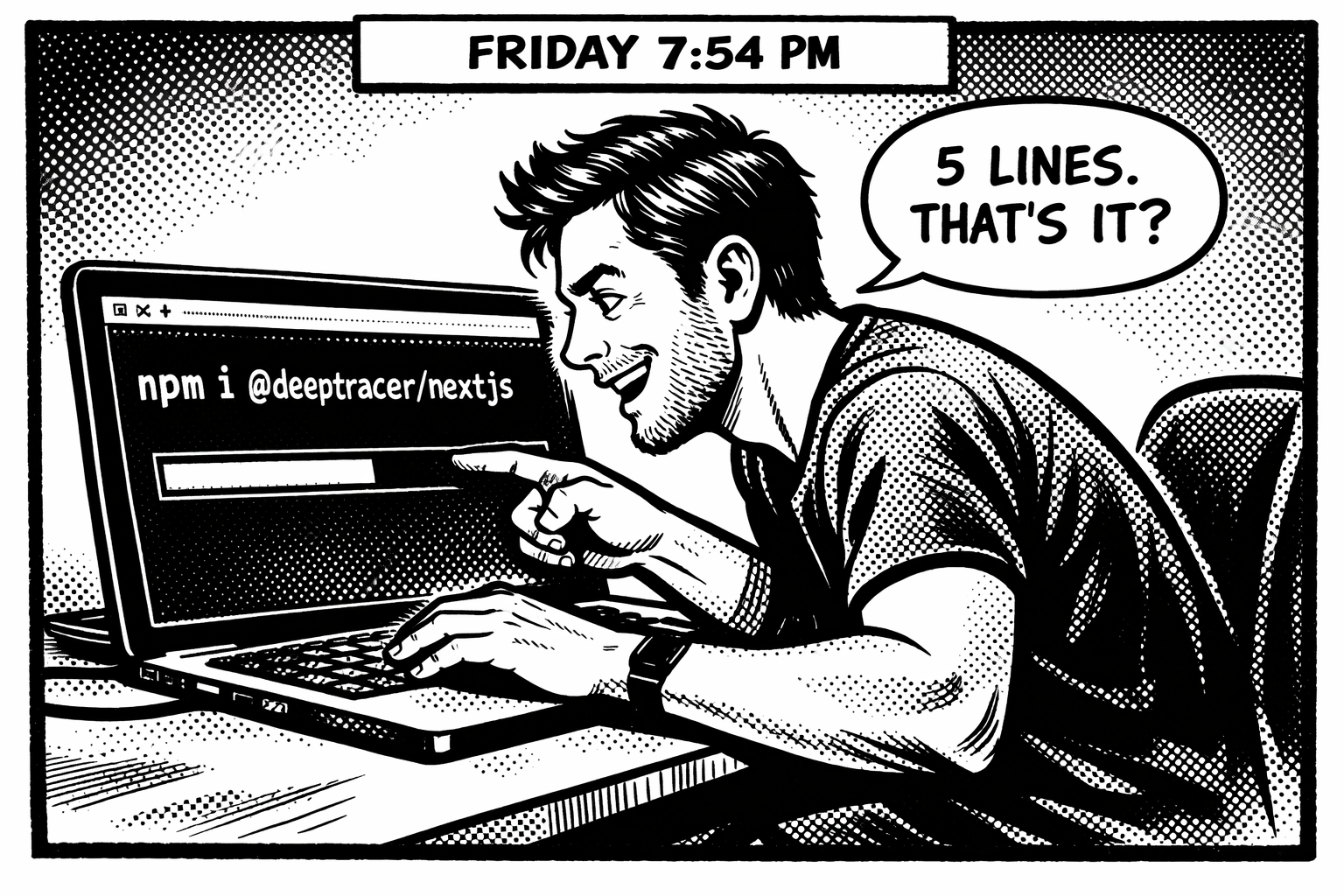
Five lines of code to install on Next.js. No dashboards to configure. No YAML files. The agent starts watching immediately.
npm i @deeptracer/nextjs

But here's the part that changed how I think about developer tooling
DeepTracer has an MCP server.
MCP — Model Context Protocol is a standard that lets AI models like Claude talk directly to your tools and data. No copy-pasting. No switching tabs. No prompting Claude with a wall of logs you manually copied.
You just ask Claude:
→ "Is my app healthy right now?"
→ "What broke after my last deploy?"
→ "Why did errors spike this morning?"
And Claude answers. With your actual live production data. Because it's connected.
This sounds like a small thing. It's not. The bottleneck in debugging has never been intelligence — any decent developer can figure out what broke eventually. The bottleneck is always time. The gap between "something is wrong" and "I know exactly what is wrong and why" is where users leave, trust erodes, and revenue disappears.
DeepTracer + Claude MCP collapses that gap.
This was built for the way we actually ship now
Most of us aren't on teams with dedicated DevOps. We're indie hackers, freelancers, solo CTOs, people shipping AI-generated code from Lovable or Bolt or Cursor. We move fast. We don't have a dedicated person watching the monitors.
AI-generated code ships fast but has blind spots. Unhandled edge cases. Missing error boundaries. Environment variable assumptions. DeepTracer was built specifically for this to catch what the AI that helped you build it missed.
What you get
Root cause not just a stack trace
Affected users and revenue impact
The exact deploy or env var that caused it
A suggested fix, in plain English
All queryable through Claude via MCP
LLM cost tracking see exactly what GPT-4o, Claude, and embeddings cost you per day
The lesson
I lost three days of checkouts because I trusted that "no news is good news" in production. It isn't.
Shipping fast is only valuable if you know when you've broken something. The feedback loop between deploy and discovery used to be measured in hours or days. With an AI agent watching, it's measured in seconds.
I don't debug production fires manually anymore. Not because I got better at debugging. Because something is watching while I build.
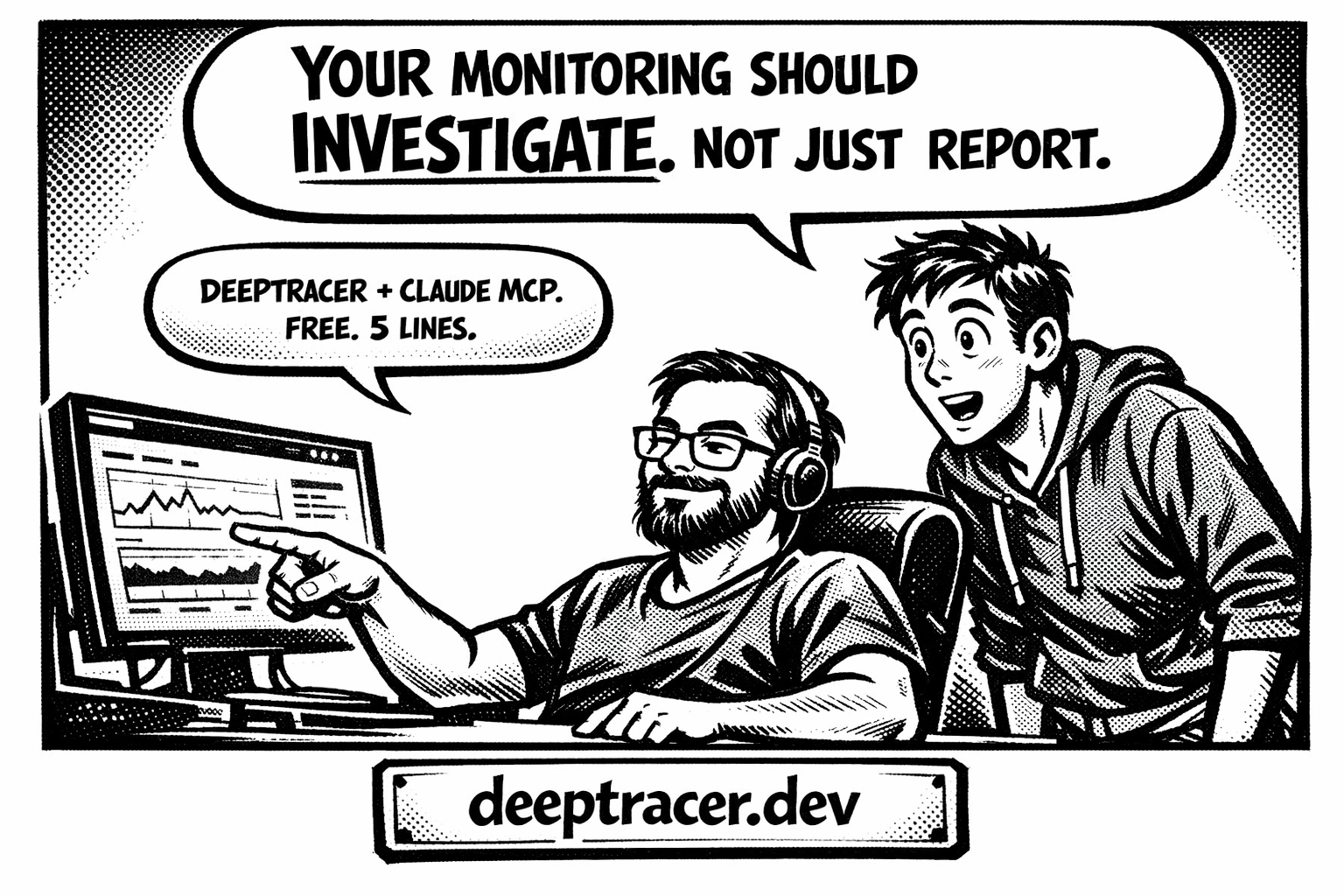
Your monitoring should investigate. Not just report. DeepTracer does.
Free plan available. 5 lines to install. MCP server included.
If this saved someone a Tuesday like mine share it.

Join Gautam on Peerlist!
Join amazing folks like Gautam and thousands of other builders on Peerlist.
0
1
1