

How to ai infographic generator from text free in 2026 (No Prompts Required)
Instantly generate professional infographics from raw text for free using zero-prompt AI technology.
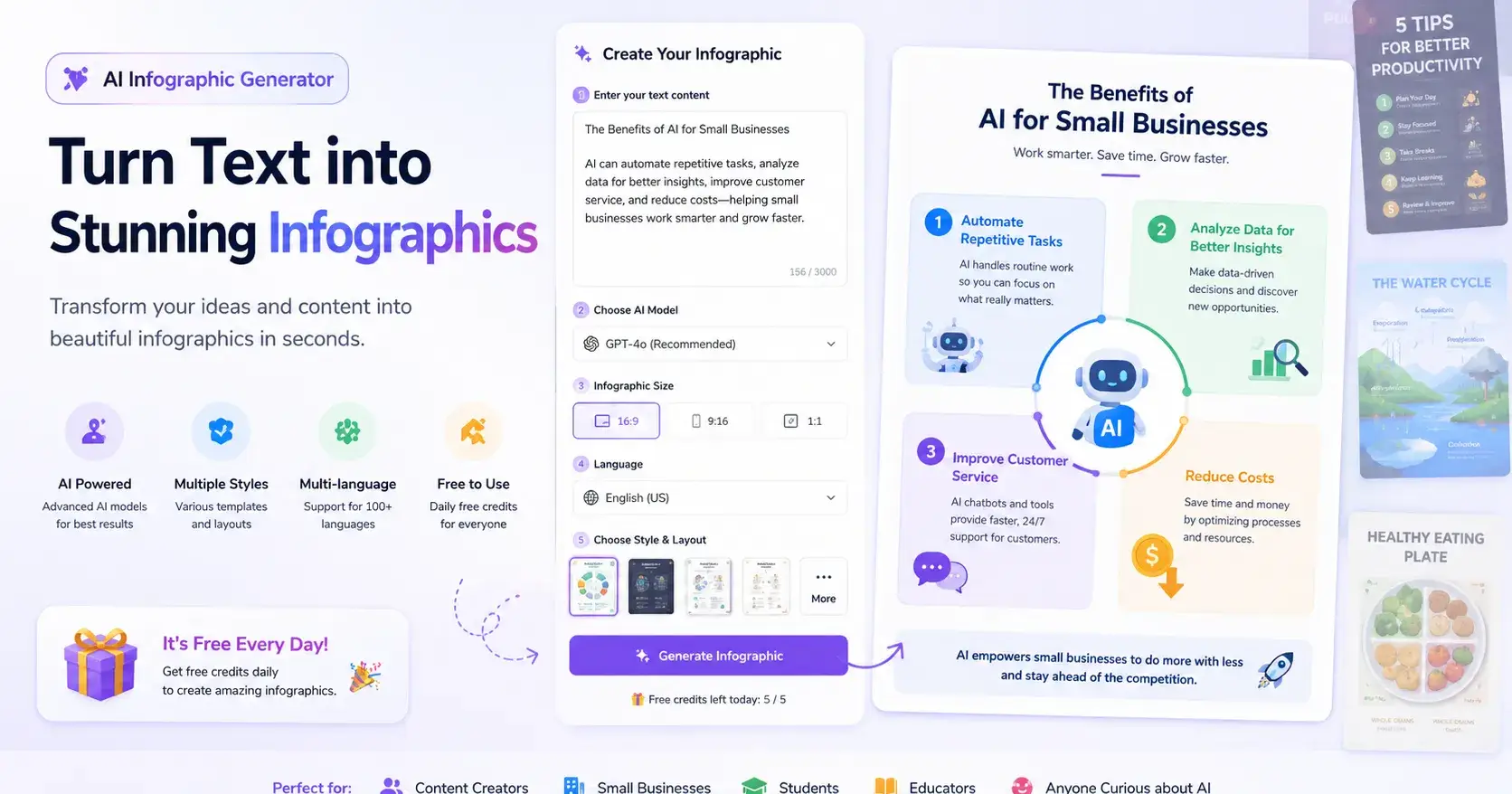
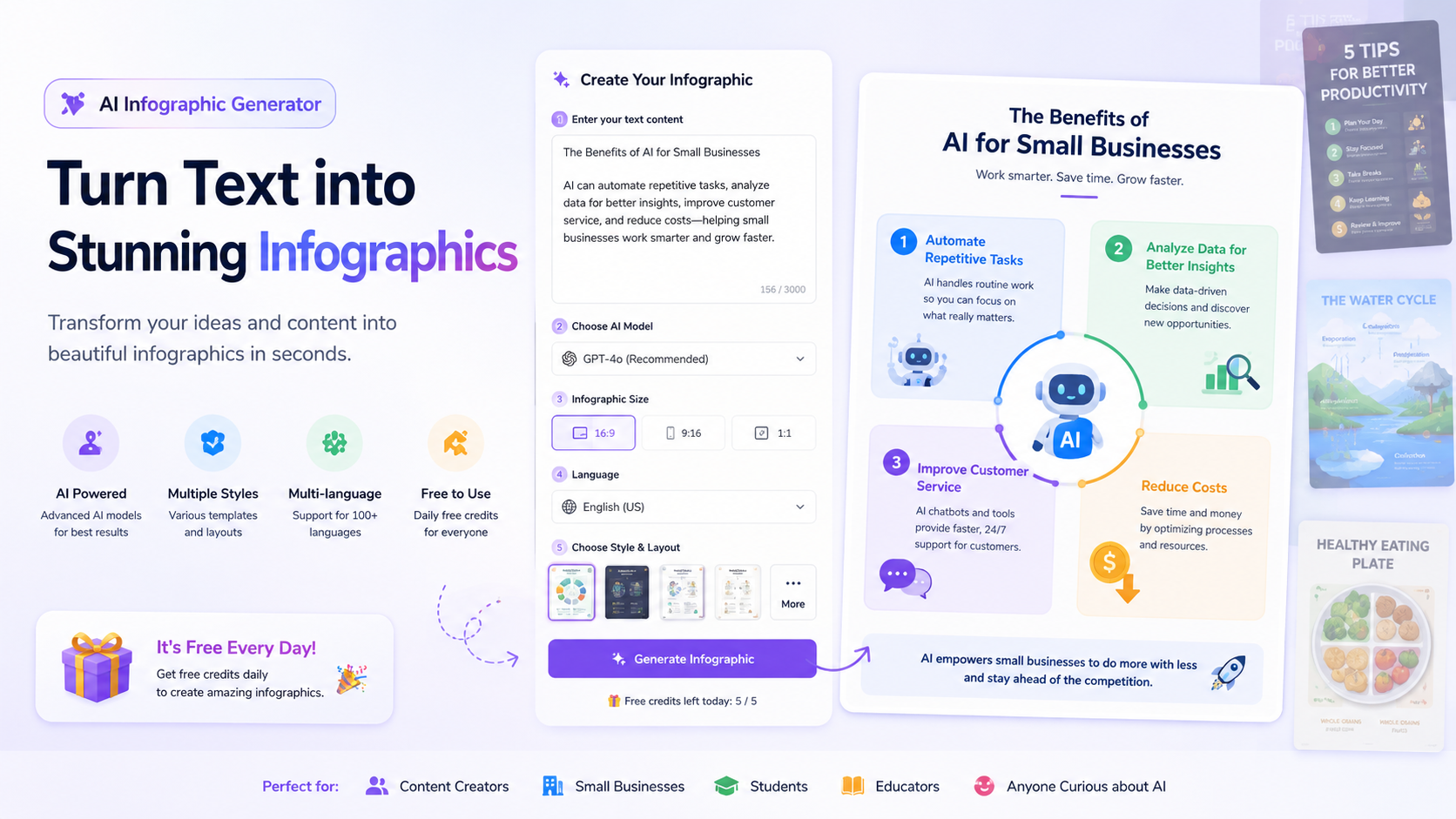
Skip the Prompt Engineering: Turning Raw Text into Infographics
Let's be honest. Nobody wants to spend hours wrestling with clunky design templates or writing a 500-word "prompt" just to get a simple business timeline. If you've been searching for how to ai infographic generator from text free, the real trick is finding a tool that skips the prompting phase entirely.
A true text to infographic generator should do exactly what the name implies: you paste your raw notes, and the engine automatically parses the logic into a structured visual. I've tested plenty that hit you with watermarks right before downloading, or hallucinate weird, misspelled words. The standard for a solid ai free infographic generator today is simple—it eliminates the slow "0-to-1" drafting phase completely. Just keep in mind: if you feed the system absolute unstructured gibberish, the resulting layout might look a bit confused. It's not magic. But give it a basic bulleted list, and it handles the visual heavy lifting instantly.
Who Actually Needs a Foolproof ai free infographic generator?
Let’s skip the fluff. Here is how this actually fits into a daily workflow:
Creators & Solopreneurs: Repurposing content is a grind, and keeping a designer on retainer is expensive. Throw a YouTube script or blog outline into the tool for an instant visual asset. You might still spend 30 seconds tweaking a font color to match your brand, but it absolutely beats manually aligning text boxes.
Corporate (HR, Ops, Product): Spoiler: nobody reads that 12-page onboarding PDF. Dumping dense policy notes into a solid ai free infographic generator forces that text wall into a clear workflow diagram. It won’t fix broken internal processes, but it formats the data so your team might actually look at it.
Students & Hobbyists: Parsing dense Wikipedia dumps is brutal. Paste the core concepts, and the engine maps out a logical study guide. If your topic is hyper-niche, the auto-selected icons might feel a bit generic. However, the structural hierarchy it builds from your raw text is usually spot-on.
The "Zero-Prompt" Workflow: How to ai infographic generator from text free
If you're searching for how to ai infographic generator from text free, you want speed, not another software to learn. Lately, I’ve just been dropping my text into Saveto because it actually skips the prompting phase. Here is how fast the actual process is when a tool just gets out of your way:
Step 1: Dump Your Raw Text. Forget writing instructions like "Act as a designer..." Just paste your messy meeting notes or raw data directly into the box. No pre-formatting needed.
Step 2: Hit Generate. The engine automatically sorts out what’s a header and what’s a detail. (Real-world tip: the progress bar sometimes pauses at 93% for a second while rendering the final image payload. Don't refresh, just give it a moment).
Step 3: Download. Grab the file. You aren't forced to dodge hidden paywalls or upgrade pop-ups at the finish line just to save your image.
Stop Overthinking: 3 Real-World Examples to Try
People always overthink what to write. You don't need a perfectly structured document or a complex command to get a good result from Saveto. To show you how the ai tools to generate infographics actually process messy information, here are three raw text dumps I’ve used, and what happens when you hit generate.
1. The "Dry Corporate Update"
What I pasted: "Q3 Product Release Plan. Phase 1 (July): Launch the new mobile UI for beta testers. Goal is to track bug reports. Phase 2 (August): Public release for all iOS users, accompanied by the email marketing campaign. Phase 3 (September): Android release and Q3 performance review."
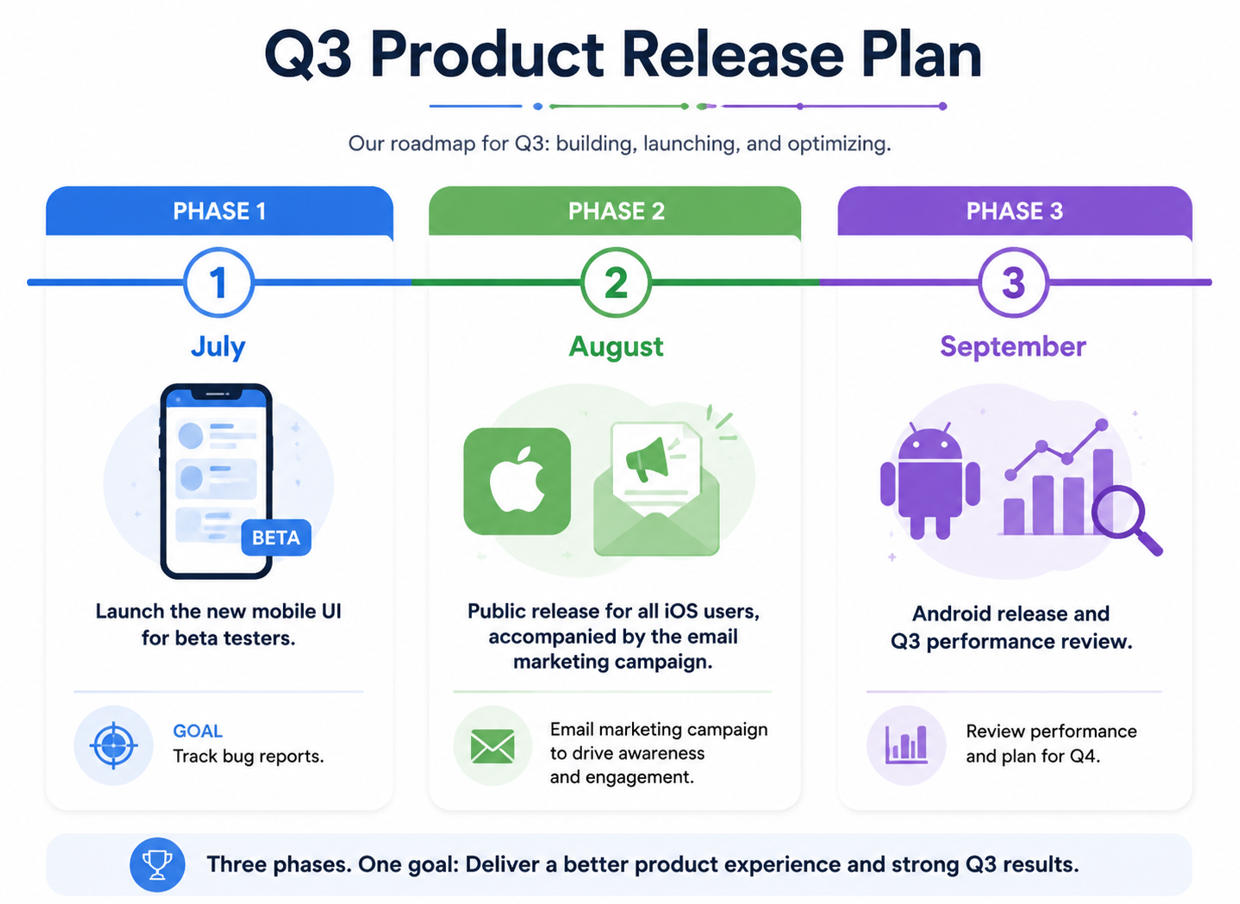
The Result: It ignored the fluff and built a clean, three-column roadmap. Notice how it automatically assigned relevant icons (like the iOS and Android logos) to each specific phase without me asking.
2. The "Wikipedia Dump"
What I pasted: "Photosynthesis has two main stages. First is the light-dependent reactions taking place in the thylakoid membrane, using light energy to make ATP and NADPH. Second is the Calvin cycle in the stroma, which uses that ATP and NADPH to convert CO2 into sugar."
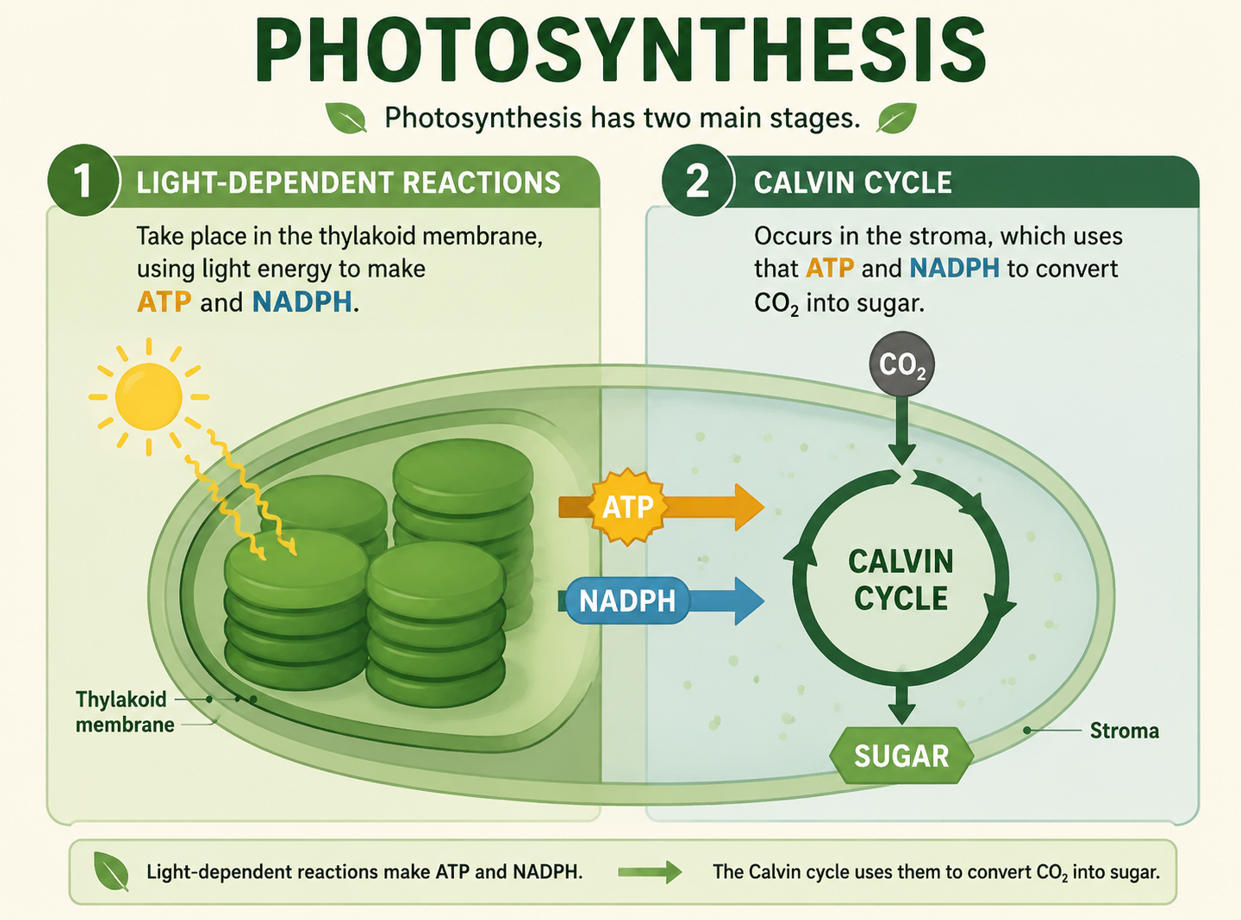
The Result: The engine actually mapped out the biological process. It split the two stages and generated a central graphic showing exactly how the ATP and NADPH flow between them. It’s basically a ready-made study card.
3. The "Messy Weekend Itinerary"
What I pasted: "Tokyo 3-day trip. Day 1: Land at Narita, grab ramen in Shinjuku, visit the neon streets at night. Day 2: Early morning at Senso-ji temple, afternoon shopping in Akihabara. Day 3: Bullet train to Kyoto, pack bags."
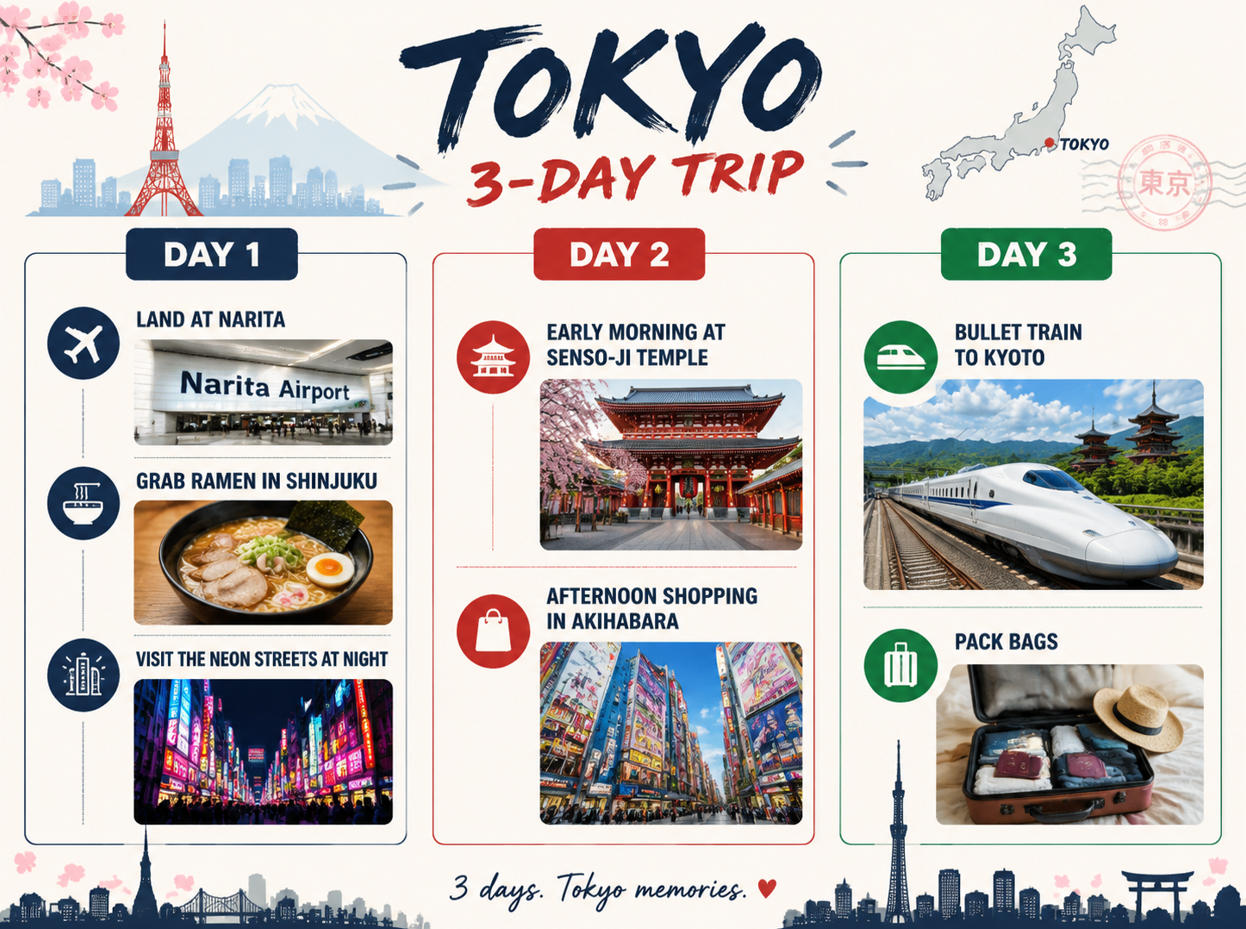
The Result: It completely shifted the vibe. Instead of a corporate chart, it built a travel layout with custom photo visuals (ramen bowls, neon streets, bullet trains) mapped perfectly to each day. Drop this straight onto Pinterest.
What If You Actually Want More Control?
Look, the whole point is to keep it simple. But sometimes, you need a specific look. In my opinion, the best ai infographics generator shouldn't treat you like a toddler. While the default auto-generation is solid, Saveto leaves a few advanced toggles exposed if you need them. You can swap out the underlying engine (like selecting the Nano Banana 2 model for different reasoning), force a 4:3 ratio for a slide deck, or manually lock in a vibe. If the auto-selected style feels too playful for a corporate report, just hit the "Custom layout & style" toggle and force it into something like the "Aged Academia" or "Bridge" templates.
Summary
Stop wasting an hour aligning text boxes for a graphic that people will only look at for five seconds. Grab your roughest meeting notes right now, head over to Saveto, and burn through your daily free credits just to see how it handles your specific text.

Join loren on Peerlist!
Join amazing folks like loren and thousands of other builders on Peerlist.
1
2
1