

Why Good Designs Fail Without Proper Mockups
The hidden role mockups play in design success
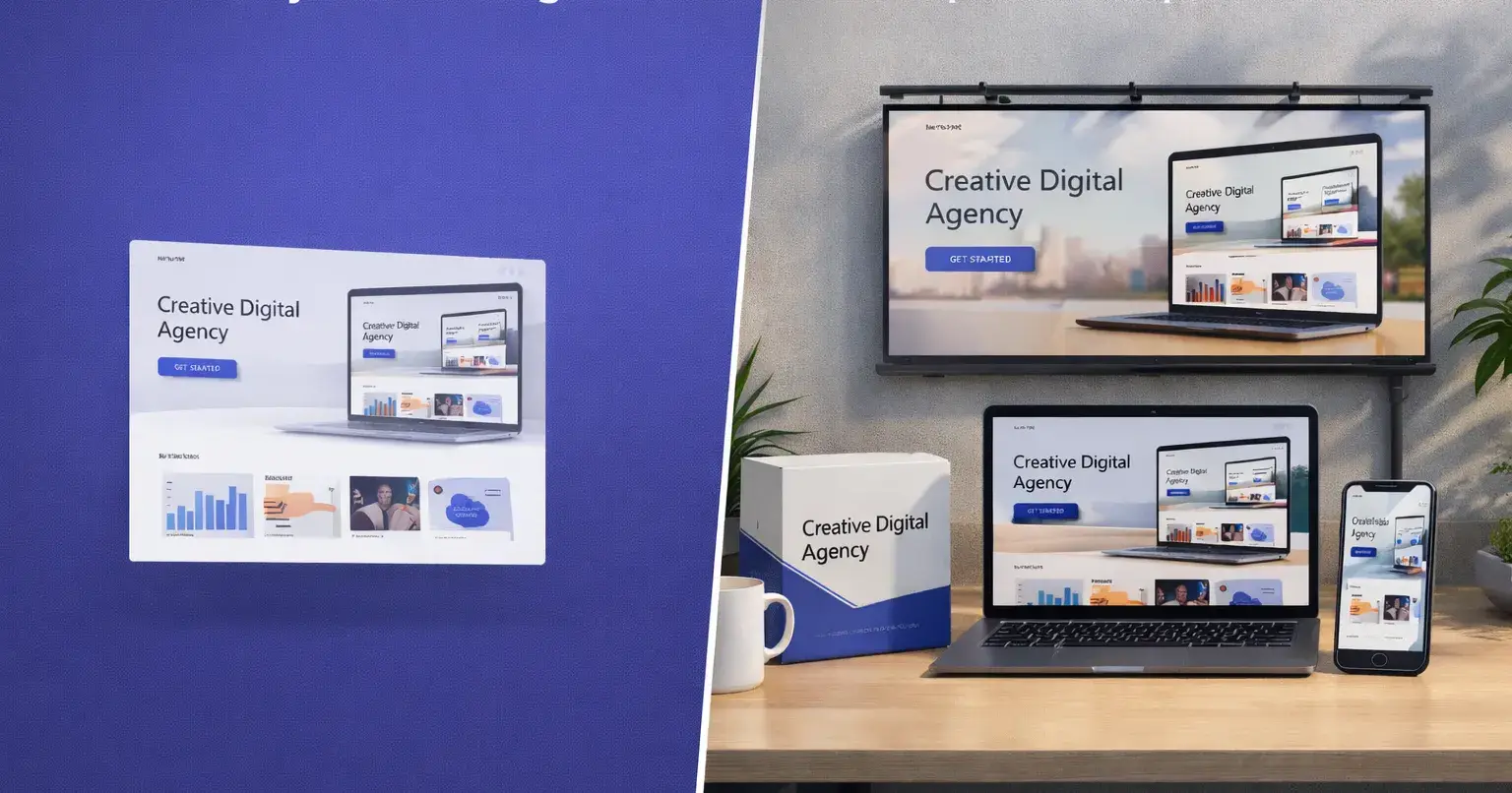
Good design is often judged long before anyone understands the thinking behind it. As designers, we spend hours refining layouts, spacing, typography, and interactions. Yet many strong designs still fail to get approval, recognition, or appreciation. In most cases, the problem isn’t the design itself—it’s how the design is presented.
This is where mockups quietly play a much bigger role than we often admit.
Design doesn’t exist in isolation
A design file by itself rarely tells the full story. Screens inside Figma or flat exports don’t show how a product will live in the real world. Stakeholders, clients, and even teammates usually don’t think of frames, grids, or components.
When designs are shown without context, people are forced to imagine the outcome on their own. That gap between imagination and reality is where confusion begins. A well-crafted mockup bridges that gap by showing where, how, and why a design exists.
First impressions shape perception
Within seconds, people form opinions about quality, clarity, and professionalism. A flat and contextless design can make even great work seem incomplete or dull.
Mockups help guide first impressions. A design placed inside a realistic environment feels more tangible. It looks closer to a finished product, even if it’s still early in the process. This doesn’t mean adding extra visuals. It means giving enough context so people understand what they see.
Good designs often fail because they’re misunderstood
Many design rejections happen not because the solution is wrong, but because the intention isn’t clear. Without context, viewers may focus on the wrong details. They may misinterpret scale, usage, or purpose.
Mockups act as a communication layer. They don’t display visuals; they explain how a design fits into real scenarios. When people grasp a design's intent, feedback improves.
Mockups help non-designers take part confidently
Design discussions rarely involve only designers. Product managers, marketers, founders, and clients all have a voice. Most of them aren’t trained to read raw design files.
Mockups make design conversations more inclusive. They give non-designers something familiar to react to. Instead of guessing how something might look or work, they can respond to what they see. This leads to clearer feedback and fewer back-and-forth cycles.
Presentation influences trust
There is an unspoken connection between presentation quality and perceived competence. When work is presented clearly and thoughtfully, it signals professionalism. It shows care, preparation, and intention.
Mockups contribute to that trust. They suggest that the designer has thought beyond the screen and considered real-world usage. This often results in greater confidence from clients and stakeholders, even before a single word is spoken.
Mockups Are Not Just Decoration
A common mistake is treating mockups as decorative elements—something added at the end to make the work look nicer. In reality, mockups are most effective when used as communication tools.
Better mockups lead to better feedback
When designs are presented with context, feedback naturally improves. People comment on usability, flow, and purpose instead of getting stuck on isolated visual details.
This doesn’t help stakeholders—it helps designers too. Better feedback leads to better iterations. Mockups can actually improve the design process itself, not the final presentation.
When mockups are missing, good work suffers
Designers sometimes skip mockups due to time pressure or the belief that “the design should speak for itself.” Unfortunately, designs rarely get that luxury. Without proper presentation, strong ideas can be overlooked or undervalued.
Mockups ensure that good work gets a fair chance to be understood. They don’t replace good design—but they protect it from being misjudged.
Design presentation is part of the design process
Presentation isn’t something separate from design. How work is shown influences how it’s perceived, discussed, and decided upon.
Thinking about mockups early—rather than as an afterthought—can significantly improve outcomes. It lets designers shape the story and guide understanding, not rely on luck.
Final thoughts
Good designs fail more often due to poor presentation than poor execution. Mockups play a quiet but critical role in shaping perception, understanding, and trust.
They are not about making designs look fancy. They are about making designs understandable.
This is something I’ve seen repeatedly while reviewing and presenting design work, and it continues to shape how I think about design communication today.

Join MD MANIK on Peerlist!
Join amazing folks like MD MANIK and thousands of other builders on Peerlist.
0
3
0