

Your DevOps Pipeline is Probably Wrong
Here’s the industry wisdom I learned the hard way, from someone who fixed it.
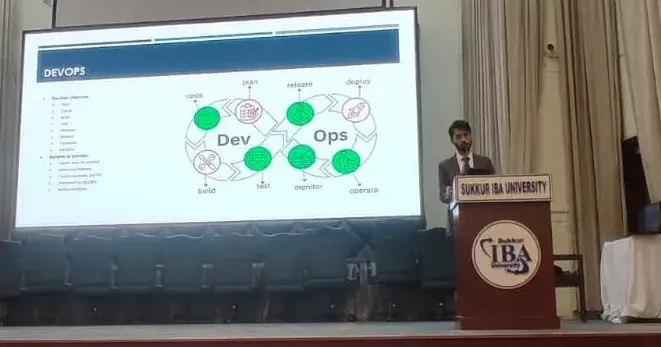
Day 02: Momentum in Motion.
not chasing streaks.
chasing clarity.
I almost didn’t go to that workshop today. I’m glad I did, because sitting there, something just fell into place for me. It wasn’t just another tech talk , it was a conversation with a guy who’s been in the trenches, Ammar Zafar Ansari, and he made the whole world of DevOps feel real.
He didn’t just throw buzzwords at us. Instead, he walked us through the actual journey that code takes, from a developer’s idea to something running live for users. He sketched it out like a story.
It starts with Git, where all the code changes live. Then it moves into the CI/CD pipeline, think of it as an automated factory line that builds, tests, and prepares your code. He told us about tools like Jenkins, GitLab CI, and GitHub Actions, and why a team might pick one over the other. It was the first time I understood that this choice really matters.
Next, the code gets packaged into a Docker container, a neat, self-contained box that has everything it needs to run. And where do you run all these boxes? In something like Kubernetes, which manages them all across a cluster of machines. He mentioned Amazon EKS and Azure AKS as ways companies handle this in the cloud.
Finally, you have to keep an eye on everything. That’s where monitoring tools like Prometheus and Grafana come in, creating dashboards that tell you if your system is healthy or on fire.
But the tech wasn’t the best part. The stories were.
He shared a time a badly built pipeline held up a release for days, and the team’s frustration. He told us about switching one part of the process and watching deployment times drop from hours to minutes; I swear, you could hear the relief in his voice. And his biggest point: no single tool is the magic “best” one. It’s all about what fits your team, your project, your problems.
Hearing him be so honest about trade-offs, costs, and where teams usually trip up… it changed something for me. DevOps stopped being a shiny buzzword. It started feeling like a simple, powerful mindset: automate the boring stuff, keep an eye on what’s important, and build systems that are kind to humans when they make mistakes.
I walked out of that room not just informed, but genuinely excited. It felt less like learning a stack of tools and more like discovering a new way to think about building things. I can’t wait to explore this path further.
On to Day 03.
Take Care.

Join Irfan on Peerlist!
Join amazing folks like Irfan and thousands of other builders on Peerlist.
0
6
0