

Transforming Manufacturing Performance with a Manufacturing Balanced Scorecard
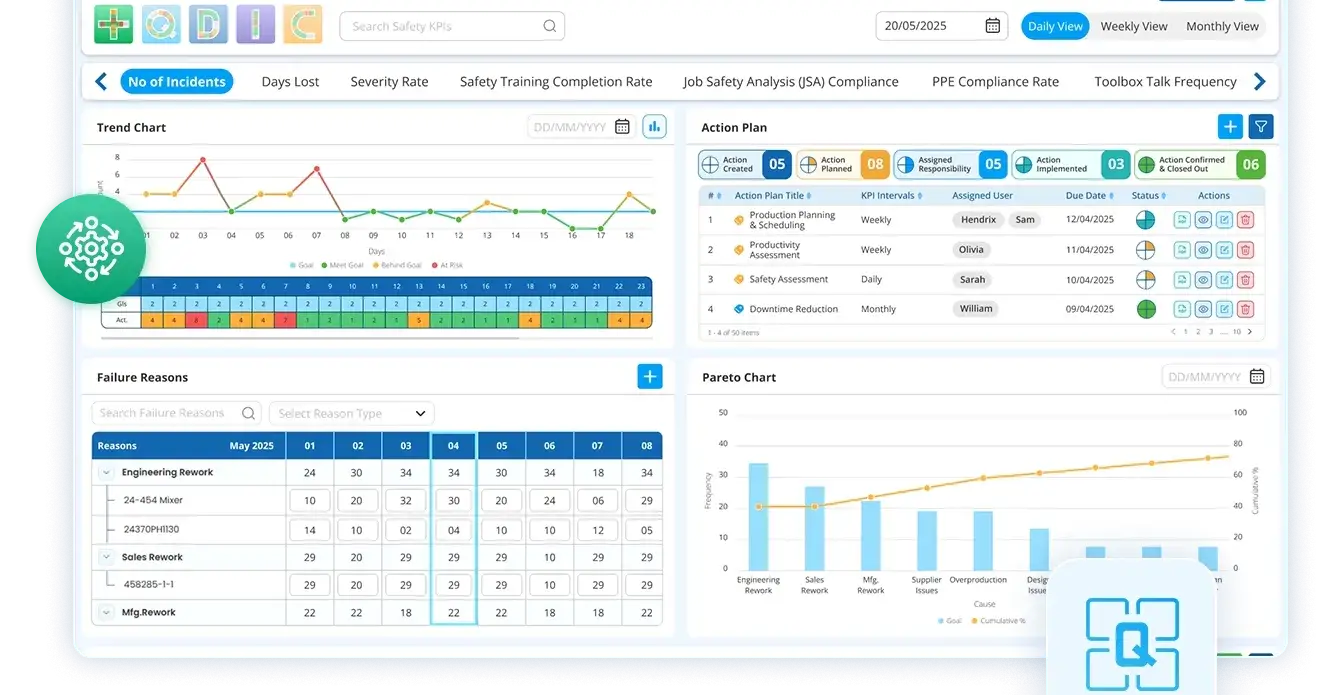
Manufacturing organisations today operate in a highly competitive environment where efficiency, productivity, and strategic alignment determine long-term success. Traditional performance tracking methods often fail to connect operational activities with strategic goals. This is where the concept of a manufacturing balanced scorecard becomes essential. By linking high-level objectives with measurable factory KPIs, manufacturers can transform everyday operational data into meaningful insights that guide smarter decision-making.
Bridging Strategy and Shop Floor Performance
Many manufacturers struggle to align their strategic vision with day-to-day factory operations. Leadership teams may define clear business goals, but without a structured framework, these goals rarely translate into actionable metrics on the shop floor. A well-implemented manufacturing balanced scorecard helps bridge this gap by connecting departmental KPIs with organisational strategy.
Instead of tracking isolated metrics, manufacturers can evaluate performance through a structured approach that considers financial results, operational efficiency, process improvements, and customer satisfaction. This alignment ensures that production teams, management, and support departments all move in the same direction toward shared business objectives.
Data-Driven KPI Tracking for Smarter Manufacturing
Modern manufacturing relies heavily on real-time data and analytics. With the right KPI management framework, companies can track critical metrics such as Overall Equipment Effectiveness (OEE), production throughput, downtime, cycle time, and resource utilisation. These insights allow leaders to detect operational bottlenecks early and make informed decisions that improve performance.
A data-driven approach also enables automated data collection and clear visualisation of manufacturing KPIs. Instead of manually compiling reports from multiple systems, manufacturers can monitor performance trends in a unified platform. This visibility makes it easier to benchmark performance against industry standards and identify improvement opportunities across different production units.
Driving Operational Excellence and Throughput
Operational efficiency remains one of the most critical priorities for manufacturing companies. Small inefficiencies in production processes can lead to significant losses over time. Integrating lean manufacturing principles with strategic KPI tracking helps organisations minimise waste, reduce downtime, and maximise production throughput.
When manufacturers monitor machine uptime, cycle time, and process efficiency through structured KPI frameworks, they gain the ability to optimise workflows and maintain consistent output. Real-time performance monitoring can also support predictive maintenance strategies, helping organisations prevent unexpected equipment failures and maintain stable production environments.
Improving Quality and Customer Satisfaction
Quality performance is another area where structured KPI management plays a vital role. Manufacturing success is not only measured by output volume but also by product quality and customer satisfaction. Metrics such as defect density, first-pass yield, and delivery performance help manufacturers maintain consistent quality standards while improving supply chain reliability.
Tracking these indicators ensures that quality issues are detected early and resolved before they impact customer relationships. When quality metrics are integrated into a strategic performance framework, manufacturers can continuously refine production processes and strengthen their competitive position in the market.
Building a Data-Driven Manufacturing Future with LTS Data Point
As manufacturers continue to embrace digital transformation, having a powerful performance management platform becomes essential. Solutions like Lean Data Point help organisations implement a structured KPI framework that connects strategy with operational performance. By enabling real-time monitoring, automated KPI tracking, and unified data visibility, LTS Data Point empowers manufacturing companies to adopt a modern manufacturing balanced scorecard approach that drives measurable improvements across productivity, quality, and strategic alignment.

Join Nidheesh on Peerlist!
Join amazing folks like Nidheesh and thousands of other builders on Peerlist.
0
1
0