

The reason Exams SUCK is deeper than your rant can articulate
The more you investigate it, the weirder it gets
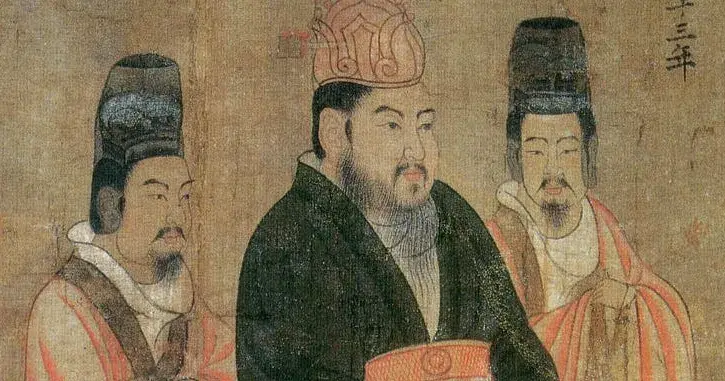
Out of all things why to talk about exams?
Personally, I believe it is important for me because it has spanned over such a long time in my life and continues to do so.
Something which has a lifelong span becomes relevant for a discussion or interrogation as understanding its nature would allow making informed decisions in our lives.
Since my childhood, schools have been bullishly filled with exams.
The details may differ based on country, but high-level it is the same.
Note: this discourse has a mix of facts and opinions. I can be biased. don't take opinions too seriously.
Exams exist at every phase of a commoner’s life
To graduate from a class, you must give exams.
To progress within a class, you must ‘keep giving’ exams or “tests” as we call them.
To get a 10 & 10+2 marksheet which acts as a necessary government document, you give the board exams.
Olympiads are a form of exams.
Once your schooling ends, you prep for the national entrance exams.
Once you’re through that phase, you give exams in your university again.
To apply for post-graduation, you give the PG entrance exam.
To sit for placements, you must give employability skills assessment exam.
To get promotions in your job, you give promotion exams.
Are exams only for a commoner?
It seems so.
That’s my personal experience.
It would be an insult to make a legend sit and take a standardized test as his majesty would be un-matchable and impossible to compare and standardize.
It certainly is ONLY FOR THE MASSES.
It is for the “majority”.
Not even once in 2 decades of my life, I have ever heard a millionaire or billionaire business-owner through any media source take a test to start his business or any revolutionary taking a test to quality for his revolution.
Let’s stick to us ‘commoner” test-takers.
Though these exams or tests creep into almost all phases of our lives, it’s not surprising to any of us that they don’t work. They are criminally ineffective and shamefully fail to evaluate a test-taker’s true capabilities.
That is obvious to most of us from pure experience.
But why so?
To judge if exams are effective or conclude them as ineffective, we must first define the end goal we are measuring effectiveness for.
And whose goal?
That would determine the design of the exam.
Whose goals do Exams optimize for?
For certain it seems, it’s not the goal or desire of a student that is important!
It is the “industry”, “companies”, “employers”, “HRs”, “Hiring Managers”. It’s not even much about the work to be done in a job, it is just about “getting a job”, “some job” with “decent average salary” for most, and “high salary” for select few who’ll be funneled through the marketing funnel and portrayed as the “highest package grabbers” of the institution. The disparity between the highest, average and the ‘attainable packages by leftouts’ is “ultra-wide”.
The reason, it is not about work, is because, it stays heavily within theory which is no match for DIY field-work.
Theory vs DIY
DIY means “Do It Yourself”
I’ll give the simple analogy of driving a car.
You know it has accelerator, brake, clutch, gears, handbrake, indicator lever etc.
But until you drive it, you can’t learn driving or understand how you navigate the vehicle when obstacles are around.
Theory is only useful when accompanied by practice. Note that I’m not saying, ‘theory is useless’. It is ‘useful’ but only when coupled with its ‘use case’ consistently.
If exams are so faulty, why they still exist today?
If exams are optimized for “getting student a job”, in which it clearly fails - unemployability is rising, graduates are unemployable, then why is it still alive and going strong?
The reason is “it is not about getting a job at all”.
It’s about what is required for most jobs – “busyness, compliance and subservience”.
Exams weren’t even invented for jobs.
They were invented to prevent aristocratic uprising.
The historical origin of Exams
Its origin goes way back, 1400 yrs ago, Imperial China during reign of Sui Dynasty.
It was created to solve this problem – How does an emperor stop powerful, wealthy aristocrats from overthrowing him!
The standardized formal written exam system called the Keju (Imperial exam) was officially institutionalized in 605 CE by Emperor Yang of Sui Dynasty.
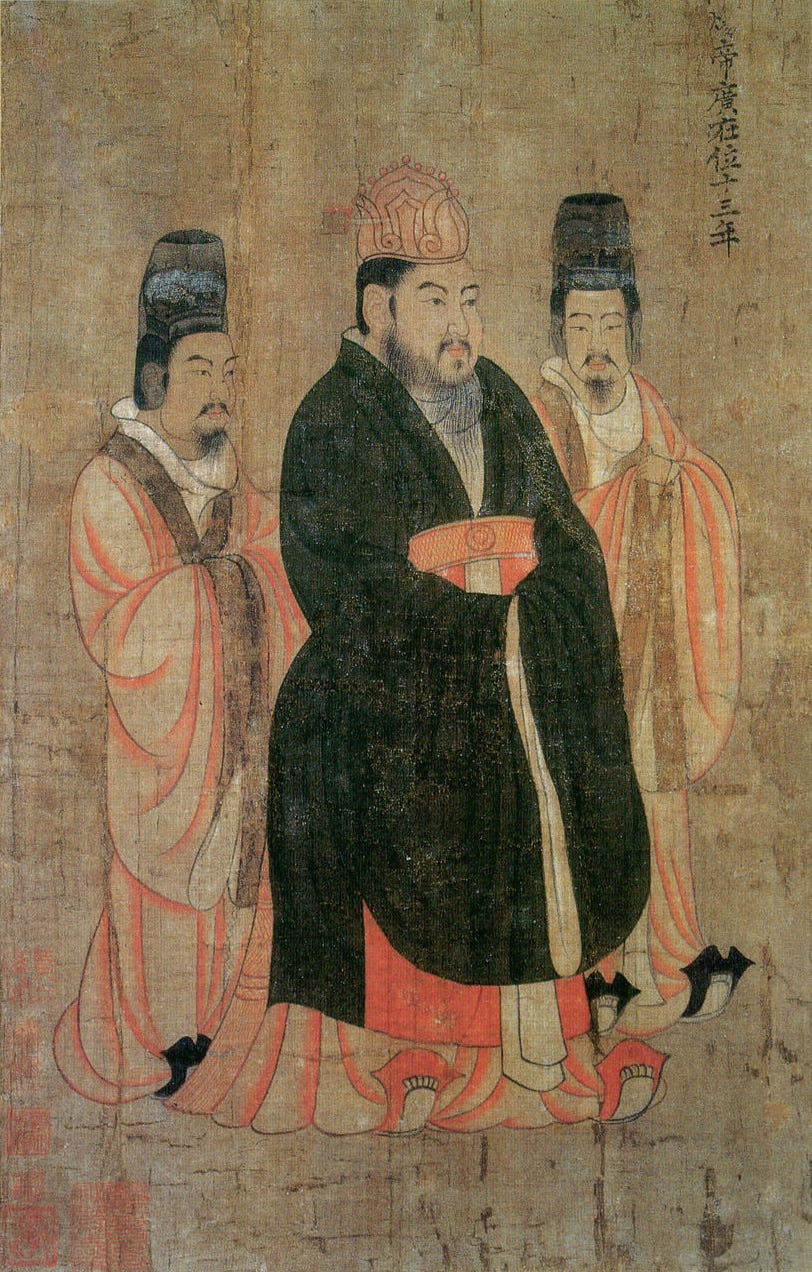
Emperor Yang of Sui, courtesy: Wikipedia
Later it was expanded by Empress Wu Zetian (only female emperor in Chinese history) in late 600s who used it to douche out her political enemies followed by Song Dynasty who pushed it to the max.
The need was this :
Before the exam system, if the Emperor needed to hire governors, tax collectors, or generals, he had to ask local noble families for recommendations. But ofc, the rich aristocrats only recommended their own sons or close relatives.
.
The problem was people running the empire were lazy, wealthy elites who inherited their jobs and didn’t know how to govern with families who became so locally powerful, wealthy and established that they could build private armies and overthrow the emperor (King).
King Yang needed a way to stop hereditary aristocracy.
He declared the initiation of Keju.
Keju bypassed nobles; was accidentally democratic and opened roles to empire’s citizens. At least on paper in his time.
It kind of made the entire population loyal to the emperor as he became the gatekeeper of status, wealth and social mobility.
.
Does the King look any similar to an employer?
.
The multiple tiers included –
Xiangshi (local exams) - Held every three years, this tested local scholars who had already passed entry-level exams. Those who passed became Juren or recommended men and qualified for next level.
Huishi (national exams) – This was conducted in the capital city. The qualifiers called Gongshi or tribute-worthy scholars finally sat for Dianshi.
Dianshi – This level was supervised by King himself at the Imperial Palace. King would sit on his throne and evaluate candidates sitting on the palace floor. The candidates would be ranked and assigned government posts. The winners were titled ‘Jinshi’ (like today’s doctorate) and immediately would get a life of power and wealth.
.
Candidates would gather in small rooms and were isolated for many days. They had to bring their own food, blankets and inks. They were even forced to urinate and sleep in the same room. If anyone died from stress or exhaustion, their bodies would be wrapped in straw mats and dumped over the outer wall, so others won’t be disturbed.
.
The exam wasn’t designed for Innovation but doctrinal alignment, mental endurance, subservience and loyalty. King wanted courtiers who won’t revolt, plot an attack and overthrow him, so he can stay in power.
.
This later reshaped the Chinese bureaucracy for over 1000 years.
Sui Dynasty was short-lived for around 37yrs and collapsed quickly. The ‘Keju’ still new, was barely used to hire few officials while noble aristocrats still held power through nepotism and bribery. The nobles continued this throughout Sui and Tang Dynasties until the Song Dynasty stripped them of this privilege.
The Tang dynasty already had fully institutionalized the system making it a reliable path to power, but it was during Song Dynasty - it greatly expanded, introduced anti-cheating methods like anonymous checking and stripped royals of privileges.
They increased number of people allowed to take the exams and degrees handed out to ‘Jinshi’. For the first time, government officials from clerks to prime ministers were selected via exams.
.
Later in Ming Dynasty ‘Baguwen’ or the rigid eight-legged essay was introduced. The essay had a pre-defined structure, down to the exact number of words per section. Test-takers would be given a topic and set of rhyming rules and had to compose poems on-the-spot to prove cultural refinement.
For Policy Essays or ‘Cewen’ they’d be given imaginary crisis cases like famine or border-raid and they had to detail how they’ll use state laws and confusion principles to solve it.
.
Any free male could take the exam excluding actors, musicians, prostitutes, convicts, and butchers, along with their children for three generations. Even though they could sit for exams the preparation including memorizing confusion texts, learning to write and articulate essays which needed access to expensive brushes, inks and tutors was only affordable by scholar-gentry middle-class.
Keju lasted for a millennium as it perfectly indoctrinated the smartest people in the empire into spending their entire youth memorizing state dogma and lured them into visions of a transformed wealthy life.
Later, In the 1800s, when the British Empire looked at China’s civil service and they were like: "Oh sick, this is so efficient way to manage our huge empire without nepotism."
They adopted it to create the British Civil Service as Britain also had nepotism problem and the Indian Civil Service in Colonial India to recruit British-subservient Indian-race government officials. The same system was again re-adopted during Industrial age by Industrialists to create the factory-model school exams we see today.
It was literally invented to make the test-taker “complaint, loyal and subservient”, plus keep him busy so he’d never have time to plot a revolt again the King.
It is the same model today.
.
The imperial income and the court minister position became corporate salary (pay check) and the middle-person post respectively.
It is an effective way to keep the mid forever at the mid with pay-check drug and slow promotions while the stakeholders’ profit from their equity and employee productivity.
Why employability skills didn’t really matter ‘until now’.
It’s mostly irrelevant for companies whether exams work well or not, if they filter well or not, because although they complaint about “unemployable graduates”; They don’t really care. The last thing they would want is capable candidates. The capable would threaten the positions of incapable parasites of a company, the parasitic middle-managers and the fake pretenders.
Companies have hierarchies.
.
The unskilled graduate gets hired at the lowest level.
Then is trained enough to do his and only his job well enough to profit the company.
The work would consume most of the time so there will be little time and energy to learn. A lot of time is spent on meetings, thinking what to do.
I have no personal job experience; I’ll be upfront about it.
But I have had conversations with people who do have jobs and are good at it.
For my generation, we can find them on discord or twitter.
Back to point - Surely the employees would learn a lot; work and learning was the point from very start. Anybody though, with basic literacy and some foundational knowledge can do that job. Graduation is nonsense.
For the past century, the 20th century companies got away with it as not much intelligence was needed anyways.
.
For most workers you needed the loyal, subservient, compliant nature to do their jobs while for higher-skill and higher-intelligence roles they could just go and hire from the tier-1 institutions which have bypass-gateways, resources and growth-minded ecosystems which allows individuals to outgrow despite the same system as anywhere else.
It’s the clubs, event experience, independent research work, alumni networks and the networking ripple effects, recommendations, VC funding, problem or curiosity-driven project building and innovative & encouraging ecosystems in these institutions which gives students the privileged-edge and likely how these institutions became providers of the required handful intelligent candidates.
.
But now it is changing and companies are panicking.
They are filled with unproductive revenue & resource consuming parasites.
.
What changed between that time and today?
few things mainly – advent of code, internet, robotics & automation.
No human is more compliant than a computerized machine.
Plus, a computer holds its quality standards and precision even under very harsh conditions if it’s engineered for it.
The more machines and AI become useful, the more processes get automated, the less valuable mid-humans will become. Which means now they need only the top 1-10% with high agency and intelligence :- the lean company ideology.
Surprise, surprise – the system was never designed to produce them.
So, there is a crisis.
And companies are leaking secrets – CEOs screaming => have “high agency”, “build real stuffs and launch”, “outcomes not hours” …
The same secrets that built them as leaders are now being promoted but which are totally incompatible with institutional model.
Agency means revolt, disobedience. Building and launching cannot be standardized. Outcome would only come if there is useful work to do – there isn’t.
So institutions as expected, take the CEO speeches, turn them into quotes, hallucinate a new drama with bumper sticker of innovation, and milk the cash-cow.
And obviously governments respond by creeping “cutting-edge industry demands” into curriculums which will operate inside an ancient machinery.
They think : Bravo – we’ll have superintelligent humans now.
But as it looks, it won’t work.
And the alternative is already in action.
Self-directed learning.
It is now officially being told in colleges openly that “academics and grades are not enough”, “you need industry skills”.
So, till now throughout my school and college academics I been learning WTF?
.
12-16 yrs of academia is in no way justifiable as “not-enough”.
Don’t even think of PhDs, their story is even more notorious. (coming soon)
Keep milking the cash cow till it dies!
Institutions showcase their placement rates.
That was supposed to be the point of education – “to get a job”, so ofc the outliers will be marketed.
Yes, they also showcase their rankers in PG exams if students go for higher studies in hopes of a higher-paying or quote-unquote “better career”.
Yes, they also showcase the select few which do business which unexpectedly work well.
Whether they contribute or not, positively or negatively, showing everything makes for inclusivity, bringing more sheep into shepherd’s yard so he can shave more wool.
It’s a win-win for institutions. They keep selling the idea of the end-goal. The student sheep keeps showing up every year, the money machine keeps printing.
This will likely continue for some more time until parents and students finally see through the trap and exit (already happening – rising dropouts & homeschooling), companies ditch campus placements and start their own training centers (already happening) and final shot would be when these 3 pieces of paper which have been holding it all together tear apart and lose value – marksheet, degree and a resume (also already happening).
But how is everyone blind?
It makes the most sense that “everyone” is blind.
The masses reinforce each other’s beliefs until everyone beliefs the same thing and they can’t see the alternatives anymore, while punishing them who question it or go against it. All to fit-in. That’s how most peace is maintained – not by open-minded disagreement and dialogues but mass-mimicry. The illusionary umbrella that “We are the same and belong to same group”.
There are alternative and new models of education and institutions innovating on them, but they are outliers statistically. And considered “too risky”. Some don’t provide degree, some provide for subjects nobody in masses knows about, New shiny thing is scary and makes up for “upskilling to not lose your job” not - going “all-in”, or they stay as fun hobbies for early-adopters.
Most of us pass through the same “traditional” one. Famously called factory-model.
In very rare cases, where parents understand the poison of traditional educational system, they may choose to not school their kids in traditional schools, in some very rare cases a student will NOT go through a traditional university. But for most of us that is not true.
And parents are NOT to be blamed. Nobody has any idea why they feel the disgust they feel. They know it intuitively, can vaguely articulate it, some even argue about it; but are too afraid to go against the herd.
The parents are afraid and we students are clueless, how would we possibly have clarity when we are figuring-out? So we lose the argument battle.
It looks like a dark world because you have closed your eyes.
.
Summary
Okay.
We started by asking whose goal is exam optimized for → “employers”
looked at how the exams got created and were useful until the last century → “king’s dominance, highly-intense physical factory jobs and low-intelligence corporate work while self-learners, exceptional ones who figure out on their own and tier-1 university graduates stayed supplies of the big brains”
how it’s crumbling with machines and AI
how institutions are milking the cash-cow for the last time before it dies
how the entire population is living in a hallucination
how students currently lose battle against society’s norms and how the transitional RESET is taking us into a new future - homeschooling, dropouts, companies’ own training centers, self-learning and even independent & free high-agency life.
We are not even close to DONE
It was already heavy and I couldn’t cover the specifics of how exams are designed, conducted, the beliefs behind them, what have worked and not worked among them and what could be the ultimate alternative.
We asked about who’s goal do exams optimize for!
It isn’t a student’s, but what does a student dream of and what alternative models exist which can enable us to attain those goals?
Coming Next.

Join Omkar on Peerlist!
Join amazing folks like Omkar and thousands of other builders on Peerlist.
0
2
1