

I came out of retirement to build a mobile app
Retired at the right time. Until my wife showed me what she'd been building

I came out of retirement to build a mobile app
In 2023 I retired early from a corporate career in medical diagnostics. Thirty years. Four AIM-listed companies. An IPO, a $55 million acquisition, fifteen completed corporate transactions across medical devices and life sciences. I had been successful enough, and fortunate enough, to do it early.
I thought I was done.
Then my wife showed me her data.
The moment that changed it
Dagmara is a Digital AI Trichology Expert, a practitioner who integrates AI-augmented tools directly into clinical scalp assessment. She runs a trichology salon in Płock, Poland. Over 18 months she had built something unusual, a systematic clinical record for every client who walked through the door. Six hundred people. A medical-grade trichoscope. Structured tracking of scalp condition, hair density, inflammation, sebum balance. Over time. By hand, in spreadsheets.
I looked at what she had built and I thought, this data should not live in a salon. It should follow the person.
That was the moment I decided retirement is not really my scene.
The gap nobody talks about
Here is the problem with hair health as a clinical category. The data that explains why your hair is falling out exists. Blood ferritin, B12, Vitamin D, SHBG. Your GP has probably run these tests at some point. They look at the results against a population reference range and tell you everything is normal.
But normal for a population is not necessarily normal for your hair. Ferritin below 70 ng/mL can disrupt the hair cycle in some people, even when it sits within standard laboratory ranges. The clinical literature knows this. The average eight-minute GP appointment does not have room for it.
And the scalp image from your trichoscopy appointment, if you have ever had one, lives in a clinic on a hard drive or a printed report you have since lost.
None of it connects.
What Dagmara had built manually in a Polish salon was a connected picture. Scalp condition over time, cross-referenced with bloodwork, tracking progress (or the lack of it) across months. We had spent years before this working together at Labskin and then Skin Trust Club, building AI diagnostic models validated on 30,000-plus real-world microbiome genomic samples. The technical architecture for doing this kind of work properly was not new territory for us. What was new was building it as a mobile product that any person, anywhere, could use on their own.
What building this actually looked like
I need to be honest about something. I had led the technical strategy for medical AI projects for a decade, long before AI was a "thing". I had not written production mobile code. I had not shipped a consumer app. There is a difference between having built things and building the thing yourself.
So I learned.
The stack we chose was practical rather than clever. The AI analysis layer runs on a backend I architected. The long-term progressing health track record, what we call the Living Profile, sits on the user's device, not on our servers. That was a deliberate choice. Blood test values are personal health data under GDPR Article 9. Raw biomarker values never leave the device. Only banded metadata (think "ferritin borderline" rather than "ferritin 35 ng/mL") synchronises for personalisation.
The bloodwork interpretation layer is a deterministic rules engine. Not a model. Not inference. Either a ferritin threshold is met or it is not. Either a B12 result warrants a flag or it does not. We made that call after a long internal argument. The argument was about where the boundary sits between "AI that analyses your scalp images" and "AI that guesses about your blood results." We wanted to stay clearly on the right side of that line.
We got the pricing model wrong the first time too. The initial instinct was a subscription. We changed it. The app's value builds over time. The Living Profile gets more useful, for the user, the longer you add to it. The more it is used, the more valuable the data becomes as a scaling life progression of the user's hair and scalp condition. A subscription puts the cost burden on month one, before the user has seen any of that building value. It felt wrong. We went transactional instead. The Living Profile, initial setup, and all bloodwork interpretation are permanently free. Deeper analysis and clinical export reports use credits you buy when you want them. You pay when you choose to go deeper, not before.
What surprised me
Actually, a few things did.
Building with your spouse is stranger than you expect. Dagmara and I had worked together before, but not like this (I was the CEO and I was not working with Dagmara, only . Every clinical decision I thought was a technical decision turned out to also be a brand decision. Every product decision she thought was straightforward turned out to have a regulatory dimension.
We argued about a single word for three days. The clinically accurate label for a blood B12 result below threshold is "deficient." It is also alarming in a way that makes people close the app and not come back. We use "needs attention" now, with an explanation and a source link. Accurate, not alarming, and something you can act on. She was right.
The clinical validation we had from the salon — 600 clients, 18 months, real trichoscope data — turned out to matter in ways I had not fully anticipated. Not just for training the AI model. For every product decision. When you can test an assumption against real records from real people with real hair loss, the conversation changes. You stop arguing about what users might want and start looking at what the data actually shows.
And I found, unexpectedly, that building something you believe in at this point in a career is different from building something you believe in at 30. At 30 you are trying to prove something. At this point I am trying to get it right. That turns out to be a better way to work.
Where we are
Órga Hair is live on Android. iOS is shortly behind.
The app is free to download. The Living Profile builds from day one and does not require a clinic visit, a trichologist, or any specialist equipment beyond the camera you already have. The bloodwork layer shipped in version 1.1.0. You input your existing blood test results. The app reads them in the context of hair biology, shows you where each value sits relative to clinical literature thresholds, and weaves the interpretation into your AI analysis.
It is not a diagnostic tool. It is a longitudinal personal health record that gets more accurate over time and gives you something to take into a clinical conversation rather than walking in with nothing.
That is what Dagmara had in a spreadsheet in Płock. We turned it into something you can carry.
If you have questions about the architecture, the clinical compliance decisions, or the freemium model thinking, I am happy to talk through any of it in the comments.
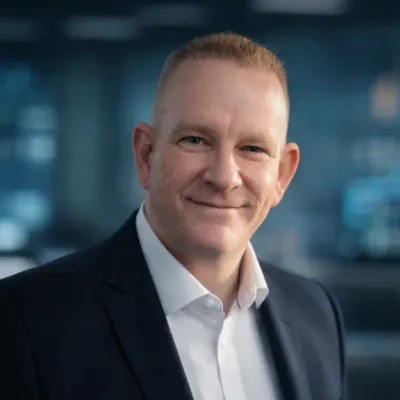
Gerry Brandon is co-founder and technology partner of Órga Hair. orgahair.com
Join Gerard on Peerlist!
Join amazing folks like Gerard and thousands of other builders on Peerlist.
0
0
0