

Are Native Apps Still Worth It in the Era of Cross-Platform Frameworks?
Understanding architecture trade-offs between native and cross-platform development in 2026
Mobile tech is still changing how businesses worldwide work. Because people’s use of phones is what their buying habits are based on now, businesses put a lot of money into things like digital products.
According to a Forbes Advisor report published in 2025, 62.73 percent of global website traffic comes from mobile devices.
This data confirms one clear reality. Mobile is not optional. It drives engagement and revenue.
However, things like Flutter and React Native, which work on more than one type of phone, offer quicker production and cheaper rates. A lot of people who start companies are beginning to wonder if apps made specifically for one kind of phone are still worth the expense.
When businesses approach a Mobile app development company, they often ask one question first. Should we build native or cross platform?
The answer requires technical depth, not assumptions.
Understanding Native and Cross Platform Frameworks
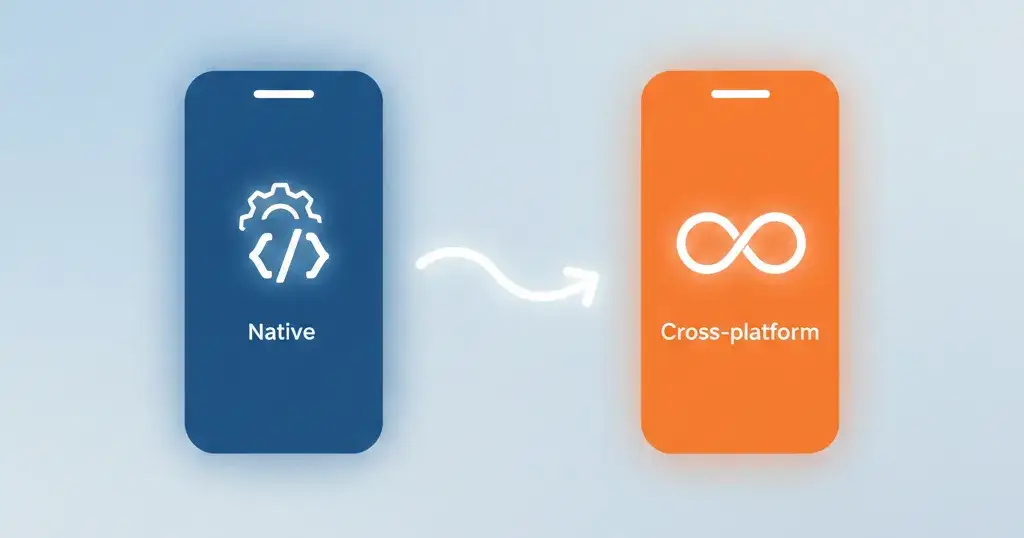
Native apps use platform specific languages. Android uses Kotlin or Java. iOS uses Swift. Developers build separate codebases.
Cross platform frameworks allow one shared codebase across platforms.
Reducing the first time it takes to get something going is important. Cross-platform development looks good for efficiency at first. Still, choices ought to be made based on how well things will do, and how easily they can grow, in the future.
Mobile Experience Is Now the Primary Experience
According to a Forbes Business Development Council article published in 2026, mobile is no longer just a channel. It has become the primary customer experience layer for brands.
This insight changes the debate completely. If mobile defines brand experience, then performance and responsiveness become critical. Native apps integrate deeply with device hardware. They respond faster. They render smoother animations. They manage memory more efficiently.
When user experience drives loyalty, performance cannot suffer.
Performance and Speed Comparison
Speed influences retention. Users uninstall slow apps quickly. Native apps run directly on operating systems. They access device resources without abstraction layers.
Cross platform frameworks rely on intermediate layers. These layers translate code into native instructions.
For most content driven apps, performance differences may appear minimal.
However, with games, financial technology, monitoring your health, and video apps, fractions of a second are significant. A mobile app development company which is good at what it does will often suggest building directly for the specific platform, where a lot of demand on the system is expected. Keeping performance steady safeguards, the good name of the company.
User Engagement and Feature Depth
According to an Entrepreneur article discussing mobile engagement trends, research shows that two thirds of Smartphone users prefer apps that offer rich features and smooth interaction.
How much functionality an app needs dictates how well it works with what the device can do. Apps created for a specific operating system, ‘native’ apps, can use sophisticated movements, fingerprint or face recognition. They also use exact GPS, Bluetooth, and the camera.
Cross platform frameworks support many plug-ins. But complex hardware integrations often require writing native modules anyway.
User expectations increase every year. If an app feels limited, users move to competitors.
Development Cost and Speed
Cross platform development reduces initial build time. One codebase supports multiple platforms. This lowers short term budget pressure.
Start-ups testing a concept may benefit from this approach.
However, businesses must consider total lifecycle cost. If future updates demand heavy customization, hybrid layers may require additional optimization.
Inc. consistently highlights that companies evaluating long term scalability make more sustainable technology decisions.
Short term savings should not override long term stability.
Security and Compliance
Security matters more than ever. Data breaches damage trust permanently.
Native apps allow tighter control over encryption and permission management. Financial institutions and healthcare providers often prefer native architecture for this reason.
Forbes frequently reports that cyber security remains a top strategic priority for digital businesses.
Though frameworks that work on more than one operating system give good security, a truly native build lets developers have greater control at the core of the system, which is needed when rules demand very careful handling of data.
Scalability and Architecture Stability
Scalability defines long term success. Apps must handle growth without performance drop.
Native apps integrate smoothly with cloud services. They aid good memory use and quick work happening in the background. Frameworks which work on a number of platforms get bigger easily for lots of different jobs.
But, getting the best speed when things are really big might ask for more detailed work from engineers. Businesses intending to grow quickly usually ask a mobile app development company to create a design for systems expecting a lot of users right away. Strong foundations prevent future rebuilds.
When Native Apps Deliver Strong Value
High performance applications
Advanced hardware integration
Large user bases
Strong brand positioning
Strict compliance requirements
These scenarios demand precision and stability.
Native development remains highly relevant in such cases.
When Cross Platform Makes Strategic Sense
Cross platform works well for:
MVP launches
Budget sensitive start-ups
Content based platforms
Internal enterprise tools
This approach supports faster iteration cycles.
However, product vision must guide the decision. Technology must support business strategy, not control it.
Talent and Engineering Depth
Framework choice matters less than engineering quality.
Developing for specific operating system needs knowledge of that operating system. Developing for a number of platforms needs understanding of how they share designs and how to make them work well.
Entrepreneur repeatedly emphasizes that skilled teams drive product innovation and competitive advantage.
Execution quality defines success more than framework selection.
In 2026, the talent gap becomes more visible. Many developers can build interfaces. Fewer engineers understand memory management, thread handling, and system level optimization. Native development demands deeper platform knowledge. Engineers must understand SDK updates, OS behaviour changes, and device fragmentation.
Cross platform also demands expertise. Developers must manage bridge performance, plug-in dependencies, and framework updates. Poor architecture leads to lag and technical debt.
Strong engineering teams write modular code. They document systems clearly. They follow version control discipline. They plan refactoring cycles.
Businesses that invest in engineering depth reduce long term rebuild cost. Skill remains the strongest competitive advantage in mobile development.
The 2026 Reality
Native apps continue to dominate categories, where performance and reliability matter most. Cross platform frameworks continue to grow in adoption. The market does not show replacement.
It proves that things can work together. Firms which put effort into careful consideration come to superior conclusions.
Mobile usage continues to expand. Forbes confirms that mobile traffic leads global digital interaction. This growth ensures that app performance and experience remain central priorities.
By 2026, what people want from apps is going to be even more. People will want apps to load quickly, use fingerprint or face sign-in, show things as they happen, and have really good movement in their design. Also, people will judge apps, a money app, for instance by how well they work compared to an app like TikTok. What is expected will not be about the kind of app any more.
Businesses will put a lot more thought into digital things they plan to keep for a long time. They will see mobile apps as something really important to the way things work, not just extra things they do.
Cross platform frameworks improve each year. Native platforms also evolve rapidly. The decision now depends less on trend and more on business maturity, scale goals, and performance benchmarks.
Final Evaluation
Are native apps still worth it in 2026?
Yes, when performance, security, and long-term scalability define your product goals.
Cross platform frameworks offer efficiency and speed. Native development offers precision and depth.
The correct answer depends on business model, growth expectations, and user experience standards. Companies that partner with experienced technical teams and plan for long term architecture stability reduce risk significantly. In a mobile first world, quality matters more than convenience. Native apps remain powerful. Cross platform frameworks remain valuable. Success depends on strategic alignment, not trends.
The smartest companies do not ask which framework is popular. People want to know what design will work for five years of expansion. They check predicted user numbers, what the plan is for new things to be added, and what the law requires. They work out how much it will cost to keep it going throughout the time the product is sold.
A thoughtful decision today prevents costly migration tomorrow. Native development still delivers strong value when performance and reliability cannot fail. Cross platform remains efficient when speed to market drives strategy.
The real advantage comes from clarity, engineering strength, and long-term vision.

Join Asim on Peerlist!
Join amazing folks like Asim and thousands of other builders on Peerlist.
0
2
0