

What Makes Users Return to a Listing Website Repeatedly?
Understanding repeat user behavior in modern listing platforms
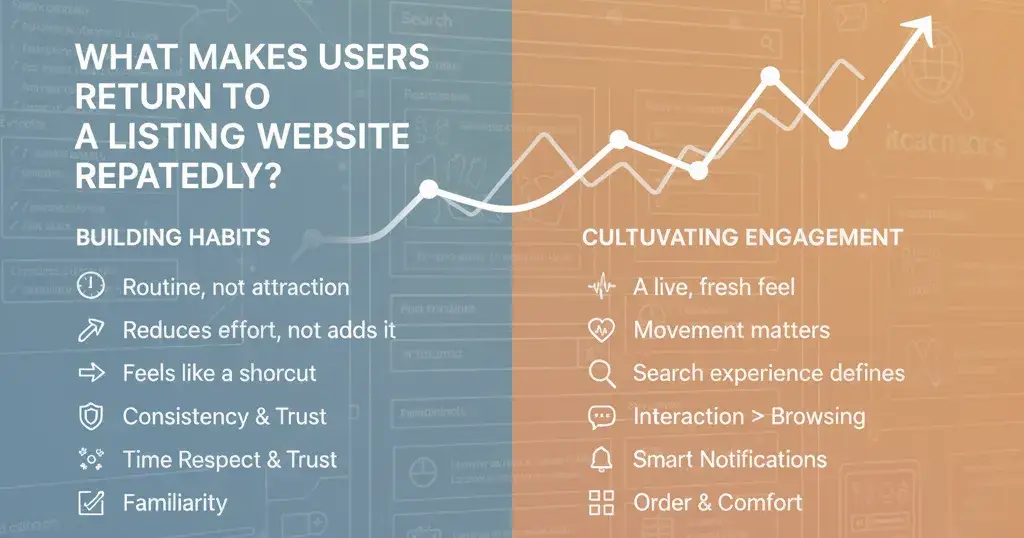
Almost every entrepreneur who builds a listing or classified website goes through the same emotional curve. The idea feels strong. The market looks obvious. People are already buying and selling these things somewhere else, so why not build a better platform? The launch happens, traffic comes in, a few listings get posted, and for a brief moment it feels like things are moving.
Then time passes.
Analytics still show visits, but fewer returning users. Listings stay unchanged for days, sometimes weeks. Engagement slows down, not dramatically, but enough to make you uneasy. Nothing is technically broken, yet something is missing. Most founders describe this phase the same way: “People come, but they don’t come back.”
That gap — between first visit and repeat habit — is where most listing websites either evolve or slowly fade away.
Return visits are about routine, not attraction
Users don’t return to listing websites because the platform impressed them once. Attraction works only on first contact. What brings users back is routine. Platforms that succeed long term become a default place people check, almost without thinking, when a need arises.
This habit forms quietly. Users stop comparing. They don’t actively decide to return — they simply do. And that only happens when a platform consistently reduces effort instead of adding it.
From the user’s perspective, a listing website should feel like a shortcut, not a task. The moment checking another platform feels easier, the habit breaks.
A website that feels alive invites curiosity
One of the most underestimated factors behind repeat visits is freshness. Not in a cosmetic sense, but in a behavioral one. People intuitively sense whether a platform is active.
A site where listings regularly change, expire, or get updated creates a subtle reason to come back. Users expect something new to discover. On the other hand, when everything looks identical across multiple visits, the platform quickly feels abandoned — even if it technically isn’t.
This is why some smaller platforms outperform larger ones in engagement. Movement matters more than scale. Users return because they believe their next visit will show something different from the last one.
Friction doesn’t cause complaints — it causes silence
Founders often wait for feedback to identify problems. The issue is that most users never complain. They simply leave.
When searching feels confusing, when pages load slowly, or when simple actions require too much effort, users tolerate it once and then disappear. They remember the difficulty, not the intention.
Ease of use is invisible when done right. Users don’t praise it. They just keep coming back. The moment a platform makes users think too much, it loses its place in their routine.
Search experience becomes the real identity of the platform
Long after users forget colors and layouts, they remember how hard — or easy — it was to find what they needed.
Search experience defines trust. When filters match real-world thinking, users feel understood. When results feel irrelevant or poorly sorted, confidence erodes.
Over time, users mentally categorize platforms into two groups: easy to search and not worth the effort. That categorization determines whether the site becomes habitual or disposable.
Trust forms from consistency, not claims
Trust in a listing website doesn’t come from badges, taglines, or policies. It comes from repeated confirmation that the platform behaves as expected.
When listings are accurate, descriptions are clear, and patterns remain consistent across visits, users relax. They feel safe investing attention and time.
The moment trust weakens — through outdated listings, misleading details, or unpredictability — users become cautious. And cautious users rarely return frequently.
Trust, once lost, is almost impossible to rebuild in a listing environment.
Time respect is the strongest retention signal
Every visit to a listing website represents an invisible investment from the user. They invest attention, comparison, and emotional effort. When that investment produces value, users return. When it produces disappointment, they don’t.
This is why outdated or misleading listings are so damaging. They don’t just create inconvenience — they break the contract between the platform and the user.
Platforms that quietly maintain accuracy build confidence over time. Users may not consciously notice the effort, but they feel the result. And that feeling becomes preference.
Interaction transforms browsing into commitment
There is a psychological difference between looking and participating.
The moment a user saves a listing, sends a message, or asks a question, their relationship with the platform shifts. It’s no longer passive. There is now something pending.
These small actions create emotional attachment. Users return because they feel involved, not because they were pushed. Platforms that encourage interaction naturally create reasons to come back.
Without interaction, even interested users drift away easily.
Notifications should support intent, not distract from it
Notifications are often misused. When they become noisy or irrelevant, users disengage entirely.
Effective reminders feel timely and personal. They reconnect users with something they already cared about. Poorly designed notifications feel like interruptions — and train users to ignore the platform.
Respect for attention is critical. Users return to platforms that know when to speak and when to stay silent.
Order creates comfort
Users are remarkably sensitive to disorder. Duplicate listings, spam, and low-quality content create unease even if users can’t articulate why.
A clean environment signals seriousness. It communicates that the platform is cared for and that users won’t waste time sorting through noise. This sense of control builds comfort, and comfort builds loyalty.
People return to places where they feel safe and oriented.
Familiarity beats constant change
Innovation often gets praised, but familiarity keeps users loyal.
Platforms that change too often — layouts, workflows, navigation — force users to relearn behavior. That effort breaks habit. Thoughtful platforms evolve quietly, without disrupting what users already understand.
Consistency lowers mental effort. Lower effort increases return frequency.
Platforms must grow with user intent
User needs are not static. Someone may browse casually today and search urgently months later. Platforms that remember preferences, past behavior, or saved interests feel adaptive rather than invasive.
This subtle personalization reduces friction and keeps the platform relevant over time. Users feel understood without feeling watched.
That balance matters more than most founders realize.
Where the foundation quietly matters
At some point, serious founders realize that user experience is not shaped by design alone, but by the reliability of the system underneath. A thoughtfully built platform — often backed by a solid classified script — supports accuracy, automation, and consistency without being visible to the user.
When the foundation works, users never think about it. When it doesn’t, users feel every crack.
This realization usually comes after the first retention struggle, not before.
Why many listing websites fail without obvious reasons
Most listing platforms don’t shut down dramatically. They simply lose momentum.
Traffic might still arrive, but users don’t return often enough. Listings stagnate. Engagement fades. The platform exists, but it doesn’t live.
The cause is rarely marketing. It’s almost always experience. Platforms built for launch excitement often underestimate long-term behavior. Retention requires patience and empathy, not just features.
What entrepreneurs should really focus on
For entrepreneurs planning to build a listing or classified website, the challenge isn’t visibility. It’s trust and repetition.
Users return when a platform consistently respects their time, reduces effort, and delivers clarity. When that happens, growth becomes organic instead of forced.
A platform that earns return visits becomes more than a website. It becomes a habit.
And habits are the strongest foundation any marketplace can have.
Join Asim on Peerlist!
Join amazing folks like Asim and thousands of other builders on Peerlist.
0
2
0