

Face Recognition Photo Sharing: What Photographers Are Getting Wrong About Photo Delivery
Face recognition photo sharing is changing how event photos reach guests. Here is what photographers need to know before their next big event shoot.
Introduction
So you just shot a 300 person wedding. 4,000 photos edited, gallery uploaded, link shared on WhatsApp group. Job done, right?
Not quite. Two weeks later the bride calls and says only 30-40 people actually downloaded anything. Rest of the guests? They gave up scrolling after the first 200 photos.
This is the exact problem that face recognition photo sharing is solving. And honestly, photographer who understand this early are the ones getting repeat bookings from same clients.
The Real Gap Nobody Talks About
Event photography has two jobs. First is the shooting part, which most photographers handle very well. Second is the delivery part, and this is where things fall apart on most events.
Think about it from guest side. Auntie Sunita attended the reception but she does not want to scroll through 4,000 photos to find the 12 pictures where she is actually in the frame. She will try for 5 minutes, get frustrated, close the link, and never come back.
Now the thing is, photographer did everything right. Photos are beautiful, editing is proper, gallery is live. But the guest experience failed. And guess who gets blamed? The photographer.
Face recognition photo sharing fixes this at the root itself.
How Face Recognition Actually Works at Events
The concept is not that complicated once you see it working.
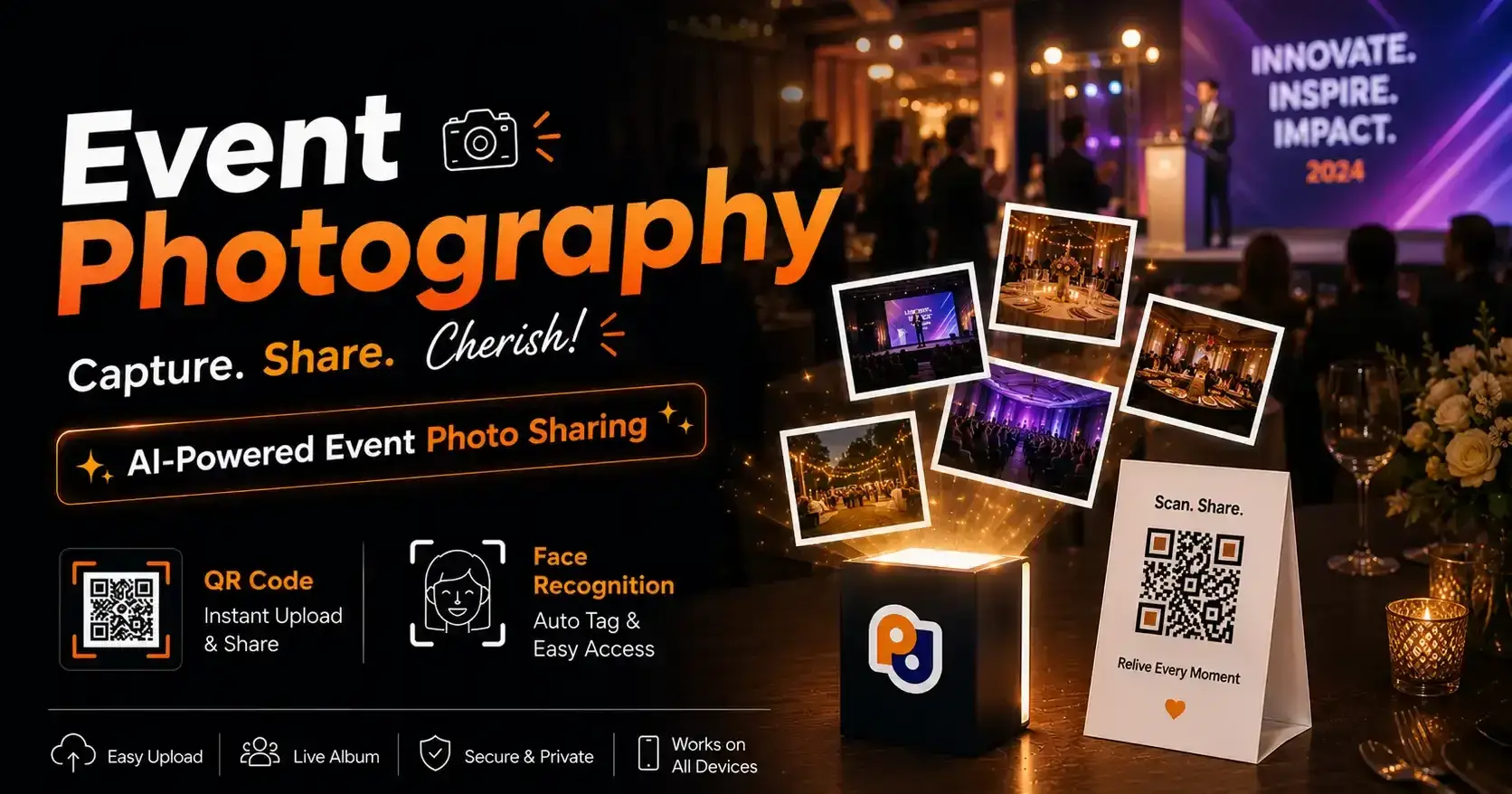
Photographer uploads all event photos to a platform that supports AI face matching. The system scans every photo automatically and builds what is basically a face map of everyone who appeared across the entire gallery.
Guest receives a QR code, scan it on phone, takes one selfie, and instantly gets a private collection showing only the photos where their face appears. No account signup required. No app to download. Works on browser itself.
What happens is the AI does in seconds what would take a human assistant 6-8 hours of manual tagging work. And it is more accurate on most platforms because the algorithm does not get tired after photo number 500.
Why Event Size Changes Everything
For a small family shoot of 20-25 people, traditional gallery sharing works fine. Everyone can scroll through 200 photos without losing patience.
But scale that up to a corporate conference with 500 attendees, or a big fat Indian wedding with 700 guests across 4-5 functions, and the math becomes different. Even if only 30% of guests want their photos, that is 200 individual people each needing to find themselves in thousands of images.
Without face recognition photo sharing, most of those 200 people gives up. With it, all 200 people find their photos in under a minute.
Platforms like PicsDrop's Event Face Recognition are built specifically for this scale, handling large guest counts without the delivery becoming a mess.
FAQ
What is face recognition photo sharing and how does it help at events?
Face recognition photo sharing is an AI-based photo delivery method where guests take a selfie and the platform automatically finds all event photos where their face appears. At large events with hundreds of guests and thousands of photos, it removes the need for manual scrolling and ensures every guest can quickly find their own photos without going through irrelevant images of strangers.
Do guests need to download an app or create an account to use face recognition photo sharing?
On most platforms including PicsDrop, guests does not need to download any app or create an account. The whole process runs on browser itself. Guest scans a QR code, takes a selfie, and their personalized photo gallery opens immediately. It is designed to work with minimum friction so even guests who are not much technical can use it without help.
Is face recognition safe to use for private events like weddings?
Yes, when using a platform with proper privacy practices. Facial data is generally used only for the matching process and not stored permanently. Guests can access only photos where they themselves appear, which adds another layer of privacy. Always check the platform's data policy before using it for sensitive private events like weddings or corporate functions.
Can face recognition photo sharing work for large events with 500 or more guests?
Absolutely. This is actually where face recognition photo sharing performs best. Manual photo distribution completely breaks down beyond 100-150 guests. AI-based matching handles large volumes without any slowdown. The system scans all uploaded photos once and makes them available for all registered guests simultaneously, which means 500 guests can all find their photos at the same time without any bottleneck.
How accurate is the face matching in these platforms?
Accuracy varies by platform but leading systems perform well even in crowded group shots, low-light conditions, and photos where face is partially visible or at an angle. Most platforms handles edge cases better than people expect, including photos with sunglasses or from the side.
What types of events benefit most from face recognition photo sharing?
Weddings, corporate conferences, school and college events, sports days, marathons, private parties, and galas all benefit from face recognition photo sharing. Any event where large number of guests want access to their own photos and manual browsing is not practical is a good fit for this technology.
Suggested Internal Link: Read more about Event Face Recognition feature on PicsDrop

Join JEEL on Peerlist!
Join amazing folks like JEEL and thousands of other builders on Peerlist.
0
2
0