

Best URL Shortener in 2026: A Complete Guide (Free, Fast, and Business Options)
Best URL Shortener in 2026: A Complete Guide (Free, Fast, and Business Options)
Shortening a link seems like a small thing until you actually need one that works well. You want it to load fast, look clean, protect sensitive content when needed, and give you real data on who clicked it. This guide breaks down what to look for in a URL shortener and takes a detailed look at Xaply (xaply.in), a fast, edge native shortener built for individuals, creators, and businesses alike.
Best URL Shortener
There is no single "best" URL shortener for everyone. The right one depends on what you are optimizing for: raw speed, a generous free plan, team features, or all three at once. That said, the shorteners worth considering in 2026 share a few traits: reliable uptime, redirects that do not lag, real analytics, and pricing that does not punish you for using the product.
Xaply stands out here because it is built specifically around the redirect experience. Instead of treating analytics logging and the redirect as one blocking step, Xaply separates them, so the person clicking your link is sent to the destination immediately while the click data is recorded in the background. That single architectural choice is the difference between a shortener that feels instant and one that just feels "fine."
Best Free URL Shortener
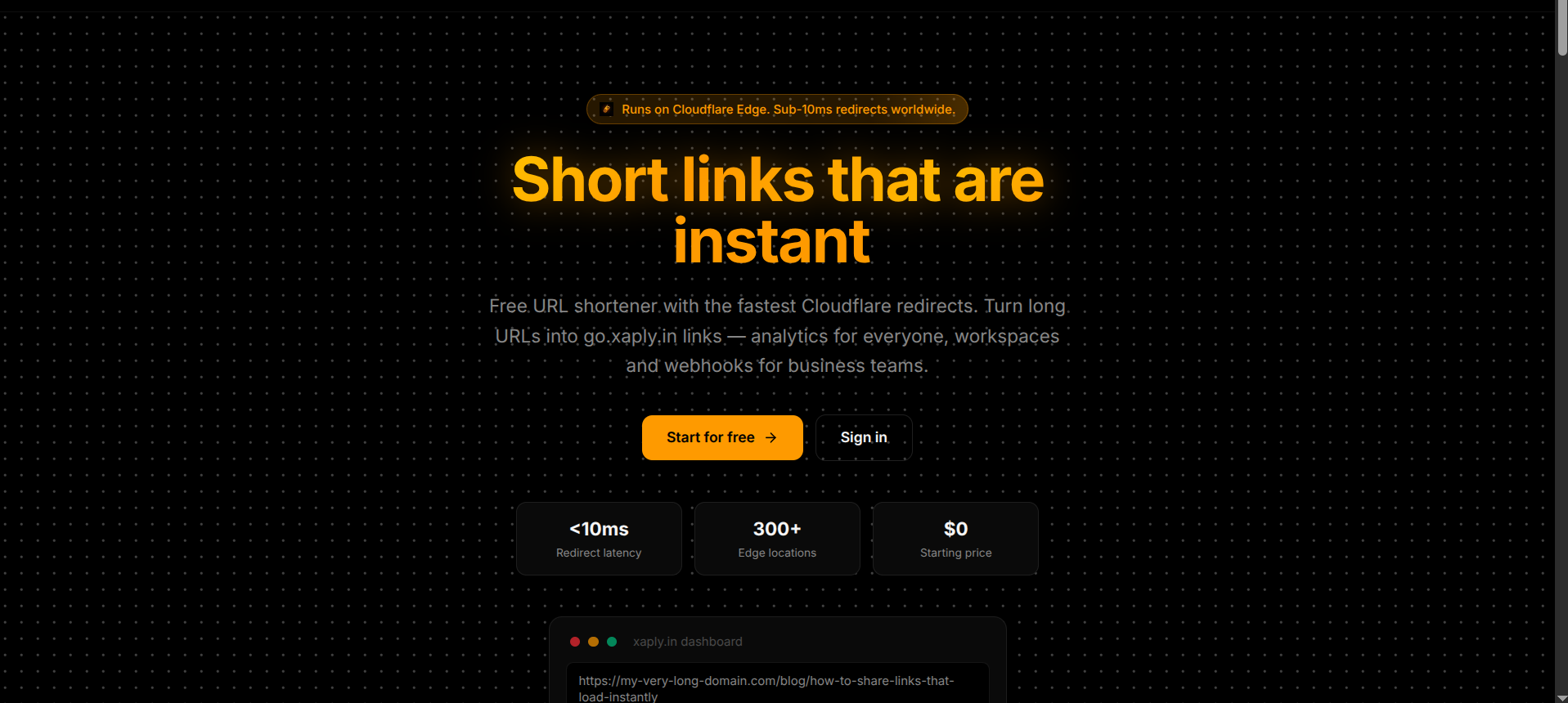
A lot of "free" URL shorteners are really just free trials with extra steps: tiny link limits, no analytics, or features locked behind a paywall from day one. Xaply's free plan is built to actually be usable:
50 active links
5,000 tracked clicks per month
7 days of click analytics history
Custom or auto generated short slugs
QR codes, password protection, and link expiry
No credit card is required to start. For students, personal projects, portfolios, and small creators, this is enough to run real links without hitting a wall in the first week.
Free URL Shortener
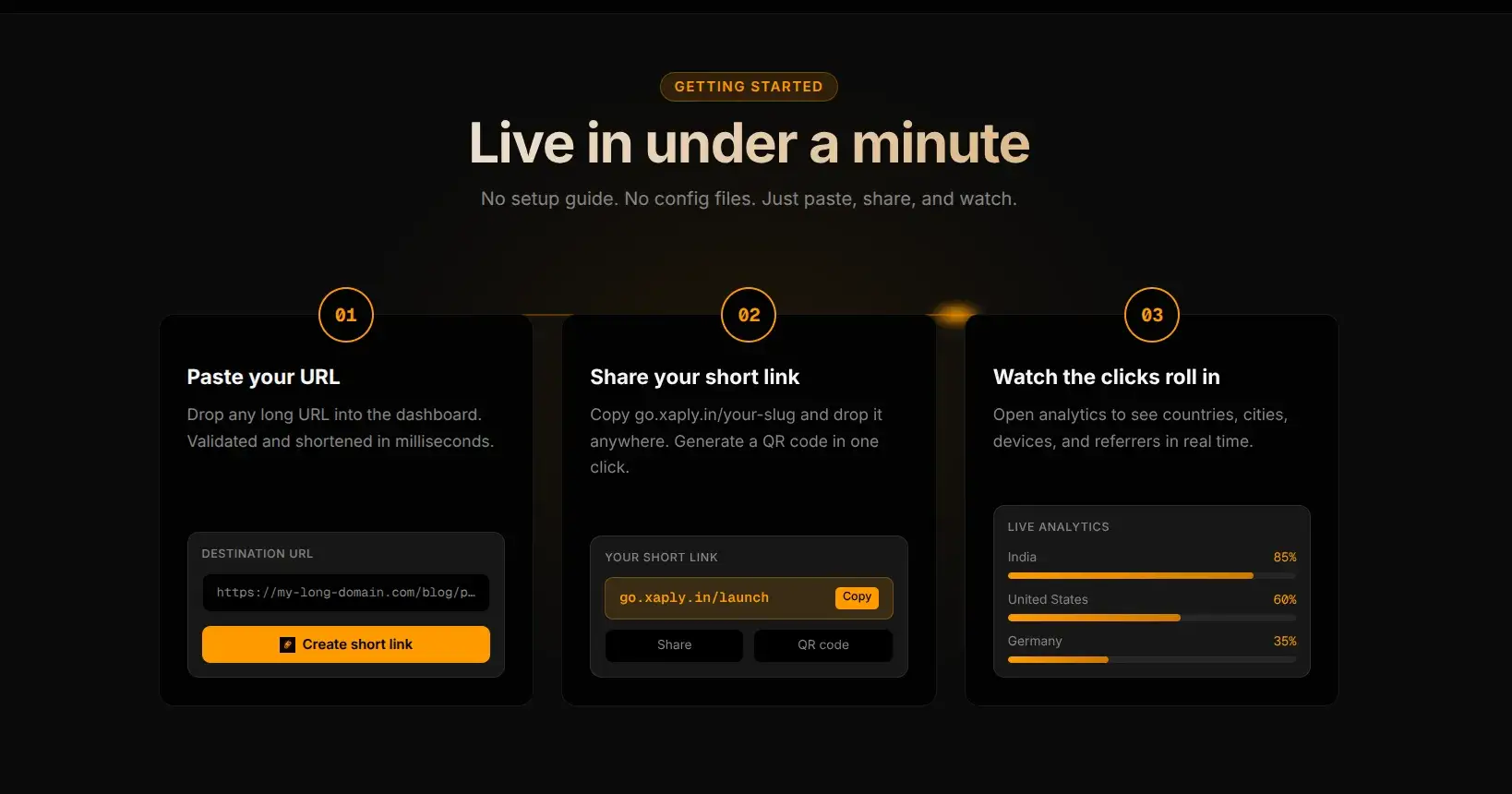
If you just need to shorten a link right now without signing up for anything complicated, Xaply's flow is simple: paste your long URL at xaply.in, get a short, clean link back through go.xaply.in, and share it anywhere: social media, email, resumes, messages, or print materials via a generated QR code.
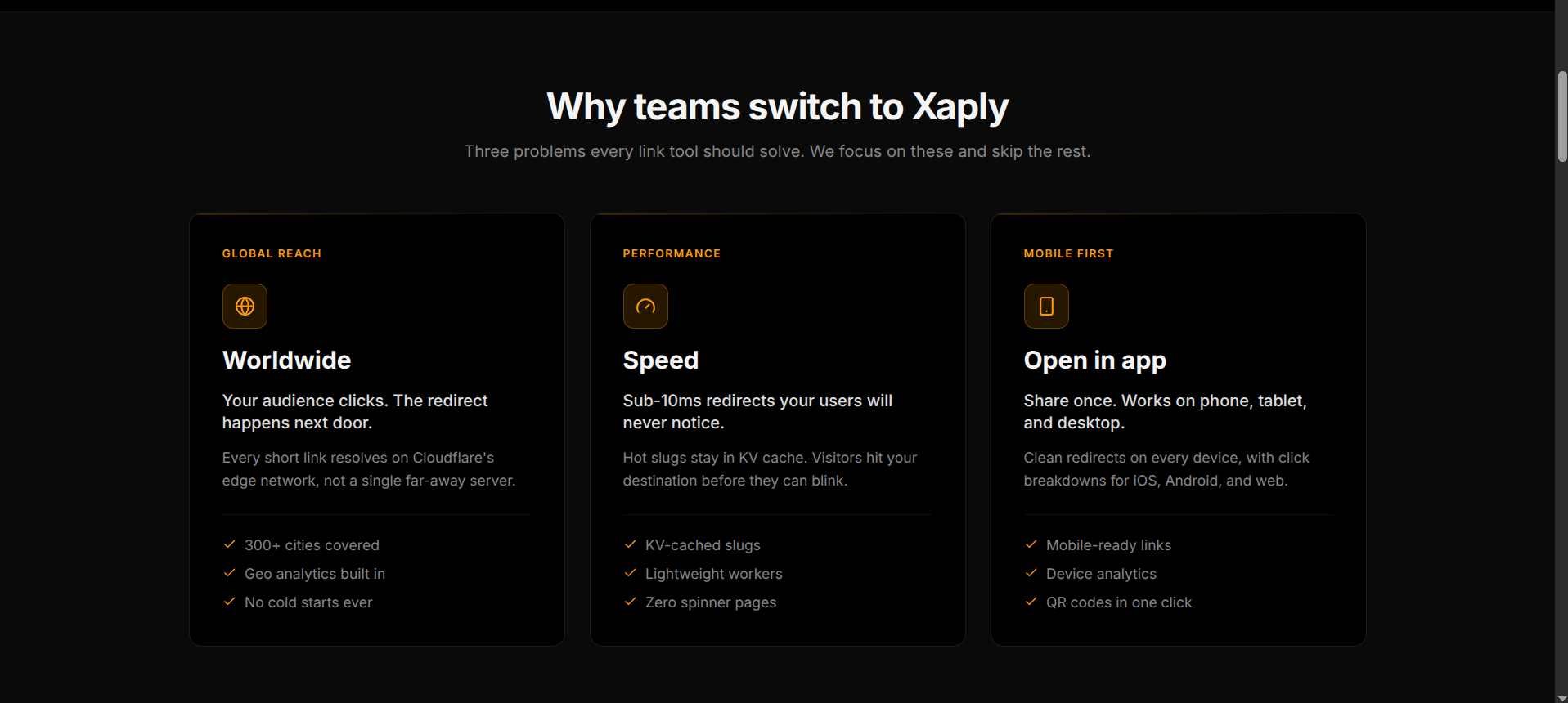
Because Xaply runs on Cloudflare's global edge network, the free plan is not a slower, second class version of the paid tiers. Every plan gets the same fast redirect infrastructure. The difference between free and paid is limits and features, not speed.
URL Shortener for Businesses
Businesses need more than a shorter link. They need control over who can see it, a way to measure performance, and a system that works across a team, not just one person's account.
Xaply's Business plan, priced at $39 per month, is built around exactly that:
Unlimited active links
1,000,000 tracked visits per month, per workspace
3 years of click history in the dashboard
Up to 30 owned workspaces, each with its own links, analytics, and monthly visit cap
Up to 100 total workspaces (owned plus invited)
Team access for up to 50 seats, including the owner
Three clear roles: owner (billing), admin (invites and webhooks), and member (link management)
Signed webhooks for link.created, link.updated, link.deleted, and link.clicked events, so you can plug link activity directly into your own systems
Priority support with a one business day response target
This kind of structure matters for marketing teams running multiple campaigns, agencies managing links for several clients, or companies that need to separate link data by department or product line. Each workspace stays isolated, so one team's traffic and analytics never mix with another's.
Premium URL Shortener
"Premium" usually means fewer limits and more control, and that is exactly where Xaply's Pro plan fits. Pro gives individual power users and creators:
500 active links
50,000 tracked clicks per month
A full year of click analytics history
A full year of history matters if you are running recurring campaigns and want to compare performance across months or seasons instead of losing that data after a week. Combined with password protected links, expiry dates, and QR codes, Pro is built for anyone who has outgrown the free plan but does not need full team infrastructure yet.
Fast URL Shortener
Speed is where most URL shorteners quietly cut corners. The typical approach logs the click to a database first, then redirects the visitor. That ordering is simple to build, but it means every click pays a small tax in latency for a tracking decision the visitor has no say in.
Xaply flips that order. Here is what actually happens when someone clicks a Xaply link:
The short code is resolved from a fast, edge cached lookup, so most requests never touch the primary database at all.
The redirect fires immediately, sending the visitor straight to the destination URL.
The click event, including device, location, referrer, and timestamp, is recorded afterward through a background queue, separate from the redirect path entirely.
The result is a shortener where analytics never slow down the one thing that actually matters to the person clicking: getting where they meant to go.
Fast URL Redirector
If "URL shortener" makes you think of the visible dashboard and link creation, "URL redirector" is the part doing the actual work every time someone clicks. Xaply runs its redirects through a dedicated domain, go.xaply.in, separate from the main dashboard at xaply.in. This split matters more than it sounds: dashboard updates, deployments, or maintenance on the main site never touch or slow down the redirect service. The redirector's only job is to resolve a short code and send the visitor on their way as fast as possible, and it is built and deployed independently to do exactly that.
Secure URL Shortener
Speed without security is not much of a product. Xaply protects both the platform and the people using it:
Password protected links use industry standard cryptographic hashing, so passwords are never stored in plain text
Rate limiting is enforced across redirects, password attempts, and API usage to prevent abuse
Webhook payloads are signed, so anything receiving Xaply's automation events can verify they genuinely came from Xaply
Automated health checks run around the clock to catch issues before they affect users
URL Shortener with Analytics
A short link without data is just a shorter version of the same problem. Every Xaply link comes with analytics covering countries, cities, devices, browsers, operating systems, and referrers, so you can actually see who is clicking, where they are coming from, and what they are using. Free plans get 7 days of history, Pro gets a full year, and Business gets 3 years, enough to track long running campaigns or year over year comparisons.
URL Shortener with Mobile App
Xaply is not limited to the browser. A native Android app shares the same account system as the web dashboard, so links, plans, and analytics stay in sync no matter where you create or check them. For creators and business owners managing links on the move, that means no waiting until you are back at a laptop to shorten or check a link.
Why Xaply Is Worth Trying
Put together, Xaply covers the full range of what people search for in a URL shortener:
A genuinely usable free plan, not a crippled demo
Redirects built for speed through edge caching and asynchronous analytics
B
usiness grade features: workspaces, team roles, and signed webhooks
A year or more of analytics history on paid plans
Security built in by default, not bolted on later
A native mobile app alongside the web dashboard
Whether you are shortening one link for a resume or running a company's entire campaign infrastructure through it, Xaply is built to handle it. Try it for free at xaply.in.

Join Pratik on Peerlist!
Join amazing folks like Pratik and thousands of other builders on Peerlist.
1
1
0