

Can You Trust AI for Academic Citations?
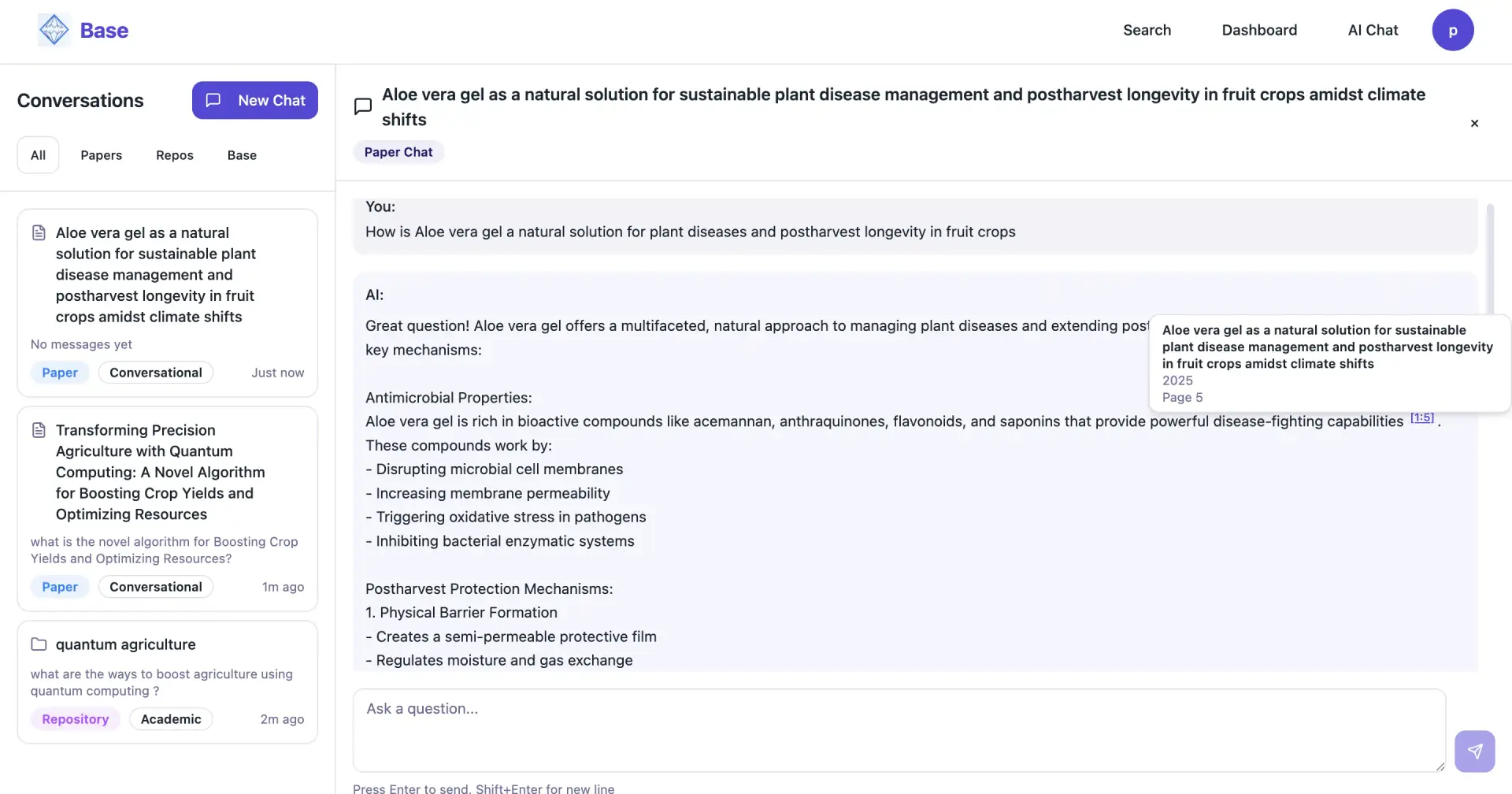
AI tools like ChatGPT have transformed how we research and write. But when it comes to academic citations, many researchers have learned a hard lesson: AI can lie convincingly. Here's what you need to know about AI citation accuracy—and how to use AI for research safely.
The Hallucination Problem
In 2023, a New York lawyer made headlines for submitting a court brief filled with fake case citations generated by ChatGPT. The cases sounded real. The citations were formatted perfectly. But none of them existed.
This isn't a bug—it's how large language models work. They're trained to predict the most likely next word, not to verify facts. When asked for a citation, they generate what a citation should look like, not necessarily one that exists.
For academic researchers, this is dangerous. A hallucinated citation in a thesis, journal article, or grant proposal isn't just embarrassing—it can end careers.
Why Traditional AI Gets Citations Wrong
General-purpose AI assistants like ChatGPT have three fundamental problems with citations:
1. No Access to Source Material
ChatGPT can't actually read papers. It has memorized patterns from its training data, but it cannot access, search, or retrieve academic papers. When it "cites" something, it's reconstructing what it thinks a citation should be—not pulling from an actual source.
2. No Page Numbers
Even when ChatGPT cites a real paper, it cannot tell you which page a claim appears on. This makes verification time-consuming: you'd need to read entire papers to confirm a single fact.
3. Confident About Everything
AI doesn't know what it doesn't know. It will present a fabricated citation with the same confidence as a real one. There's no uncertainty signal, no "I'm not sure about this"—just authoritative-sounding text that may or may not be true.
The Real Cost of Bad Citations
Using unverified AI citations carries serious risks:
Academic misconduct: Citing non-existent sources violates academic integrity policies
Rejected papers: Peer reviewers check citations—fabricated ones mean instant rejection
Damaged credibility: Once you're known for sloppy citations, your reputation suffers
Wasted time: Hours spent chasing down citations that turn out not to exist
A Better Approach: Retrieval-Augmented Generation
The solution isn't to abandon AI—it's to use AI that's actually connected to sources. This approach is called Retrieval-Augmented Generation (RAG), and it fundamentally changes how AI handles citations.
Instead of generating citations from memory, RAG systems:
Search actual databases of papers based on your question
Retrieve relevant passages from real sources
Generate responses grounded in those retrieved passages
Link every claim to its specific source and page
The AI can only cite what it can show you. No retrieval, no citation.
What Trustworthy AI Citations Look Like
When an AI research tool gets citations right, you should be able to:
See the exact source: Title, authors, year, and publication
Get page numbers: Know exactly where in the paper the claim appears
Click to verify: One click takes you to that page in the actual paper
Read the context: See the surrounding text, not just a snippet
This is what Base provides. Every response includes citations in the format[1:47]—meaning Source 1, Page 47. Click it, and you're looking at that page in the PDF.
How to Evaluate AI Citation Tools
Before trusting any AI tool with your citations, ask these questions:
1. Does it access real papers?
The tool should search actual academic databases, not just predict what citations might exist. Ask: "What papers are you searching?" If the answer is vague, be skeptical.
2. Does it provide page numbers?
Any tool can name a paper. Fewer can tell you which page. Page-level citations are a strong signal that the tool actually retrieved and read the content.
3. Can you verify instantly?
If verifying a citation requires leaving the tool and manually searching, the tool isn't built for research. Good tools let you click directly to the source.
4. What happens when there's no source?
Ask the tool something obscure. A good tool will say "I couldn't find sources for this." A bad tool will confidently make something up.
Best Practices for AI-Assisted Research
Even with the best tools, responsible researchers should:
Verify before citing: Click through to the actual source. Read the context. Make sure the citation supports your claim.
Check publication details: Confirm the paper exists in Google Scholar or the publisher's site.
Use multiple sources: Don't rely on a single paper for important claims.
Keep records: Save PDFs of papers you cite. Links can break; your evidence shouldn't disappear.
The Future of AI and Academic Integrity
AI isn't going away, and neither is the pressure to publish and produce research quickly. The researchers who thrive will be those who learn to use AI responsibly—leveraging its speed while maintaining academic rigor.
The key is choosing tools designed for research, not adapted from general-purpose chatbots. When your citations are verifiable by design, AI becomes a research accelerator rather than an integrity risk.
The Bottom Line
Can you trust AI for academic citations? It depends entirely on the AI.
General-purpose AI assistants like ChatGPT are not citation-safe. They hallucinate sources, can't provide page numbers, and give you no way to verify claims efficiently.
Research-specific AI tools built on retrieval—like Base—give you citations you can actually trust, because every claim links to an exact page in a real paper.
The question isn't whether to use AI for research. It's whether to use AI that respects the standards your work requires.
Check out Base at - https://basedid.com/

Join Purna on Peerlist!
Join amazing folks like Purna and thousands of other builders on Peerlist.
0
11
0