

How Mainframe Performance Compares to Modern Distributed Cloud Systems for High‑Volume Transactions
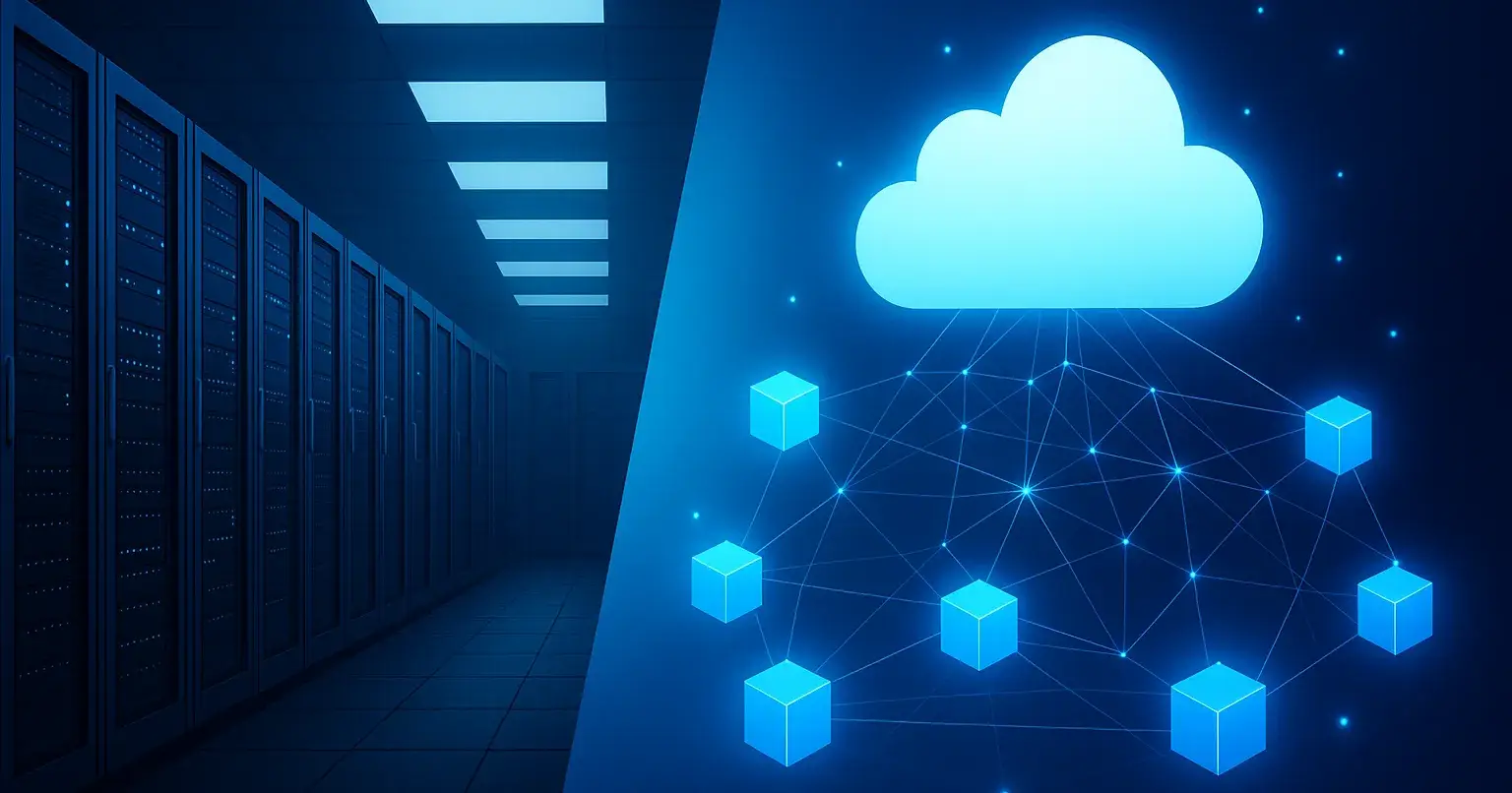
Mainframes have powered business for decades. They still run the core of banking, payments and government systems. Research shows that mainframes are used by 71 percent of Fortune 500 companies and handle 68 percent of the world’s production IT workloads while processing about 90 percent of all credit‑card transactions.
They deliver this vast capacity while making up only about six percent of IT spending. For large enterprises, downtime is not an option. Many mainframe workloads require availability measured in minutes per year. Mainframes achieve uptime between 99.999 percent and 99.9999 percent – equal to 5 minutes or 31 seconds of downtime per year.
Modern distributed cloud systems promote scalability and agility. They let teams deploy microservices across many servers and regions, scale out automatically and integrate with managed services.
Yet their performance under heavy transactional loads can vary widely. This post compares the performance characteristics of mainframes and cloud‑native systems for high‑volume transaction processing. It explains when each platform excels and why most enterprises end up embracing a hybrid model.
What high‑volume transactional workloads need
High‑volume transaction processing places demanding requirements on infrastructure. Systems must handle millions or billions of events every day without delays or errors. Performance depends on several dimensions:
Throughput:
The number of transactions a system can execute per second or per day. IBM mainframes can process 2.5 billion transactions in a single day and modern models can exceed 30 billion daily transactions.
Latency:
The time a system takes to complete a transaction. Low and predictable latency is crucial in payments and trading. Mainframes deliver single‑digit millisecond response times even at scale.
Availability and durability
The ability to keep running under hardware or software faults. Mainframes are designed for five‑nine or six‑nine availability.
Consistency
Whether the system provides strong ACID transactions or eventual consistency. Financial applications require strict consistency.
Elasticity
The ability to absorb sudden spikes in demand.
Modern mainframes
Today’s mainframes are very different from the machines that debuted in 1964. The IBM z16 family includes on‑chip AI accelerators and hardware encryption. An AI accelerator in the Telum processor can perform 300 billion deep‑learning inferences per day with about one‑millisecond latency.
IBM reports that inferencing on a z16 yields 20× lower response time and up to 19× higher throughput compared with a comparable x86 cloud server with 60 ms network latency.
Mainframes excel at processing high volumes of transactions quickly and consistently. One system can handle 2.5 billion transactions in a day, equivalent to 100 Cyber Mondays.
In its maximum configuration, a latest‑generation mainframe can process 146 million transactions per second.
Public cloud services typically limit individual instances to around 10 000 TPS. Mainframes achieve this throughput by combining massive compute capacity with tightly coupled I/O subsystems, large memory pools and specialized transaction monitors.
Reliability is another key strength. Mainframes often run mission‑critical workloads for decades.
Hardware redundancy, error‑correcting memory and mature operations practices ensure that failures are rare and recoverable.
Operational costs may appear high, but when fully utilized mainframes are cost‑efficient. They process a large share of enterprise workloads for a small share of IT spending.
A single system can replace hundreds of smaller servers, simplifying management and reducing data‑center footprints. However, specialized skills and licensing models mean that incremental workloads can be expensive.
Distributed cloud systems
Cloud‑native architectures use many small services that communicate over networks. Applications are split into independent services with well‑defined APIs. This approach allows developers to deploy and update services independently.
Each service can scale out individually and run on its own process or container.
Scalability and elasticity are major strengths. Distributed microservices can adjust resource allocation automatically in response to demand. The system can add or remove instances to keep performance steady without human intervention.
Auto‑scaling policies handle unpredictable bursts of traffic by creating more service instances. Horizontal scaling adds more nodes or pods to share the load, while vertical scaling increases the resources of a single machine.
Horizontal scaling is preferred because it avoids the limits of a single machine and improves resilience.
Cloud systems also support elasticity and geographic distribution. They can spread services across data centers and regions, reducing latency for users around the world.
They integrate easily with managed services such as message queues, caches, databases, observability tools and AI services. Continuous integration and deployment (CI/CD) pipelines make it possible to release features faster than with traditional monolithic systems.
However, distributed architectures introduce complexity. Each microservice must communicate with others over a network. This adds latency and failure modes. Scaling services independently can lead to unpredictable communication patterns, load‑balancing challenges and service discovery issues.
Maintaining data consistency across many services requires careful design with patterns like sagas or eventual consistency. Monitoring dozens or hundreds of services demands robust observability and automation tools.
These overheads mean that reaching mainframe‑like performance in the cloud requires significant engineering effort.
Cost is a double‑edged sword. Cloud platforms offer pay‑as‑you‑use pricing that suits variable and experimental workloads. They remove the need for capital expenditure. Yet poorly designed microservices can generate high networking costs, underutilized instances and complex debugging bills. Rehosting monolithic applications in the cloud without redesign may lower upfront costs, but modernization delivers better long‑term returns and efficiency.
Head‑to‑head comparison
1. Throughput
Mainframes deliver consistent low latency and high throughput. A single IBM z16 can process billions of transactions per day and millions per second.
Distributed cloud systems rely on horizontal scale to achieve comparable throughput. When properly partitioned and sharded, a microservices architecture can handle very large aggregate volumes. Elastic services can add instances to support flash sales or regulatory deadlines.
2. Latency
Response times stay in the single-digit millisecond range even at peak load. IBM’s integrated AI accelerators process 300 billion inferences daily at about one millisecond latency. Banking applications use this capability for real-time fraud detection and credit scoring.
Network hops, distributed consensus and service coordination add latency. Without careful design, a cloud system may exhibit higher p95 or p99 latencies than a mainframe. Achieving mainframe-like determinism often requires specialized tuning, caching and connection management.
3. Scalability models
Mainframes scale up. Capacity increases by adding processors, memory or specialty engines to the same system. This model suits predictable growth and stable workloads. Scaling up avoids the overhead of distributed coordination but has physical and financial limits.
Cloud systems scale out. They add more nodes or pods and distribute work across them. This model suits variable and rapidly growing workloads. Horizontal scaling with auto-scaling policies ensures resources match demand. Cloud systems can also scale down when demand drops, optimizing costs. However, scaling out requires partitioning data and handling networked state, which increases complexity.
4. Availability
Mainframes achieve near-continuous service through hardware redundancy and mature operations practices. Uptime of five to six nines is common. Planned maintenance is scheduled carefully, and failover mechanisms protect against hardware failures.
Cloud platforms build resilience through redundancy across zones and regions. Microservices replicate data and services to handle node failures. Automatic failover ensures that failed instances are replaced quickly.
5. Fault tolerance
Mainframe hardware and operations are designed to keep critical systems running without interruption.
The distributed nature of the system means there are more failure modes: network partitions, misconfigured scaling policies or cascading retries. Achieving five-nines availability in a cloud-native system often requires complex fault-tolerance patterns and chaos testing.
6. Consistency
Mainframes use strict ACID transactions as the default. This is essential for financial ledgers, balances and contracts. Systems like IBM CICS enforce atomicity, consistency, isolation and durability for each transaction.
In cloud architectures, consistency is a design choice. Distributed databases and event streams often trade strict consistency for availability and partition tolerance. Critical write paths may use ACID transactions, while read models rely on eventual consistency.
7. Data integrity
ACID-based processing ensures correct transactional state for every operation, which is why mainframes anchor core systems of record.
This flexibility enables high throughput but requires engineers to reason about state divergence and reconciliation. Patterns like two-phase commit, sagas or compensating transactions mitigate these challenges but add complexity.
8. Operational complexity
Mainframe operations are centralized and mature. Dedicated teams manage capacity, scheduling and security. The platform has stable tooling for monitoring, logging and performance tuning. The talent pool is shrinking as skilled mainframe engineers retire, but surveys show high confidence in the platform: a 2025 survey of financial-services respondents found that 96 percent have a positive view of the mainframe and 53 percent see it as a launchpad for new workloads.
Cloud operations require new skill sets. Teams must manage Kubernetes clusters, service meshes, API gateways and infrastructure-as-code. Observability requires tracing, metrics and log correlation across many services. Engineers must model workloads, tune autoscaling and optimize network pathways. The trade-off is flexibility: cloud platforms support rapid experimentation, integration with managed services and continuous delivery.
9. Cost
When fully loaded, mainframes deliver unmatched cost efficiency for high-volume, steady workloads. They process a majority of enterprise transactions while representing a small fraction of IT cost. However, adding new workloads can be costly due to licensing and specialized hardware.
Cloud platforms offer flexible pricing. Organizations can start small and pay only for the resources they consume. Elastic scaling eliminates over-provisioning. But costs can rise quickly if microservices chat frequently or if workloads run continuously. Application modernization and right-sizing are essential to control cloud costs.
10. Efficiency
Mainframes run high-volume workloads efficiently when utilization stays high.
A migration that simply “lifts and shifts” a monolithic workload may save 30–40 percent initially but still yields poor efficiency; proper modernization delivers three to five times better return on investment.
Where mainframes still win
Mainframes remain the backbone of industries where transaction integrity and latency matter. Banks, card networks and insurers depend on mainframes for settlement, clearing and regulatory compliance. They power 90 percent of credit‑card transactions and handle most core banking operations.
Mainframe systems process billions of transactions per day with single‑digit millisecond latency, ensuring that payments clear instantly and balances update correctly. Real‑time fraud detection applications use on‑chip AI to score thousands of transactions per second and stop fraudulent activity before it happens.
Government and public‑sector systems rely on mainframes for consistency and longevity. Tax systems, benefit payment systems and identity registries often run on mainframes, with some programs operating for decades.
These workloads have strict regulatory requirements and must withstand disasters and cyber‑attacks. The reliability and security features of mainframes make them ideal for such environments.
Where distributed cloud systems excel
Cloud‑native platforms shine in scenarios that demand rapid elasticity, global reach and fast iteration. Customer‑facing applications such as e‑commerce, mobile apps and streaming services experience unpredictable traffic.
Cloud systems can scale out across regions to serve users near their location and adjust capacity within minutes. Microservices architectures enable teams to build and release new features independently without disrupting other components.
Integrations with managed databases, AI services and analytics platforms allow organizations to innovate quickly.
Elastic workloads such as campaign‑driven traffic, seasonal surges and experimental services benefit from cloud flexibility. For example, an online retailer can scale payment and inventory services independently, run promotions across regions and integrate new payment gateways.
Government agencies that need to roll out new programs quickly or handle spikes in benefit applications also leverage cloud platforms for their front‑end systems.
The hybrid reality
Most enterprises are not choosing between mainframe and cloud; they are combining them. Hybrid architectures connect mainframe systems of record with cloud‑native services.
According to the 2025 BMC survey, 53 percent of financial‑services respondents see the mainframe as a platform for new workloads and 43 percent expect steady growth.
This suggests that organizations are investing in the mainframe while extending it with modern technologies.
Common hybrid patterns include:
API‑enable the mainframe. Tools like z/OS Connect expose mainframe transactions as REST APIs. Cloud services can call these APIs to execute core functions without moving data off the mainframe.
Event streaming. Mainframes publish transaction events to Kafka or other streaming platforms. Cloud consumers subscribe to these streams for analytics, notifications and integration.
On‑platform modernization. Mainframes now support containers and DevOps pipelines. Teams can modernize COBOL or PL/I applications and deploy microservices alongside legacy code.
Off‑loading read‑heavy workloads. Cloud systems handle analytics, reporting and customer experience, while the mainframe remains the system of record.
Hybrid designs allow organizations to retain the reliability of mainframes while taking advantage of cloud innovation. The mainframe continues to process high‑value transactions with predictable latency. Cloud services deliver elastic scale, personalized experiences and advanced analytics. With careful architecture, the two worlds complement each other.
Decision framework
When selecting a platform for high‑volume systems, enterprises should evaluate:
Workload characteristics. Define average and peak transactions per second, p95 latency targets and transaction value. Determine how much latency variability is acceptable and whether strict consistency is required.
Data gravity. Identify where the system of record lives and how costly data movement will be. Moving core data off a mainframe can be expensive and risky.
Failure and consistency tolerance. Decide which user journeys can tolerate brief outages or eventual consistency. For high‑value transactions, zero tolerance for inconsistency may favor the mainframe.
Skills and investment roadmap. Assess your internal capabilities. Mainframe expertise may be scarce, while cloud engineers may be easier to hire. Consider the technology roadmap for IBM Z and your chosen cloud provider.
Long‑term view. Plan for five to ten years. Consider emerging features like AI on the mainframe, quantum‑safe encryption and distributed SQL maturity. Hybrid architectures often provide the best balance.
Common pitfalls
Organizations often stumble when comparing mainframes and cloud systems:
Lifting and shifting without redesign. Migrating monolithic workloads to cloud servers without rearchitecting increases latency and can raise long‑term costs. Modernization and refactoring yield better returns.
Ignoring performance modeling. Cloud performance depends on partitioning, caching, thread pools and network design. A lack of capacity planning can result in unpredictable latencies.
Underestimating modern mainframe capabilities. Recent systems include on‑chip AI, container support and hybrid cloud connectors. Treating mainframes as legacy limits innovation.
Ideological decisions. “Cloud first” or “mainframe forever” mindsets overlook workload characteristics. Performance should drive platform choices, not fashion.
Conclusion
Mainframes remain unmatched for ultra‑reliable, low‑latency, high‑volume transactional cores. They process billions of transactions per day, deliver single‑digit millisecond latency and sustain five‑ to six‑nine availability.
Distributed cloud systems excel at elasticity, global reach and rapid change. They allow teams to scale services independently and adjust resources automatically, enabling innovation at the edges.
For most enterprises, the answer is hybrid. Keep the mainframe at the heart of critical transactions and leverage cloud services for user experiences, analytics and experimentation.
Use APIs and event streams to bridge the two worlds. The decision should be driven by workload requirements, data gravity and long‑term strategy.
If your organization is exploring hybrid modernization, expert guidance matters. Kumaran Systems has more than 30 years of experience modernizing legacy applications.
Its tool‑based approach reduces manual effort and risk, enabling seamless migration and integration. Kumaran’s mainframe modernization services help move or extend critical workloads to modern platforms. The company offers proven strategies for hybrid cloud integration and phased rollouts that avoid downtime.

Join Rajkumar on Peerlist!
Join amazing folks like Rajkumar and thousands of other builders on Peerlist.
0
2
0