

5 Trusted providers for powerbuilder migration to cloud-based environments
Discover trusted PowerBuilder migration providers that help enterprises move legacy applications to cloud-based environments with speed, security, and control.
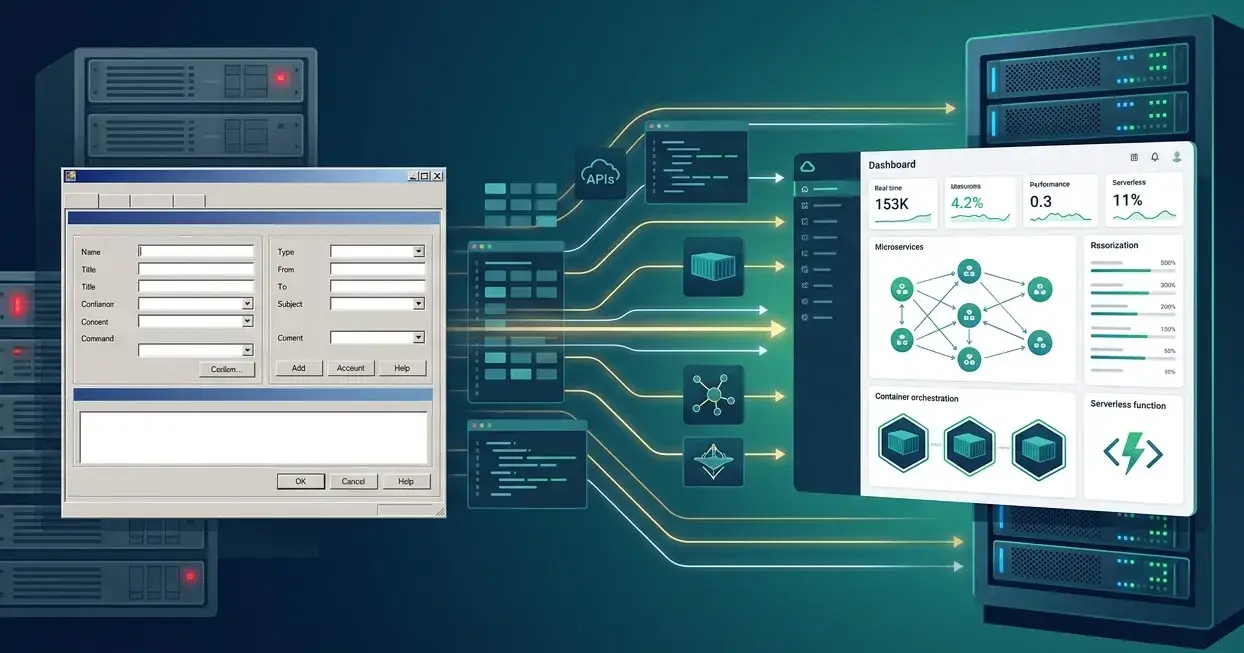
There are still very large enterprises that use PowerBuilder, government, higher education, manufacturing, and insurance (don't forget banks, utilities and telecommunications). While PowerBuilder has been around for a long time, it is still used heavily in critical functions today. And many companies are facing urgent issues with the need to modernize, so there is also a need for a reputable migration partner.
This blog will discuss the current landscape of moving from PowerBuilder to the cloud as well as several of the reasons why companies must take action now, what types of strategies are effective, and which vendor(s) you can actually trust to help you with the transition process.
Why the Urgency to Migrate Now?
PowerBuilder modernization has been talked about for decades by enterprises during annual strategy meetings, but the actual migration to new technology and platforms often takes a back seat to keeping the existing applications and continuing business. Even though these applications still function correctly and are critical for the business, the perceived expense of migrating from PowerBuilder applications outweighed the discomfort of doing nothing at this time.
Recently, with several key events occurring at the same time, the cost vs. risk of migration equation has been greatly changed. Many of the original developers that built these PowerBuilder applications, and continue to sustain and maintain them, are now in their late 50's and early 60's. As they retire, the business processes developed by these original creators will no longer be available.
As the data supports the difficulty many companies face with this issue, it is apparent that this shortcoming is at many organizations throughout the country.
Red Hat reported in 2024 that organizations were allocating 59% of their modernization budget to modernizing existing legacy infrastructure and applications, compared with 41% for new infrastructure, cloud services, and modern applications.
A report by the US Government estimates that 10 critical legacy systems cost about $337 million annually to operate and maintain; this is only a small part of the estimated total cost of maintaining outdated systems.
KPMG research suggests that legacy integration remains a major barrier in cloud adoption. Its global cloud survey found that 41% of respondents cited integration with existing architecture as a key challenge, while Harvey Nash / KPMG CIO Survey data shows that organizations use cloud investments to improve agility, support innovation, and reduce costs.
Legacy PowerBuilder workloads handling ePHI may face growing modernization pressure as HHS proposes stricter HIPAA security requirements.
When you add in rising maintenance costs, increasing security requirements, and a growing skills gap in PowerBuilder talent, the business case for migrating has never been stronger!
The Four Proven Migration Strategies
1. In-Place Modernization (Appeon/PowerServer Approach)
Organizations can utilize Appeon's PowerBuilder 2025, a modern development platform that allows developers to modernize their existing Windows applications by reproducing them as web-enabled applications or as installable cloud applications with minimal code changes.
This method involves creating a REST API middle tier to execute the logic of the existing client-server application in the cloud. This approach works best for companies that have tight deadlines and/or proficient in-house PowerBuilder resources.
2. Automated Code Migration
There are a number of AI-enabled tools that enable the automated migration of PowerBuilder code from the existing format into a new format, such as C#/.NET or Java, that allows to recreate the DataWindows in modern web-based front-end technologies like Angular or React and a new cloud back-end technology.
Vendors, such as Kumaran Systems, utilize their own proprietary technology called PowerBuilder Converter, which automates the conversion of PowerBuilder code into JEE/.NET based on a documented set of best practices.
Other tools, such as GAPVelocity AI Migrator and Ispirer nGLFly Wizard, provide similar capabilities through the automation of migrating existing PowerScript code into the target environment.
3. Hybrid/Strangler Fig Method
Transitioning gradual modules . monolithic powerbuilder apps using microservices method. Business as usual, successively phase out legacy app (low risk solution for large, complex app portfolios).
4. Rewrite Application from Scratch
Re-engineering legacy app on new framework (i.e. .NET Core, Java Spring Boot) provides greatest future returns, BUT also has highest initial investment & delivery risk. Experts recommend doing this only when the existing application is considered irreparable OR where a commercial solution provides better fit for your business; start pilot module ONLY, NOT the entire application portfolio.
Trusted Providers for PowerBuilder Cloud Migration
1. Appeon (Official Vendor)
Currently, Appeon has the PowerBuilder development roadmap established, providing updates at 9-to-12 month intervals with developers focusing on cloud migration, cloud-native application development, enhancing developer productivity, and modernizing UI.
The release of PowerBuilder version 2025 takes place in May 2025 and will include an ultra-fast compiler, creation of REST API by means of click through process, creation of UI through a codeless process, and enhanced deployment capabilities for the cloud. The Appeon tool set is your safest route to remain in their ecosystem while not having to make a full platform transition.
2. Kumaran Systems
Kumaran Systems provides PowerBuilder modernization services to help organizations move their existing PowerBuilder applications onto modern platforms such as JEE and .NET, using their PowerBuilder Converter as the migration tool.
The Kumaran’s PowerBuilder Converter has been designed specifically for the purpose of migrating PowerBuilder applications; it is fully automated and uses the same set of application to produce equivalent code in JEE or .NET.
Kumaran employs a factory model approach for all of their migrations; this means that all of the processes they use in migrating an application from PowerBuilder are structured within a defined phase of development and supported by documented process assets (checklists, templates, and processes) used to migrate applications from PowerBuilder to JEE or .NET.
Kumaran's experience has enabled them to create a proven integration between tool automation and human expertise to minimize the likelihood of manual errors during the migration process.
3. OptiSol Business Solutions
OptiSol provides a wide range of PowerBuilder services such as cloud migration, User Interface/ User Experience (UI/UX) updates, and Application & Database Modernization. The engineers at OptiSol have between 12 and 15 years’ experience with PowerBuilder and have used Appeon. The areas they have experience in are Banking, Finance and Healthcare.
Through the use of PowerServer technology, they deploy existing PowerBuilder client-server applications to the cloud in a secure manner, while maintaining full functionality and not requiring the end-users to be re-trained.
4. 10decoders
10decoders builds an automated framework for zero-disruption/minimal downtime migration. They use AI to code parse each module and DataWindow, map dependencies, extract business logic & create a detailed modernization blueprint. Examples: Migrating a healthcare provider's code to Java and Angular using a HIPAA-compliant workflow and modernizing a financial institution's loan management system to REST APIs with Angular front-end components.
5. EvolveWare
EvolveWare has been identified as a Representative Vendor in the 2025 Gartner AI Modernization Tool Reports. Their Intellisys platform leverages AI/ML technologies for the automation of the core processes involved in documenting, analyzing, and modernizing applications created using over 20 legacy and modern programming languages, including PowerBuilder.
They excel at application portfolio rationalization, helping enterprises decide how to migrate as well as which applications to prioritize and the best way to sequence the journey.
How to Evaluate a Migration Provider
Proprietary Tooling: Look for vendors who have built or refined their own migration tooling and not just resold third-party conversion tools; for example, Kumaran's proprietary PowerBuilder migration converter creates maintainable code in open standards for all target layers.
Phased Methodology: Select vendors that provide a well-defined, repeatable process including a Disovery/Assessment stage, Architecture Design, Phased Migration, Regression Testing and Post-deployment Support. Rushed or undocumented processes should raise red flags.
Business Logic Preservation: Vendors must have a well-defined process for capturing, validating and preserving embedded business logic (found in datawindows and event handlers), which is often never formally documented.
Domain-Specific Case Studies: Migration complexity varies greatly by domain; therefore, it is important to choose vendors with established success deploying your desired product in your sector (healthcare, financial services, manufacturing, or government) to avoid or overcome challenges that are specific to your field.
Post-Migration Support Model: A credible vendor will not just provide support through go-live; therefore, it is recommended to review their steady-state support model, capability for skill transfer and overall commitment to monitor and optimize performance during the post-migration period.
Conclusion
The availability of new AI-powered migration tools and the decline in retiree talent, growing compliance requirements, and increasing maintenance costs has created a sense of urgency to modernize PowerBuilder applications in ways that were not available until recently.
Organizations that take advantage of this urgency can do so in a reasoned way by developing their target architecture, intelligently sequencing their application portfolio, and migrating according to their needs. Organizations that do not move quickly enough risk being pushed into an emergency migration through any number of scenarios, such as a compliance deadline, the retirement of a critical developer, or the shocking reality of a security incident exposing the vulnerability of legacy systems.

Join Rajkumar on Peerlist!
Join amazing folks like Rajkumar and thousands of other builders on Peerlist.
0
3
0