

The Future of UX/UI in 2026: Generative Interfaces Are Here, but Only Ethical Ones Will Last
The UX role isn’t vanishing — it’s upgrading. If you’re still focused mainly on hand-crafted static deliverables → the opportunity pool is shrinking
As Co-Founder & CAO at Panze Studio, I spend my days helping SaaS startups and enterprise teams turn complex tech into intuitive, high-leverage experiences. In the last 12–18 months, I’ve watched the field change faster than ever.
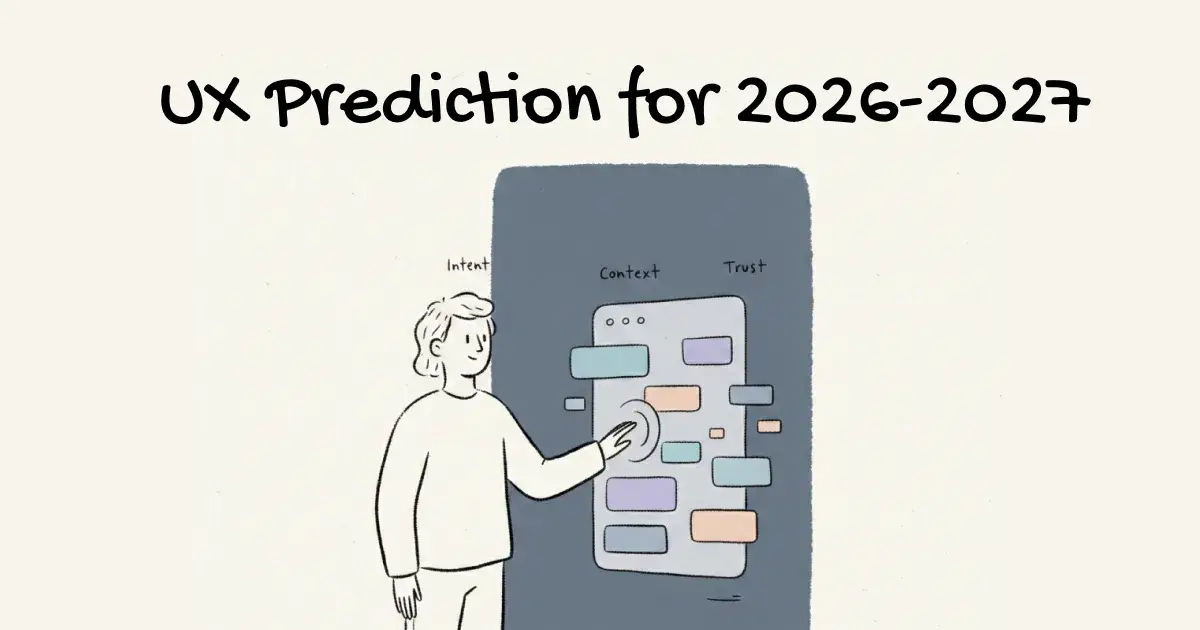
What used to be “make beautiful screens in Figma” has become designing systems that generate screens — in real time, driven by user intent, context, and even inferred emotion.
Here’s what I’m seeing (and betting on) right now in early 2026:
1. Static → Generative & Agentic UX Is the New Reality
Pixel-perfect mocks are quickly becoming prototypes and system-definition tools only. The delivered experience is dynamic: composed on-the-fly based on current goal, device, history, emotional signals, and live data. → Our real work? Crafting better prompts, setting strong guardrails, evaluating generations, defining human hand-off paths, and tuning for trust.
2. Visual Polish Is Table Stakes — Real Moats Are Deeper
AI + mature design systems make stunning UIs fast and cheap. Differentiation has moved upstream:
Depth of intent understanding
Seamless agent ↔ human transitions
Explainability and visible reasoning
Emotional “vibe” orchestration (calm, energizing, trustworthy…)
How the system feels when it fails gracefully
3. Ethics Isn’t a Checkbox — It’s Core Craft Skill
With generative personalization, persistent memory, emotional inference, and adaptive nudges, the power (and risk) is massive. In high-trust domains like finance, health, education, and career tools, users already demand:
“Show AI thinking” toggles and confidence indicators
Easy overrides (“Stop personalizing”, “Forget this context”)
Clear memory dashboards and one-click wipes
No hidden manipulation based on detected stress or vulnerabilities
Frictionless, dignified escalation to humans
At Panze, we now run every project through questions like:
Would I accept this logic applied to my family?
Can users see and control why the interface changed?
Are we amplifying biases in generated layouts, copy, or recommendations?
If no → back to the drawing board. Ethics has become a differentiator, not optional polish.
My 2026–2027 Predictions (What are going Toward)
Multimodal + Spatial becomes everyday for early adopters (voice-first, gaze/gesture, AR glasses workflows) → zero-UI fluency is essential
Emotional safety design surges: use inference to calm frustration, never exploit it
Traditional portfolios fade — impact stories win (“Cut decision time 60% while raising trust scores” beats 50 polished frames)
Teams that master intent modeling + ethical guardrails attract the best talent, users, and longevity
The UX role isn’t vanishing — it’s upgrading. If you’re still focused mainly on hand-crafted static deliverables → the opportunity pool is shrinking. If you’re shaping how AI interprets intent, explains itself, adapts ethically, and feels human → you’re in the most exciting (and rewarding) part of the industry.
What do you see happening in your work right now? Are generative/agentic interfaces already live in your products? Which ethical challenge hits hardest for you — transparency, bias in GenUI, manipulation risk, memory control, or something else?
Drop your thoughts below 👇 — always open to exchanging ideas with fellow designers and founders.

Join Rakibul on Peerlist!
Join amazing folks like Rakibul and thousands of other builders on Peerlist.
0
20
4