

UX Design Process: From Research to Launch
A great product isn’t designed in one step. It’s shaped through a clear, thoughtful process that moves from understanding → creating → testing → improving.
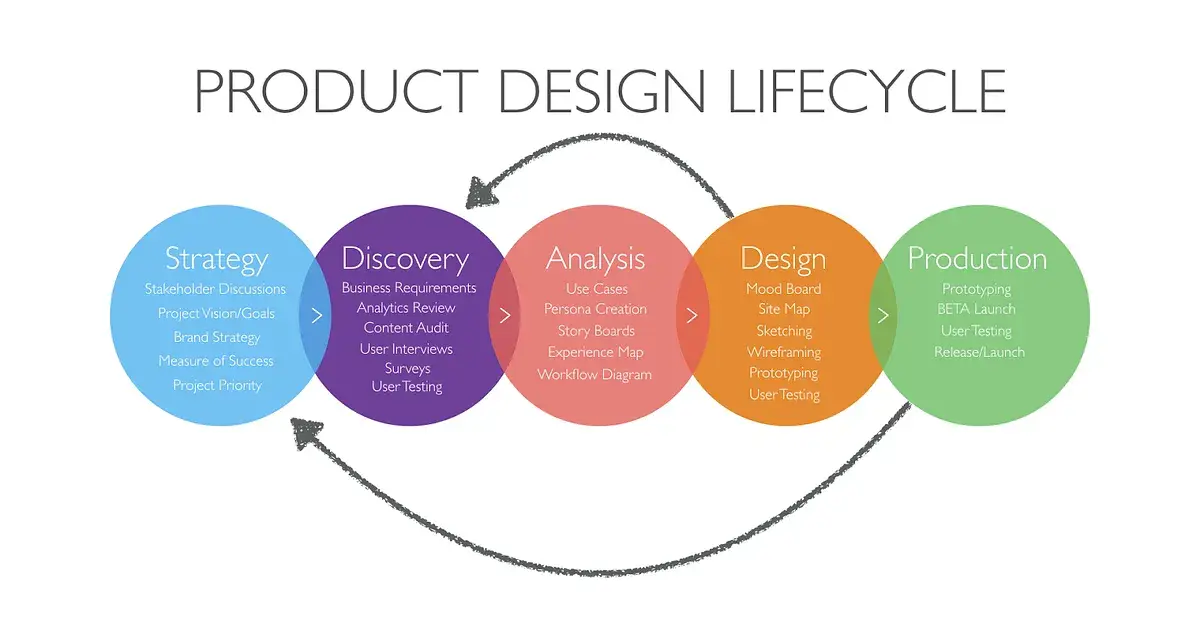
If you're new to UX, it’s easy to think that design starts with screens.
But professional UX design begins long before Figma.
The real work happens in a structured process that ensures every decision is intentional.
Let’s walk through the UX design process in the simplest possible way, step by step.
1. Research — Understand Before You Solve
Everything begins with understanding the user and the problem.
Research helps answer:
Who are the users?
What are their goals?
What frustrates them today?
What context are they operating in?
This can include:
user interviews
surveys
competitor analysis
contextual observations
Outcome: clarity about the problem and real user needs.
2. Define — Turn Insights Into a Clear Problem Statement
Once you collect insights, you organize and synthesize them.
This stage includes:
personas
user journeys
problem statements
“How might we…?” questions
Defining the problem ensures that the entire team is aligned.
Outcome: a well-defined problem worth solving.
3. Ideate — Generate Many Possible Solutions
Now the creativity begins.
In this phase, you explore ideas without judging them.
The goal is to think wide and free.
Activities include:
brainstorming
sketching
whiteboard flows
mind mapping
Quantity matters—because innovation often hides in unexpected ideas.
Outcome: a range of possible solutions.
4. Design — Bring Ideas Into Structure and Form
This is where UX takes shape visually, step-by-step.
Design includes:
user flows
wireframes
low-fidelity prototypes
high-fidelity mockups
You’re not just designing how things look—you’re designing how they work.
Outcome: an interactive representation of the product.
5. Test — Validate With Real Users
No matter how confident you are, the user decides what works.
Testing reveals:
confusion points
broken flows
unexpected behaviours
missing information
This can be done through:
usability tests
A/B testing
remote testing tools
Outcome: real feedback that guides improvement.
6. Iterate — Refine, Polish, Simplify
Great design is not built in one attempt.
Iteration ensures your product becomes clearer, easier, and more intuitive.
You refine:
flows
interactions
copy
visuals
microinteractions
Every cycle makes the experience better.
Outcome: a polished experience grounded in real behaviour.
7. Launch — Deliver, Monitor, Learn
Launching is not the end.
It’s the beginning of continuous improvement.
After release, you:
track analytics
gather user feedback
fix friction points
monitor how people actually use it
Outcome: insights for future updates.
🌿 Final Thought
The UX design process is not a straight line.
It’s a loop of understanding, creating, testing, and improving.
If you’re new to UX, remember:
You are not designing screens.
You are designing experiences shaped by a thoughtful process.

Join Vijay on Peerlist!
Join amazing folks like Vijay and thousands of other builders on Peerlist.
0
2
0