

Bridging the Gap: Integrating AI and Real-Time Data into Modern Full-Stack Apps
From static sites to intelligent systems—how I built Stocklytics and PromptStore to solve real-world problems.
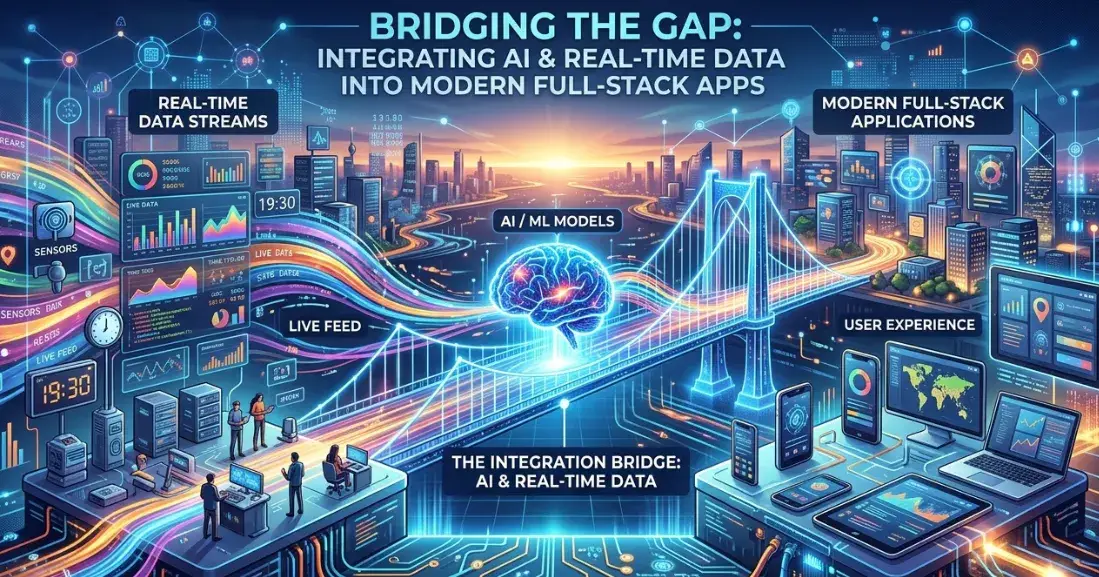
As a Computer Science student at the University of North Texas, I’ve always been fascinated by the "bridge"—that space between writing clean code and delivering a product that actually changes how a user makes a decision.
Over the past few months, I’ve moved away from building "standard" CRUD applications to focus on intelligent systems. Whether it’s predicting market sentiment or scaling a digital marketplace, the challenge isn’t just the UI—it’s the architecture behind it.
1. The Latency Challenge: Stocklytics
When I started Stocklytics, I had one goal: cut down the time it takes for a trader to analyze a stock. The problem? Most stock apps feel "heavy" or laggy when handling live data.
To solve this, I integrated WebSockets with a React and TypeScript frontend. By moving away from traditional polling, I achieved <100ms latency in data visualization. But data is useless without context. I implemented a deep learning LSTM model via TensorFlow to scrape social media and news, turning thousands of "noisy" tweets into a clear market sentiment score.
Key Takeaway: Real-time UX isn't just about speed; it's about providing processed, intelligent data the moment it arrives.
2. Scaling to Zero: The PromptStore Architecture
With PromptStore, I wanted to explore the "AI Creator Economy." The technical hurdle here was cost-efficiency. I didn't want to pay for idle server time.
I opted for a Serverless architecture using Next.js and Prisma, deployed on Vercel. This "scale-to-zero" approach ensures the app is highly available during traffic spikes but costs nothing when nobody is using it. For the "trust" layer, I integrated Stripe and Clerk to ensure that creators could monetize their prompts securely without me having to manage complex sensitive data.
3. Engineering for Security (Lessons from Mentozy)
My internship at Mentozy is teaching me that "working" code isn't enough—it has to be secure. Implementing Supabase Row Level Security (RLS) is a turning point. It shifts my mindset from "How do I fetch this data?" to "How do I ensure only this specific student sees this specific mentor’s feedback?"
Architecting structured learning modules shows me that the best features are the ones the user never "notices" because they work so seamlessly.
The Road Ahead
Building these projects has reinforced my belief that the next generation of web development belongs to developers who can blend Full-Stack fundamentals with AI integration.

Join Raymond on Peerlist!
Join amazing folks like Raymond and thousands of other builders on Peerlist.
1
11
0