

How to Develop a Food Delivery App Like Skip
What It Really Takes to Build the Next Big Food Delivery App Like Skip
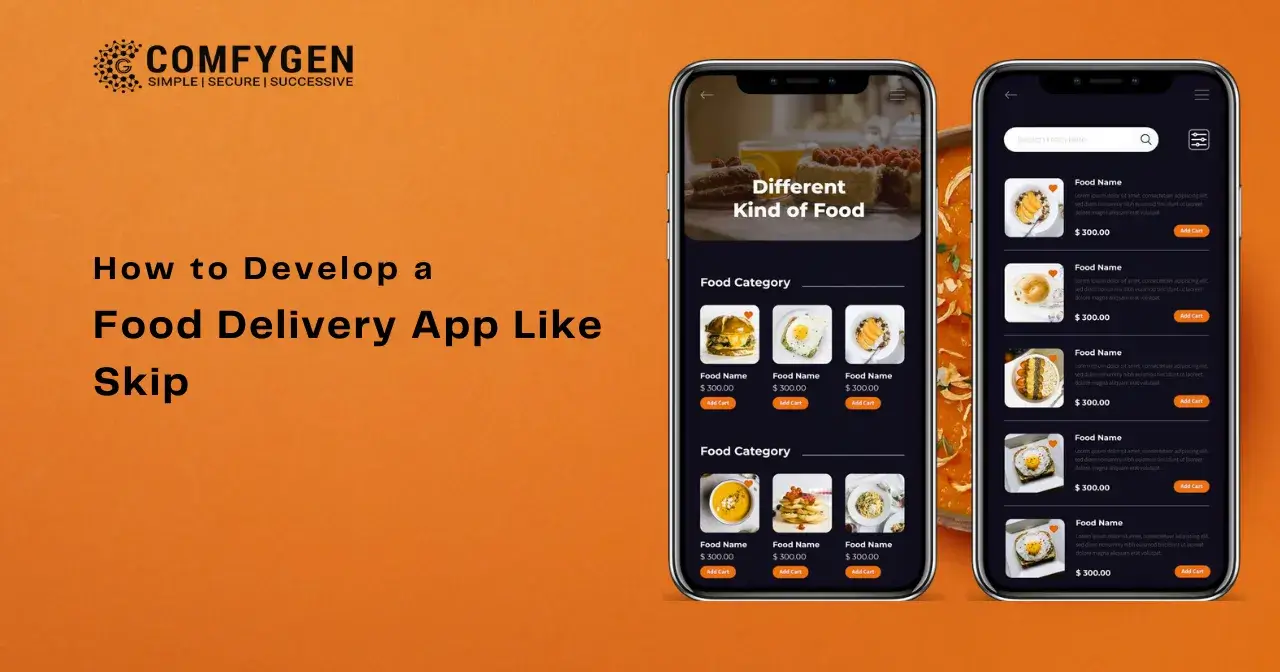
The food delivery industry has exploded over the past decade, and apps like SkipTheDishes have completely changed how people order meals. If you're an entrepreneur or business owner looking to develop a food delivery app like Skip, you're stepping into one of the most lucrative digital markets today. The global online food delivery market is projected to surpass $500 billion in the coming years, and that window of opportunity is wide open.
This comprehensive guide walks you through everything you need to know — from understanding the business model to the technology stack, must-have features, development cost, and monetization strategies — so you can build a food delivery app that competes with the best in the market.
What Makes SkipTheDishes So Successful?
Before you set out to create a food delivery app like Skip, it's worth understanding why SkipTheDishes became a household name in Canada and beyond. The platform connects three key players — customers, restaurants, and delivery drivers — through a seamless, intuitive digital interface.
SkipTheDishes succeeded because it solved a real problem efficiently: people wanted restaurant-quality food without leaving their homes, and restaurants wanted access to a larger customer base without managing their own delivery fleets. The app created a win-win ecosystem where every party benefited.
When you plan to build an on-demand food delivery app, replicating this three-sided marketplace is your foundation. Understanding how value flows between customers, restaurants, and couriers will shape every major decision you make during development.
Business Models for a Food Delivery App Like Skip
Top on-demand food delivery platforms use three primary business models:
The Aggregator Model works as a marketplace. Your app lists multiple restaurants, accepts orders, and passes them along to the restaurant, which handles its own delivery. This model is simpler to launch but limits your control over delivery quality.
The Logistics Model is what SkipTheDishes and DoorDash primarily use. The platform manages its own fleet of delivery drivers, handling the complete logistics from order placement to doorstep delivery. This model requires more infrastructure but gives you end-to-end control over the customer experience.
The Cloud Kitchen Model is newer and rapidly growing. Here, the platform operates its own ghost kitchens, preparing food in centralized locations optimized for delivery. This is a higher-investment approach but offers extremely high margins.
For entrepreneurs looking to develop a food delivery app like SkipTheDishes, the logistics model is typically the best starting point for building a scalable, recognizable brand.
Essential Features to Build in Your Food Delivery App
If you want your food delivery mobile app to compete with Skip, you need to nail the core features across three separate user panels.
Customer App Features
The customer-facing side of your app is your most public product. It needs to be fast, intuitive, and delightful to use. Key features include:
Smart restaurant discovery with filters for cuisine type, dietary preferences, rating, price range, and distance
Real-time order tracking with live map view showing driver location
Multiple payment options including credit/debit cards, digital wallets, and cash on delivery
Order history and reorder functionality for convenient repeat purchases
Ratings and reviews for restaurants and delivery experiences
Promo codes, loyalty rewards, and referral programs to boost retention
Scheduled orders for customers who want food delivered at a specific time
Push notifications for order status updates
Restaurant Partner Dashboard
The restaurant panel is your B2B product. Make it easy for restaurant owners to manage everything in one place:
Menu management with item availability toggles
Real-time order management and acceptance
Earnings reports and payout tracking
Customer feedback and ratings overview
Promotions and discount management
Integration with existing POS systems
Delivery Driver App
Your courier app needs to be highly functional in challenging conditions — poor connectivity, GPS accuracy, time pressure:
Real-time order assignment with GPS navigation
Delivery history and earnings tracker
Status updates (picking up, on the way, delivered)
In-app chat with customers and support
Availability toggle for flexible scheduling
Admin Panel
The backend dashboard for your operations team should give full visibility and control over orders, users, payments, disputes, analytics, and platform settings.
Steps to Launch Your Food Delivery App
Here's a streamlined roadmap to take your idea from concept to launch:
Market research — Identify your target city, analyze competitors, and define your unique value proposition
Define your business model — Choose between aggregator, logistics, or hybrid
Create wireframes and UI/UX designs — Prioritize simplicity and speed
Develop an MVP — Build the essential features for all three user panels
Test thoroughly — QA across devices, operating systems, and use cases
Onboard restaurants — Build your supply-side before your demand-side
Launch and market — Use social media, local SEO, and referral incentives
Gather feedback and iterate — Continuously improve based on real user data
Technology Stack for Building a Food Delivery App
Choosing the right technology stack for a food delivery app like Skip is critical for performance, scalability, and long-term maintainability.
Frontend (Mobile Apps): React Native or Flutter for cross-platform iOS and Android development. Both allow you to maintain a single codebase while delivering native-like performance.
Backend: Node.js or Python (Django/FastAPI) for the server side. Node.js is particularly popular for real-time applications due to its event-driven architecture.
Database: PostgreSQL for relational data (users, orders, restaurants) and Redis for caching and session management.
Real-Time Features: WebSockets or Firebase Realtime Database for live order tracking and chat functionality.
Maps & Geolocation: Google Maps API or Mapbox for restaurant discovery, route optimization, and live driver tracking.
Payment Gateway: Stripe, PayPal, or Braintree for secure payment processing.
Cloud Hosting: AWS, Google Cloud, or Microsoft Azure for scalable infrastructure.
Push Notifications: Firebase Cloud Messaging (FCM) for Android and APNs for iOS.
When you hire a food delivery app development company, make sure they have hands-on experience with this stack and a portfolio of similar marketplace applications.
How Much Does It Cost to Develop a Food Delivery App Like Skip?
The food delivery app development cost varies based on complexity, region, and team structure. Here's a realistic breakdown:
A basic MVP (Minimum Viable Product) with core features for one platform (iOS or Android) typically costs between $25,000 and $50,000. A full-featured, cross-platform app with all three panels (customer, restaurant, driver) and an admin dashboard generally ranges from $80,000 to $150,000 or more, depending on your food ordering app development partner's location and the depth of features.
Ongoing costs — server hosting, third-party API subscriptions, maintenance, marketing, and customer support — should be factored into your business plan from day one.
Many startups choose to build an MVP first, launch in a single city, gather user feedback, and iterate before scaling. This lean approach is highly recommended for food delivery app startups operating with limited initial capital.
Monetization Strategies for Your Food Delivery Platform
Understanding how to monetize a food delivery app is just as important as building it. Here are the most proven revenue streams:
Commission per order is the backbone of platforms like Skip. Charging restaurants a percentage (typically 15–30%) of every order processed through your platform generates consistent revenue as you scale.
Delivery fees charged to customers per order are another major income stream. Many platforms use dynamic pricing, increasing fees during peak hours or bad weather.
Subscription plans like SkipPlus offer customers unlimited free delivery for a monthly fee, driving loyalty and recurring revenue.
Featured listings and promotional placements allow restaurants to pay for premium visibility in search results or on your homepage.
In-app advertising from restaurants or third-party brands can become a meaningful revenue channel once your user base grows.
Why Now Is the Right Time to Build a Food Delivery App
Post-pandemic consumer behavior has permanently shifted toward digital convenience. The food delivery app market is still growing, and while giants like Skip and DoorDash dominate nationally, there is massive opportunity in underserved cities, niche cuisines, and specialized dietary markets (vegan, halal, organic, etc.).
Technology costs have also come down significantly. Cross-platform frameworks, open-source tools, and cloud services make it more affordable than ever to build a food delivery app startup with professional-grade technology.
Final Thoughts
To successfully build a food delivery app like Skip, you need more than just good code — you need a clear business model, a frictionless user experience, and a solid go-to-market strategy. The opportunity is real, the technology is accessible, and consumers are already trained to use these platforms daily.
Whether you're a startup founder, a restaurant group looking to launch your own platform, or a tech entrepreneur entering the online food delivery space, now is the time to act. Partner with an experienced food delivery app development company, start lean with an MVP, and build your way toward a platform that can genuinely compete in your market.

Join Saddam on Peerlist!
Join amazing folks like Saddam and thousands of other builders on Peerlist.
0
0
0