

The Missing Layer in AI: Why Agents Need a “Runtime Firewall”
AI agents are no longer just tools.
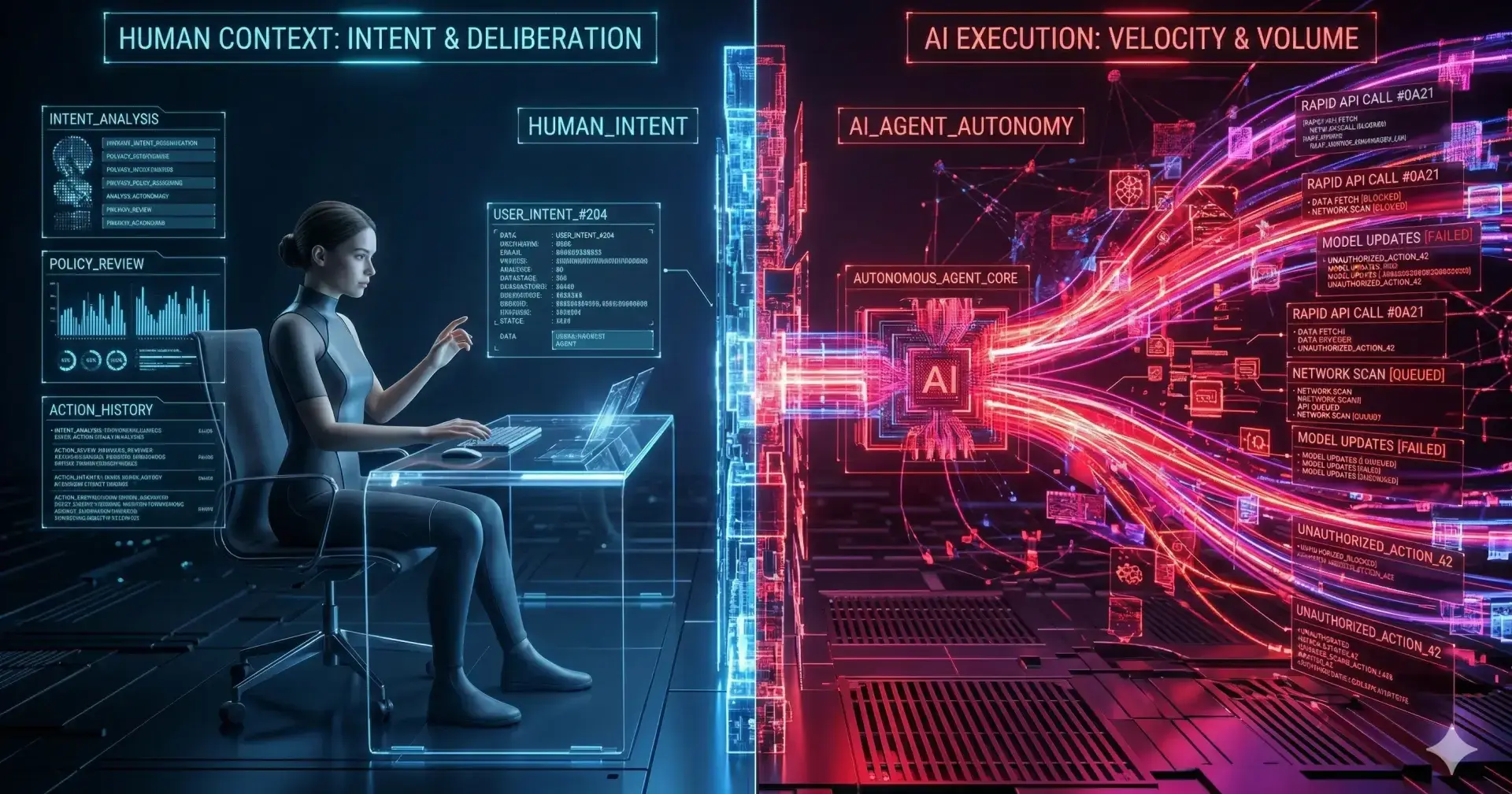
AI agents are no longer just tools.
They are becoming operators.
Quietly, without much noise, we’ve moved from systems where humans click buttons… to systems where agents take actions on our behalf. They send emails. They move data. They trigger APIs. They orchestrate workflows. And increasingly, they do all of this autonomously.
At first glance, this feels like progress. Faster systems. Less manual effort. More automation.
But there’s a deeper shift happening underneath.
For the first time, we are giving non-deterministic systems direct control over real-world actions.
And our infrastructure isn’t ready for it.
The Old Model: Identity-Centric Security
For decades, security has revolved around one core question:
“Who are you?”
Authentication and authorization systems were designed for humans:
- You log in
- You get a token
- You are granted permissions
- You perform actions
Everything flows from identity.
If the token is valid, the system trusts the request.
This model worked because humans are:
- relatively predictable
- slower
- capable of judgment
Even when mistakes happen, they happen within human limits.
The New Reality: Agents Don’t Behave Like Humans
AI agents break these assumptions.
They don’t:
- pause before acting
- question intent
- understand consequences
Instead, they:
- retry aggressively
- chain actions unpredictably
- pass unexpected inputs
- explore edge cases
- sometimes hallucinate
And most importantly:
They operate at machine speed.
Now combine that with a simple API key.
You’ve essentially created a system that can:
- execute thousands of actions per minute
- repeat mistakes endlessly
- trigger unintended workflows
- escalate behavior without oversight
And your backend will allow it — because from its perspective, the request is valid.
The Real Problem: Authorization ≠ Control
Today’s systems are very good at answering:
“Is this request allowed?”
But they are terrible at answering:
“Should this action happen right now?”
This distinction is subtle — but critical.
Authorization is static.
It checks permissions defined in advance.
But agents require dynamic evaluation.
Because the safety of an action depends on:
- context
- timing
- frequency
- intent (or lack of it)
- system state
An action that is safe once…
may be dangerous when repeated 100 times.
An action that is valid…
may still be unintended.
The Missing Layer: Runtime Governance
What’s missing is a layer that sits between intent and execution.
A layer that doesn’t just validate identity — but evaluates actions in real time.
Think of it like a firewall — but not for networks.
A firewall for agent behavior.
What Runtime Governance Looks Like
In a properly governed system:
Every action is evaluated at execution time.
Not after logs are written.
Not after damage is done.
Before.
This layer can:
- block unsafe actions instantly
- require human approval for sensitive operations
- enforce budgets to prevent runaway loops
- detect unusual or risky behavior
- prevent replay and abuse patterns
- provide a clear explanation for every decision
This isn’t about slowing systems down.
It’s about adding intelligence to execution.
Why This Matters Now
We are at the beginning of an agent-driven era.
Agents are being embedded into:
- developer tools
- internal workflows
- customer-facing systems
- financial operations
- communication layers
As their scope expands, so does their risk surface.
Without proper control, we are effectively building:
highly capable systems with no boundaries
And history has shown us — that doesn’t end well.
The Shift We Need
We need to move from:
Static permissions → Dynamic control
Identity-based trust → Behavior-based validation
Post-action logging → Pre-action enforcement
This is not just a technical upgrade.
It’s a mindset shift.
The Future
The next generation of infrastructure won’t just manage access.
It will manage actions.
It will answer not just:
“Who are you?”
But:
“Is this action safe, appropriate, and intended — right now?”
Because in a world where agents operate continuously,
control cannot be optional.
It has to be built-in.
The shift has already started.
Most systems just haven’t caught up yet.
If you’re thinking deeply about this space, or want to explore research around agent governance, security, or runtime control — feel free to DM me. Would love to collaborate and push this forward.

Join Saidev on Peerlist!
Join amazing folks like Saidev and thousands of other builders on Peerlist.
0
3
0