

10+ Open Source Bootstrap Sidebar Templates, Designs & Examples
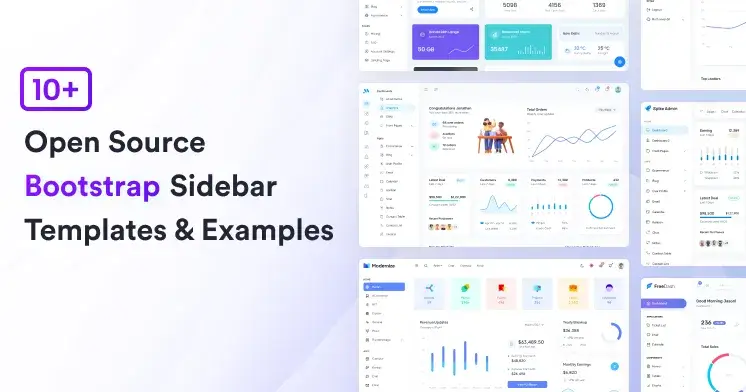
Every web project reaches a moment where pages start growing. What began as a simple layout suddenly needs navigation for dashboards, settings, reports, and users.
This is where sidebars quietly become one of the most important parts of an application.
Whether you’re building a SaaS product, an internal admin tool, or a client dashboard, a good sidebar helps users move around without thinking. A bad one, on the other hand, slows everyone down. This article is written for developers who want to avoid that mistake and pick the right Bootstrap sidebar from the start.
What You’ll Learn From This Article
In this guide, you’ll learn:
Why sidebars matter in real-world Bootstrap projects
The difference between dashboard-ready sidebars and simple code snippets
Which open source Bootstrap sidebars work best for SaaS, admin panels, and internal tools
How responsiveness, navigation structure, and customization affect usability
When to choose a full template and when a lightweight sidebar example is enough
By the end, you should have a clear idea of which sidebar fits your project and why.
Why Sidebars Are Important in Bootstrap Projects
Sidebars do more than hold links. They define how users explore your application.
In dashboards and SaaS apps, sidebars usually stay visible, giving quick access to important sections. In mobile layouts, they collapse or move off-canvas to save space. A well-designed sidebar keeps navigation predictable, reduces clicks, and scales as your app grows.
Bootstrap makes this easier by offering a strong grid system, utility classes, and responsive helpers. That’s why Bootstrap sidebars are still widely used in production apps today.
Let’s Explore Top Open Source Bootstrap Sidebars
Below is a mix of modern sidebar templates and community-built examples. Some are full dashboard solutions, while others are simple layouts you can customize freely.
MaterialM Sidebar

MaterialM comes with a clean, Material-inspired sidebar built for modern admin dashboards. The layout is easy to follow and works well when your application has many pages or sections. It’s a good fit for dashboards where structure and consistency matter.
Key Features
Collapsible and responsive sidebar
Icon and text-based navigation
Active states and nested menus
Designed for admin and SaaS dashboards
Modernize Sidebar

Modernize offers a simple and modern Bootstrap sidebar that focuses on spacing and readability. It feels lightweight and works especially well for analytics dashboards, internal tools, and SaaS admin panels where clarity is important.
Key Features
Clean and minimal sidebar UI
Fully responsive on all screen sizes
Multi-level navigation support
Ready for dashboard layouts
Studiova Sidebar
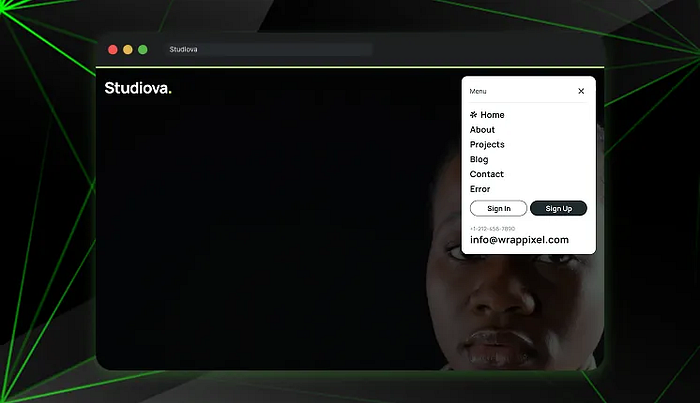
Studiova includes one of the most visually polished sidebars in this list. It’s designed for design startups, SaaS products, creative websites, and modern dashboards where navigation should look clean and professional. The sidebar adapts smoothly across devices and feels ready for real production use.
Key Features
Modern and polished sidebar design
Built for SaaS and modern websites
Fully responsive layout
Easy to integrate into existing projects
Matdash Sidebar

Matdash provides a structured Bootstrap sidebar designed around real SaaS workflows. It works well for dashboards that need multiple sections while keeping navigation simple and easy to follow.
Key Features
Well-structured sidebar menu
Smooth responsive behavior
Easy integration with dashboard pages
Designed for admin use cases
MaterialPro Sidebar

MaterialPro offers a professional sidebar inspired by Material UI concepts. It’s built for large dashboards where clear navigation and scalability are important.
Key Features
Professional sidebar layout
Nested menu support
Mobile-friendly design
Suitable for enterprise dashboards
FreeDash Sidebar

FreeDash is a free Bootstrap admin template that includes a ready-to-use sidebar. It’s a solid option for small projects, prototypes, or internal tools where you want something functional without extra setup.
Key Features
Free and open source
Responsive sidebar navigation
Includes dashboard pages
Lightweight and easy to use
Spike Sidebar

Spike provides a simple and flexible Bootstrap sidebar that’s easy to customize. It works well for long-term admin projects and for teams maintaining existing Bootstrap applications.
Key Features
Clean sidebar navigation
Responsive toggle support
Simple customization structure
Suitable for both new and legacy projects
Collapsible Bootstrap Sidebar by Peter Kaagman

This is a simple collapsible sidebar built with plain Bootstrap. It’s a good starting point if you want full control over behavior without adding extra libraries.
Key Features
Collapsible sidebar layout
Clean Bootstrap structure
Easy to customize
Ideal for small dashboards and internal tools
Animated Bootstrap Sidebar by Yuliana

This sidebar adds smooth animations to standard Bootstrap navigation. It’s useful when you want a modern touch without relying on heavy JavaScript.
Key Features
Animated open and close behavior
Bootstrap 5 markup
Lightweight and fast
Suitable for modern dashboards
Offcanvas Bootstrap Sidebar by Furkan Gulsen
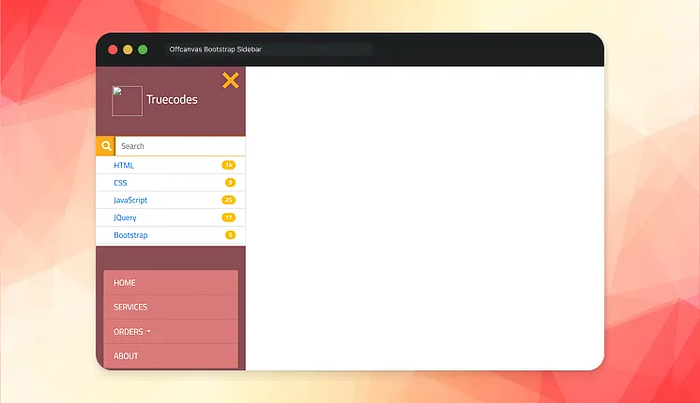
This offcanvas sidebar works well for mobile-first layouts. It hides navigation until it’s needed, keeping the UI clean on smaller screens.
Key Features
Offcanvas sidebar layout
Mobile-friendly navigation
Minimal JavaScript usage
Great for responsive designs
Sidebar with Submenu by Bootdey

This example focuses on multi-level navigation. It’s useful for dashboards that need nested menus without making things complicated.
Key Features
Multi-level sidebar menus
Responsive design
Simple HTML and Bootstrap setup
Easy to customize
Left & Right Sidebar Modal by Patrick
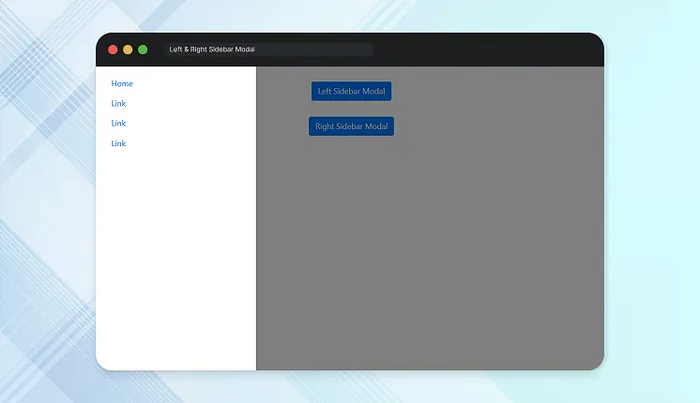
This example includes both left and right sidebar layouts. It’s useful for content-heavy dashboards where different panels are needed.
Key Features
Left and right sidebar layouts
Minimal UI design
Responsive behavior
Ideal for clean admin interfaces
FAQ
Which Bootstrap sidebar is best for SaaS applications?
Studiova, Modernize, and MaterialM are strong choices for SaaS projects. They focus on responsiveness, clean navigation, and layouts that scale with growing products.
Are Bootstrap sidebars still relevant today?
Yes. Bootstrap is still widely used in real-world dashboards and enterprise applications. Sidebars remain a reliable navigation pattern, especially for admin and SaaS platforms.
Should I choose a template or a sidebar snippet?
If you’re building a full dashboard, a template saves time. If you want full control or are adding navigation to an existing project, a sidebar snippet is often enough.
Wrapping Up
Building a good sidebar is not about adding more features; it’s about making navigation feel natural.
Modern Admin Templates like Modernize, Spike and MaterialM , show how sidebars can be clean, responsive, and ready for real-world use. Their open-source nature and multi-framework support make them practical for teams working across different tech stacks.
At the same time, community-built sidebars are great for learning, prototyping, and custom solutions. With so many open source options available, you don’t need to start from scratch — you just need to choose what fits your project best.
If you’ve built or discovered a useful Bootstrap sidebar, feel free to share it. Good sidebars help the entire developer community build better applications.

Join SANJAY on Peerlist!
Join amazing folks like SANJAY and thousands of other builders on Peerlist.
0
5
1