

NVIDIA is Up 12% This Year. Its Under-the-Radar Suppliers are Up 120%. Here’s Why.
As data clusters choke on power and bandwidth limits, Lumentum and Applied Materials are quietly outperforming the chip giants.
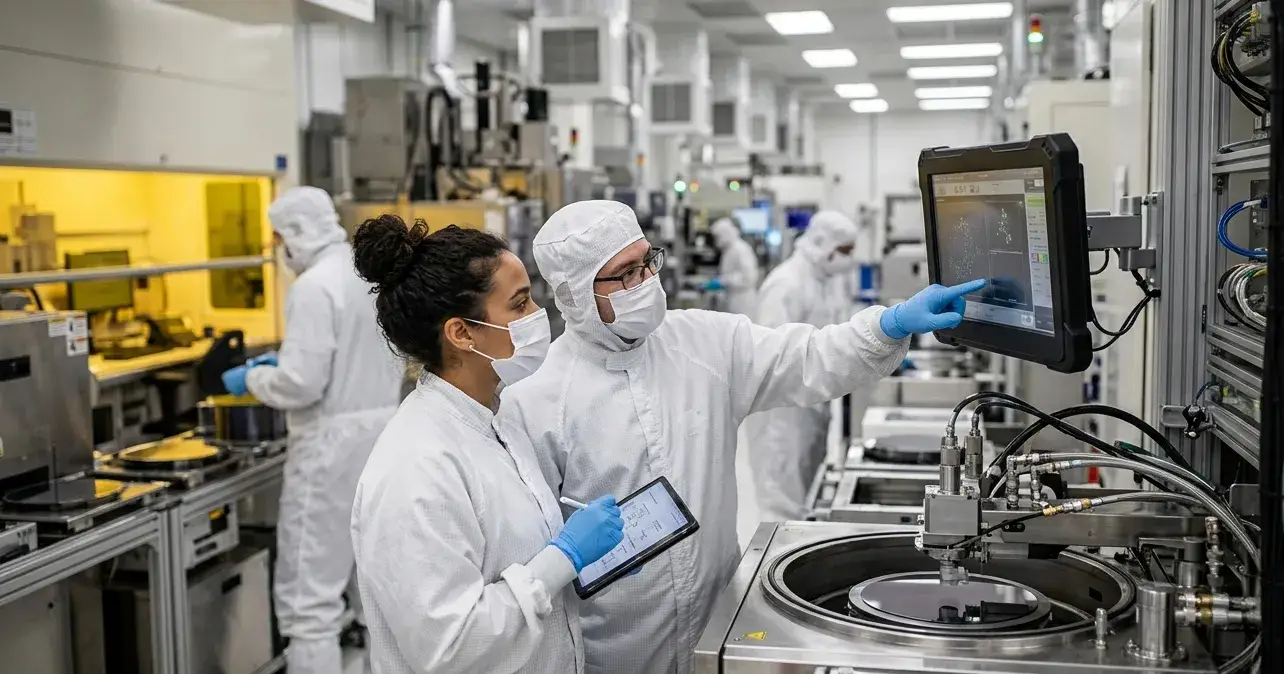
While the tech media remains hyper-focused on NVIDIA as the sole protagonist of the AI narrative, the engineering and capital realities of 2026 tell a completely different story. Year-to-date, NVIDIA’s stock is up a modest 12%, while the broader semiconductor sector has surged 74%.
The real alpha isn't in raw compute anymore—it’s in the infrastructure beneath it. Two under-the-radar enablers, Lumentum Holdings (+121%) and Applied Materials (+67%), are drastically outperforming the chip giants.
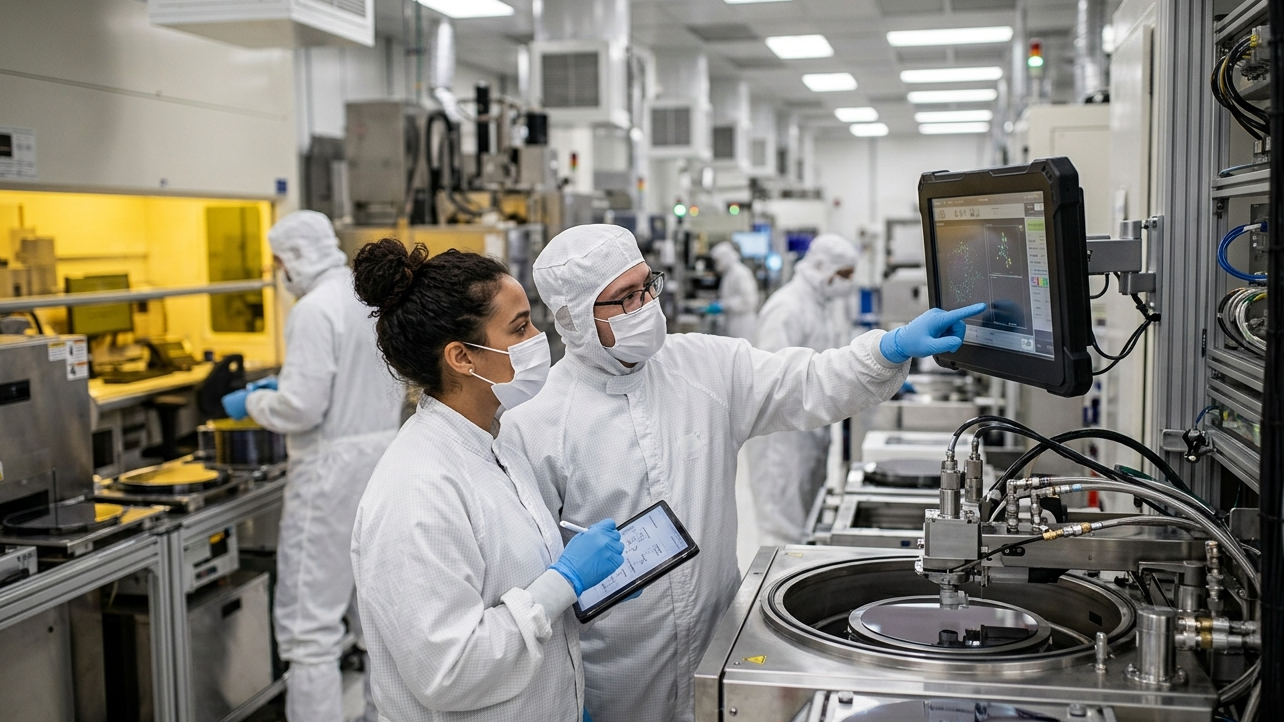
This isn't speculative hype. It marks a fundamental architectural shift: AI scaling has officially moved past the compute bottleneck and slammed into the data-movement wall.
The Compute Ceiling and the Physical Reality of AI
NVIDIA’s primary challenge is its concentrated reliance on GPU sales at a time when training clusters are hitting brutal physical and economic limits. A single H100 server rack draws nearly 10 kW, and total deployment logistics are starting to eclipse the cost of the chips themselves.
Furthermore, algorithmic efficiency gains are plateauing, and model scaling is slowing down. Teams building large-scale infrastructure increasingly recognize that the true constraint isn't how fast a transistor can flip—it’s how fast data can move between them.
Photons over Electrons: The Lumentum Surge
This is exactly where Lumentum has captured the strategic high ground. Specializing in optical and photonic components, they supply the 800G and 1.6T pluggable transceivers that have become the absolute standard for modern AI data center interconnects.
[NVIDIA Compute Architecture]
 │ (Bottleneck: Bandwidth & Thermal Limits)
 ▼
[Lumentum Silicon Photonics] ──► Enables 800G/1.6T Transceivers for Meta, Google, Microsoft
When Meta, Microsoft, and Google scale their latest clusters, they rely heavily on silicon photonics to bypass the inherent bandwidth limitations of NVIDIA’s own GB200 NVL72 architecture. The results speak for themselves:
Q1 2026 AI Revenue: Up 310% year-over-year.
Gross Margins: Climbed to 42%, outpacing NVIDIA’s data center segment.
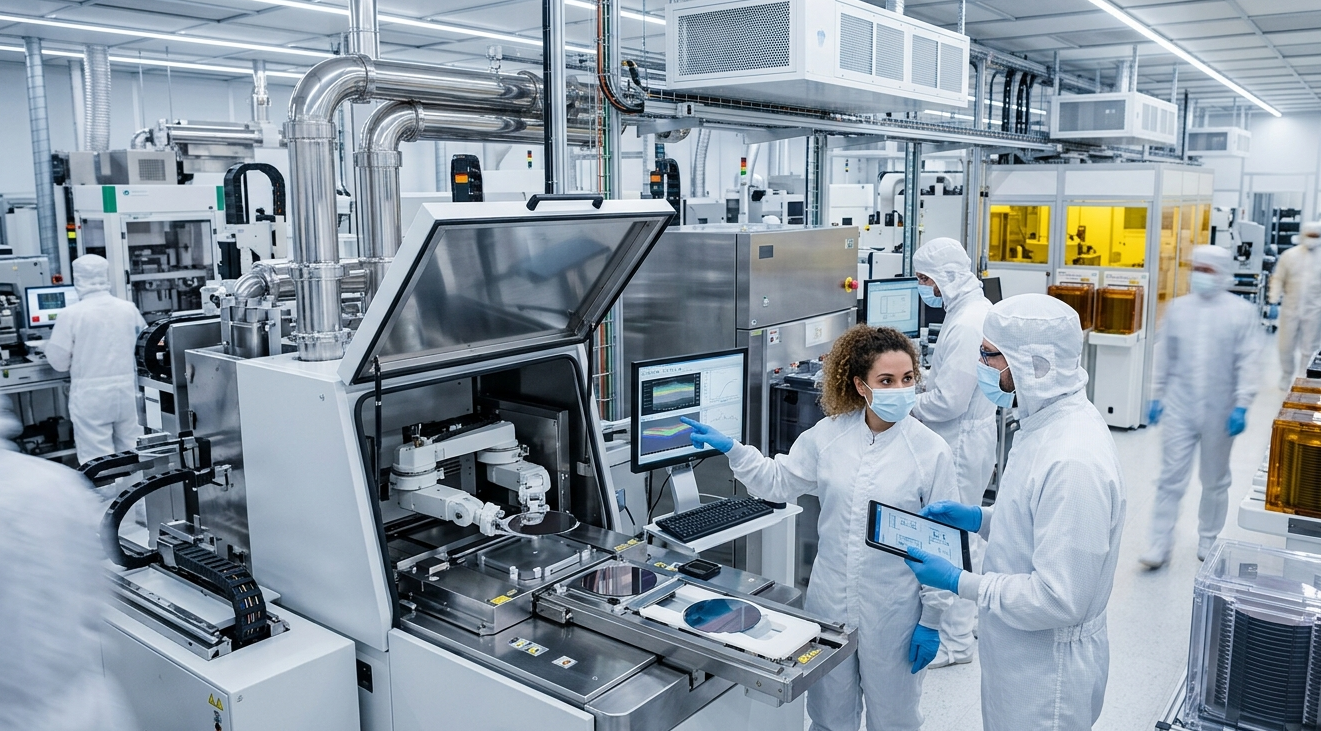
Crucially for product strategy, these optical interconnects are "design-locked." Once they are baked into a cluster's architecture, ripping and replacing them is prohibitively expensive, handing Lumentum an incredibly durable moat.
The Advanced Packaging Frontier: Applied Materials
The second major bottleneck is physical manufacturing and memory integration. With TSMC’s CoWoS (Chip-on-Wafer-on-Substrate) capacity stretched to its limits, memory giants like Samsung and SK Hynix are aggressively adopting hybrid bonding and silicon interposers.
Applied Materials practically owns this space, commanding nearly 60% of the 2.5D/3D packaging equipment market through its Endura and Producer platforms.
Consider the hardware stack: Micron's recent mass production of HBM4E (High Bandwidth Memory) relies entirely on Applied’s atomic layer deposition (ALD) systems. Every single HBM stack requires hundreds of precision thin-film steps. In this environment, yield rate is everything, and Applied Materials holds the keys to the factory floor.
The Infrastructure Shift: System integrators like Supermicro and Dell are reportedly allocating up to 80% of their engineering resources to interconnect and cooling optimization rather than chip integration.
The Paradigm Shift: Are We Post-GPU?
For years, the industry narrative fixated on a simple question: "Who builds the fastest AI chip?" It largely ignored the plumbing—the optical signaling, thermal management, and interconnect density required to make those chips work together.
As we head into the second half of 2026, the momentum is firmly with the hardware layers enabling HBM4 scaling and co-packaged optics (CPO). Unless NVIDIA successfully expands its ecosystem into optical standards or packaging leadership, its dominance risks being diluted by the very infrastructure it relies on.
As AI bottlenecks migrate from transistors to photons and substrates, the power dynamics of tech are shifting. Value is moving away from the flashiest compute engines and toward the quiet engineers building the data highways beneath them.
source:https://www.semipulse.info/deep/the-quiet-winners-of-the-ai-boom-how-semipulse

Join Alan on Peerlist!
Join amazing folks like Alan and thousands of other builders on Peerlist.
0
0
0