

SemiPulse Daily Briefing: June 2, 2026 Industry Dynamics: A New Era of AI-Driven Industrial Realignment
Mapping the Silicon Shifts: Sovereign Tech, AI Hardware, and the New Edge Domination

The semiconductor industry is undergoing a profound structural shift, catalyzed by NVIDIA’s aggressive entry into the personal computing domain and reinforced by geopolitical recalibrations in global supply chains. At the heart of this transformation lies the convergence of AI workloads, advanced packaging, and sovereign industrial policy—forces that are collectively redefining competitive advantage.
NVIDIA’s launch of the RTX Spark “superchip” at Computex 2026 marks more than a product debut; it signals a strategic pivot from data center dominance to end-user compute control. Integrating Arm-based CPU cores, Blackwell GPU architecture, and unified memory in a single package, RTX Spark targets what CEO Jensen Huang termed “agentic AI”—autonomous, context-aware applications running locally on PCs. This move directly challenges Apple’s M-series silicon and pressures traditional x86 players like Intel and AMD, both of which saw share prices dip amid fears of market encroachment.
Simultaneously, the U.S. government has closed a critical export control loophole that previously allowed Chinese firms to acquire NVIDIA AI chips through overseas subsidiaries. This tightening aligns with broader efforts to contain China’s access to cutting-edge compute, even as Huawei continues to push architectural alternatives like its so-called “Her’s Law” (a misreported variant of its earlier “Tau Law”), which emphasizes system-level efficiency over transistor scaling—a narrative TSMC has publicly contested, reaffirming its commitment to continued node advancement.
Meanwhile, Europe is resetting its Chips Act strategy, shifting focus from pure manufacturing capacity to stimulating domestic demand and fostering vertical integration in automotive and green tech. A new EU-backed semiconductor initiative, launched in partnership with EV makers, underscores this pivot toward application-specific sovereignty.
Technology Frontiers: From GaN Switches to AI-Accelerated Design
Technological innovation is accelerating across multiple vectors—not just in logic and memory, but in power electronics and design automation. STMicroelectronics’ release of MASTERGAN6 and MASTERGAN7 demonstrates how integrated GaN (gallium nitride) platforms are simplifying high-efficiency power conversion, now featuring built-in LDOs and dedicated control pins to lower adoption barriers for consumer and industrial designers.
In parallel, Seoul Semiconductor’s “HV Opto-Semiconductor” has secured design wins with four of the world’s top automakers, signaling growing demand for high-voltage optoelectronic solutions in next-gen EV architectures. Infineon, too, is doubling down on India as a growth corridor for its green-energy chips, reflecting a broader trend of decarbonization-driven semiconductor demand beyond data centers.
On the design front, Synopsys reported stronger-than-expected Q2 FY2026 results, driven by surging demand for AI-enhanced EDA tools. Cadence extended its chip design agent to support Level-5 autonomous systems, embedding generative AI directly into verification and layout workflows. These developments highlight a meta-trend: AI is not only the application driving chip demand—it is also becoming the tool reshaping how chips are conceived and validated.
Notably, Nikon’s continued pricing pressure on ArF immersion scanners introduces a rare crack in ASML’s lithography hegemony. While still far from matching EUV capabilities, Nikon’s cost-competitive offerings are gaining traction among mature-node fabs seeking yield optimization without billion-dollar tool investments—particularly relevant as specialty chemical supply chains struggle to keep pace with new U.S. fab construction.
Market Reactions: Valuation Volatility and Strategic Positioning
Financial markets reacted swiftly to NVIDIA’s PC gambit. Wall Street futures rose on June 1, 2026, buoyed by optimism around AI PCs, while ARM Holdings saw its stock surge on expectations of expanded licensing from RTX Spark’s CPU subsystem. Conversely, Intel and AMD shares tumbled, with Intel executives openly expressing “a healthy dose of paranoia” about NVIDIA’s vertical integration play.
Analysts have revised price targets across the board: AMD faces downward pressure as NVIDIA threatens its discrete GPU stronghold in premium laptops, while Micron remains a focal point of investor debate—some see HBM-driven momentum (SK Hynix’s 1,000% annual gain has drawn major fund inflows), others warn of cyclical overcapacity.
Qualcomm’s announcement of the Snapdragon C platform adds another layer: positioned as a $300–$400 alternative to Apple’s rumored $599 MacBook Neo rival, it aims to democratize AI PCs in the mid-tier segment. Yet questions linger about software readiness and developer ecosystem maturity—challenges that Microsoft and NVIDIA are jointly addressing through co-engineered Windows optimizations and CUDA-on-Arm compatibility layers.
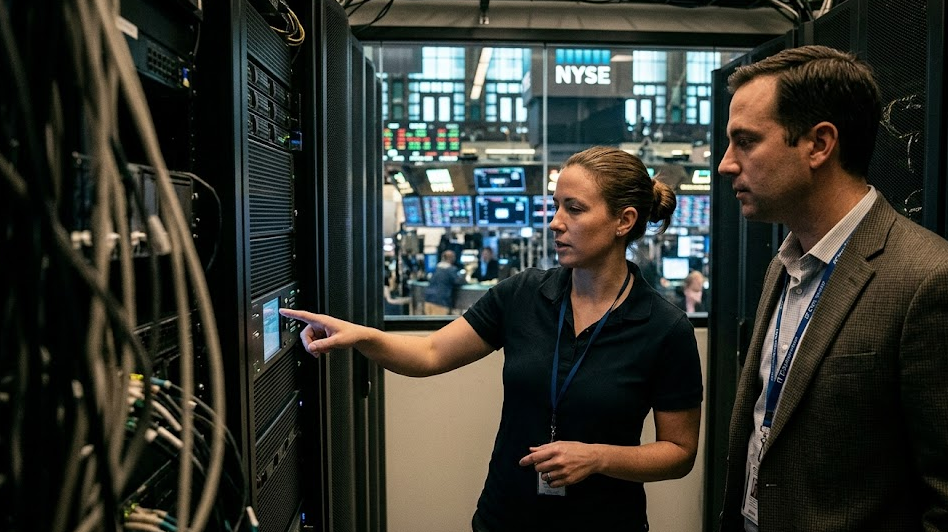
CoreWeave’s successful validation of the Vera Rubin NVL72 rack—featuring novel liquid cooling and full production readiness—further cements NVIDIA’s infrastructure lead. The NYSE’s partnership with NVIDIA to deploy AI-optimized trading infrastructure exemplifies how AI compute is permeating even non-traditional sectors, creating new revenue channels beyond hyperscalers.
Events & Ecosystem Developments: From Munich to Taipei
Computex 2026 in Taipei served as the epicenter of AI PC momentum. Beyond NVIDIA’s keynote, OEMs unveiled a wave of RTX Spark-powered devices: ASUS debuted its ProArt P16 and P14 creator laptops, while Microsoft unveiled the Surface Laptop Ultra—packing 128GB RAM, 20 Arm cores, and a mini-LED PixelSense display. These products validate the “AI-first PC” thesis but also expose a premium-only trap: most configurations start well above $2,000, limiting mass-market reach.
In mobility, Uber, Autobrains, and NVIDIA announced a joint robotaxi pilot in Munich, leveraging NVIDIA’s DRIVE Thor platform. This tripartite alliance illustrates how AI chipmakers are expanding beyond hardware into full-stack mobility solutions—a trend mirrored in Infineon’s India strategy and Seoul Semiconductor’s automotive wins.
Back in the U.S., the disconnect between fab construction and specialty chemical readiness remains acute. As new semiconductor facilities rise in Arizona, Texas, and Ohio, the upstream supply of ultra-pure precursors, photoresists, and CMP slurries lags, threatening yield ramp timelines. This bottleneck could delay the Biden administration’s goal of achieving 20% domestic chip production by 2030 unless addressed through targeted industrial policy.
Outlook
The semiconductor landscape in mid-2026 is defined by three interlocking narratives: vertical integration (NVIDIA controlling the stack from silicon to software), geopolitical containment (U.S. export controls, EU demand stimulation), and architectural divergence (Huawei’s system-level innovations vs. TSMC’s scaling orthodoxy). While AI PCs capture headlines, the real battle is being waged in supply chains, standards, and sovereign compute ecosystems. Companies that master this triad—not just raw performance—will define the next decade of semiconductor leadership.
---
Prepared by SemiPulse Intelligence | June 2, 2026
https://www.semipulse.info/deep/nyse-s-deployment-of-nvidia-s-vera-cpu-semipulse

Join Alan on Peerlist!
Join amazing folks like Alan and thousands of other builders on Peerlist.
0
1
0