

The State of Generative Media: When AI Tools Grew Up
A few years ago, generative media felt magical. And unreliable.
Images looked impressive — until you noticed the details.
Videos broke after a few seconds.
Characters changed faces.
Motion ignored physics.
Voices sounded just… off.
You could generate something interesting.
But rarely is something usable.
That phase is over.
Today, designers, marketers, and builders can generate production-ready assets at scale — in minutes, not days.
What once required photographers, studios, lighting setups, and post-production pipelines…can now be done with a prompt and a system.
But the real shift isn’t just speed.
Its capability.
Generative media has crossed an important threshold:
• From experimentation → to reliability
• From outputs → to systems
• From novelty → to infrastructure
This isn’t about better models.
It’s about mature systems.
• Outputs are more predictable
• Workflows are more repeatable
• Tools are finally usable in production
By the end of 2025, most organizations were already using AI in at least one function.
Not as an experiment.
As part of how they operate.
The best way to understand this shift isn’t by listing models.
It’s by understanding how each medium evolved:
• Images learned control
• Video learned memory
• Audio learned speed
• And now, systems are learning to orchestrate everything together
What we’re witnessing is a transition.
Generative media is no longer something you try.
It’s something you build with.
The Acceleration Era: When Progress Stopped Being Linear
Until recently, progress in generative media felt unpredictable.
Breakthroughs came as research papers.
Not products.
Then something changed.
From 2024 onward, generative models began evolving like software:
• Frequent releases
• Rapid iteration
• Continuous improvement
By 2025:
• Image, video, and audio models reached similar levels of maturity
• Improvements arrived every few weeks
• Teams stopped waiting for “the next big breakthrough.”
• Builders started shipping systems on top of constant change
Progress stopped being occasional.
It became continuous.
And that changed everything.
Image Generation: From Aesthetic Wins to System Reliability
Early image models were judged on how beautiful they looked.
But production systems don’t care about beauty alone — they care about consistency, control, and predictability.
That’s where the maturity curve becomes visible.
The Real Shift
Image generation didn’t evolve through one big breakthrough. It matured through three quiet improvements that turned experiments into systems:
Prompt adherence improved
Models stopped “freestyling” and started respecting composition, camera angle, lighting, and subject constraints.Detail coherence increased
Hands, faces, text, object relationships — fewer hallucinated artifacts.Throughput and latency dropped
Generating large batches of images within a workflow became feasible.
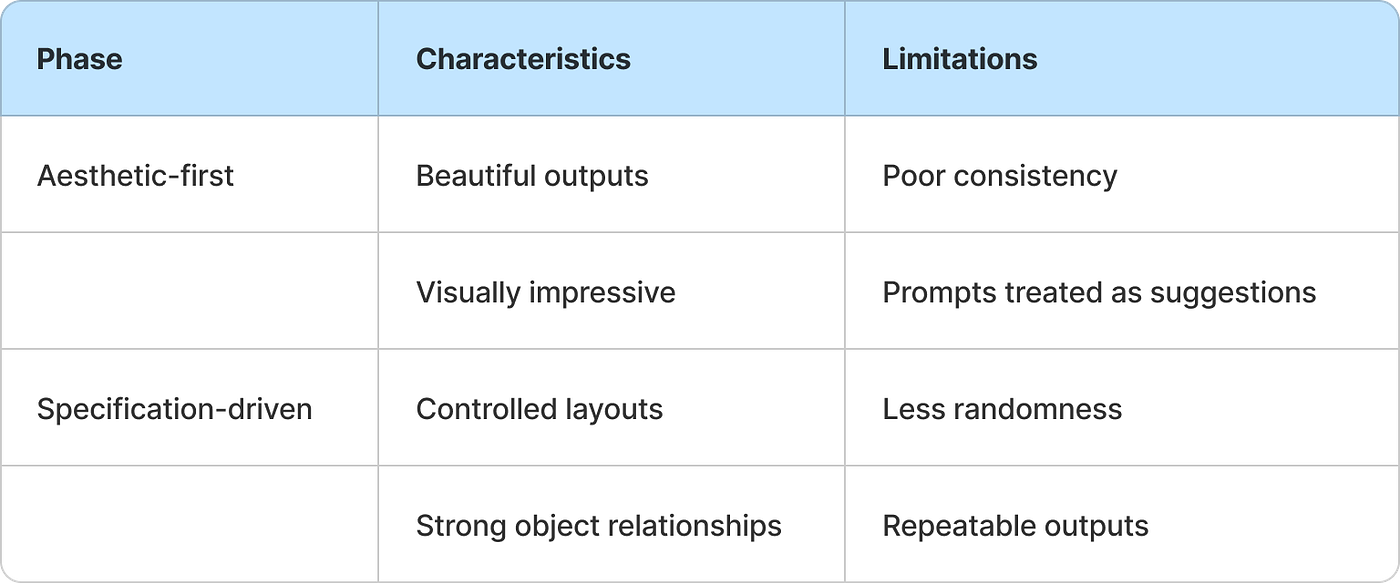
Then vs Now
Press enter or click to view image in full size
Cheat Sheet: Writing Better Image Prompts
If your outputs feel inconsistent, the issue is usually not the model.
It’s the prompt.
Use this structure:
Press enter or click to view image in full size

Example:
A modern fintech dashboard, mial UI design, soft ambient lighting, top-down perspective, clean and professional mood, subtle gradients, and glassmorphism
Weak Prompt:
fintech dashboard
Too vague → model fills gaps randomly
What Actually Changed
The biggest shift wasn’t visual quality.
It was behavior.
Prompts stopped being suggestions.
They became specifications.
You can now reliably control:
✅ Composition (close-up, wide shot)
✅ Lighting (studio, natural, neon)
✅ Style (realistic, anime, cinematic)
✅ Perspective (top-down, isometric)
✅ Consistency (same character, same scene)
From Experiments to Production
Press enter or click to view image in full size
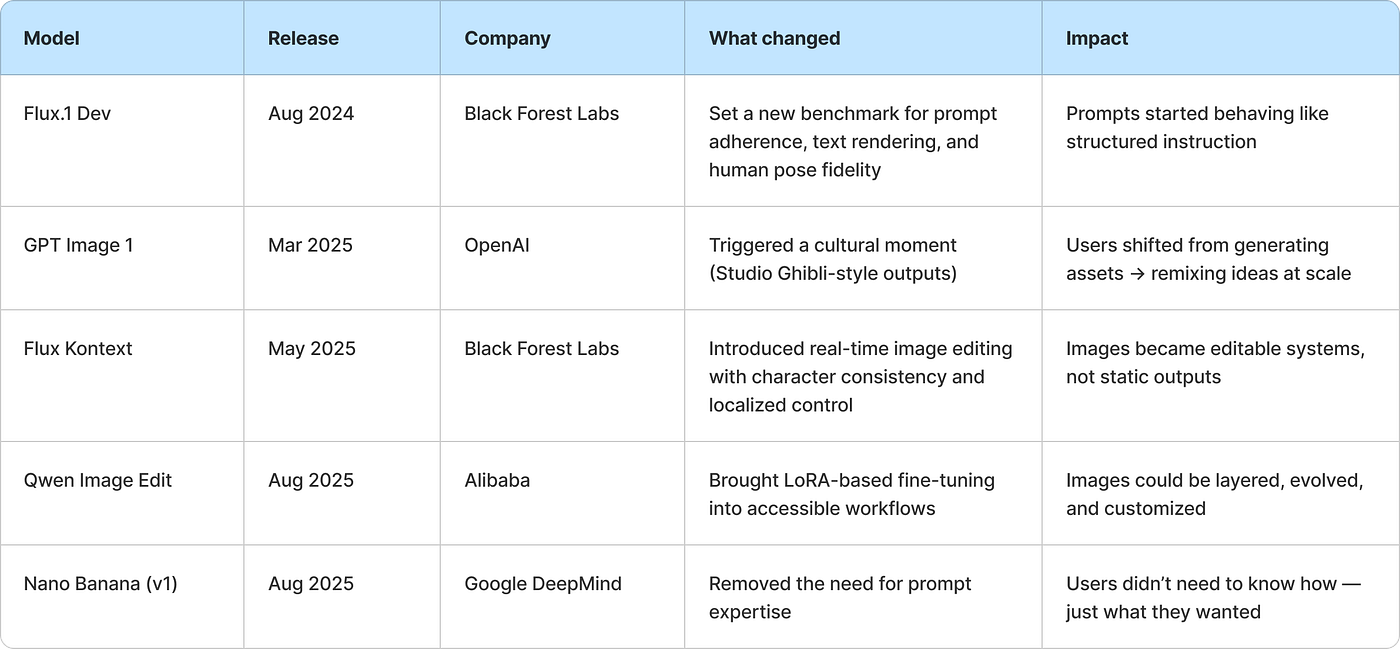
Real Use Case: E-commerce transformation
Press enter or click to view image in full size
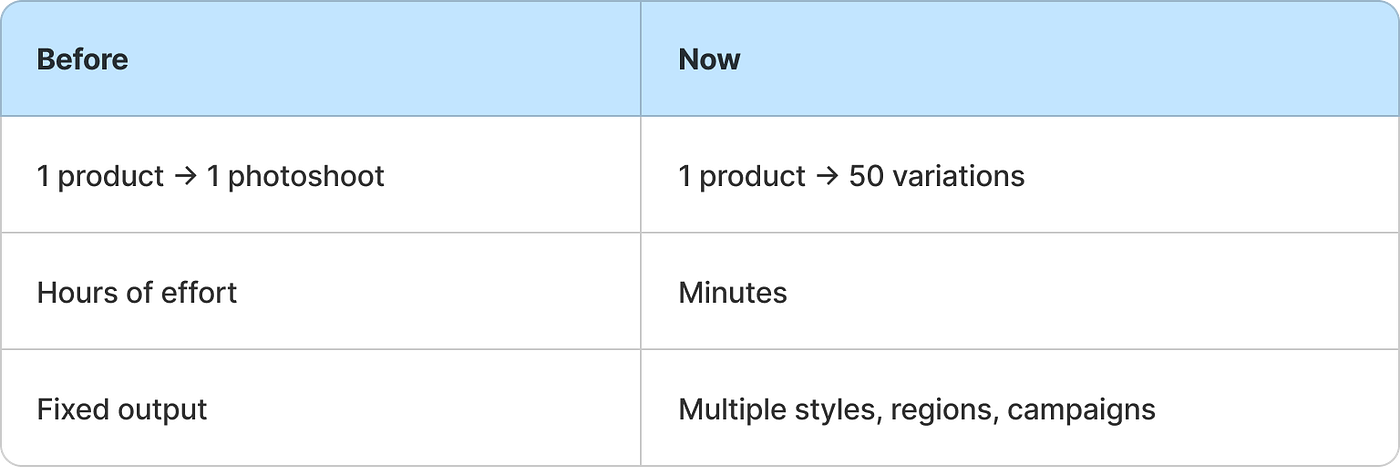
This is where image generation moved from impressive to valuable.
Common Mistakes (Still Happen)
Writing vague prompts
Ignoring lighting and camera
Treating outputs as final instead of iterative
Generating one image instead of batches
Pro Tip
Don’t generate one image.
• Generate multiple variations
• Change small variables: lighting, angle, and mood
• Select the best output
That’s how production teams actually use these tools.
Key Insight
Image generation didn’t just improve.
It became predictable.
And that’s when tools grow up.
Mental Model
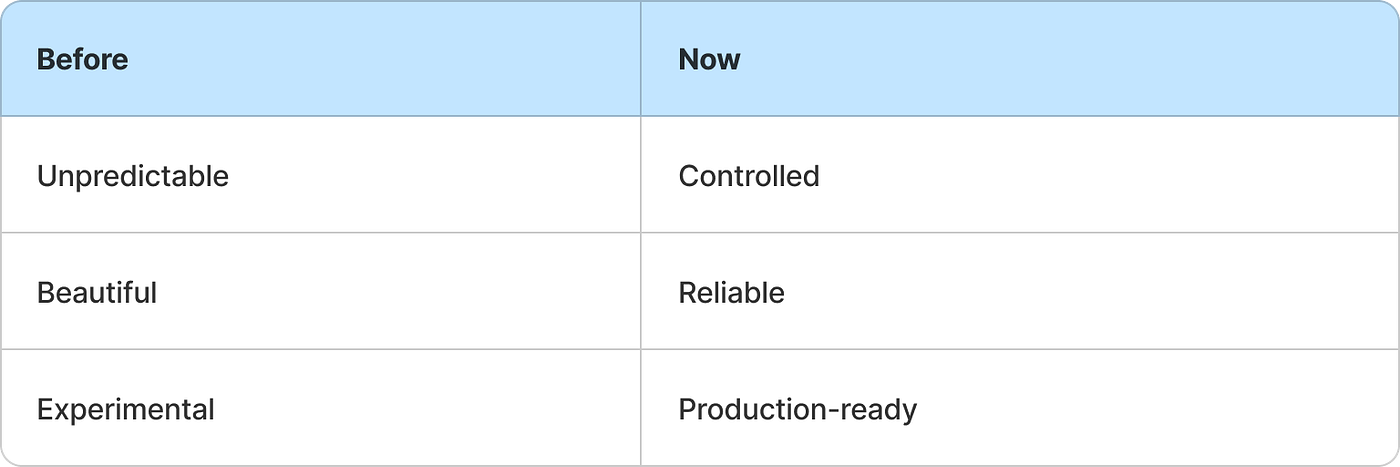
Before → Generate something cool.
Now → Generate exactly this.
Why This Matters
Once image generation became predictable:
Designers stopped “retrying endlessly.”
Teams integrated it into workflows
Production scaled without proportional cost
Image generation didn’t replace creativity.
It removed friction.
Image generation in one line:
Press enter or click to view image in full size
But images were only the beginning.
The next challenge was much harder:
Teaching models how to understand time.
Video Generation: Learning to Remember Over Time
If images struggled with control, video struggled with memory.
Early video models could generate stunning frames — but couldn’t remember what happened one second ago.
Characters changed faces
Motion broke physics
Scenes reset themselves
It looked impressive.
Until it moved.
The Core Problem
Unlike images, video requires:
Press enter or click to view image in full size
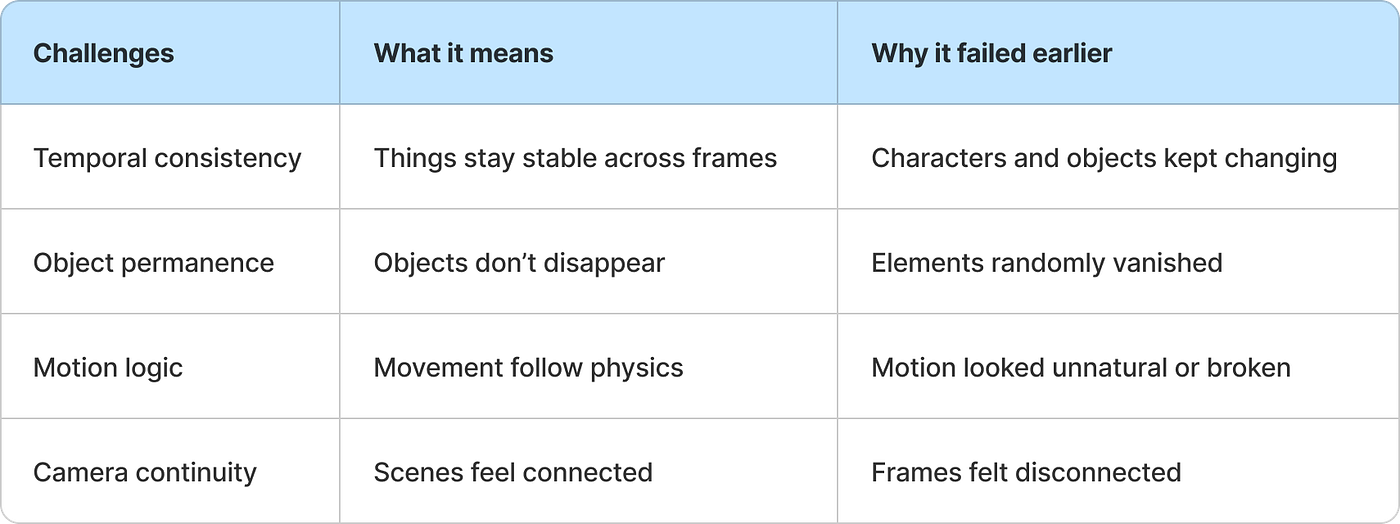
Early models failed at all four.
The Breakthrough
The shift happened when models stopped treating video as:
animated images
…and started treating it as:
a time-based medium
How Maturity Showed Up
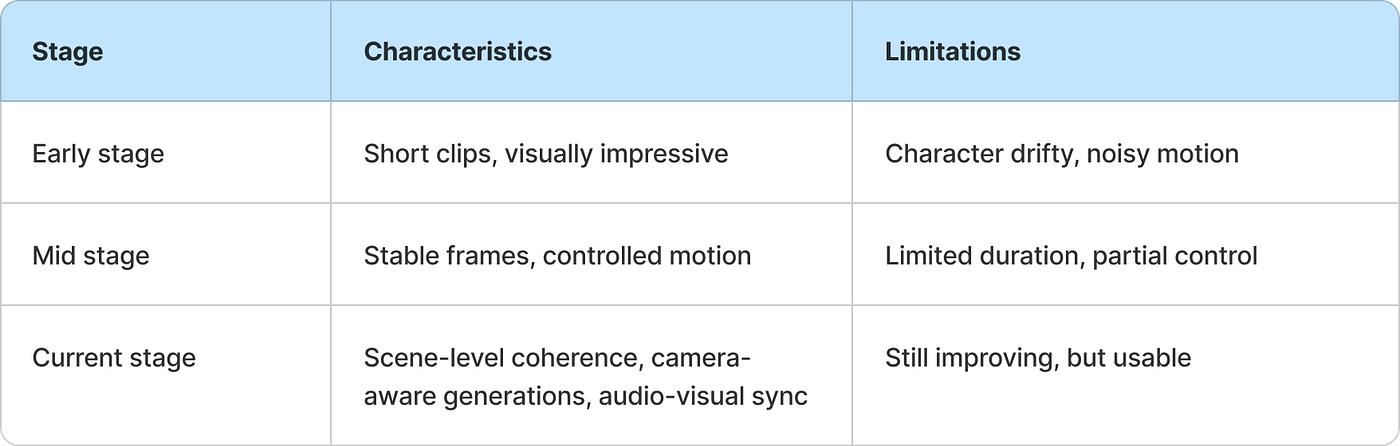
Video models didn’t improve all at once. They evolved in layers:
Single-shot clips
Short, visually impressive, but unusable beyond demos.Temporal stability
Characters stopped melting frame-to-frame.Narrative control
Scene duration, camera motion, and subject persistence became controllable.Multimodal fusion
Audio, motion, and visuals began to be synchronized rather than being stitched later.
Evolution of Video Models
From Demos → Usable Systems
Press enter or click to view image in full size
Cheat Sheet: How to Prompt Video
Most people write video prompts like image prompts.
That’s the mistake.
Use this structure:
Press enter or click to view image in full size

Example:
A man running through a forest, camera tracking from behind, cinematic style, golden hour lighting, 6-second shot
Weak Prompt:
man running in the forest
Missing motion + camera + timing → unstable output
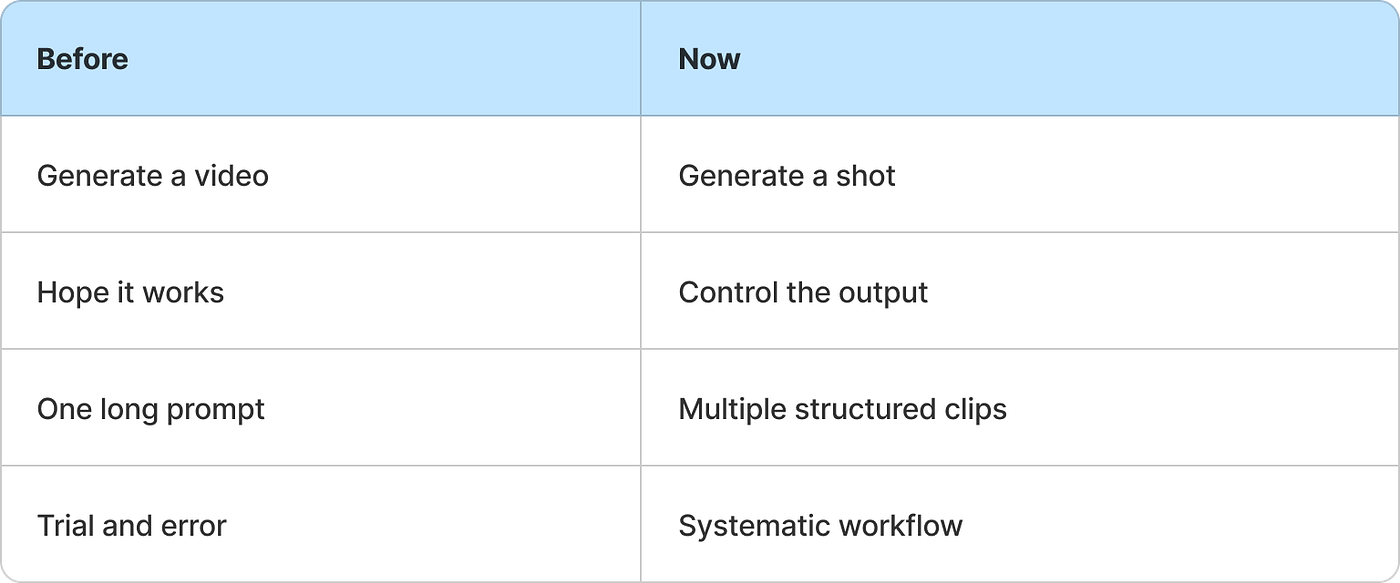
Mental Shift: Think in Shots, Not Prompts
Instead of: Generate a video
Think: Generate a shot
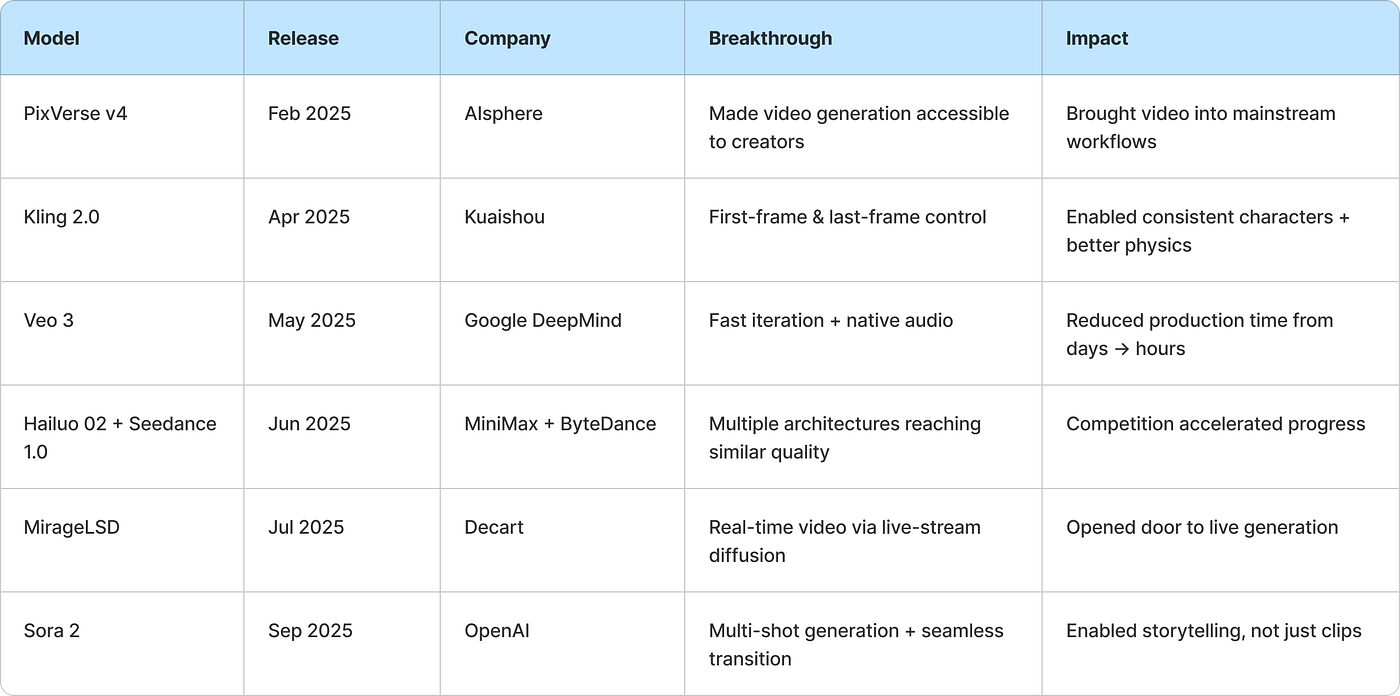
Key Releases That Changed Everything
Press enter or click to view image in full size
What This Means
Eight major releases in 10 months.
Progress stopped being occasional
It became continuous
Why this mattered
Once video became predictable:
Storyboarding became automated
Marketing previews scaled instantly
Creators stopped “re-rolling endlessly.”
Key Insight
Video became a tool, not a gamble.
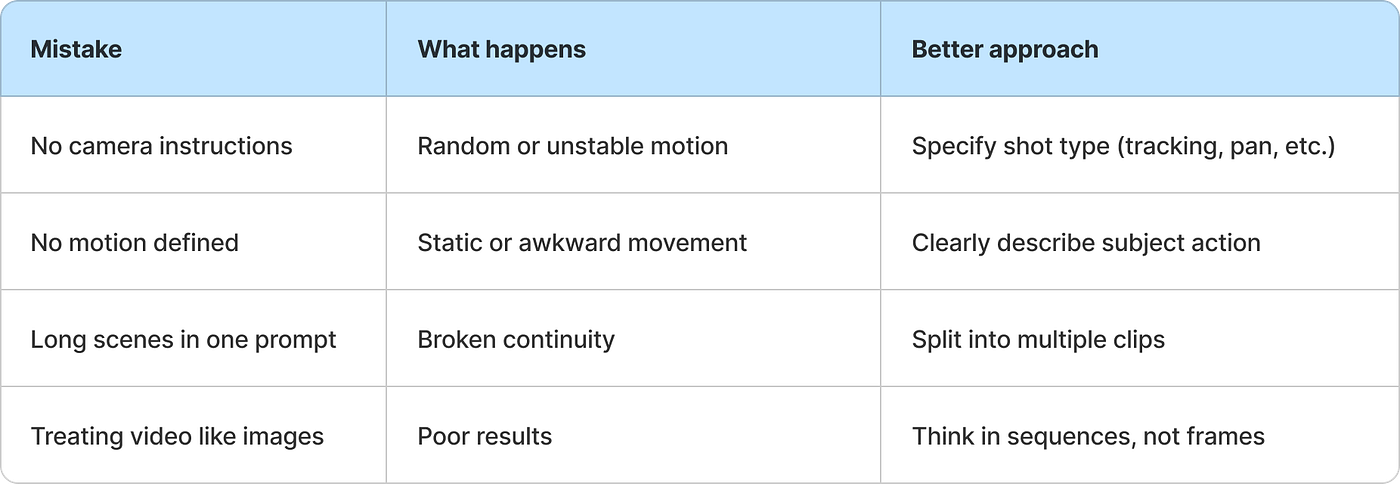
Why Most People Still Struggle
Even now, outputs fail because:
Press enter or click to view image in full size
Practical Tips
Keep clips 5–10 seconds max
Control first + last frame when possible
Generate multiple variations
Stitch clips instead of forcing one long video
Final Takeaway
At that point, video generation ceased to be a novelty.
Press enter or click to view image in full size
It became a tool for:
• storytelling
• marketing
• simulation
Video didn’t just improve.
It became usable.
If video models struggled with time, audio models struggled with something else entirely. Speed.
Voice, Music, and Audio: When Latency Became More Important Than Quality
Audio’s path was different.
It has become one of the most production-ready categories of generative media — but not for the reason most people expect.
The Real Shift
Voices didn’t need to sound flawless.
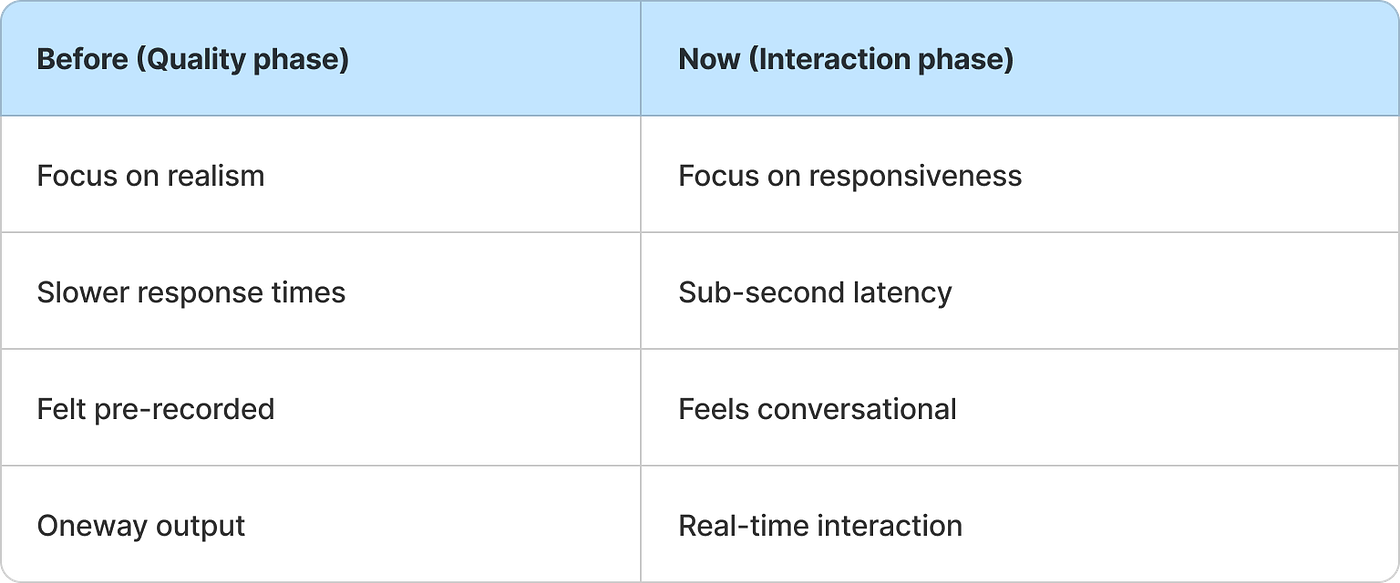
They needed to respond fast.
Once latency dropped below a second, everything changed.
• Conversations felt alive
• NPCs stopped sounding scripted
• Educational tools became interactive instead of pre-recorded
Cheat Sheet: What Actually Changed
Sub-second voice response
Emotionally expressive speech
Structured music generation
The breakthrough wasn’t just quality. It was responsiveness.
Then vs Now
Press enter or click to view image in full size
Why Audio Worked Early
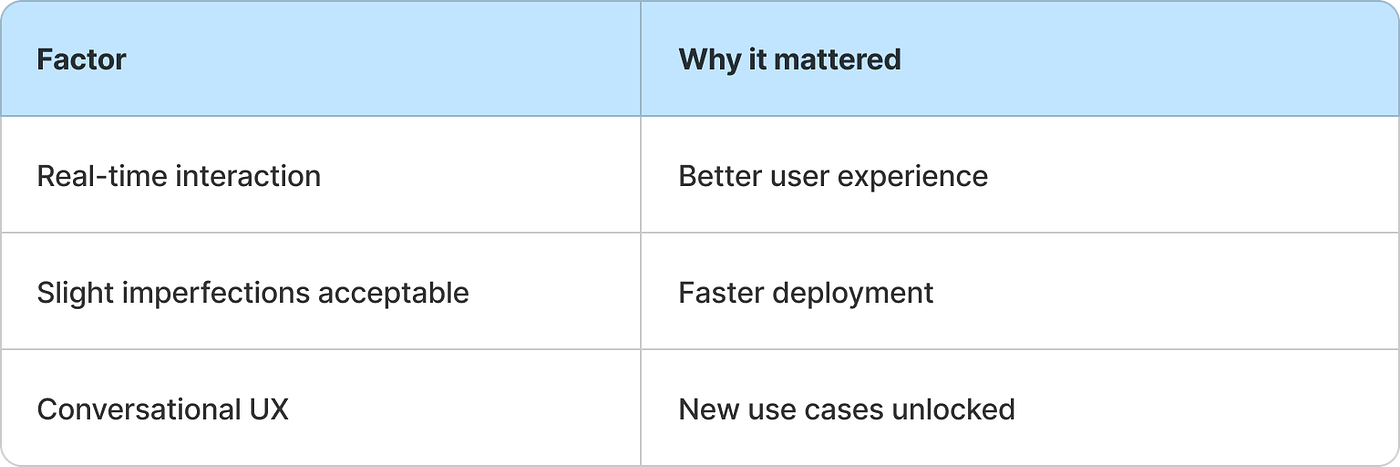
Audio became one of the first generative mediums enterprises trusted — not because it was perfect, but because it was predictable.
Why enterprises adopted audio early:
Press enter or click to view image in full size
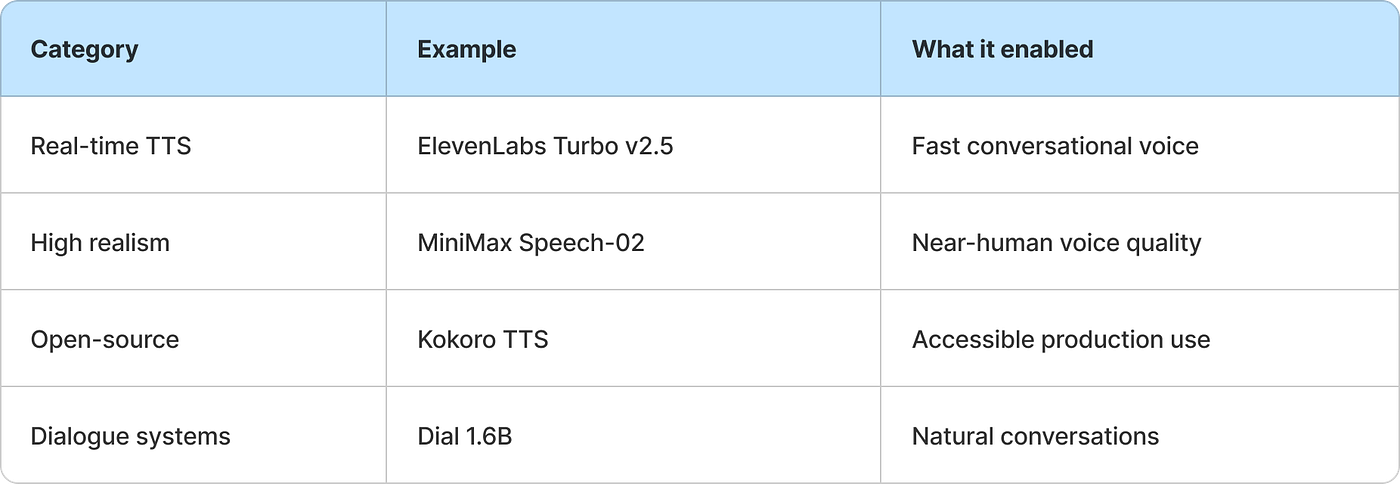
Real-World Progress:
Press enter or click to view image in full size
Music Followed a Different Path
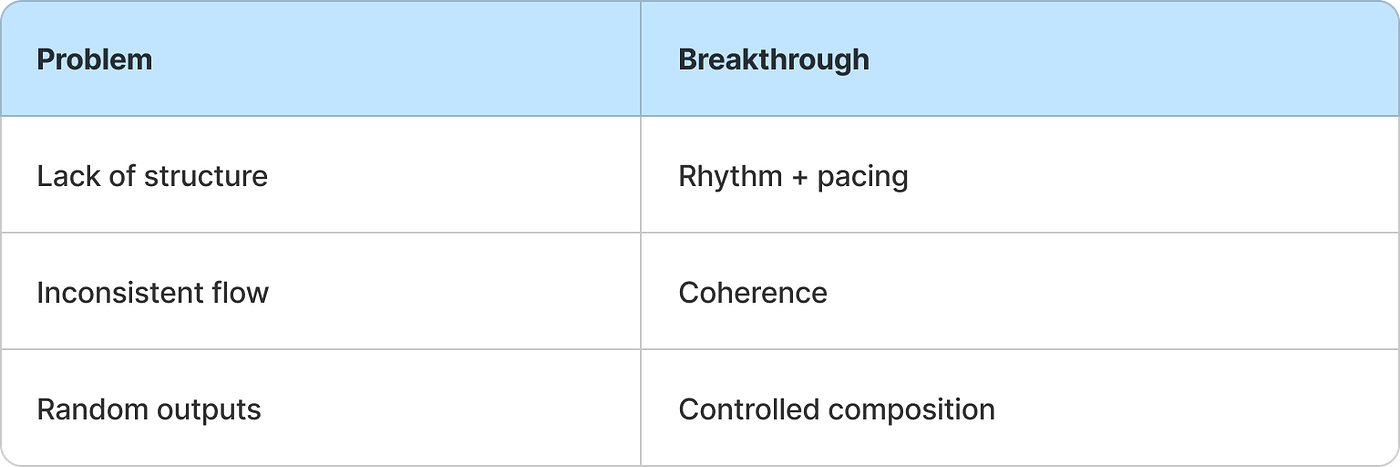
Music didn’t struggle with latency.
It struggled with structure.
The real breakthrough wasn’t creativity — it was:
Press enter or click to view image in full size
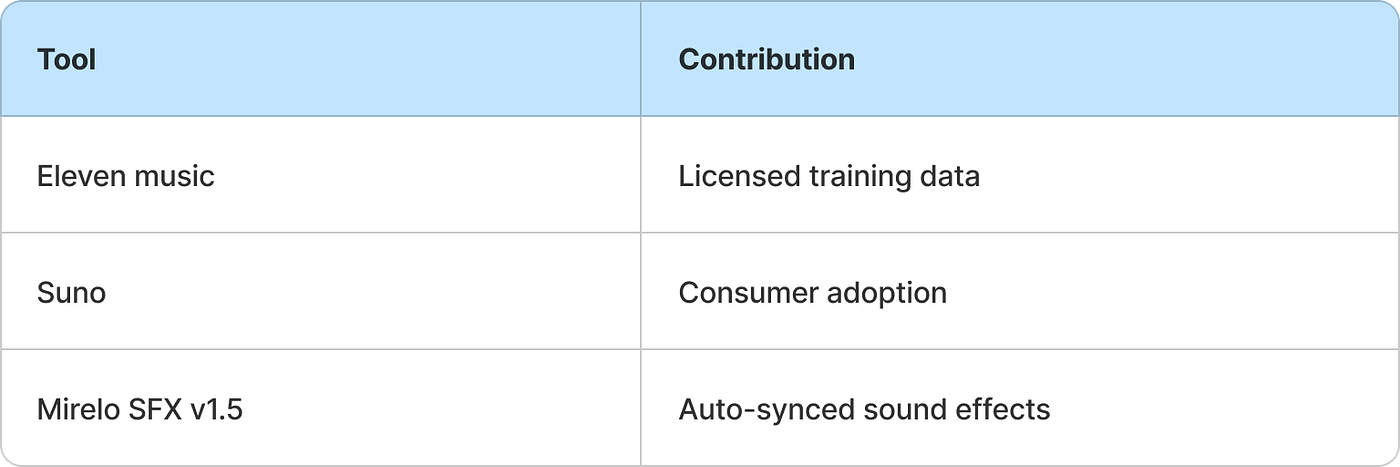
Recent shifts in music + sound:
Press enter or click to view image in full size
Key Insight
Audio didn’t need to be perfect.
It needed to be trusted.
Common Mistake
Most people still optimize for:
How real does it sound?
Instead of:
How fast does it respond?
Practical Takeaway
If you’re building with audio:
Prioritize low latency over perfect realism
Design for interaction, not playback
Use audio where real-time feedback matters
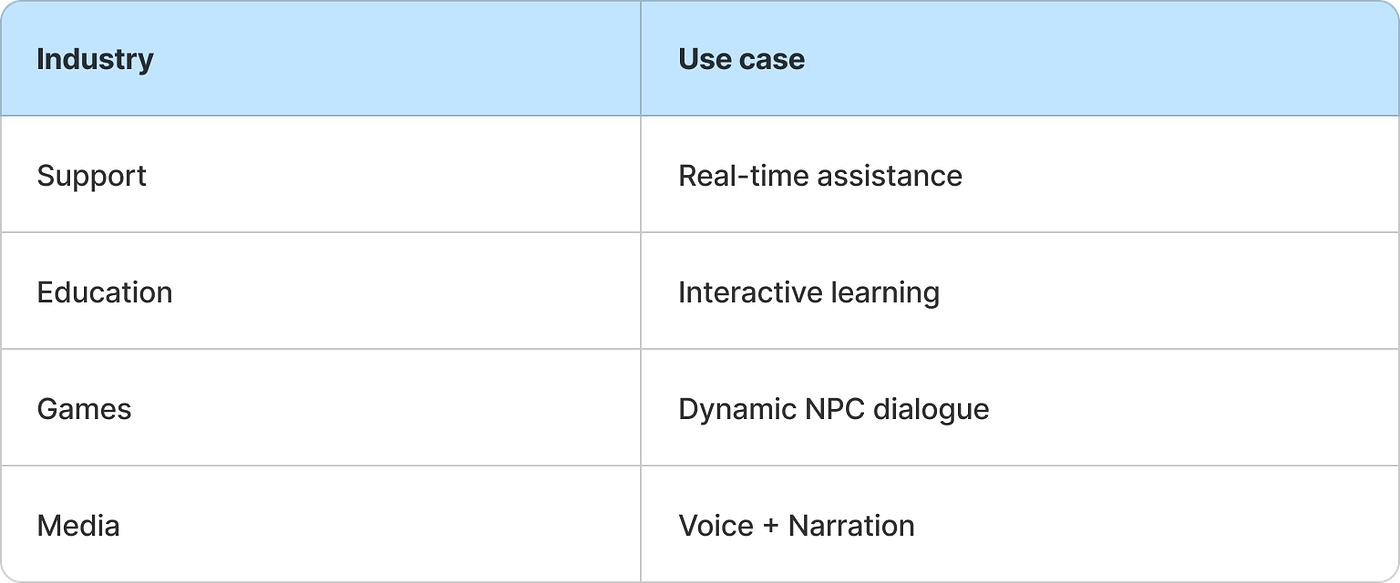
Why This Matters
This is why audio models quietly became some of the first AI systems deployed at scale — in:
Press enter or click to view image in full size
Audio didn’t need perfection.
It needed trust.
The Hidden Pattern Across Generative Media
If you zoom out, something interesting appears.
Each type of generative media solved a different core problem:
• Images need control
• Video needs memory
• Audio needed speed
This evolution wasn’t random.
Each modality matured by overcoming its biggest limitation.
What This Means
Generative media didn’t grow through one breakthrough.
It matured by solving different constraints across different mediums.
And once those constraints were solved…
These tools stopped being experiments
and started becoming reliable systems.
3D Model and Vision Language
2025 was the year the 3D generation moved from experiments to production.
Modeling timelines compressed — from weeks to minutes.
Press enter or click to view image in full size
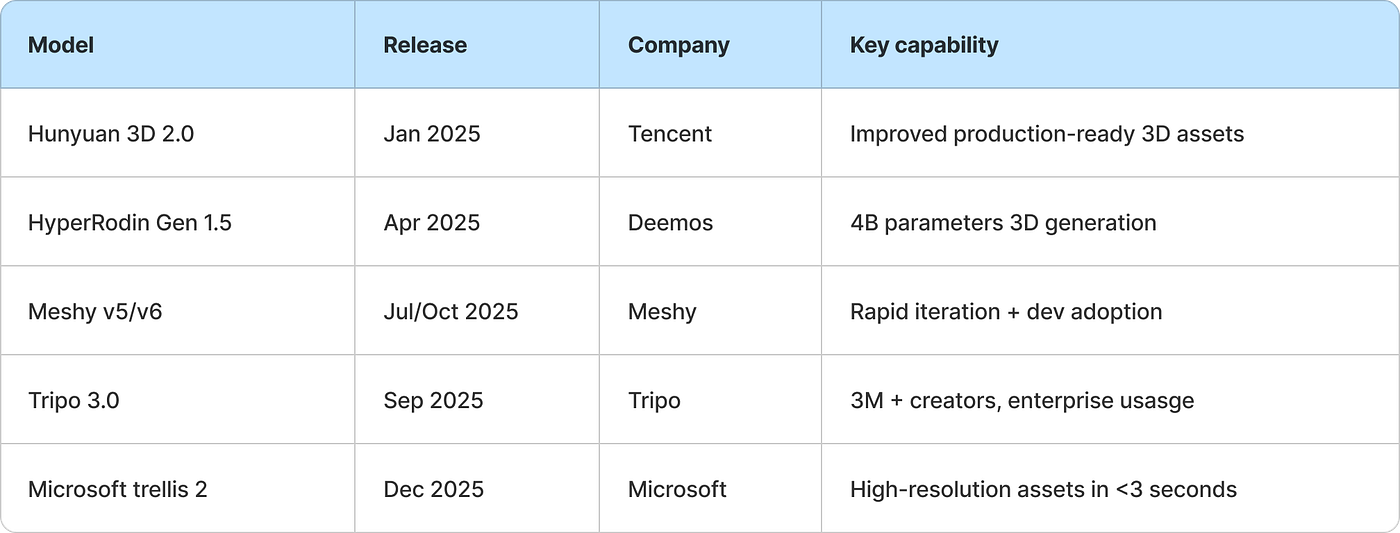
3D generation is powerful — but not frictionless yet:
• Meshes still need topology cleanup
• Complex mechanical accuracy breaks down
• Hard-surface models require manual refinement
Images generate scenes.
Video generates motion.
But the next generation of systems goes one step further.
They generate environments.
World Models: When Media Became Environments
This is where generative media quietly crossed into a conceptual boundary.
World models don’t just generate assets.
They generate systems you can interact with.
What world models introduce
Spatial reasoning
Object persistence
Agent interaction
Cause-and-effect simulation
Instead of asking:
Generate an image of a city.
We ask:
Generate a city I can navigate.
World models don’t generate an image of a city.
They generate a city that understands space, objects, and movement.
You don’t render a frame — you enter an environment.
This shift enables:
Press enter or click to view image in full size
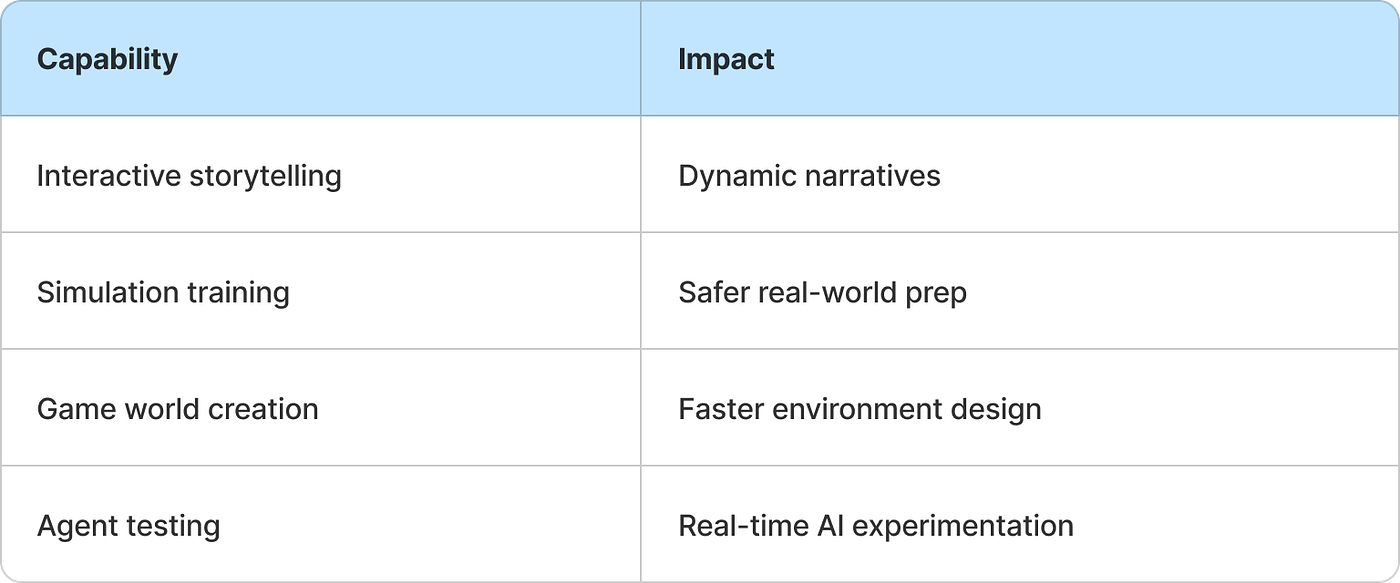
The media wasn’t flat anymore.
It became navigable.
World models mark the shift from generating media to simulating reality — where visuals, physics, and interaction exist together.
Press enter or click to view image in full size

They combine video’s sense of time with 3D’s understanding of space — in real time. This enables autonomous vehicles training in simulated cities and game developers prototyping worlds from sketches. Today, these systems are still closer to prototypes than full production tools.
The media was no longer something you looked at.
It became something you could enter.
Recent Advancements: Why Progress Feels Faster Now
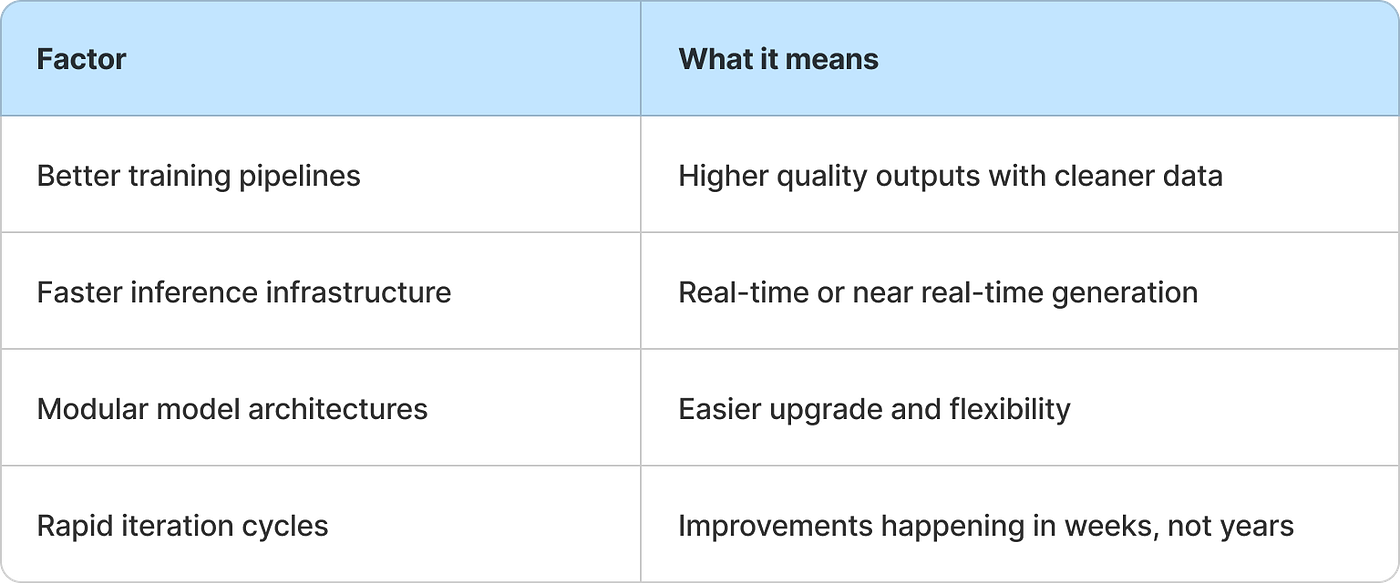
The acceleration isn’t accidental. Foundation models will continue improving on core metrics (resolution, temporal consistency, physical realism), but improvement rates will likely decelerate as models approach fundamental limits. Overcoming the next set of limitations will likely require new architectures beyond today’s diffusion and transformer models. The Rechen model releases the potential for new directions.
Recent progress comes from:
Press enter or click to view image in full size
Recent Model Breakthroughs
Press enter or click to view image in full size
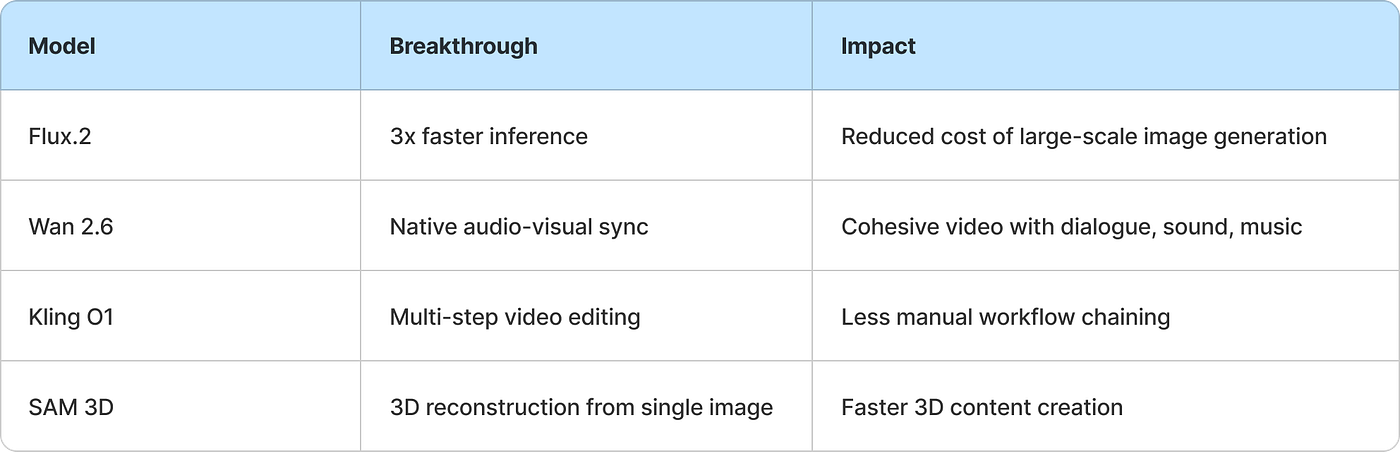
Generative media evolution now looks more like software releases than academic breakthroughs.
State of Adoption: Where Generative Media Actually Works
Organizations faced real barriers: model orchestration, integration decisions, and cost management. Businesses used two pathways to access generative technology, with applications (65%) and APIs (62%) split evenly, and many using both.
Production deployment maturity varied by modality. 31% of organizations are still in the prototyping phase of deploying generative models into their workflows. Creative teams gravitated toward generative applications for rapid iteration without code, while engineering organizations prioritized API integration for programmatic control and workflow automation.
As frontier model access becomes increasingly commoditized, adoption is expanding beyond early entertainment-led experimentation. Organizations across advertising, e-commerce, and creative production are moving toward reliable production infrastructure, where consistent performance, scalability, and cost efficiency matter most.
Enterprise ROI: Faster Than Most Tech Shifts
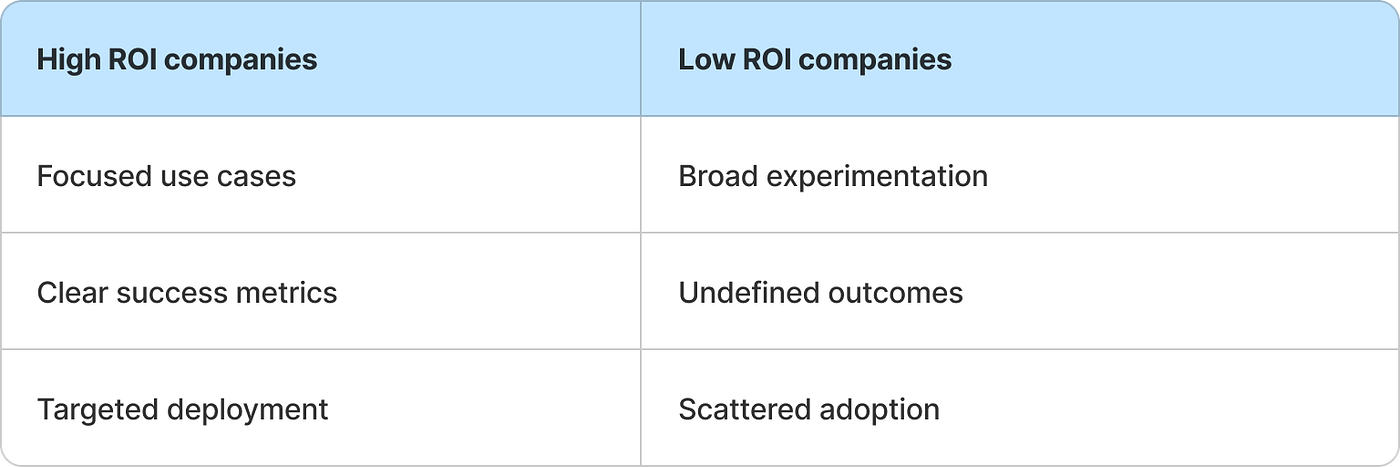
Unlike many emerging technologies, generative media showed measurable ROI within months, not years. Return on generative media investment materialized faster than expected for new enterprise software technology. The details, however, reveal that return on investment is still split:
ROI wasn’t evenly distributed.
Press enter or click to view image in full size
Press enter or click to view image in full size
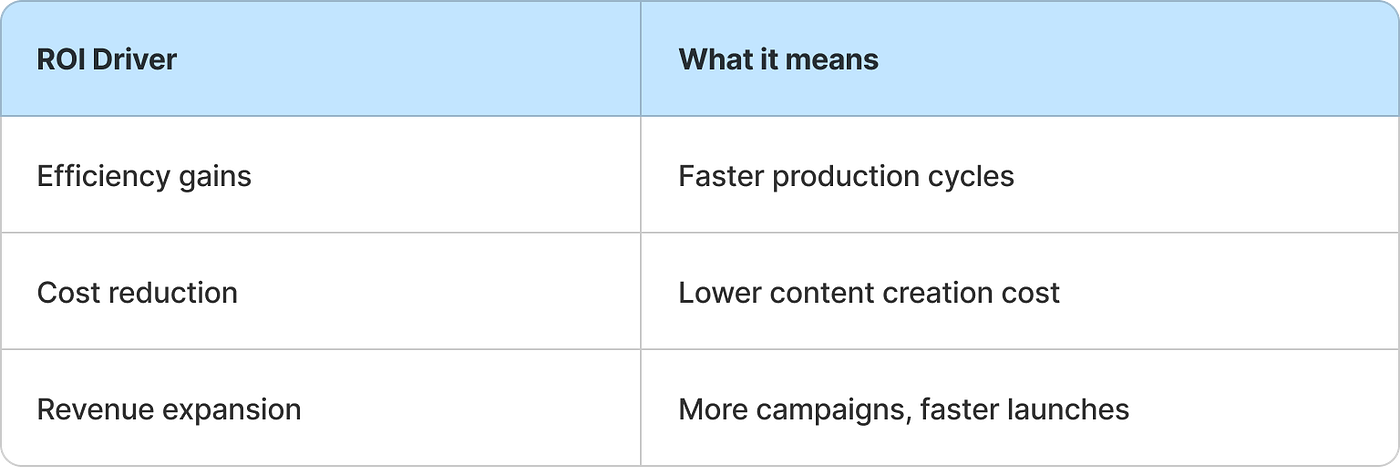
74% of companies report their initiatives meet or exceed ROI expectations. For the creative marketing platform Pimento, results were achieved by eliminating cold-start delays rather than maximizing quality. Deployment reduced generation times by 80%, doubling their feature shipping pace.
Game studios needed speed more than hosting control, as competitive advantages came from offering the latest capabilities before competitors. The digital creative platform layer is built on this insight, enabling a lean team to release a new model to studios within 24 hours.
Press enter or click to view image in full size
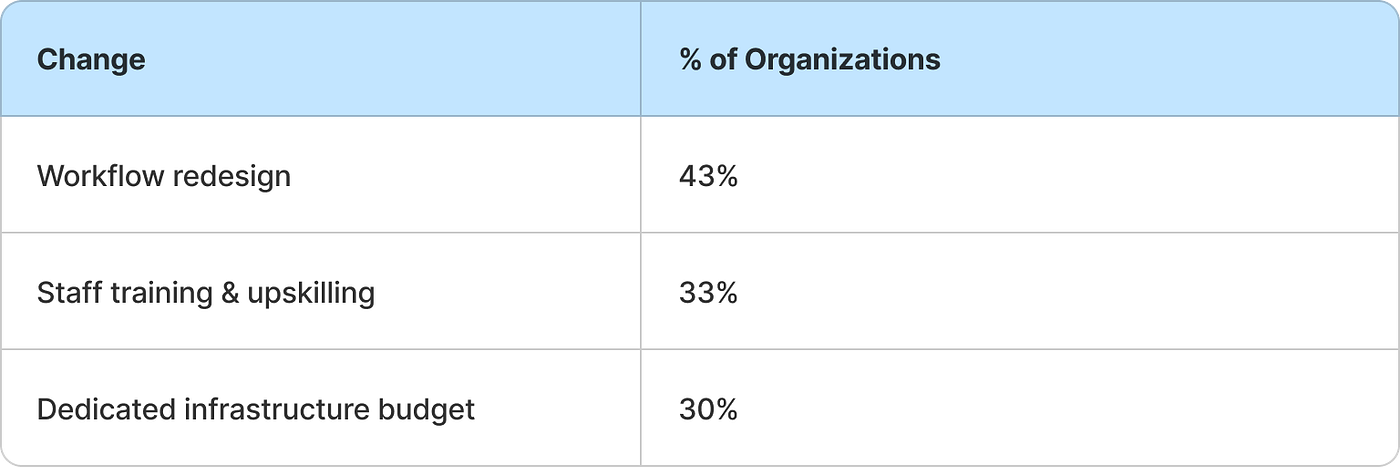
Organizations achieving generative scale made structural changes beyond deploying new technology.
Press enter or click to view image in full size
Industry deployment patterns
Marketing & advertising → asset variants
Media & entertainment → storyboarding, effects
Retail → product visuals, localization
Education → early-stage personalization
This image belongs here because it grounds the story in usage, not hype.
The most-used models are not the flashiest ones. They’re the ones that:
• fit into workflows
• balance cost and latency
• fail gracefully
This explains why enterprises adopted generative media faster than most technologies.
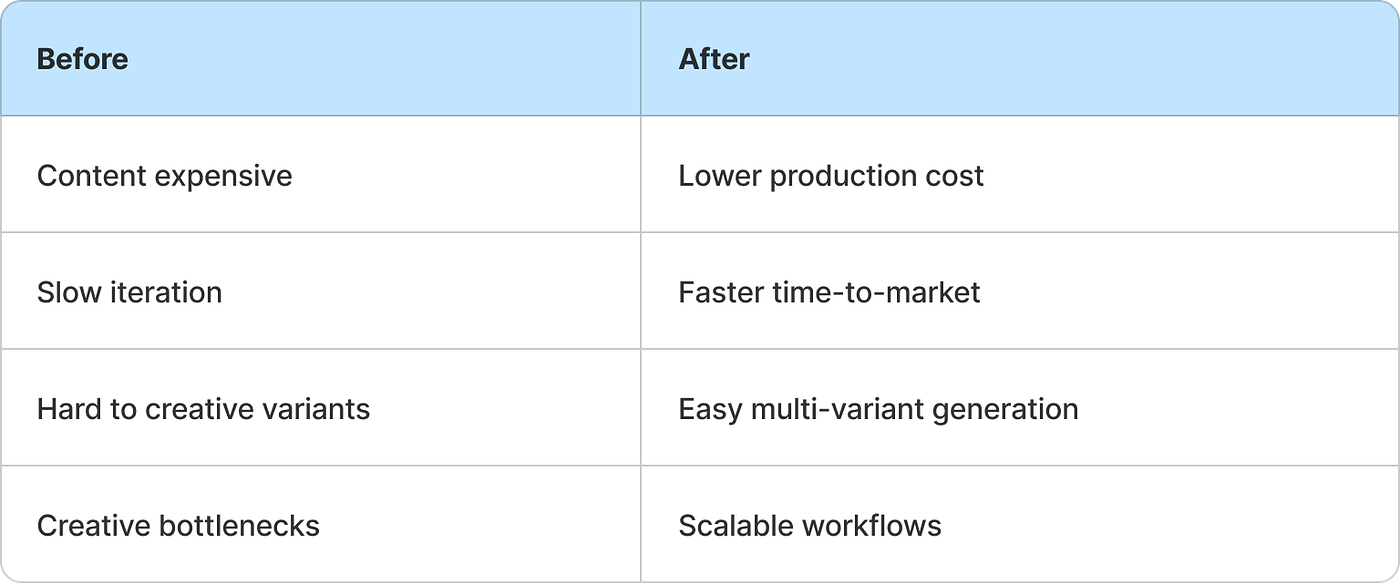
Marketing, media, retail, and entertainment didn’t adopt AI to replace creativity. They adopted it to remove friction — faster iteration, more variants, lower cost.
Within a year, most deployments showed tangible ROI.
Adoption patterns tell a clear story:
Marketing & advertising
Marketing teams needed variants.
Asset generation, personalization, campaign variantsMedia & entertainment
The media needed speed.
Storyboarding, pre-visualization, effectsE-commerce & retail
Retail needed scale.
Product imagery, localization, virtual try-onsEducation
Early-stage, but strong potential for personalized content
Notice something?
These are content-heavy industries.
Generative media didn’t replace creativity — it scaled it.
Developer Experience & Model Orchestration
Everything so far feels smooth.
Images generate instantly.
Videos look coherent.
Audio responds in real time.
But that’s only the surface.
Behind every working system is something far more complex:
Orchestration.
The Core Reality
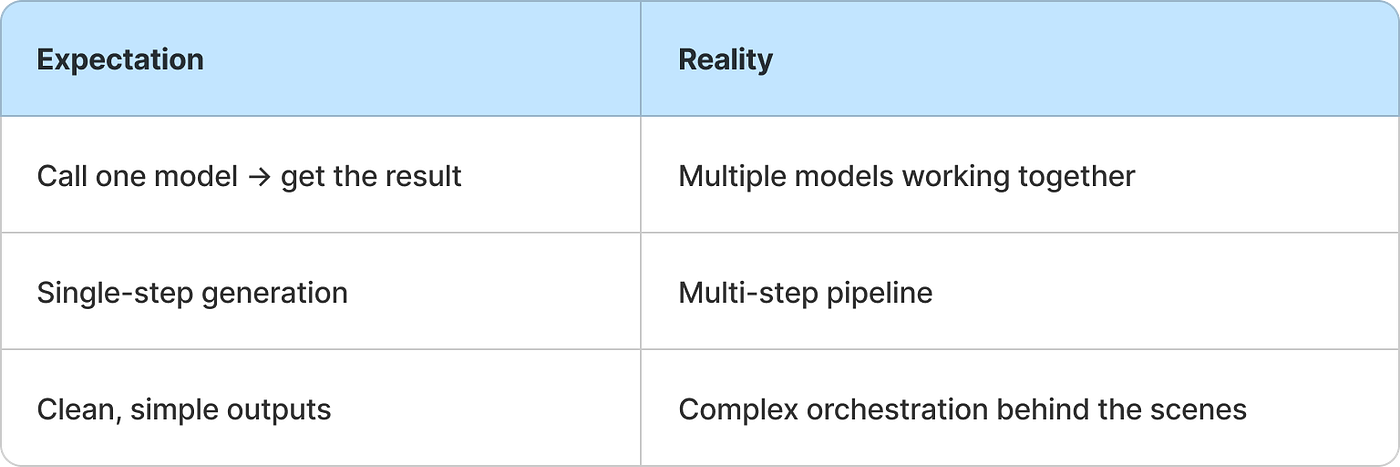
Despite how demos look, real-world systems don’t rely on a single model.
They rely on many.
At the same time.
What People Imagine vs What Actually Happens
Press enter or click to view image in full size
A Typical Production Setup
A single workflow might involve:
Image model → realistic generation
Style model → specific aesthetics
Video model → motion & sequencing
Audio model → voice & narration
Fallback models → failure handling
This isn’t edge-case complexity.
It’s standard.
Cheat Sheet: What “Orchestration” Actually Means
Orchestration is the system that decides:
Which model runs
When it runs
Why was that choice made
Mental Model
Think of it like this:
Models are tools
Orchestration is the decision layer
A Real Workflow Example
Consider a simple marketing video pipeline:
Generate product images
Convert images into video clips
Add an AI-generated voiceover
Sync background music
Handle failures and retries
What looks like one output is actually:
A system coordinating multiple models across steps
Why This Is Hard
Each step introduces trade-offs:
Press enter or click to view image in full size
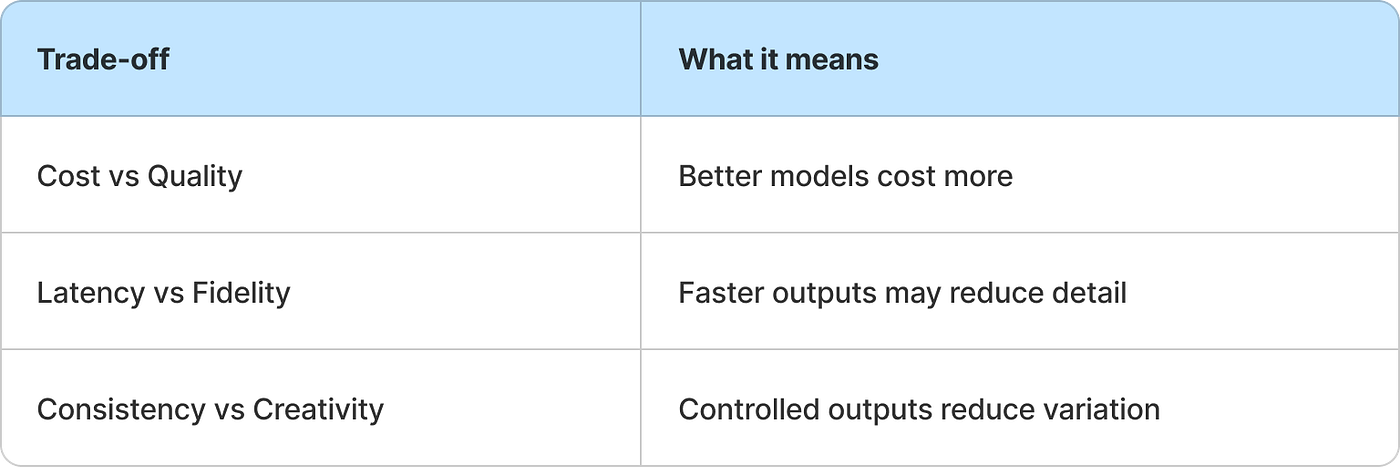
There is no single “best model.”
Only the best model for a specific task.
Common Challenges Teams Face
Routing requests to the right model
Managing cost vs latency trade-offs
Handling failures gracefully
Maintaining consistency across outputs
Versioning models and outputs over time
What Actually Works in Production
Teams that scale successfully tend to:
Use multiple models instead of one
Build fallback systems for reliability
Optimize for workflow, not individual outputs
Continuously test and refine model choices
Reality Check
Production systems rarely rely on a single provider.
Most teams operate with:
10–15 models across different tasks
The idea of one “omni-model” handling everything has not held up in practice.
Key Insight
The competitive advantage isn’t the model.
It’s the orchestration layer.
Where the Real Complexity Lives
Not in prompting.
But in:
Model routing
Version control
Monitoring performance
Handling failures
Managing costs at scale
This is where generative media stops being experimentation
and starts becoming engineering.
Why This Matters
This is the layer most discussions ignore.
But it’s where real products are built.
Generative media becomes valuable not when a model performs well in isolation, but when it performs reliably within a system.
Real Impact
Teams that invest in orchestration:
Ship faster
Reduce operational costs
Improve reliability
Scale content production efficiently
One-Line Takeaway
Models generate outputs.
Orchestration builds products.
Future Generations: What Changes Next
If the last phase was about making generation possible…
The next phase is about making it invisible.
1. Fully Multimodal Systems
Text, image, video, audio, and 3D won’t exist as separate steps.
They’ll collapse into a single system.
You won’t “switch tools.”
You’ll describe intent — and the system will figure out the rest.
2. Real-Time Generation
We move from:
rendering → interaction
Content won’t be pre-generated.
It will be created live, in response to users, context, and environment.
3. Environment-First Creation
We won’t generate isolated assets anymore.
We’ll generate: worlds, systems, and interactive environments
Not: Create an image of a city
But: Create a city I can explore
4. Creativity Becomes the Bottleneck
For the first time, tools won’t be the limitation.
Ideas will be.
• Capability becomes abundant
• Execution becomes trivial
• Taste becomes scarce
The Shift
The constraint is no longer creation.
Its direction.
The tools are catching up to imagination.
Which means the advantage shifts:
From execution → to orchestration
From production → to storytelling
From access → to taste
The next generation of builders won’t win by using better tools.
They’ll win by knowing what to build with them.
Closing Thought
Generative media didn’t just evolve.
It stabilized.
It learned to:
listen
follow instructions
remember context
respond in real time
scale across systems
What we’re seeing now isn’t hype.
Its infrastructure is taking shape.
The question is no longer:
Can AI generate this?
That’s already answered.
The real question is:
What do we choose to build, now that creation is no longer the constraint?
Models have matured.
Enterprises are deploying them.
Developers are building systems around them.
And for the first time:
The barrier isn’t capability.
It’s clarity.
If you’re designing, building, or writing in this space —
You’re not early.
You’re not late.
You’re right at the moment where this all becomes real.

Join Shweta on Peerlist!
Join amazing folks like Shweta and thousands of other builders on Peerlist.
7
19
0