

Why Developers Actually Needed Version Control (A Pendrive Story)
How Git Saves Time Compared to Old Pendrive Methods
Why Do We Need a Version Control System?
In the early days of software development, managing code was easy because projects were small and usually done by one or two developers. But as software got bigger and teams expanded, developers began to have major issues working together.This is where Version Control Systems (VCS) came.
Before delving into why a version control system is essential, let's reflect on how developers collaborated before version control existed.
The Pendrive Story
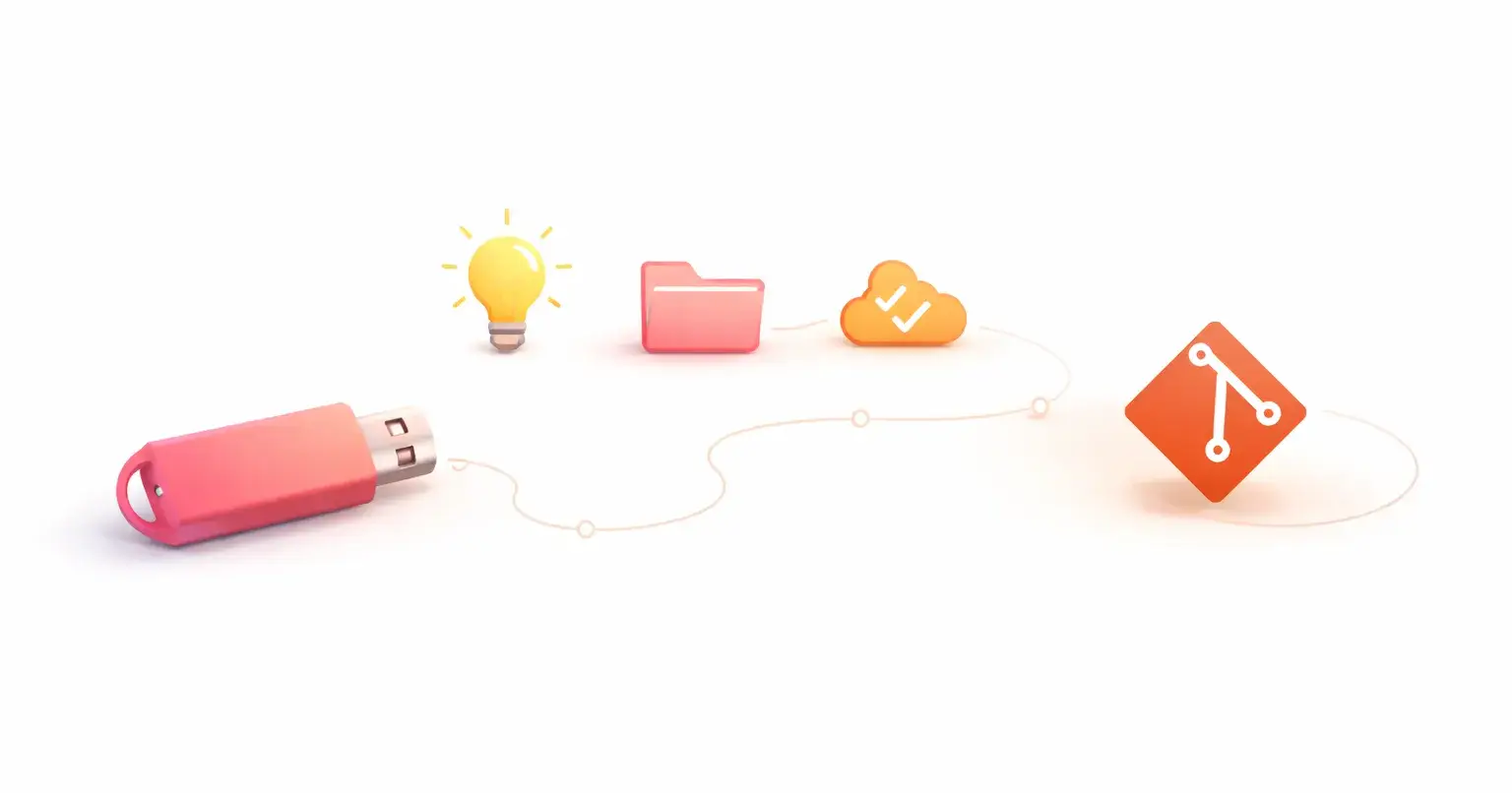
Imagine a time when there was no Git, no GitHub, no cloud storage.There was also ways to share codebase but they were not efficient. One of the simplest ways to share code was by using a pendrive.
A developer would:
Write code on their computer
Copy the whole project to a pendrive
Hand it over to another developer
The new developer would finish their work and, if they wanted, make a copy of the project and pass the pendrive to other developers.
For very small projects, this worked fine. But as the codebase grew bigger and more people joined the project, this approach started falling apart.
Problems With the Pendrive Approach
1. Code Sharing Was Painful
Every time someone made a change, they had to copy the entire project again and pass the pendrive. Only the person who made the change knew what was modified and where. If a bug showed up, others had no clue what changed, making debugging slow and frustrating.
2. No Two Developers Could Work Together Safely
Two developers couldn't work on the same file at the same time. If they tried, one person's work would overwrite the other's changes. There was no safe way to combine their code.
3. Reverting Changes Was Almost Impossible
If a bug was introduced and the project stopped working, returning to a previous working version could take hours or might not even be possible. There was no history to depend on.
4. No Proper Version Naming
There were no rules for managing versions.
Folders often looked like this:
final_v1, final_v2, final_v2_final, final_v2_final_really
Soon, no one knew which version was actually correct.
5. High Risk of Data Loss
Pendrives could:
Get lost
Get corrupted
Stop working suddenly
A broken pendrive could erase weeks of work.
6. No Backup, No Recovery
If someone accidentally deleted code:
No backup
No undo
No recovery point
The only option was to rewrite the code from scratch.
Why This Completely Failed for Big Projects
Large software projects involve many developers, not just a few. Sharing code using pendrives:
Doesn't work well as the project gets bigger
Takes up a lot of time
Makes teamwork hard and inefficient
Leads to frequent conflicts and data loss
It was clear that a better system was needed.
Introduction of Version Control Systems
A Version Control System (VCS) is a tool that tracks changes to files over time.
Instead of manually copying code:
Every change is saved automatically
A complete history of the project is maintained
Developers can work independently without concern
A VCS helps by:
Showing who made each change
Allowing a return to any previous version
Safely combining work from different developers
How Version Control Solves The Pendrive Problems
A version control system:
Keeps a complete record of changes
Lets many developers work at the same time
Makes fixing mistakes quick and dependable
Sets clear rules for versions
Prevents data loss with backups
Ensures easy collaboration, even for big teams
Final Thoughts
The pendrive-based workflow might seem simple, but it breaks down when projects become larger or teams expand.
Version control systems were created out of necessity, not luxury. They changed software development by enabling safe teamwork, quicker progress, and reliable code management.
Today, modern software development can't be imagined without a version control system.

Join Soumen on Peerlist!
Join amazing folks like Soumen and thousands of other builders on Peerlist.
2
7
0