

Web3 Job Scam Is Getting Bigger Every Day
How Fake Jobs Are Stealing Crypto Wallets, Money, and Developer Data
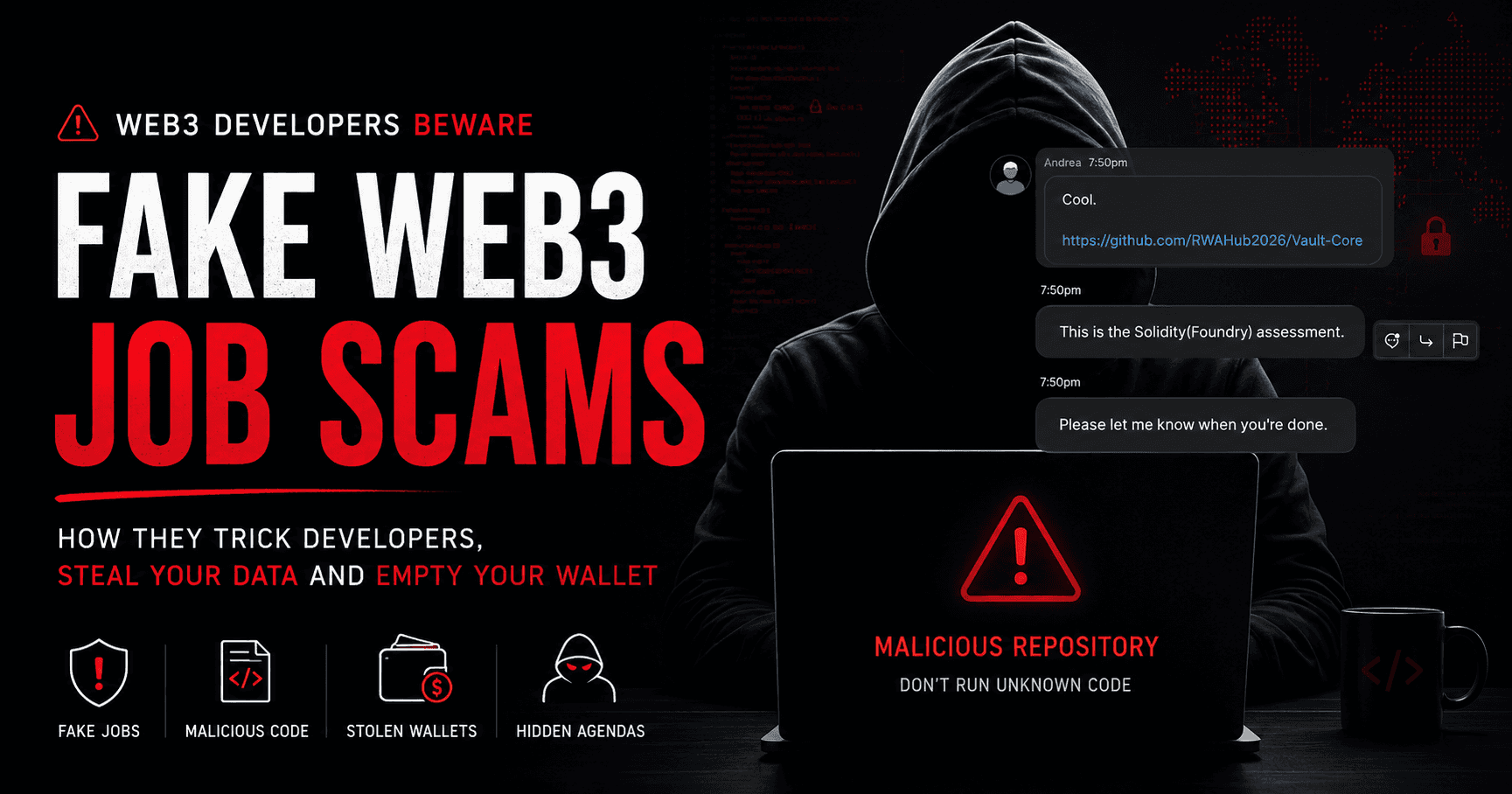
If you are a Web3 developer, designer, smart contract engineer, marketer, or freelancer, this article is for you
The Web3 job market is growing fast, but so are Web3 scams. Every week, more developers are losing crypto, wallets, GitHub accounts, private data, and even their entire computers because of fake job offers
I wanted to write this because I keep seeing these scams again and again. Many people think they are too smart to get hacked, but these scammers don't attack beginners only. They also target experienced developers, founders, designers, and security researchers
Today, the biggest risk is not always a smart contract hack. Sometimes it starts with a simple message saying:
"Hi, we loved your portfolio"
And everything changes from there
Why Web3 Developers Are the Main Target
Web3 developers usually have things that attackers want
Many of us use MetaMask, Phantom, Rabby, hardware wallets, GitHub, private repositories, API keys, deployment keys, SSH keys, cloud accounts, and crypto exchanges. Some developers also have access to project treasury wallets or company infrastructure.
For a hacker, one successful attack can be worth thousands or even millions of dollars
That is why fake Web3 jobs have become one of the most common crypto scams today
How The Scam Usually Starts
Everything looks normal at first
You receive a message on LinkedIn, X, Telegram, Discord, or email
The person introduces themselves as a recruiter from a Web3 startup. They talk professionally, answer your questions, and sometimes even know your previous projects
They tell you they found your portfolio, GitHub, or personal website and believe you are a perfect fit for their team
At this point, nothing feels suspicious
That is exactly what they want
They Build Trust Before They Attack
Most scammers never rush
Instead, they spend time building trust
They create professional websites, fake company pages, fake employee profiles, GitHub organizations, documentation, and social media accounts. Some even copy real startups and change only a few letters in the company name.
Sometimes they schedule video meetings
Sometimes they send official-looking offer letters
Sometimes they even discuss salary, benefits, token allocation, and remote work
Everything feels real
That is why so many experienced developers fall for it
The Fake Technical Assignment
After a few conversations, they send you a technical task
This is where the real attack begins
The repository usually looks like a normal React, Next.js, Vue, Node.js, or Web3 project
It has folders, components, README files, package.json, and everything looks clean
They simply ask you to clone the project and run it locally
Most developers think this is completely normal because technical assignments are common during hiring
Unfortunately, this is exactly what the attackers are counting on
What Really Happens After You Run It
The moment you install dependencies or run the project, hidden scripts can start working in the background
Some projects contain malicious npm packages
Some use hidden post-install scripts
Some include dangerous Git hooks
Others download additional malware after the project starts
You may never see anything unusual on your screen
Everything can look completely normal while your computer is already being compromised
Within a few minutes, attackers may start collecting your browser cookies, saved passwords, GitHub tokens, SSH keys, environment files, API keys, wallet extensions, browser sessions, and many other files.
In many cases, the victim has no idea anything happened until their wallets become empty
Fake Meeting Apps Are Also Part of the Scam
Not every attack comes through a GitHub repository
Some recruiters ask you to join an interview using a special meeting application that they claim the company uses
They send a download link instead of using Zoom, Google Meet, or Microsoft Teams
The application installs malware instead of opening a meeting
Many people have lost access to their crypto wallets after installing fake meeting software
If a company cannot use trusted meeting platforms, that should immediately make you more careful
Why Even Experienced Developers Get Hacked
One common mistake is believing that technical knowledge is enough
It is not
These attacks are based on trust, not coding
When someone spends several days talking with you, shares a beautiful website, answers every question, sends professional documents, and behaves like a real recruiter, your brain naturally stops looking for danger
That is exactly how social engineering works
The hacker does not need to break your security
They convince you to open the door yourself
The Biggest Red Flags
There are many warning signs, but people often ignore them because they are excited about a new opportunity
A company that has almost no online history should make you think twice
A recruiter who only contacts you through Telegram or Discord deserves extra attention
A GitHub repository with very little activity or strange commits should never be trusted immediately
A project that asks you to disable antivirus software, ignore security warnings, or run unusual commands is a huge red flag
A company that insists you install unknown software before your first interview is another warning sign
None of these automatically mean it is a scam, but they should always make you stop and verify everything carefully
How You Can Protect Yourself
The safest habit is simple
Never trust a project just because it looks professional
Always inspect the repository before running it
Read the package.json file carefully
Look for install scripts, post-install scripts, prepare scripts, and any command that runs automatically
Check the dependencies
Search for unknown packages before installing them
Read the Git history
Look for hidden files
Check Git hooks
If something feels strange, stop immediately
It is much better to lose one job opportunity than lose your wallet, your GitHub account, and months of work
Use a Separate Environment
Many professional developers never run unknown code on their main computer
Instead, they use virtual machines, disposable cloud environments, Docker containers, or a dedicated testing machine
This way, even if something goes wrong, the damage stays inside that isolated environment
Your personal files, browser sessions, and crypto wallets remain protected
This extra step takes a little more time, but it can save years of work
Never Keep Everything on One Device
Many people use one laptop for everything.
Their crypto wallets, development work, banking, personal email, exchanges, GitHub, and social media all live on the same machine.
If that computer gets infected, everything is at risk.
Keeping important accounts separated is one of the easiest ways to reduce damage.
A hardware wallet is also much safer than storing large amounts of crypto in a browser extension.
Verify The Company First
Before accepting any assignment, spend a few minutes researching the company
Read about the founders
Check if employees are real
Look at the GitHub organization
Search the company name together with words like "scam", "fake job", "malware" or "review"
Visit their official website
Read their documentation
Check whether people are actually talking about the company
Real companies leave a real footprint on the internet
Fake companies often look impressive but disappear when you start checking deeper
If Something Feels Wrong, Trust That Feeling
Many victims later say the same thing
"I had a strange feeling, but I ignored it"
That feeling matters
If a recruiter becomes aggressive, pressures you to finish quickly, avoids simple questions, or changes the process many times, slow down
A real company will understand if you want to verify things before running unknown software
A scammer usually wants you to act before you have time to think
This Scam Is Growing Fast
These fake Web3 job scams are becoming more advanced every month
The websites look better
The fake recruiters sound more professional
The malware becomes harder to detect
The GitHub repositories become more realistic
This is no longer a simple phishing email
It is a carefully planned attack designed to earn your trust before stealing your digital life
Let's Help Each Other Stay Safe
The Web3 community is built on open source, trust, and collaboration
Unfortunately, scammers also know this
That is why we need to share information, report fake companies, warn other developers, and help new people understand these attacks before they become victims
If this article helps even one developer avoid losing their wallet or personal data, then it was worth writing
Final Thoughts
The next time someone offers you a high-paying Web3 job, remember that not every opportunity is real
A beautiful website does not prove a company is real
A professional recruiter does not prove a company is safe
A clean GitHub repository does not prove the code is harmless
Take a few extra minutes before you clone a repository, install packages, or download software
Those few minutes could save your crypto, your projects, your clients, and everything you have worked hard to build
Stay careful..:)

Join Sourav on Peerlist!
Join amazing folks like Sourav and thousands of other builders on Peerlist.
3
4
0