

How Napolean Leads
Napoleon's entire life was a manual for escaping the permanent underclass. The blueprint still works and used by current world leaders. That's worth understanding.
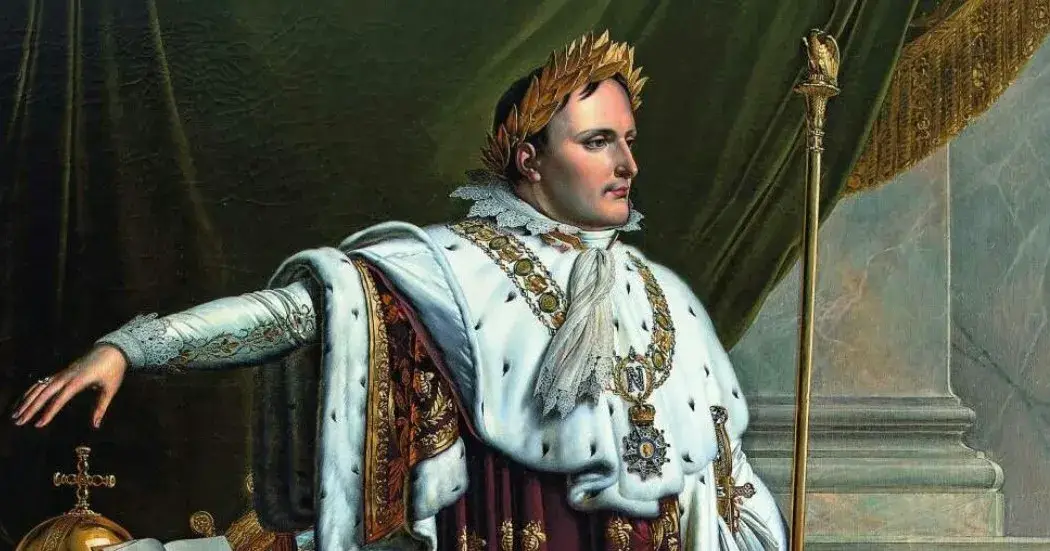
Napoleon Bonaparte did more before 35 than most people do in a lifetime.
He was making battlefield decisions at 3am. Commanding 200,000 men across hundreds of miles. Redesigning legal systems between campaigns. Building an empire from scratch, starting with nothing, rising from a middle-class Corsican family to Emperor of France.
Most people who study Napoleon talk about the battles. The Failed Marriage. The conquests. The eventual fall.
That’s not what I want to talk about. Lmao not at all.
I want to talk about the system underneath all of it.
How he thought, how he rested, how he led people into impossible situations and somehow made them believe the impossible was already done.
Because that system is still being used by some of the most powerful founders and builders alive today. Some of them will tell you they studied him directly. Others just arrived at the same place on their own.
Either way, it’s worth understanding.
He Treated His Mind Like a Cupboard
Napoleon was capable of compartmentalizing his life so that one set of concerns never spilled into another.
He could go from planning a military invasion to drafting legal documents in the same hour without losing a single step.
Napoleon described it himself:
“Different subjects and different affairs are arranged in my head as in a cupboard. When I wish to interrupt one train of thought, I shut that drawer and open another. Do I wish to sleep? I simply close all the drawers and there I am asleep.”
Think about how you work for a second.
How often do you sit down to build something and find yourself still mentally inside the last conversation you had?
An argument from the morning. An email you haven’t replied to. That one thing someone said that’s just sitting there unresolved.
Napoleon refused to work that way.
Every context switch came with a complete reset. Previous thing closed. New thing open. Full attention on what was in front of him.
Elon Musk does a version of this.
He breaks his day into 5-minute blocks and assigns each one to a single domain.
Engineering. Product. Legal.
Not partial attention to everything, complete switches.
What’s interesting is that Musk didn’t arrive at this by accident.
His biographer Walter Isaacson confirmed that Musk studied Napoleon directly and drew specific leadership lessons from him when building Tesla and SpaceX.
Mental drag is invisible. But it kills momentum. The people who can close one drawer and fully open the next, without carrying the weight of the last thing, move faster than everyone around them.
He Adjusted His Energy to Match the Moment
During peacetime, Napoleon slept 6–7 hours a night. During campaigns, that dropped to 3–4. Sometimes less. Not because he was performing toughness but because he understood that the urgency of the moment determines how much rest you can actually afford.
The night before the Battle of Jena, Napoleon had barely slept for two days. His generals pushed him to rest. Instead he spent the night on the plateau among his troops, issued orders by candlelight, and the next morning crushed the Prussian army.
You see this pattern with anyone who did something extraordinary right before they did it.
Elon Musk sleeping on factory floors during Tesla’s production hell.
The Wright brothers napping between test flights at Kitty Hawk.
Edison and his team crashing under tables while building the light bulb.
Mendeleev worked three days straight, fell asleep at his desk, and woke up with the periodic table fully formed.
Da Vinci took 20-minute naps every four hours so the work never fully stopped.
and countless examples like these……
There are certain windows in life that require everything you have.
The average person protects their routine even during those windows. The exceptional ones recognize the window and sprint through it.
Napoleon adjusted his rest around his work. Not his work around his ideal rest.
He Knew Every Detail of the Machine He Was Running
This one is easy to miss because it seems small. But pay attention!
Napoleon was known to halt operations over missing supply shipments. Thousands of men, hundreds of miles from home, and he was catching supply chain details that had quietly broken down. Most commanders at his level never got anywhere near that granular.
He said it himself: “The slightest circumstance decides the issue of the battle. Therefore, a commander must pay attention to the details.”
There are documented accounts from Tesla where Musk would show up unannounced, walk the floor, and question lower-level employees about their specific tasks.
Multiple people said Elon knew the details better than they did. Same instinct. Whoever understands the small decisions best is the one who sees failure coming before it arrives.
Steve Jobs reviewed the internal circuit board of the first Macintosh, something no customer would ever see and pushed for a redesign because it wasn’t beautiful enough.
Jeff Bezos once listened to a supply chain team present nine months of work, said “you’re all wrong” and filled a whiteboard with the correct solution. The VP who ran that team said every single thing Bezos wrote down was accurate, despite having no background in the field.
Large outcomes are made of small decisions.
Leaders who stay at the strategic level and ignore the granular usually find out about problems after they’ve already become crises.
Napoleon never let himself get that far from the ground.
He Read to Apply, Not to Consume
Napoleon had a custom-built traveling library that went with him on every campaign. But what made him different wasn’t that he read a lot. It was why he read.
Napoleon was exceptionally well read in history, especially military history, and constantly sought to apply lessons from past campaigns to present circumstances.
Before Egypt, he studied the Quran, accounts of Alexander’s campaigns in the region, and reports on local geography.
Before Russia, he read about Charles XII’s failed invasion, topographical maps of Lithuania, and analyses of the Russian army’s structure. He wasn’t reading to feel informed. He was reading to prepare for a specific problem. Every book was operational intelligence.
Reed Hastings read Clayton Christensen’s The Innovator’s Dilemma and pulled one specific idea from it, that your biggest threat isn’t a competitor, it’s your own current model becoming obsolete. He used that directly to justify killing Netflix’s profitable DVD business before streaming made it irrelevant.
Charlie Munger spent decades reading across psychology, history, biology, and physics, not out of curiosity, but because every discipline had to eventually connect to a real investment decision. He called it a latticework of mental models. Napoleon called it preparation. It’s the same thing.
Alex Hormozi has a line that captures this perfectly: “Rather than picking up your next book, take action on your last book.”
Ask yourself honestly are you reading tactically? Or just reading?
He Made Decisions Fast and Built Systems That Got Faster
Napoleon understood something about decisions that most leaders miss.
Every decision you make creates information. That information feeds your next decision. The faster you complete that loop, the more effective you get over time. He designed his entire army structure around this idea.
He created the corps system his army split into semi-independent units, each capable of operating on their own, each with infantry, cavalry, and artillery.
Decisions happened at the unit level without waiting for orders from the top. The whole army became faster because the loop ran at every level simultaneously.
Jeff Bezos built the exact same concept into Amazon. His two-pizza rule: no team should be large enough that two pizzas can’t feed them was designed specifically to keep decision loops short.
Small teams own their problems completely. They see a result, adjust, and move without waiting for approval. The teams behind Alexa, Prime, and AWS all came out of that structure.
The clearest example of Napoleon’s fast decisions is the Ulm campaign. General Mack positioned his army watching the Black Forest, expecting Napoleon to come through.
Napoleon sent a decoy force into the Black Forest while swinging his main army around from behind. Mack surrendered without a major battle. The decision took hours. The result took days.
He Communicated in Three Lines
Napoleon was managing 200,000 men across hundreds of miles. All by letter. There was no margin for ambiguity.
His orders always followed the same structure: one action, one person, one time or place. Never more than was necessary.
During the Prussian campaign, a general misread a vague report and caused hours of delay that almost cost Napoleon a key position. It turned out to be a mistranslation by a scribe. After that, Napoleon started rewriting many dispatches himself. Some were three lines. All were exact.
Winston Churchill said it differently but meant the same thing: “It is slothful not to compress your thoughts.”
Jack Dorsey built Twitter’s 140-character limit around one belief “constraints force clarity”. He described it as asking someone to write on a piece of paper the size of a fortune cookie. Any mark on that paper is valuable.
A brief that requires explanation has already failed.
An instruction that needs to be re-read is already a liability.
If you make an article that could have been 5 minutes read, you just stole thirty minutes from everyone who read it.
Compression isn’t laziness. It’s respect. And it pays off everywhere.
He Concentrated Everything on One Point
Here’s a concept that sounds almost too simple. But when you actually apply it, it changes everything.
Most military commanders of Napoleon’s era spread their forces wide to cover as much ground as possible.
Napoleon did the opposite. He concentrated everything on a single point of weakness in the enemy’s line, broke through, and then turned to deal with what remained.
In 1796, during the Italian campaign, he was badly outnumbered, facing a combined Austrian and Piedmontese force that outnumbered him on multiple fronts. He drove straight into the center, split them apart at Montenotte, then turned around and beat the remaining force at Millesimo. Not because he had more men. Because he didn’t divide what he had.
Apple in 2001. Steve Jobs came back to a company stretched thin across too many mediocre product lines. He cut everything down to four. All resources, all engineering, all attention concentrated on those four. The iPod came from that. Then the iPhone.
When you’re moving in ten directions, it’s nearly impossible to make real progress in any of them. Cut down to one or two things and put everything you have toward them. Conquer that. Then turn around and conquer the next.
He Attacked From Angles Nobody Expected
The Battle of Austerlitz. Napoleon’s masterpiece.
He made his right flank look deliberately weak. The enemy saw it and committed their forces to exploit it. While they were moving, Napoleon drove his main force straight through the now-undefended center. The battle was over in hours.
It was a masterpiece of tactical deception and execution, showcasing Napoleon’s unparalleled ability to manipulate enemy movements and exploit terrain to his advantage.
The direct attack is the obvious move. The flanking move is the one that ends things quickly.
In content, most people attack the same trending topics from the same angle as every other account in their niche. The ones who build fast are almost always flanking a topic nobody’s covering, a familiar idea framed from a completely different direction, an audience the big accounts are ignoring.
That’s the undefended center. Find it. Move there fast.
He Only Bet Heavy When the Odds Were Already in His Favor
Napoleon crossing the Alps looked insane from the outside.
From the inside, it was planned to the hour. Artillery was dismantled at the base, moved in specially made chests on mules, and reassembled on the other side. The army was staggered in waves so the supply line could keep pace. Every contingency was mapped before a single soldier moved. The Austrians never expected it because it looked impossible to anyone who hadn’t done the preparation.
Warren Buffett described the same philosophy:
“The wise ones bet heavily when the world offers them that opportunity. They bet big when they have the odds, and the rest of the time they don’t. It’s just that simple.”
Buffett built Berkshire Hathaway on concentrated positions in businesses he understood completely. Not frequent small bets spread across many positions. Rare, large bets in situations where he had genuine edge.
Napoleon operated identically.
The risk wasn’t recklessness. It was the final variable in a system where everything else had already been controlled.
Basically what creators and founders mean when they talk about taking aymmetric bets.
He Controlled the Story Before Anyone Else Could
After every battle, Napoleon sent bulletins back to France. But they weren’t reports. They were narratives.
Napoleon’s bulletins were often exaggerated and theatrical, but they succeeded in turning setbacks into stories of resilience and victories into moments of national pride. He understood the value of narrative control long before it became a common practice.
The Battle of Marengo was genuinely close. Napoleon framed it as a decisive strategic triumph.
Most of France never knew how narrow it actually was. His enemies feared him and the public loved him not just because of what he did, but because of how the story of what he did was told.
Steve Jobs did this with every Apple launch.
What Apple employees called the reality distortion field, his ability to make people believe whatever he wanted them to believe about a product or a deadline was narrative control operating at close range.
He didn’t fabricate things. He selected which parts of reality to emphasize. He framed the problem. He made the room feel like they were watching history.
Because he controlled the story, they believed they were.
Someone is always shaping the narrative around what you’re building.
If that person isn’t you, you end up with a story you didn’t write.
He Stayed Calm When It Mattered Most
Napoleon didn’t just command armies. He commanded himself.
He showed a remarkable ability to control his emotions, especially anger, which he believed clouded judgment. He understood that the man who remains calm under pressure is the one who can think most clearly.
During the Egypt campaign, Napoleon received word that Josephine was cheating on him while British newspapers were running the story publicly.
His personal life was collapsing in full view of two continents. He closed that drawer, kept it closed, and continued making sound military decisions in the field.
Think about the last time you made a genuinely bad decision.
Chances are you were emotionally activated when you made it.
The ability to pause, take in the information, and respond from a clear state instead of a reactive one is one of the rarest capabilities in leadership.
Napoleon didn’t treat it as a personality trait. He trained it like a tactical skill.
He Led From the Front
Napoleon’s soldiers called him Le Petit Caporal. The Little Corporal.
It wasn’t an insult. It was affection. It meant they thought of him as one of them.
He shared their dangers, their food, their clothing, their bivouacs, and often their hardships. They knew he was there with them in every sense of the word.
He didn’t lead from a palace. He slept on the ground next to cannons. He walked the line.
During the Italian campaign, one of his officers wrote:
“Bonaparte sleeps among us. He walks with us. He looks us in the eye.”
Musk studied this quality directly. Isaacson said Musk believed wherever Napoleon was, that’s where his armies performed best which is why Musk made unannounced late-night visits to Tesla and SpaceX factory floors. Not to inspect. To be present.
The effect on people who see their leader doing the same thing they’re doing at 2am is different from any memo or speech.
Nobody follows a cause they believe the person at the top has already exempted themselves from.
He Believed Something Bigger Was Carrying Him
This is the one nobody talks about. And it might be the most important one.
At multiple points in Napoleon’s life, the situation was objectively finished.
Stranded in Egypt after the British destroyed his fleet. Cut off from France. There was no obvious way out.
A soldier asked if destiny had forsaken them.
Napoleon’s response:
“She has not abandoned us yet. She has served us during this entire operation beyond anything she has ever done.”
Then he told his men the disaster might actually be beneficial because the British were now forcing him to consider marching toward India.
George Washington had bullets fly past him in the French and Indian War, two horses shot from under him, bullet holes through his coat and hat, and walked away unharmed. He wrote to his brother afterward that he felt something was protecting him.
Churchill was captured during the Boer War, escaped against the odds, and said later he felt guided throughout.
The thread connecting all of them isn’t luck. It’s that they interpreted every near-disaster as evidence that something was still pulling for them.
When you genuinely believe that, something shifts in how you operate. You stop spending energy on things you can’t control. You look for opportunities in the wreckage because you expect them to be there.
And because you’re looking, you find them.
Napoleon didn’t just build an empire.
He built a way of thinking that made building an empire feel inevitable.
The tools changed. The principles didn’t.
Thanks for reading this article. Hope it was worth your time.
follow for more breakdowns on ai tools that actually matter.
If you want to understand how ai agents work in practice, check out my clawdbot guide and for hardware ai integration, i covered that in my siri memory limitations article.
Join Tanay on Peerlist!
Join amazing folks like Tanay and thousands of other builders on Peerlist.
0
7
0