

How to Manage Meeting Tasks in Asana Without Creating More Admin Work
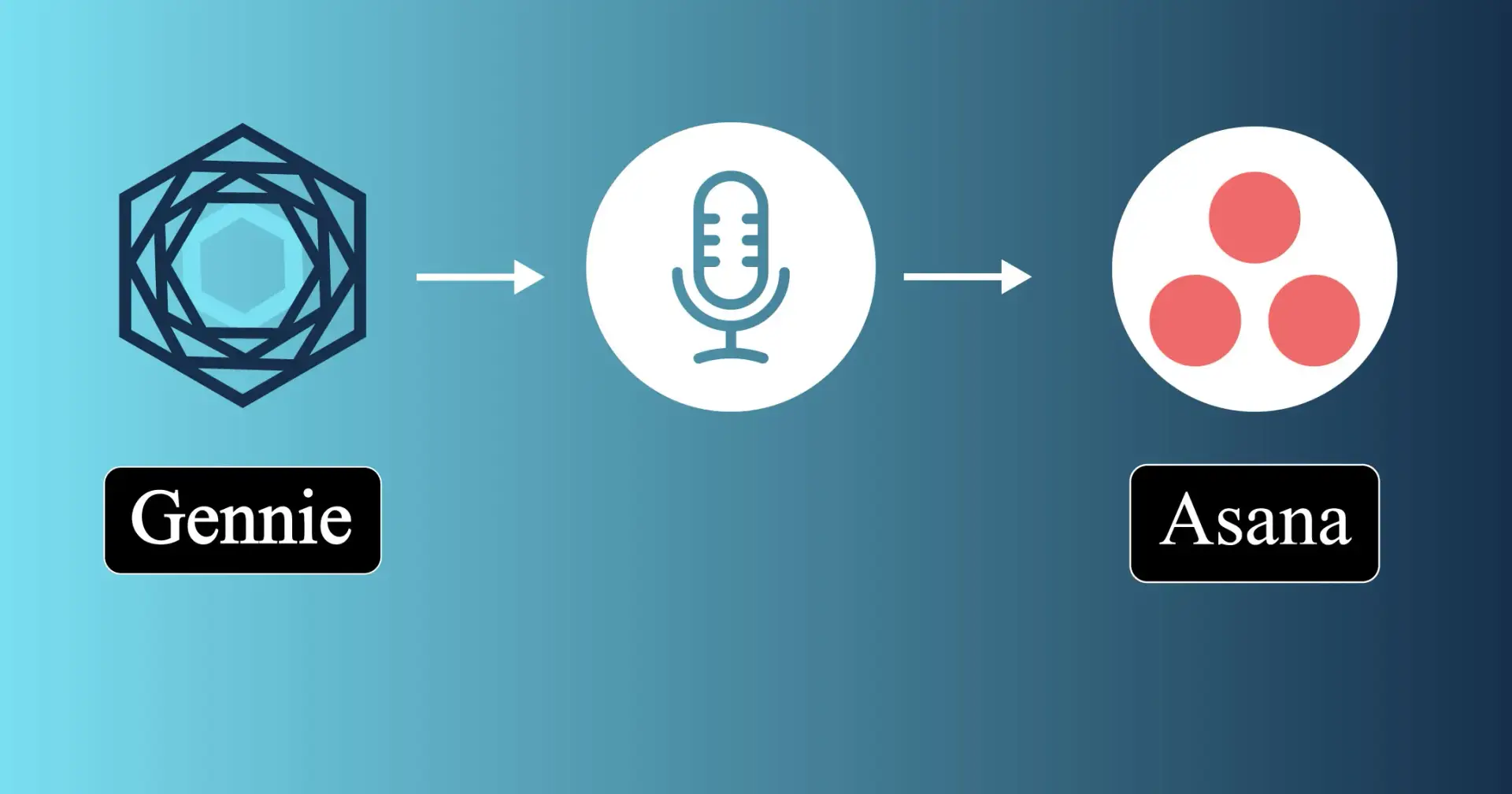
Asana is excellent at organizing work.
The challenge is getting the right work into Asana in the first place.
Many teams have a solid project management process, but struggle afterward. Action items get discussed, decisions are made, and responsibilities are assigned verbally. However, by the time team members return to their desks, important details are scattered across notes, recordings, emails, and chat messages.
The result is a surprisingly common problem:
Work gets discussed but never tracked.
Why Meeting Tasks Often Fall Through the Cracks
Consider a typical weekly team meeting.
A product manager requests an update to the onboarding process.
Marketing agrees to prepare launch assets.
Customer success commits to gathering feedback.
Engineering needs to investigate a reported issue.
Everyone leaves the meeting knowing what needs to happen.
Yet unless those responsibilities become visible tasks, accountability quickly becomes unclear.
This is where many organizations struggle to meet their task management needs in Asana.
The issue isn't project management.
The issue is task capture.
The Wrong Way to Handle Meeting Tasks
Many teams rely on a manual process:
Take notes during the meeting.
Review notes later.
Create Asana tasks manually.
Assign team members.
Add due dates.
Share updates.
While this works, it introduces delays.
Tasks may be created hours—or even days—after the discussion. Context gets lost, priorities shift, and follow-ups become inconsistent.
As meetings increase, administrative work grows with them.
A Better Workflow for Meeting Task Management in Asana
The most effective teams follow a simple principle:
Capture tasks as close to the conversation as possible.
A strong workflow includes:
Clear Action Items
Every task should represent a specific outcome rather than a vague idea.
Instead of:
"Discuss onboarding improvements."
Use:
"Update onboarding checklist for new enterprise customers"
Defined Ownership
Every task needs a responsible owner.
Shared responsibility often becomes no responsibility.
Context Preservation
Tasks should include enough information that team members understand why the work matters.
Immediate Visibility
The faster work enters Asana, the faster teams can begin execution.
What Should Become an Asana Task?
Not everything discussed in a meeting requires a task.
Focus on:
Action items
Deliverables
Follow-ups
Decisions requiring implementation
Customer commitments
Project blockers
This keeps Asana focused on execution rather than documentation.
How Teams Scale Meeting Task Management
As organizations grow, manually creating tasks after every discussion becomes difficult.
Teams begin managing dozens of meetings every week.
Without a reliable system, important responsibilities can remain trapped inside meeting notes.
This is why many organizations are looking for better ways to automate meeting task management in Asana and reduce administrative overhead.
How Gennie Helps Asana Teams Execute Faster
Gennie is an AI notetaker that converts meetings into structured tasks and assigns them instantly across workplace tools.
For teams focused on meeting task management in Asana, Gennie automatically extracts action items, identifies owners, and organizes responsibilities from meetings, recordings, and conversations.
Instead of manually reviewing notes and creating tasks afterward, teams can move directly from discussion to execution while maintaining the context behind every decision.
Whether conversations happen in scheduled meetings, recorded calls, or informal discussions, Gennie helps ensure important work is captured and assigned consistently.
Final Thoughts
Most teams don't have a project management problem.
They have a task capture problem.
When action items remain trapped inside meeting notes, execution slows, and accountability suffers.
A structured approach to meeting task management in Asana helps teams create clearer ownership, faster follow-through, and more reliable project delivery, turning conversations into work that actually gets completed.

Join Vishal on Peerlist!
Join amazing folks like Vishal and thousands of other builders on Peerlist.
0
2
0