

Ultimate SaaS Boilerplates List for Fast MVP Launches
Discover top SaaS boilerplates for startups & developers. Compare features, pricing, and launch your SaaS faster with proven starter kits.
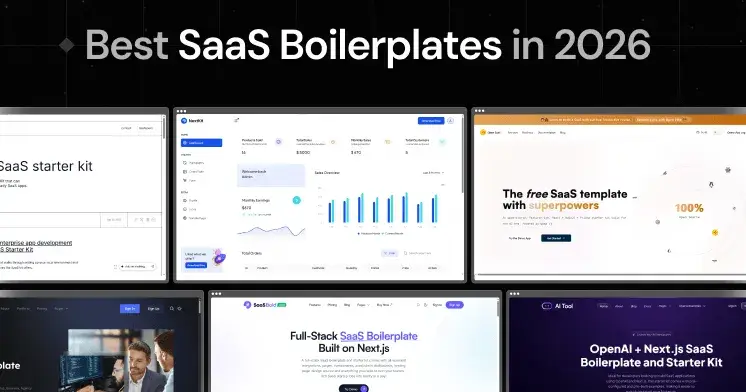
Building a SaaS product in 2026 is far more complex than before. AI SaaS growth has made features like multi-tenancy, advanced auth, billing, AI integrations, streaming responses, and fast deployments part of the default stack. The global AI SaaS market is projected to grow from USD 30.33 billion in 2026 to USD 367.6 billion by 2034, with a CAGR of 36.59% during the forecast period.
Startup competition is also much higher today. Founders are expected to validate ideas quickly, launch MVPs within weeks, and support production-ready infrastructure early. Modern SaaS apps now require systems such as Stripe billing, team workspaces, AI APIs, scalable databases, analytics, and SEO from the outset.
For this guide, I reviewed 10+ SaaS boilerplates across stacks like Next.js, Supabase, Prisma, PostgreSQL, MongoDB, Stripe, Clerk, Auth.js, Tailwind CSS, and Vercel. We compared different starter kits based on their tech stacks, use cases, developer workflows, customization flexibility, and suitability for different types of SaaS products.
This guide is built for SaaS founders, indie hackers, startup teams, agencies, and developers who want to replace months of setup work. Instead of relying on marketing claims, we focused on real development factors like authentication architecture, billing systems, documentation quality, deployment workflows, scalability, and long-term developer experience.
What is SaaS Boilerplate?
A SaaS boilerplate is a pre-built starter codebase that gives you the core infrastructure needed to launch a SaaS product faster. Instead of spending weeks setting up authentication, billing systems, multi-tenancy, dashboards, emails, APIs, and deployment workflows, you start with these features already connected and production-ready.
In simple terms, a SaaS boilerplate helps you skip repetitive setup work so you can focus on building the actual product your users will pay for.
Why SaaS Boilerplates matter more in 2026?
Now that you’ve understood what a SaaS boilerplate is, the next question is more important: why are SaaS boilerplates becoming almost essential in 2026? The answer is simple. Modern SaaS products are no longer small side projects with just login pages and dashboards. Users now expect production-level features from day one.
1. AI SaaS Apps Need More Infrastructure
Building an AI SaaS app now involves much more than connecting a single API. You often need AI SDKs, streaming responses, usage metering, vector DBs, RAG pipelines, background jobs, and scalable storage before your product is even ready for beta users.
Without a solid SaaS boilerplate, you can spend weeks setting up infrastructure instead of improving the actual product experience your users care about.
2. Founders Need Faster MVP Validation
In 2026, speed matters more than perfection. Founders are launching MVPs quickly to validate ideas, test pricing, collect user feedback, and improve products before competitors move into the same market.
A good SaaS boilerplate helps you reduce setup time massively so you can focus on shipping features, onboarding users, and reaching product-market fit faster.
3. Auth + Billing Complexity Keeps Growing
Authentication is no longer just email and password login. Modern SaaS products now require social auth, magic links, team access, role management, organization support, subscriptions, invoices, taxes, and webhook handling.
Billing systems have also become more complex because many AI SaaS products now use credit systems, usage-based pricing, and metered subscriptions instead of fixed monthly plans.
4. Modern SaaS Requires Production-Ready Architecture
Users expect SaaS apps to feel reliable from day one. That means your product needs scalable databases, API security, background queues, admin dashboards, email systems, monitoring, SEO pages, and deployment workflows already structured correctly.
A production-ready SaaS boilerplate gives you that foundation early, so you avoid rebuilding core architecture later as your product grows.
How we evaluated these SaaS Boilerplates
Not every SaaS boilerplate is built for the same type of product. Some are optimized for AI SaaS apps, while others focus more on dashboards, multi-tenant systems, or startup MVPs. That’s why we evaluated every boilerplate using practical developer-focused criteria instead of marketing claims alone.
1. Developer Experience
A clean developer experience helps you ship faster without fighting the codebase. Project structure, reusable components, TypeScript support, folder organization, and setup simplicity all play a major role in daily development speed.
2. Authentication Systems
Authentication has become much more advanced in modern SaaS products. Features like social login, magic links, team access, protected routes, organization support, and role-based permissions now matter for both startups and enterprise-ready apps.
3. Multi-Tenancy Support
Many SaaS platforms now support multiple teams, clients, or workspaces inside one application. Strong multi-tenancy architecture makes workspace management, organization isolation, permissions, and scaling much easier as your user base grows.
4. AI SaaS Readiness
Modern AI SaaS apps require infrastructure beyond basic API calls. Features like Vercel AI SDK support, streaming UI, token systems, queues/background jobs, AI workflows, and scalable request handling are becoming important parts of production-ready AI applications.
5. Documentation Quality
Good documentation reduces development friction and onboarding time. Clear setup guides, deployment instructions, architecture explanations, and organized examples make it easier for you to customize the product without wasting hours understanding the codebase.
6. Performance & Scalability
Fast performance becomes critical once traffic and user activity increase. Database architecture, API handling, rendering strategy, deployment optimization, and scalable infrastructure all impact how well the SaaS product performs in production environments.
7. SEO & Content Features
Organic traffic is still one of the biggest growth channels for SaaS products. Features like metadata management, dynamic SEO pages, sitemap support, content architecture, blog systems, and structured routing help improve long-term search visibility.
8. Long-Term Maintainability
A boilerplate should still feel manageable after months of active development. Clean architecture, readable code, modern dependencies, reusable patterns, and an organized project structure make future scaling and feature expansion much easier.
What to look for in a SaaS Boilerplate?
Now that you’ve understood the evaluation process, the next step is knowing what actually matters when choosing a SaaS boilerplate for your product. A good-looking demo is not enough because the real experience starts once you begin building, scaling, customizing, and deploying your SaaS application.
1. Authentication
Authentication should already support modern SaaS requirements instead of basic login forms only. Features like social auth, protected routes, team access, session handling, and role-based permissions save you significant development time later.
2. Payments & Billing
A strong billing setup helps you launch monetization faster without rebuilding payment flows from scratch. Stripe subscriptions, usage-based pricing, invoices, webhook handling, and customer billing portals are now essential for many SaaS products.
3. Emails & Notifications
Transactional emails play a major role in onboarding, authentication, billing alerts, and user engagement. Built-in email workflows and notification systems help you avoid setting up repetitive infrastructure manually.
4. AI Integrations
AI SaaS products now require faster API handling, streaming responses, token management, and scalable AI workflows. Boilerplates with built-in AI integrations reduce the time needed to launch production-ready AI features.
5. Background Jobs & Queues
Some SaaS tasks should run in the background instead of blocking the user experience. Queue systems become important for AI processing, scheduled jobs, email handling, report generation, and large-scale automation workflows.
6. SEO & Blogging Features
Organic search traffic still drives long-term SaaS growth. Features like metadata management, blog support, sitemap generation, dynamic routing, and SEO-friendly architecture help you grow visibility directly from search engines.
7. Framework Flexibility
Your product requirements can change quickly as the startup grows. Flexible architecture makes it easier for you to extend features, switch services, customize workflows, and scale the product without major rewrites.
8. Self-Hosting Support
Some developers prefer complete infrastructure control instead of depending fully on managed platforms. Self-hosting support gives you more flexibility for deployment, compliance, pricing control, and long-term scalability.
9. Deployment Simplicity
Deployment should feel smooth, even for fast-moving startup teams. Boilerplates with clean deployment workflows, environment setup guidance, and platform support help you move from local development to production faster.
10. Documentation & Community
Good documentation saves hours during development and debugging. Active communities, regular updates, setup guides, and real developer discussions make it much easier for you to maintain and improve the product long term.
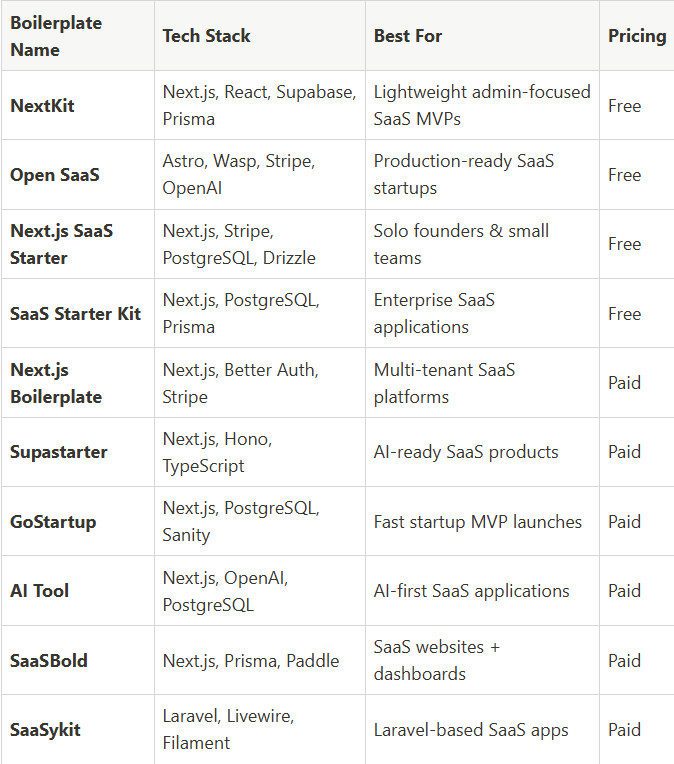
Quick comparison: which SaaS Boilerplate should you choose?
Here’s a quick breakdown to help you pick the best SaaS boilerplate.
Best SaaS Boilerplates in 2026
Below are 10+ powerful SaaS boilerplates trusted by founders and developers to build and ship products quickly in 2026.
NextKit
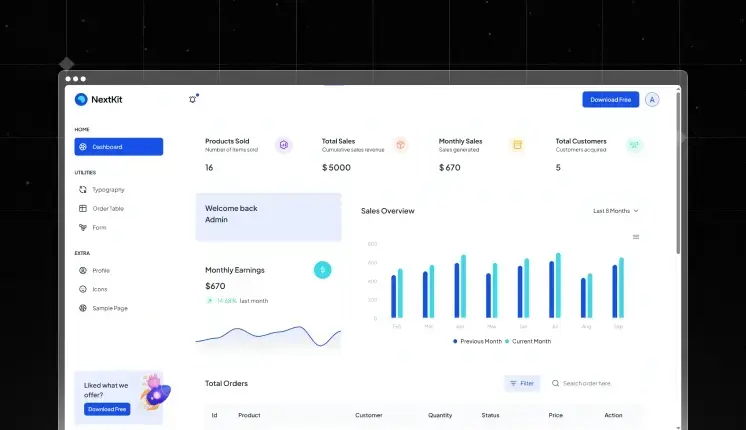
NextKit is a free SaaS boilerplate focused on helping developers launch admin-driven SaaS applications faster using a modern Next.js stack. It comes with pre-built authentication, database integration, dashboard pages, and backend infrastructure that reduce repetitive setup work during early-stage SaaS development.
The project is especially useful if you want a lightweight SaaS starter without adding unnecessary complexity. The architecture feels easier to customize for startups building MVPs, analytics platforms, and internal SaaS tools.
Free or Paid: Free and Open Source
Tech Stack: Next.js v15, React v19, Tailwind CSS v4, Supabase, MongoDB, Prisma, TypeScript
Use Cases:
SaaS analytics dashboards
Startup admin panels
AI workflow management tools
CRM SaaS platforms
Multi-user reporting systems
Best for: Developers building lightweight admin-focused SaaS MVPs using Next.js and Supabase.
Open SaaS
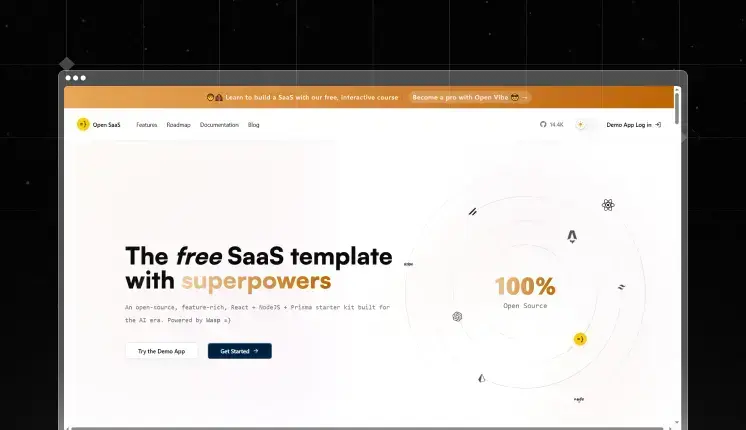
Open SaaS is a full-stack SaaS starter focused heavily on startup speed and production-ready workflows. It includes authentication, Stripe subscriptions, email handling, admin dashboards, and deployment support, making it useful for founders trying to launch products quickly.
One of its strongest advantages is the developer experience around scaling and maintainability. The structure feels organized for teams planning to ship real SaaS products instead of temporary prototypes.
Free or Paid: Free and Open Source
Tech Stack: Astro, Wasp, Stripe, Tailwind CSS, OpenAI
Use Cases:
AI SaaS startups
Subscription-based SaaS apps
Team collaboration platforms
Internal business tools
Usage-based SaaS products
Best for: Founders launching production-ready SaaS apps with built-in billing and AI infrastructure.
Next.js SaaS Starter
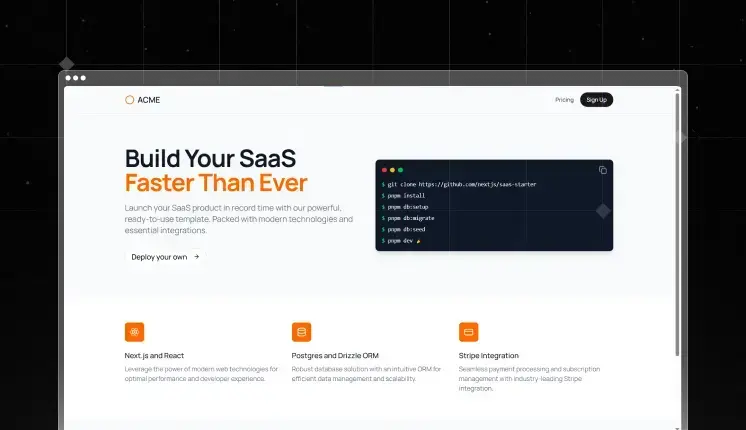
Next.js SaaS Starter is an open-source starter kit built for developers who want a clean and modern SaaS foundation directly inside the Next.js ecosystem. The project focuses on simplicity while still covering important SaaS infrastructure like auth, subscriptions, and deployment workflows.
The boilerplate works well for developers who prefer minimal architecture without sacrificing scalability. It feels especially useful for solo founders and small teams shipping SaaS MVPs rapidly.
Free or Paid: Free and Open Source
Tech Stack: Next.js, Stripe, PostgreSQL, Shadcn UI, Drizzle
Use Cases:
Marketing landing page with animated Terminal element
Dashboard pages with CRUD operations on users/teams
Basic RBAC with Owner and Member roles
Email/password authentication with JWTs stored in cookies
Global middleware to protect logged-in routes
Best for: Developers who want a clean Next.js SaaS starter with modern authentication and Stripe support.
SaaS Starter Kit
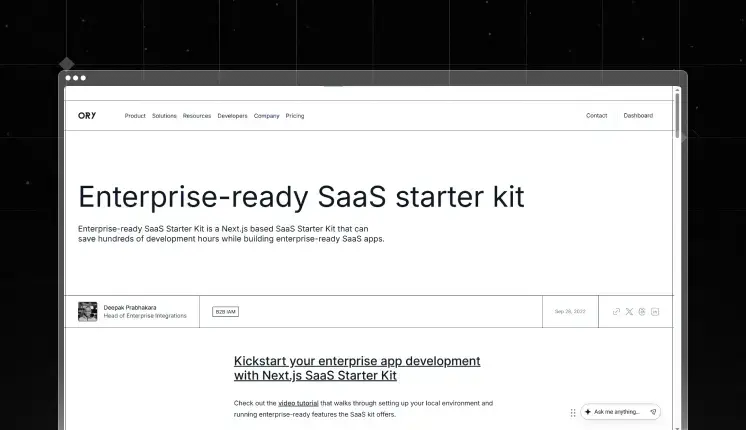
SaaS Starter Kit is designed more for enterprise-focused SaaS applications where authentication, organization management, and multi-tenant workflows matter heavily. The architecture supports scalable, team-based SaaS products with stronger access control.
This starter kit stands out for developers building products that require enterprise SSO, workspace management, and advanced authentication layers from the beginning.
Free or Paid: Free and Open Source
Tech Stack: Next.js, React, SVIX, PostgreSQL, Prisma, Tailwind CSS
Use Cases:
Authentication with email/password, magic links, and more
Team management: create teams, invite users, manage members, and more
Built-in webhooks and event handling
Internationalization (i18n) and dark mode support
Includes Docker Compose and Prisma Studio support
Best for: Teams building enterprise SaaS products with advanced authentication and organization management.
Read the full article here

Join Vaibhav on Peerlist!
Join amazing folks like Vaibhav and thousands of other builders on Peerlist.
0
0
0