

Normal SEO vs AI SEO: Key Differences, Benefits, Cost & Future Trends
Search engine optimisation is evolving fast. Here's everything you need to know about where traditional SEO ends and AI-powered SEO begins — and which approach deserves your investment.
1. What is normal (traditional) SEO?
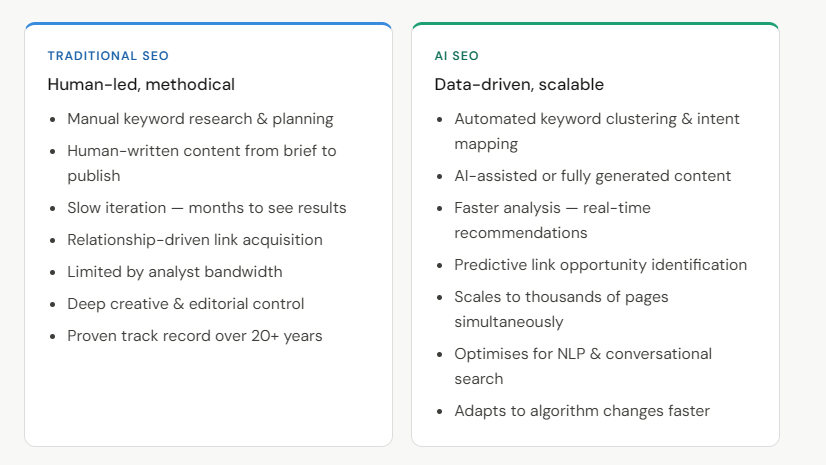
Traditional SEO is the practice of optimising your website so it ranks higher on search engine results pages (SERPs) through a combination of human expertise, manual research, and iterative testing. It has been the backbone of digital marketing for over two decades.
At its core, traditional SEO breaks down into three pillars:
On-page optimisation
This covers everything within your control on the page itself — title tags, meta descriptions, header hierarchy, keyword placement, internal linking, and content quality. A human strategist researches relevant keywords using tools like Ahrefs or SEMrush, then weaves them naturally into content that serves user intent.
Technical SEO
Site speed, mobile-friendliness, crawlability, Core Web Vitals, structured data, and canonical tags all fall here. Technical SEO is the invisible infrastructure that allows search engines to index and rank your pages correctly.
Off-page / link building
Earning authoritative backlinks from relevant websites signals credibility to Google. This is still one of the most powerful ranking factors — and traditionally one of the most labour-intensive, relying on outreach, PR campaigns, guest posting, and relationship-building.
2. What is AI SEO?
AI SEO uses machine learning, natural language processing (NLP) and large language model (LLM) technology to automate, speed up and improve SEO tasks that used to take a lot of human hours. It’s not a replacement for strategy, it’s a supercharger for execution.
AI SEO tools can analyse thousands of data points within seconds, create content briefs or even full drafts, predict keyword trends before they become popular, and personalise content suggestions at scale. Mainstream examples are platforms like Surfer SEO, MarketMuse, Clearscope, and Semrush’s AI features. More recently, generative AI has come into the fold — allowing businesses to create high-quality SEO content at a fraction of the traditional cost and timeline.
Crucially, AI SEO also reflects a shift in how people look for things. Queries are more conversational, more natural, often posed directly to AI assistants. Optimising for these patterns – voice search, featured snippets, AI Overviews (Google SGE) – is a separate discipline in itself in AI SEO.
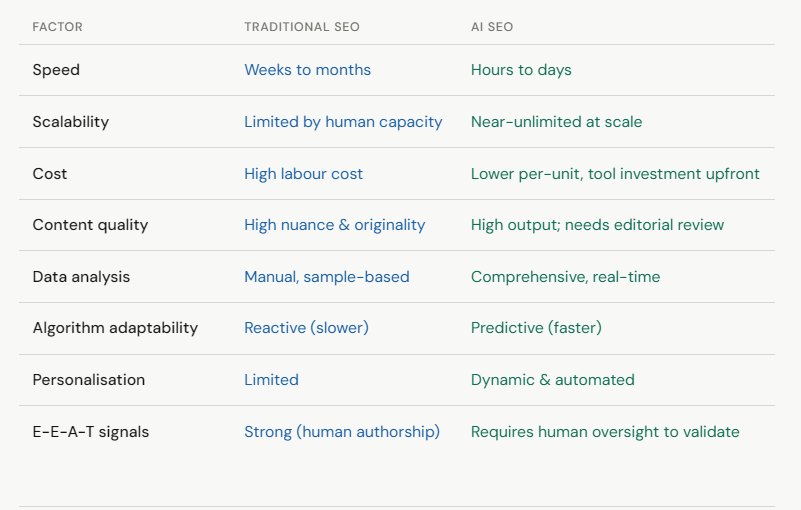
3. Key differences at a glance
4. Benefits of each approach
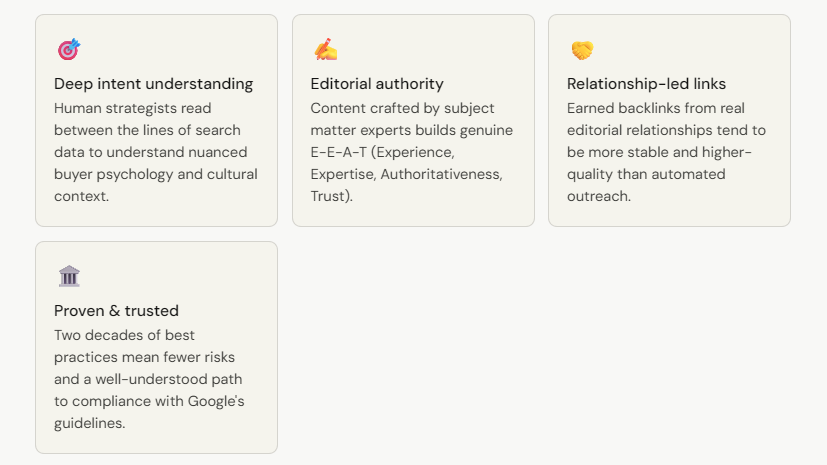
Benefits of traditional SEO
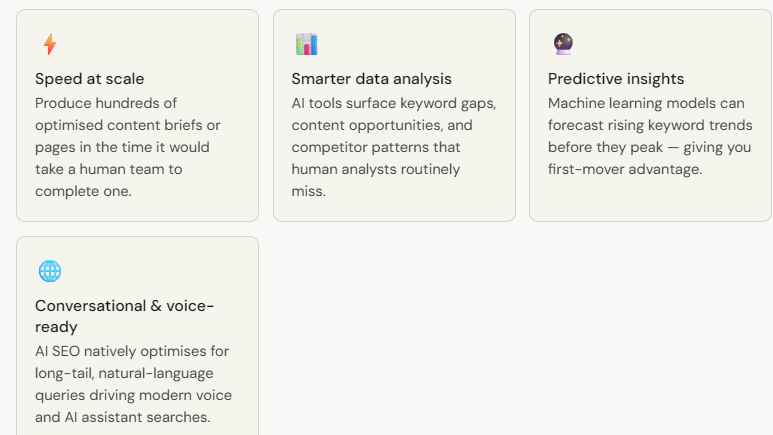
Benefits of AI SEO
5. Cost comparison
Cost is often the deciding factor for businesses weighing these approaches. Here is a realistic breakdown based on typical market rates.
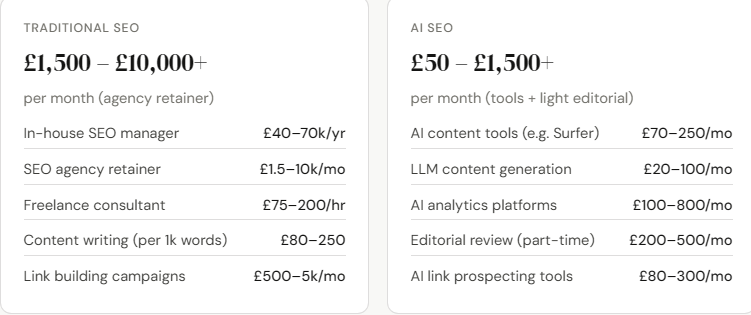
The cost advantage of AI SEO is most dramatic at content scale. A business publishing 50+ pages per month would spend £12,500+ on traditional content writing alone — versus a few hundred pounds on AI-assisted production with light editorial. However, traditional SEO still wins on trust signals and nuanced strategy for competitive or YMYL (Your Money, Your Life) niches where Google scrutinises authority more heavily.
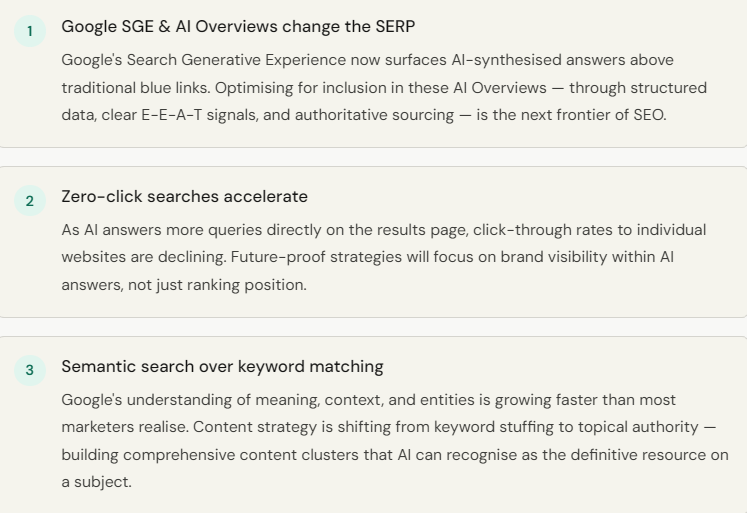
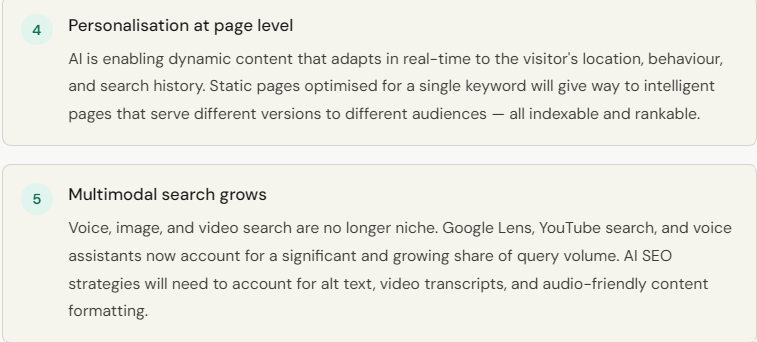
6. Future trends in AI-driven search
7. Which approach is right for you?
The honest answer: neither approach works best in isolation. The most effective SEO programmes in 2025 combine AI efficiency with human strategy.
The winning formula
Use AI tools to handle research, analysis, content production, and technical audits at scale. Use human expertise to set strategy, apply editorial judgment, build relationships, and ensure every piece of content genuinely serves your audience. AI accelerates the engine. Humans steer it.

Join Vandana on Peerlist!
Join amazing folks like Vandana and thousands of other builders on Peerlist.