

Why Every Packaging Company Needs SEO to Stay Ahead of Competitors
This guide breaks down exactly why every packaging company needs SEO, how it drives leads, and the practical steps to build a strategy that keeps you ahead of the pack — pun intended.
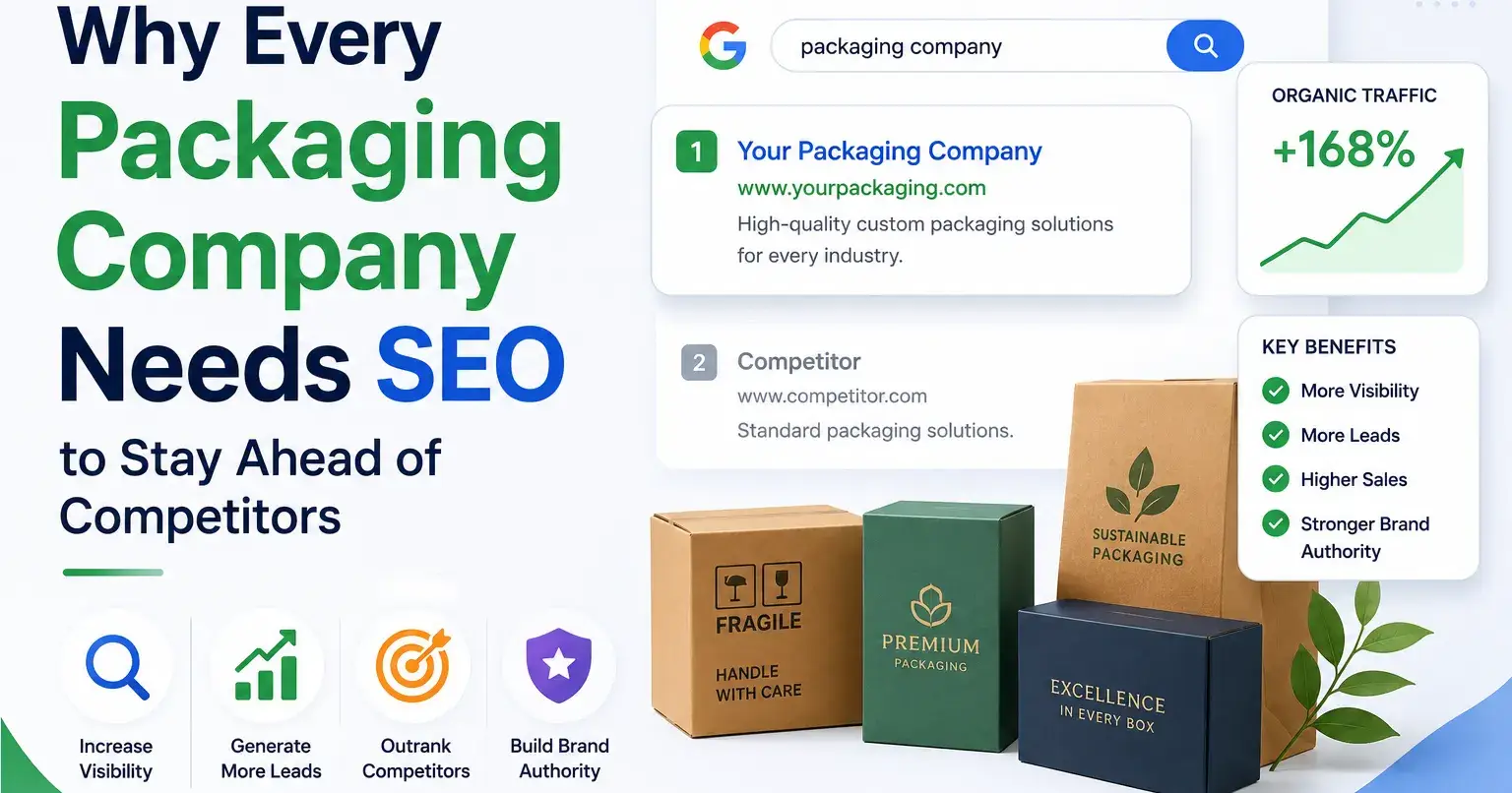
Somewhere right now, a procurement manager is typing "custom corrugated boxes supplier near me" into Google. A brand manager is searching for "sustainable packaging manufacturer USA." A startup founder is comparing "flexible pouch packaging companies" before ever picking up the phone. None of them are calling you first — they're searching first.
That's simply how B2B buying works today. Buyers now complete roughly 60% of their purchasing journey through independent research before they ever reach out to a vendor, and by the time they do make contact, they've usually already formed a shortlist and a preferred choice.<cite index="3-1">Buyers spend most of their journey conducting independent research online, which culminates in a preliminary vendor choice made before engaging vendors</cite> In fact, <cite index="5-1">95% of the time, the vendor that wins a deal was already on the buyer's day-one shortlist</cite>. If your packaging company isn't visible on that list, you're not losing the sale at the negotiation stage — you're losing it before the conversation even starts.
Search remains the biggest driver of that discovery process. <cite index="27-1">Organic search accounts for roughly 53% of all website traffic</cite>, and search engines continue to send vastly more qualified visitors to business websites than any AI chatbot or social platform. For an industry built on relationships, quotes, and repeat orders, that's a wake-up call: if packaging buyers can't find you online, they'll find your competitor instead.
This guide breaks down exactly why every packaging company needs SEO, how it drives leads, and the practical steps to build a strategy that keeps you ahead of the pack — pun intended.
Why SEO Matters for Packaging Companies
The packaging industry is more competitive and commoditized than ever. Custom boxes, flexible pouches, protective packaging, labels, and sustainable materials are all searched for online, and buyers rarely limit themselves to one supplier when comparing quotes.
Here's the uncomfortable truth: a beautifully designed website means nothing if no one can find it. SEO (Search Engine Optimization) is what makes your site visible when a potential client searches for the exact products or services you offer — whether that's "eco-friendly packaging supplier" or "custom pouch manufacturer for food brands."
The Shift in How Packaging Buyers Search
Packaging procurement has moved almost entirely online. Buyers research materials, compare manufacturers, check certifications, read case studies, and shortlist vendors — all before filling out a contact form. <cite index="7-1">B2B buyers review an average of 11.4 pieces of content before they're ready to contact a vendor</cite>, which means your website, blog, and product pages are doing the selling long before your sales team gets involved.
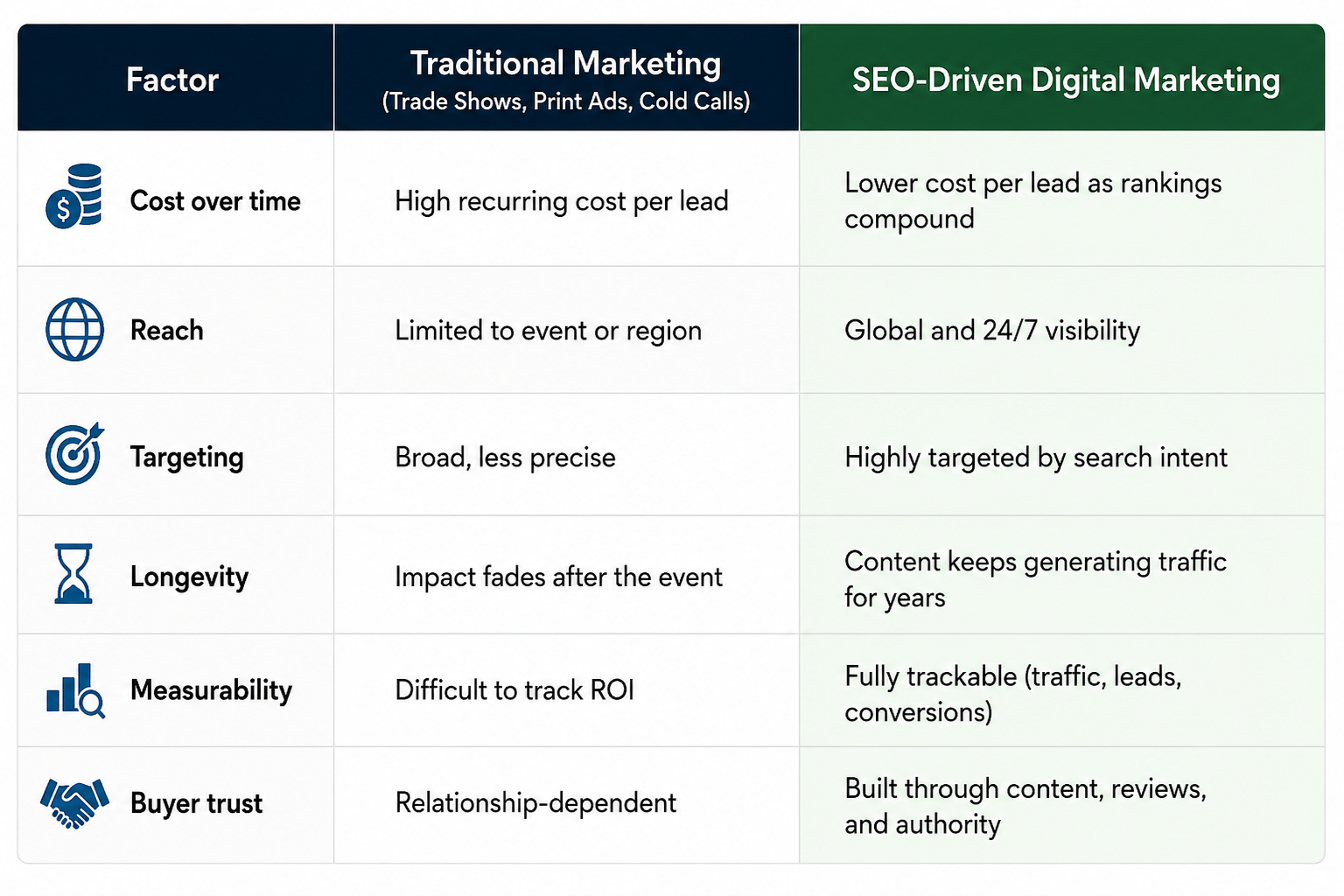
SEO vs. Traditional Marketing for Packaging Companies
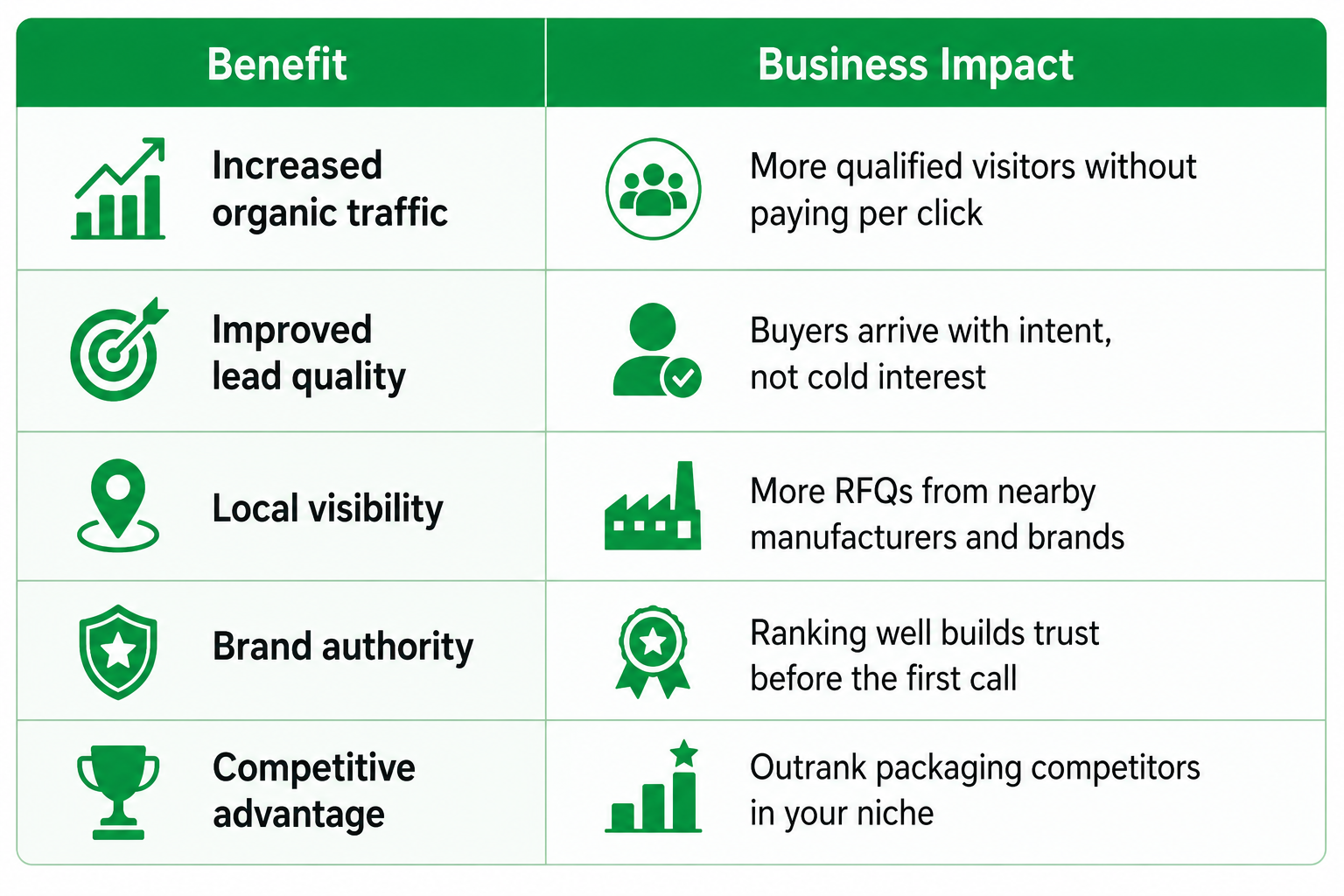
Top Benefits of SEO for Packaging Businesses
A well-executed SEO strategy does more than improve rankings. It changes how your packaging company is perceived, found, and chosen.
Higher visibility for high-intent searches — Appear when buyers search for specific packaging types, materials, or industries you serve.
Better quality leads — SEO leads tend to convert at a noticeably higher rate than outbound or cold leads, because searchers arrive already interested.
Stronger brand credibility — Ranking on page one signals authority and trustworthiness to procurement teams.
Lower long-term cost per lead — Unlike paid ads, organic rankings keep generating traffic without an ongoing spend per click.
Better user experience — Technical SEO improvements (speed, mobile-friendliness, clear navigation) make your site easier for buyers to use.
Long-term compounding growth — Content published today can continue to attract leads for years, unlike a single ad campaign or trade show appearance.
How SEO Helps Packaging Companies Generate B2B Leads
Packaging is a B2B-heavy industry, and B2B buying behavior has changed dramatically. Buyers are self-directed, skeptical of sales pitches, and rely heavily on search engines and AI tools before ever contacting a vendor.
The Modern B2B Buyer Journey
<cite index="4-1">B2B buyers are typically nearly 70% through their purchasing process before they engage with a seller, and roughly 80% of the time, it's the buyer who initiates first contact</cite> — not the sales rep. That means your website content, product pages, and case studies need to do the convincing long before a salesperson steps in.
<cite index="1-1">Most B2B buyers, around 71%, start their research with a simple Google search</cite>. If your packaging company doesn't show up for the terms your ideal buyers are searching, you're invisible during the exact moment they're deciding who to shortlist.
Where SEO Fits Into the Funnel
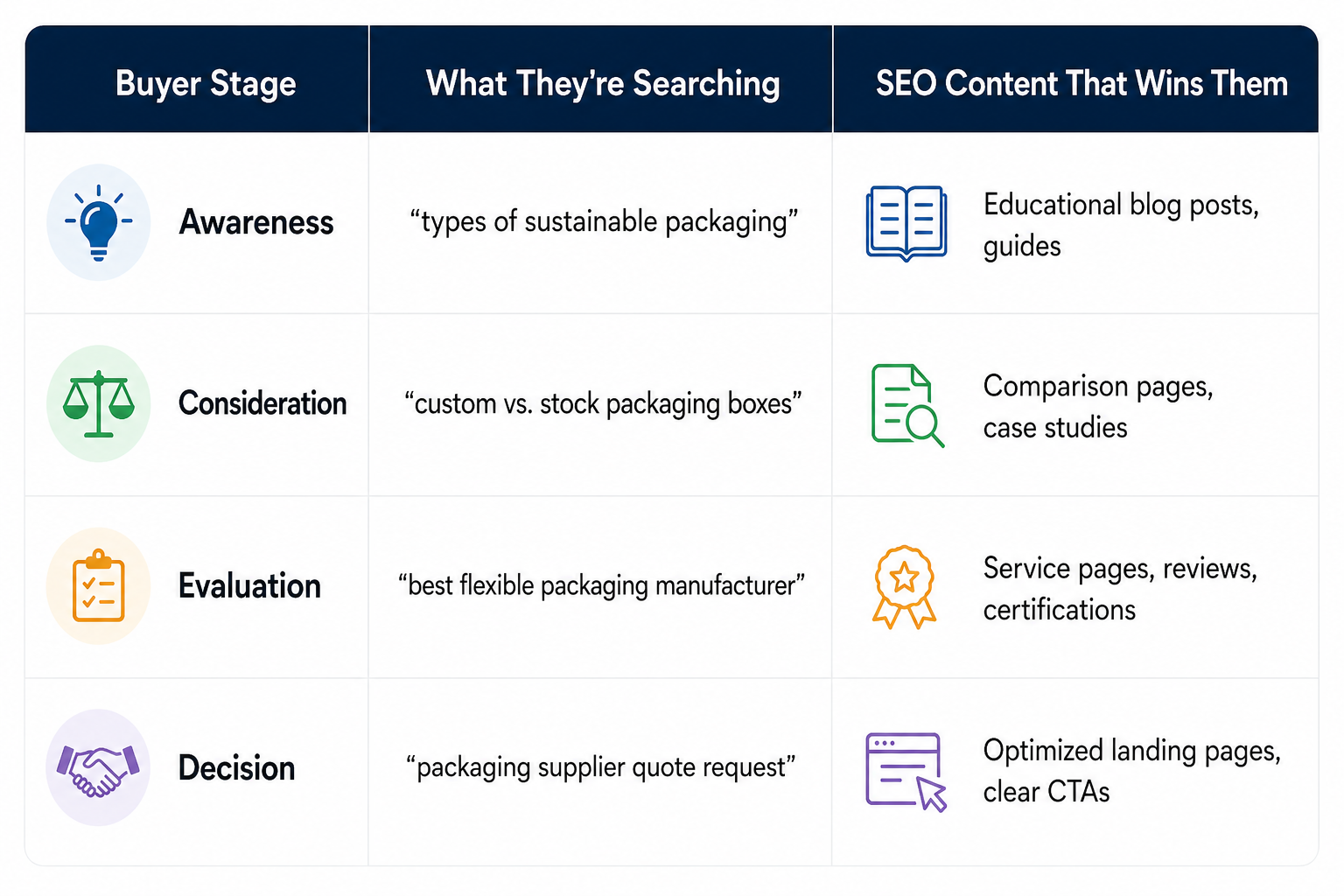
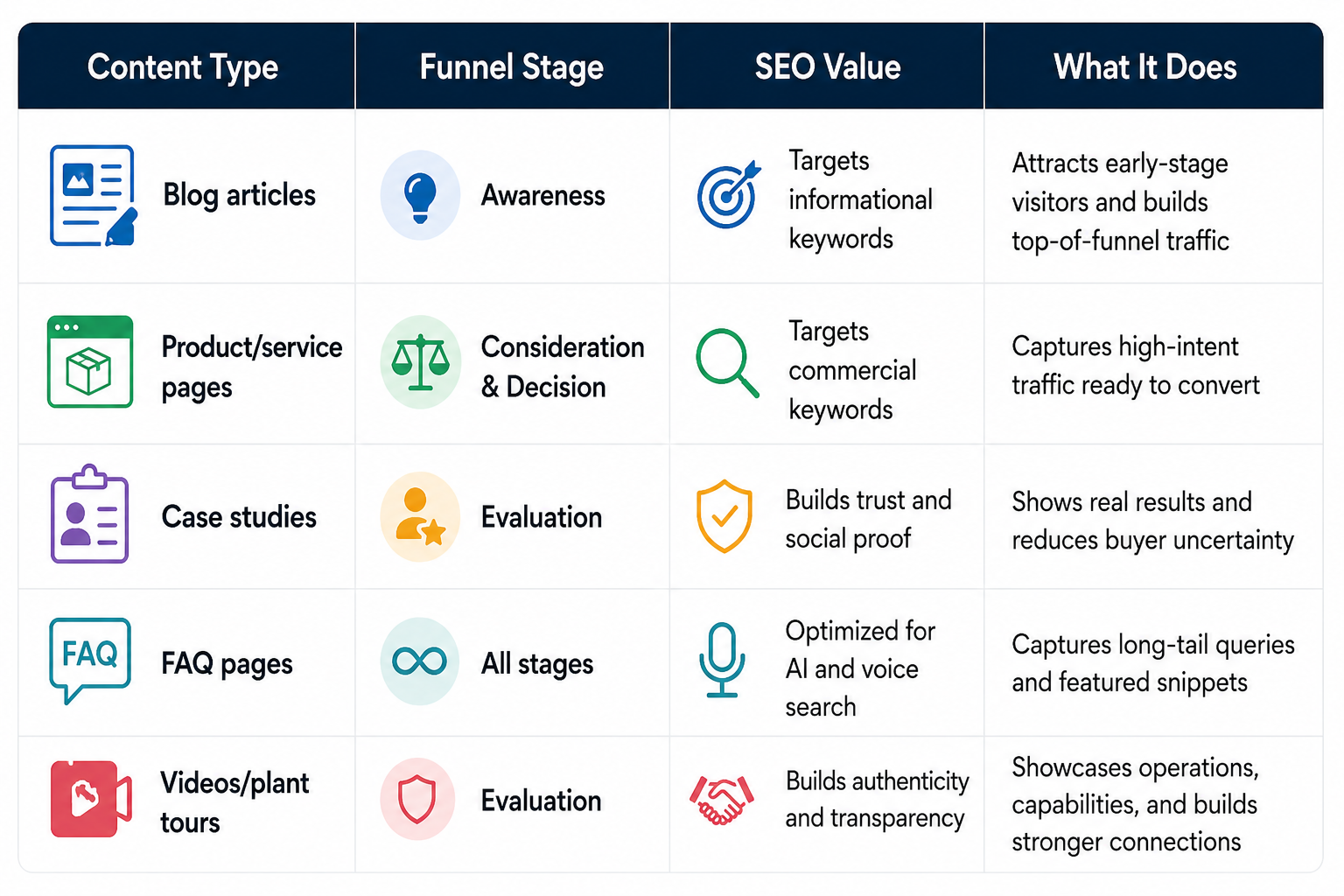
SEO-driven content maps directly to each of these stages, so your website is working as a 24/7 sales asset — answering questions, building trust, and capturing leads without a rep having to be on the call.
Local SEO for Packaging Manufacturers
Many packaging companies serve regional clients, operate physical manufacturing facilities, or want to be found by nearby brands looking for a local supplier. That's where local SEO becomes essential.
<cite index="17-1">Searches with local intent drive an estimated 1.5 billion business visits each month</cite>, and local search behavior has become deeply tied to how buyers evaluate suppliers. <cite index="12-1">Businesses with 50+ Google reviews earn significantly more leads than those with fewer than ten</cite>, showing just how much reputation influences local B2B decisions too.
Local SEO Essentials for Packaging Companies
Google Business Profile optimization — Complete every field: services, service areas, photos of your facility, certifications, and hours.
Location-specific landing pages — If you serve multiple regions, create dedicated pages (e.g., "Custom Packaging Manufacturer in Texas").
NAP consistency — Keep your Name, Address, and Phone number identical across your website, directories, and industry listings.
Customer reviews — Actively request reviews from clients; <cite index="16-1">a fully optimized, verified profile appears far more often in search and generates significantly more website visits, calls, and direction requests than an incomplete listing</cite>.
Local backlinks — Get listed in regional manufacturer directories, chambers of commerce, and industry associations.
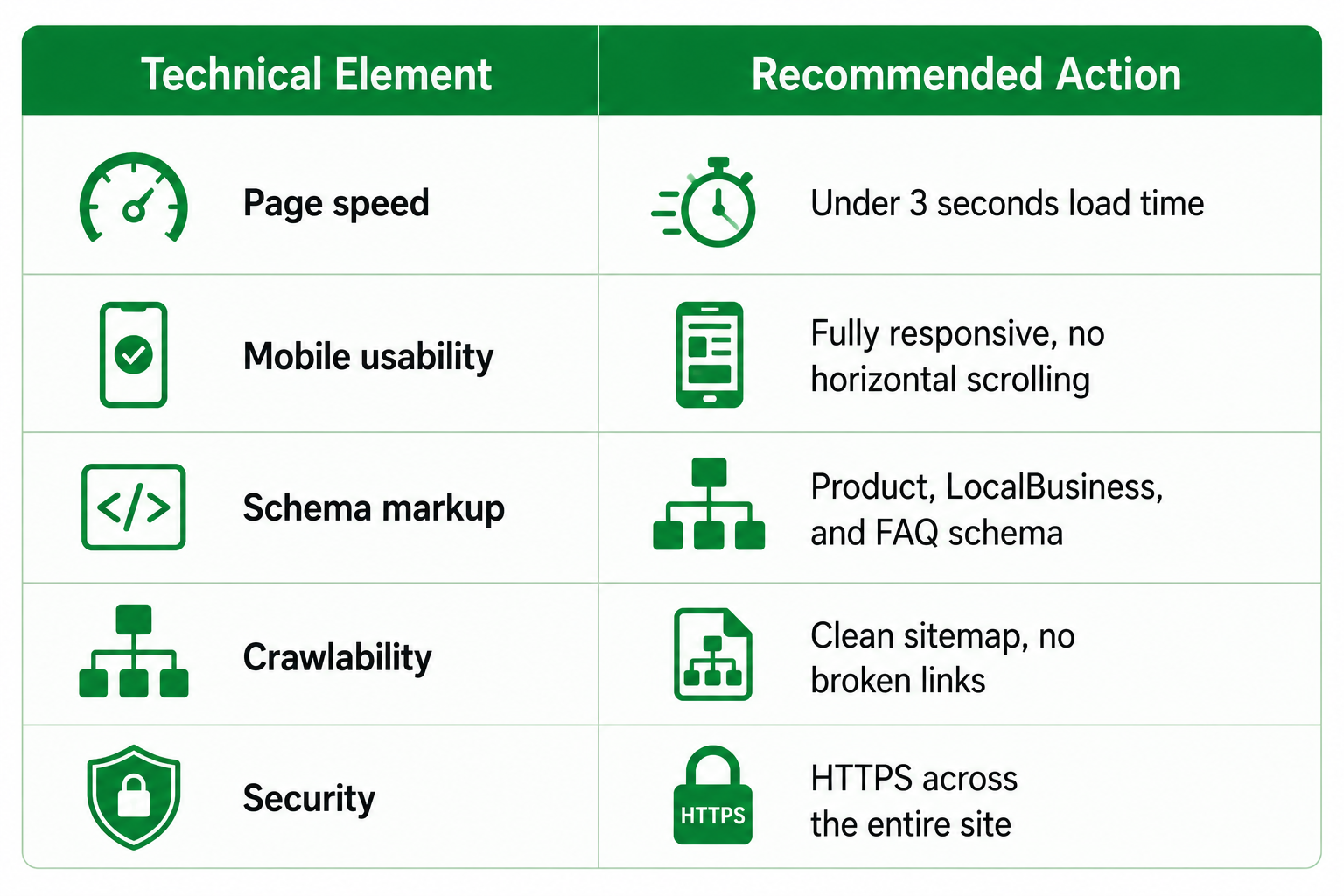
Technical SEO Best Practices
Great content won't rank if the underlying website has technical problems. Technical SEO ensures search engines can crawl, index, and properly understand your packaging website.
Core Technical SEO Priorities
Site speed — Slow-loading product pages frustrate buyers and hurt rankings. Compress images, use lazy loading, and minimize scripts.
Mobile-friendliness — With most local and product searches happening on mobile, responsive design is non-negotiable.
Core Web Vitals — Google uses these performance signals to assess user experience; as of late 2025, <cite index="23-1">only just over half of websites meet the requirements for Core Web Vitals</cite>, meaning technically sound packaging sites have a real edge.
Secure, crawlable architecture — HTTPS, clean URL structures, and an updated XML sitemap.
Structured data (schema markup) — Helps search engines and AI tools understand your products, services, reviews, and business details.
Fixing duplicate or thin content — Common on packaging sites with dozens of similar product SKUs; consolidate or differentiate these pages.
Content Marketing Strategies for Packaging Companies
Content is how packaging companies answer buyer questions, demonstrate expertise, and build the trust needed to win RFQs.
High-Performing Content Types for Packaging Brands
Buying guides — "How to Choose the Right Packaging Material for Frozen Food"
Comparison content — "Corrugated vs. Rigid Packaging: Which Is Right for You?"
Case studies — Real client results build credibility with procurement teams.
Sustainability content — Increasingly important as brands prioritize eco-friendly packaging.
Technical spec pages — Detailed product pages with dimensions, materials, and certifications.
FAQ pages — Directly target the questions buyers type into Google and AI search tools.
Case studies deserve special attention: <cite index="1-1">nearly 69% of B2B marketers consider case studies their most effective content format</cite>, and buyers frequently want proof before engaging a new supplier.
Content Formats That Support the Full Funnel
Common SEO Mistakes Packaging Companies Make
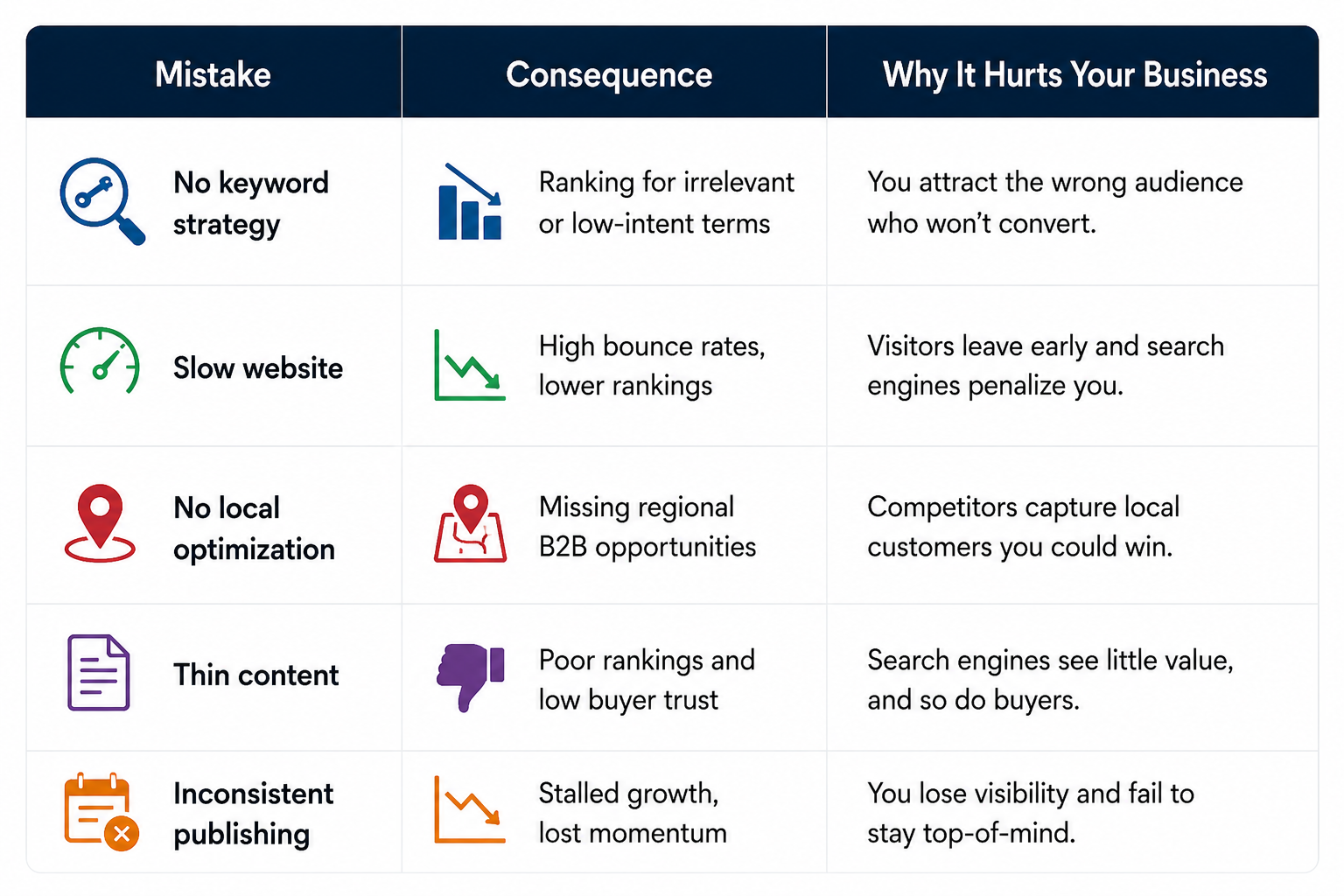
Even well-intentioned packaging businesses often undermine their own SEO efforts. Watch out for these recurring mistakes:
Treating the website as a static brochure instead of updating it regularly with fresh content.
Ignoring keyword research, guessing at terms instead of using data to find what buyers actually search.
Ignoring mobile experience, despite the majority of local searches happening on smartphones.
Neglecting Google Business Profile, missing out on local visibility entirely.
Duplicate product pages with little unique content, confusing search engines.
No clear calls-to-action, so even good traffic doesn't convert into quote requests.
Expecting overnight results and abandoning SEO before it has time to compound.
How to Measure SEO Success
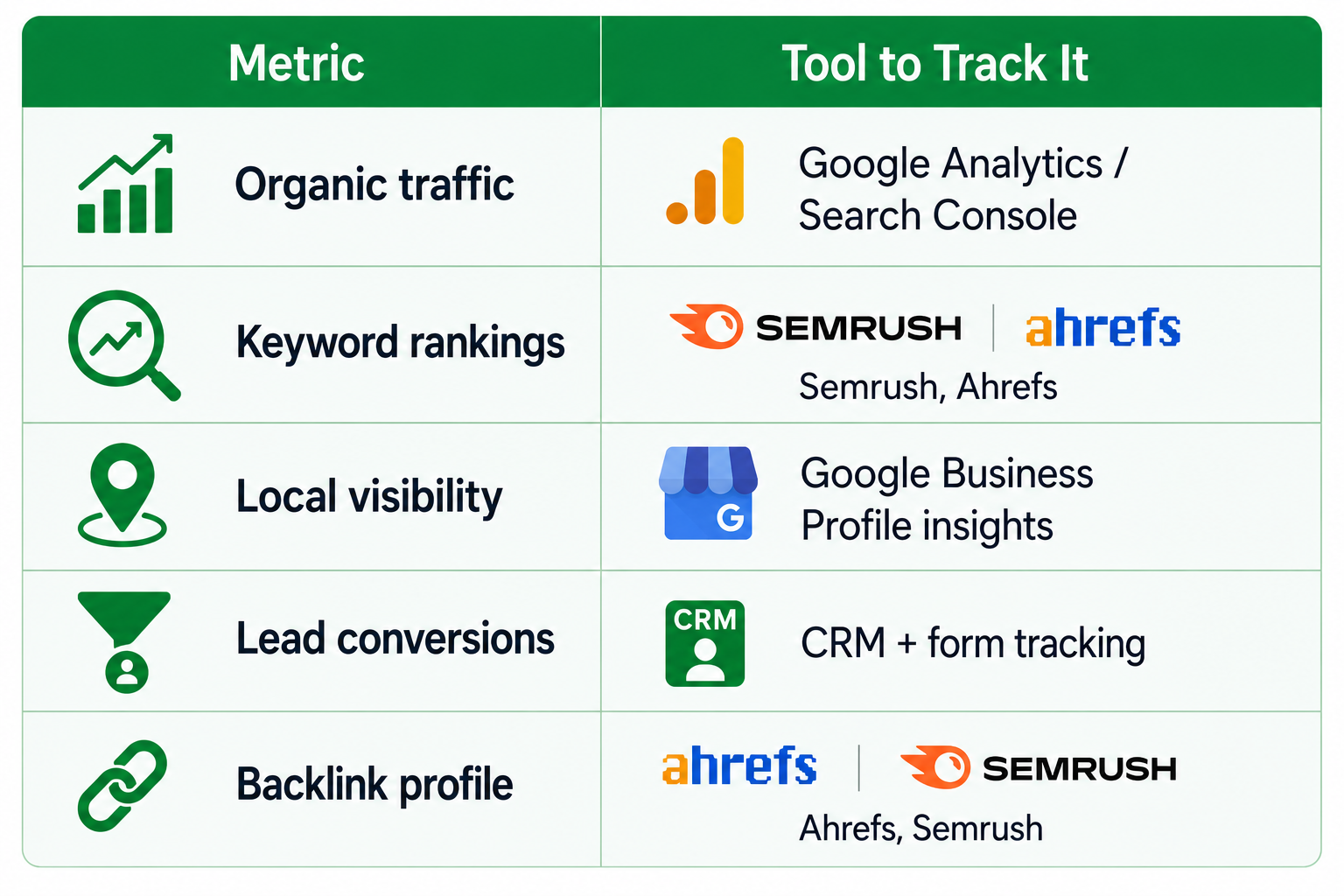
SEO should never be a guessing game. Packaging companies need clear metrics to evaluate whether their strategy is working.
Key Metrics to Track
Organic traffic growth — Are more relevant visitors finding your site over time?
Keyword rankings — Are you climbing for target terms like "custom packaging manufacturer"?
Lead and quote form submissions — The ultimate measure of SEO's business impact.
Local pack visibility — Are you appearing in the top three Google Maps results for local searches?
Conversion rate — Are visitors actually taking action once they land on your site?
Domain authority/backlink growth — Reflects how trustworthy and authoritative your site appears to search engines.
Conclusion
The packaging industry is being shaped by a fundamental shift: buyers research, compare, and shortlist suppliers almost entirely online before ever picking up the phone. If your company isn't visible in that research phase, you're losing deals you never even knew existed.
SEO isn't a nice-to-have anymore — it's the infrastructure behind modern B2B growth. From technical optimization to local visibility and content that answers real buyer questions, every piece works together to keep your packaging company ahead of competitors who are still relying on outdated marketing playbooks.
Frequently Asked Questions
1. Why does a packaging company need SEO instead of just relying on referrals? Referrals are valuable, but they're unpredictable and don't scale. SEO ensures new buyers who don't already know you can still find and vet your company online.
2. How long does it take to see SEO results for a packaging business? Most packaging companies start seeing meaningful traffic and lead growth within 4–6 months, with compounding results building over 12+ months.
3. Is local SEO important if my packaging company ships nationwide? Yes. Even national suppliers benefit from local SEO because many buyers still prefer working with, or at least verifying, a physically established manufacturer.
4. What keywords should packaging companies target first? Start with high-intent terms tied to your specific products and materials (e.g., "custom corrugated packaging supplier") rather than broad, generic terms like "packaging."
5. Does SEO work for niche packaging products? Yes — niche products often have less competition, making it easier to rank and capture highly qualified, specific search traffic.
6. How is SEO different from paid ads for packaging companies? Paid ads stop generating traffic the moment you stop paying. SEO builds long-term, compounding visibility that continues generating leads over time.
7. Do packaging companies need a blog for SEO to work? A blog isn't mandatory, but consistent content (guides, case studies, FAQs) significantly accelerates rankings and builds buyer trust.
8. What's the biggest SEO mistake packaging companies make? Treating SEO as a one-time project instead of an ongoing strategy — search engines reward consistency, not one-off efforts.

Join Vandana on Peerlist!
Join amazing folks like Vandana and thousands of other builders on Peerlist.
0
0
0