

Vibe Coding: The Real High Was Never the Stack
I was six or seven when I first saw a computer at my dad’s office. A white box, not too different from the old televisions back home. A keyboard with keys like little bricks laid out in perfect order. And a mouse — not sleek or futuristic, but shaped like its name, a small off-white mouse curled up in your palm.
I remember tapping away on that keyboard, staring into the bulky gray monitor that seemed to want to talk back to me. I didn’t know what I was doing, but it felt alive. Then, for years, that moment just sat as a memory, until decades later when I met the computer again. This time, the monitor was thin, crisp, and modern. The keyboard, lighter and weaker than those old bricks I loved smashing.
As for coding? Computer classes in school was just a blur of wounded memories — the teacher asking me to stand outside the class for failing. That’s where it should have ended. But it didn’t.
Like most developers, I began with games. Not the polished, expensive kind. Mine was an online RPG called Pokémon Omega — free to play, fueled by nostalgia, and wrapped around communities and clans. The fun twist? Some of the top players were also the developers of the game.
At first, I wanted to be the best player. But within days, something shifted. I didn’t want to just play the game. I wanted to build the game. That urge took over me, even though I had no clue where to start. All I knew was how much I enjoyed editing my profile section with bits of HTML and CSS.
Then I found out the game itself was built on HTML, CSS, and JavaScript. That was it. The blocks of the web. Suddenly, everything clicked. While other players stacked Pokémon, I was stacking up web dev skills. I spent my days diving into jQuery, experimenting with templating engines like Pug and Jade. From there, it snowballed into Python and Django. Then Ruby — which felt like poetry — and PHP, which burned my hands but taught me lessons.
I became obsessed. Tutorials, blogs, late-night coding — it was my whole world. Every six months, I’d pick up a new stack. I loved dual-booting Linux, setting up LAMP stacks, playing with servers, configuring SSL on Digital Ocean droplets. My first taste of Heroku felt magical — my hobby projects had a home. Then came Node.js, the simplicity of Express.js, and even Discord bots I’d spin up and deploy just for fun.
My first startup? Built on Django and Angular. After that, I took up work at a web shop, where I played with Flutter, Angular, Node.js, GCP, AWS, Firebase, PostgreSQL. I wanted to touch everything. The high of learning new frameworks and languages, of shaping little experiences from scratch — that was the best high of my life.
But now, with Vibe Coding, I realize the real high was never the stack. It was the products. Building something that lives. Even today, I still lose myself scrolling through docs or watching tutorials, chasing that builder’s joy.
I remember years ago watching some guy live-streaming Flutter development on FreeCodeCamp’s YouTube channel. I’d sit there for hours, mesmerized, watching another developer build. This year, after mentoring at a few hackathons, that memory came back full circle. It’s a joy — a privilege, really — to see others build.
And me? These days, every app I build starts with a conversation. Not with a co-founder. Not with a product manager. But with ChatGPT.
That’s where the spark begins. I pour in everything I’m thinking — the annoyance from some clunky workflow I bumped into, the little itch that keeps tugging at me, half-baked thoughts that don’t yet make sense. I talk it out with the model like I would with a friend. And somewhere in that messy stream of words, the idea starts taking shape. It’s reflected back to me, sharper, more alive. That’s when I feel it — the click that says, yes, this is something I want to build.
From there, I go searching for signs that I’m not alone. I take the idea to Perplexity, not for polished research but for the raw conversations buried in forums and threads. It pulls out voices of people venting, debating, asking for help. Sometimes I stumble onto a post where someone is practically begging for a solution to the very problem I’ve been chewing on. Those moments seal it — the idea isn’t just in my head, it’s out there in the world, waiting.
Once I know it’s real, I move to give it form. I draft a prompt with ChatGPT, clean and focused, and feed it into Bolt.new. In seconds, a landing page appears on my screen — rough, but alive, something to mold. Then comes the UI. Another conversation with ChatGPT, another crafted prompt, this time for design. I run it through Google Stitch, and suddenly I’m staring at screens that hint at the app’s soul — the flow, the branding, the structure. It’s still just scaffolding, but it’s enough.
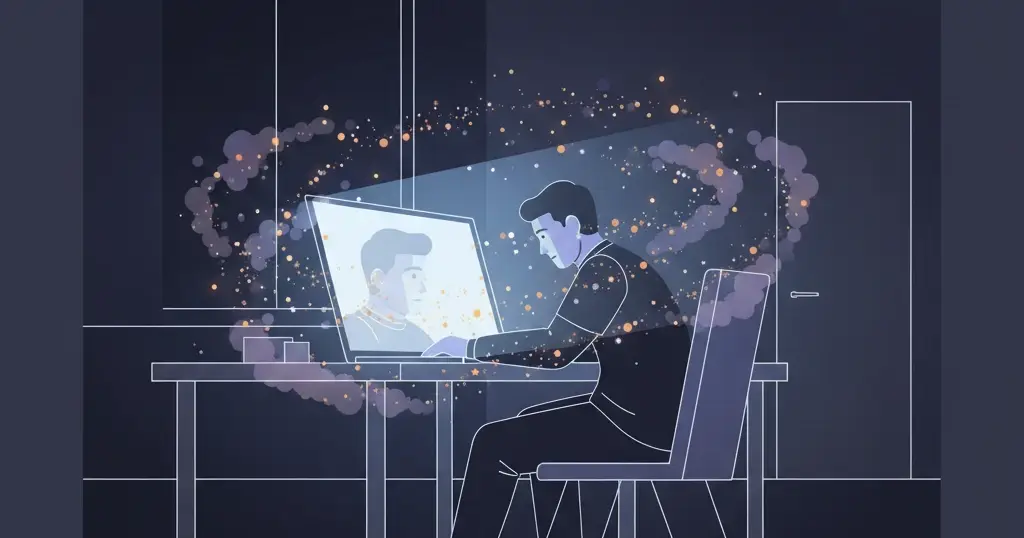
And then comes the part I love most. I open up a fresh React Native + Expo project, and I start building. One screen at a time, one feature at a time. No rush. No pressure. Just me, shaping something out of nothing. That’s the real high. Not the frameworks, not the fancy stacks, but this: sitting at my desk, lost in the rhythm of creation, building a product that didn’t exist yesterday.
That’s what Vibe Coding is to me. A loop of spark, validation, scaffolding, and then the joy of turning it into something real. It isn’t a playbook. It isn’t the right way. It’s just my way. Fast tools, short feedback loops, ideas born from little frustrations, and the thrill of watching them turn into products.
The tools change, the stacks evolve, but the feeling? The feeling is the same as that day when I was six, tapping away on that brick of a keyboard, staring at a gray monitor that seemed to want to talk back. The joy of building has always been the same.

Join Vishnu on Peerlist!
Join amazing folks like Vishnu and thousands of other builders on Peerlist.
0
14
1