

When the World Breaks, Efficient Enterprises Win
The world changed on February 28, 2026.
US and Israeli strikes on Iran set off a chain reaction that nobody fully priced in: airspace closures across Bahrain, Iraq, Kuwait, Qatar, Syria, and the UAE. Iranian attacks on vessels passing through the Strait of Hormuz dramatically reduced traffic in the narrow channel, through which about 20 percent of global oil and gas supplies transit. Global stocks have fallen 5.5 percent since the war began, with Asian stock markets hit the worst.
The head of the International Energy Agency described the situation as the "greatest global energy security challenge in history."
That's not hyperbole. That's the operating environment for every business right now.
The Playbook Nobody Wants to Run, But Everyone Should
In moments like this, most enterprises do one of three things: panic and cut everything, wait it out hoping the storm passes, or double down on what actually compounds, operational efficiency.
The third group consistently wins. Not just survives, wins.
Look at the 2008 financial crisis. Amazon, a company obsessed with efficiency and unit economics, used the downturn to cement its logistics and AWS advantage while competitors froze. Look at COVID. Businesses that had clean operational intelligence, who knew where their costs were, where their waste was, where demand was actually moving, adapted in weeks. The rest spent months figuring out what was even happening.
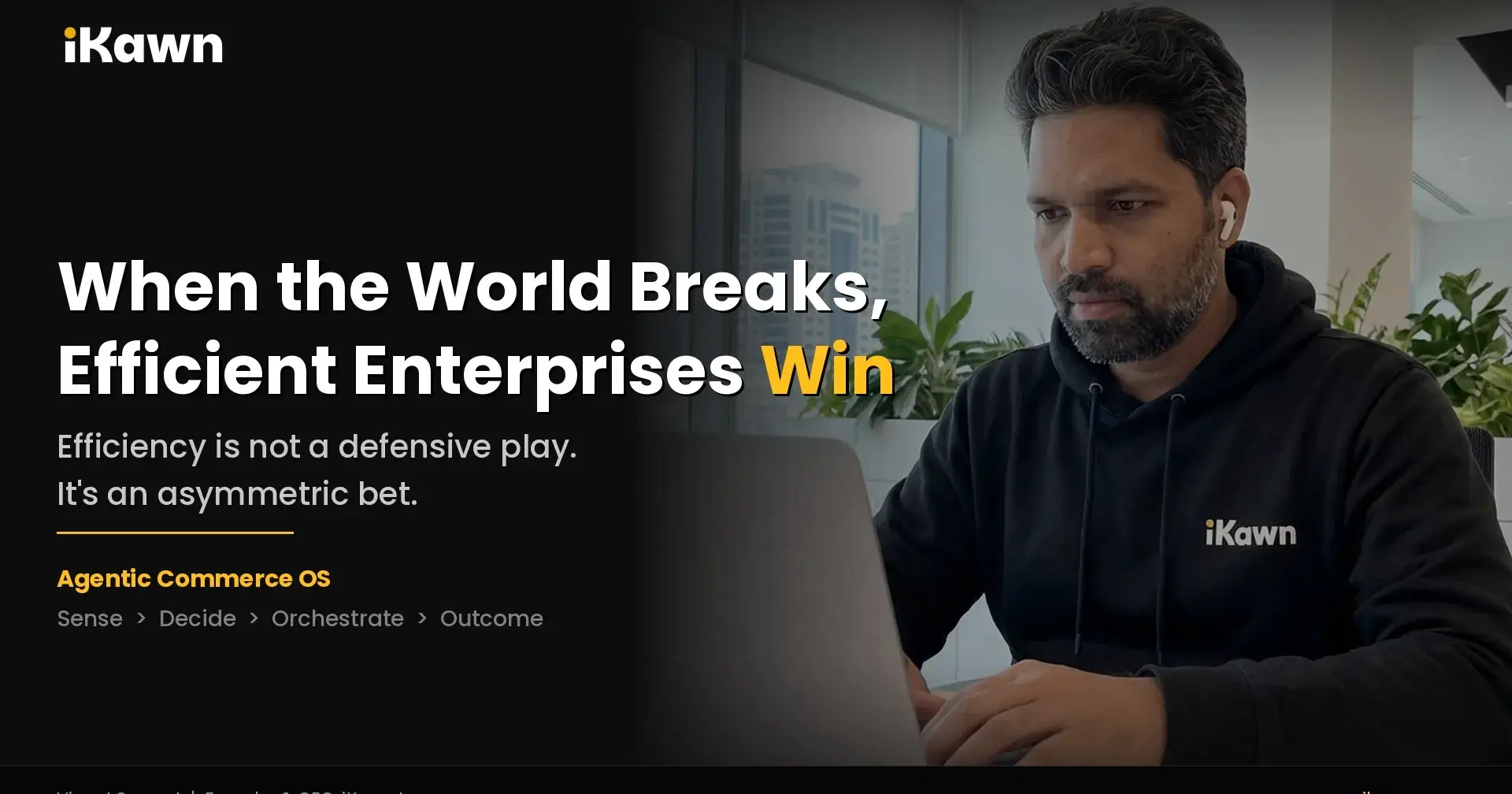
Efficiency isn't a defensive play. It's an asymmetric bet. When the environment is chaotic, operational clarity becomes an unfair advantage.
The New Variable in the Equation: Signals
Here's the thing most enterprises miss. Efficiency in 2026 isn't about cutting headcount or renegotiating vendor contracts. That's 2010 thinking.
Real efficiency today is about signal-to-noise. Every enterprise is drowning in data, CRM logs, customer conversations, social activity, support tickets, transaction histories, inventory movements. All of it is raw. Most of it goes to waste.
Economists note that the economic fallout from the war is "only beginning to emerge" and that we'll see evidence filtering through to macroeconomic indicators in the coming weeks. Which means uncertainty isn't going away, it's going to compound. The enterprises that have already built the muscle to read early signals and act on them before problems crystallize are the ones that will pull ahead.
That's the capability gap. It's not about having more data. It's about having the intelligence layer that tells you what to do with it, before it's too late.
Proactive Beats Reactive. Always.
The difference between a reactive and a proactive enterprise isn't talent. It's orchestration.
A reactive enterprise responds to a churn spike after it becomes a revenue problem. A proactive one catches the signal three interactions earlier and intervenes before the customer even considers leaving.
A reactive enterprise discovers a supply chain disruption when a shipment is already delayed. A proactive one has already rerouted based on early indicators, energy price movements, port congestion data, supplier sentiment, before the delay becomes a crisis.
This is what we're building at iKawn.
iKawn is an Agentic Commerce OS, not another dashboard, not another SaaS tool you have to babysit. It runs a continuous loop: Sense → Decide → Orchestrate → Outcome. It takes the raw data distributed across your systems, distills it into structured intelligence, and proactively surfaces the actions that matter, before the situation forces your hand.
For our clients, that means fewer fires, faster decisions, and the kind of operational clarity that makes uncertainty manageable rather than paralyzing.
Efficiency Is the Moat That Compounds
The WTO estimates that if oil and gas prices remain elevated through the year, it could reduce forecasted 2026 global GDP growth by 0.3 percent. Council on Foreign Relations That's a macro drag nobody can control.
But within that macro drag, some enterprises will compress costs, move faster, and serve customers better. Not because they got lucky with geography or exposure. Because they built the operational muscle to act on intelligence instead of instinct.
The enterprises focused on efficiency aren't just weathering this storm. They're building the infrastructure that makes them harder to beat in the next one.
That's the bet worth making right now.
iKawn is an Agentic Commerce OS helping enterprises Sense, Decide, Orchestrate, and Deliver outcomes, proactively, at scale. If you're thinking about what efficiency looks like with AI at the center of it, I'd love to talk.

Join Vineet on Peerlist!
Join amazing folks like Vineet and thousands of other builders on Peerlist.
0
3
0