

Seeing is Believing, Show your Process
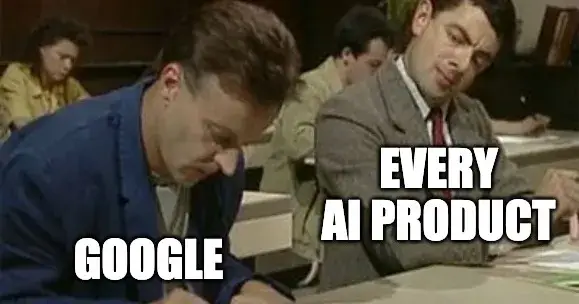
There's a quiet problem hiding inside every AI-powered answer you've ever received from a frontier model, and it starts long before the response hits your screen.
When you ask ChatGPT, Gemini, Perplexity, or any of the major AI products a question that needs real-time information, they don't search the web the way you do. They pull data from specialized services (think real-time SEO tracking APIs, search data aggregators) that are built to monitor the web at scale. These services are genuinely impressive pieces of infrastructure, but they're optimized for one thing: tracking search patterns and rankings. They're not built to replicate the exact, personalized, geo-located, intent-inferred results that appear when you open Google on your phone and type the same query.
That gap matters more than people realize.
The Source Similarity Problem Nobody Talks About
If you've ever noticed that an AI's cited sources feel slightly off, like they're adjacent to what you'd actually find but not quite it, you're not imagining things. The results these services return often diverge meaningfully from what a real user sees on a real device. It's not that they're wrong, exactly. It's that they're sampling from a different slice of the internet than the one you actually live on.
This creates two compounding problems.
First, there's the hallucination issue everyone already knows about, where models occasionally fill gaps with confident-sounding fabrications. But the second problem, source drift, gets far less attention. The AI might cite a page that, when you actually open it, doesn't contain what the snippet promised. The snippet exists in the index; the content on the live page has moved on. This happens more than people think, and it quietly erodes trust in AI-generated answers without users knowing exactly why they feel uneasy.
Second, because the source quality is lower, the AI often needs to run multiple searches to triangulate an answer that a user could have found in a single self-directed search. That's not a model intelligence problem. It's a sourcing infrastructure problem being papered over with extra API calls.
What Happens When You Do It Manually
Try the experiment yourself. Take a question you recently asked an AI assistant. Now go search for it yourself on your phone. More often than not, you'll land on better sources, more current information, and pages that actually contain what they appear to contain. The manual search wins, not because you're smarter than the model, but because you have access to the real, unmediated version of the web that the model doesn't.
This tells us something important: the bottleneck isn't reasoning, it's retrieval.
A Different Approach, Inspired by the Agentic Movement
The shift toward agentic AI, where models don't just respond but actually do things on your behalf, points toward a better solution. And it's one that's particularly worth thinking about for mobile, where the majority of people actually use these AI services.
What if instead of relying on a third-party search data service, the app just... searched the way you do?
Here's what that looks like in practice. When a user asks a question that needs live information, the app performs the search in-app using a WebView, the same rendering engine your browser uses. It scrapes the actual search results as they appear to a real user on that device. Those results get sent to a server with a headless browser, which then fetches the full content from each result page, not just the snippet but the actual live page, to verify that the snippet's content is genuinely there.
The result: source similarity goes way up. The AI is now grounding its answer in the same web you'd find if you searched yourself. The snippet verification step also filters out those frustrating cases where a cited page doesn't actually contain what it claims, because you've confirmed the text exists before it ever reaches the model.
What This Actually Solves
This approach doesn't eliminate hallucinations. That's a model problem, and it's being worked on separately. But it does collapse the gap between what the AI retrieves and what a careful human would retrieve. It makes the sourcing genuine in a way that SEO tracking APIs simply can't replicate.
It also addresses speed. Fewer redundant searches are needed when the first search is higher quality. The answer gets grounded faster, with less noise.
And perhaps most importantly, it makes AI answers feel less like citations in a research paper and more like information from someone who actually looked it up. Because frankly, most of the questions people ask AI don't need five blue hyperlinks and a bibliography. They need a good answer from a real source. Humans searching manually make mistakes too, but that's kind of the point. Mimicking genuine human search behavior, imperfections and all, ends up being the most honest way to bring real-world information into a conversation.
The infrastructure to do this already exists. The agentic movement has given us the mental model. The only thing left is building it into the products where it matters most, the ones in your pocket.

Join Virat on Peerlist!
Join amazing folks like Virat and thousands of other builders on Peerlist.
0
0
0