

The Note-Taker’s Two Minds: Are You a Transcriber or a Thinker?
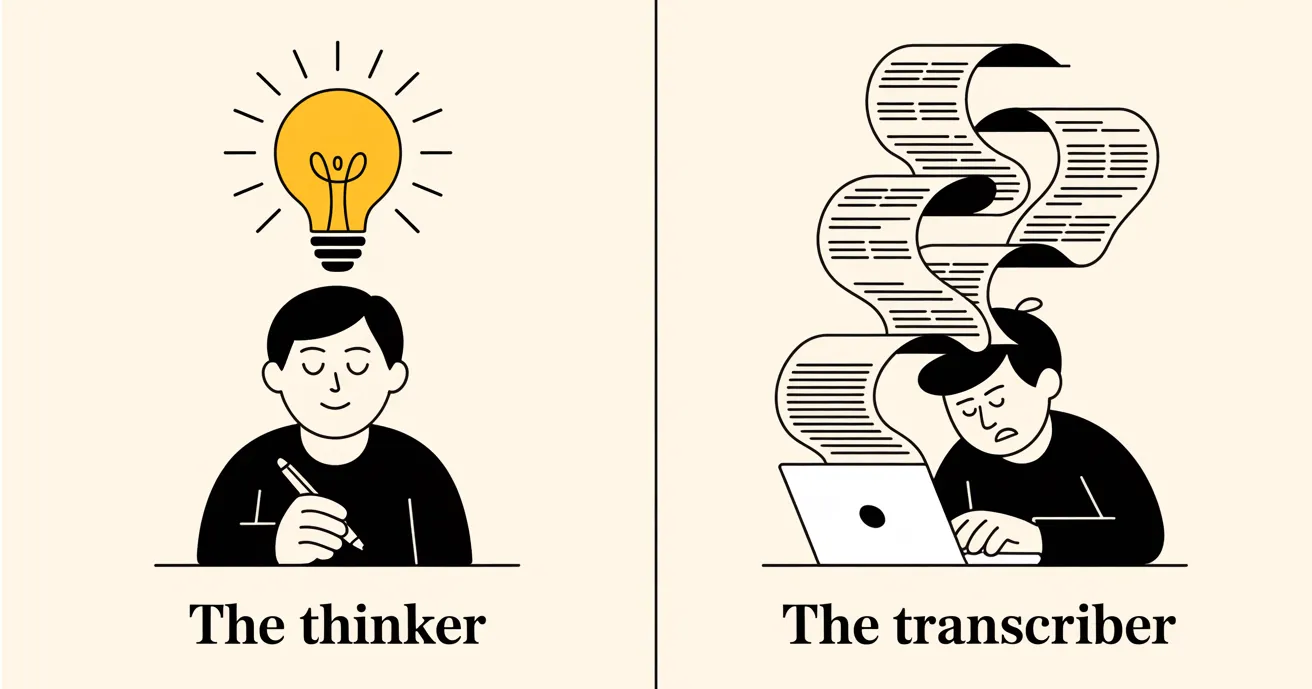
When it comes to capturing ideas, we often think in terms of tools. Are you a pen-and-paper person, a fast typist, or someone who thinks out loud with voice memos?
We assume it’s a matter of personal style. The real difference, however, is not in the tool itself, but in the mode of thinking the tool encourages.
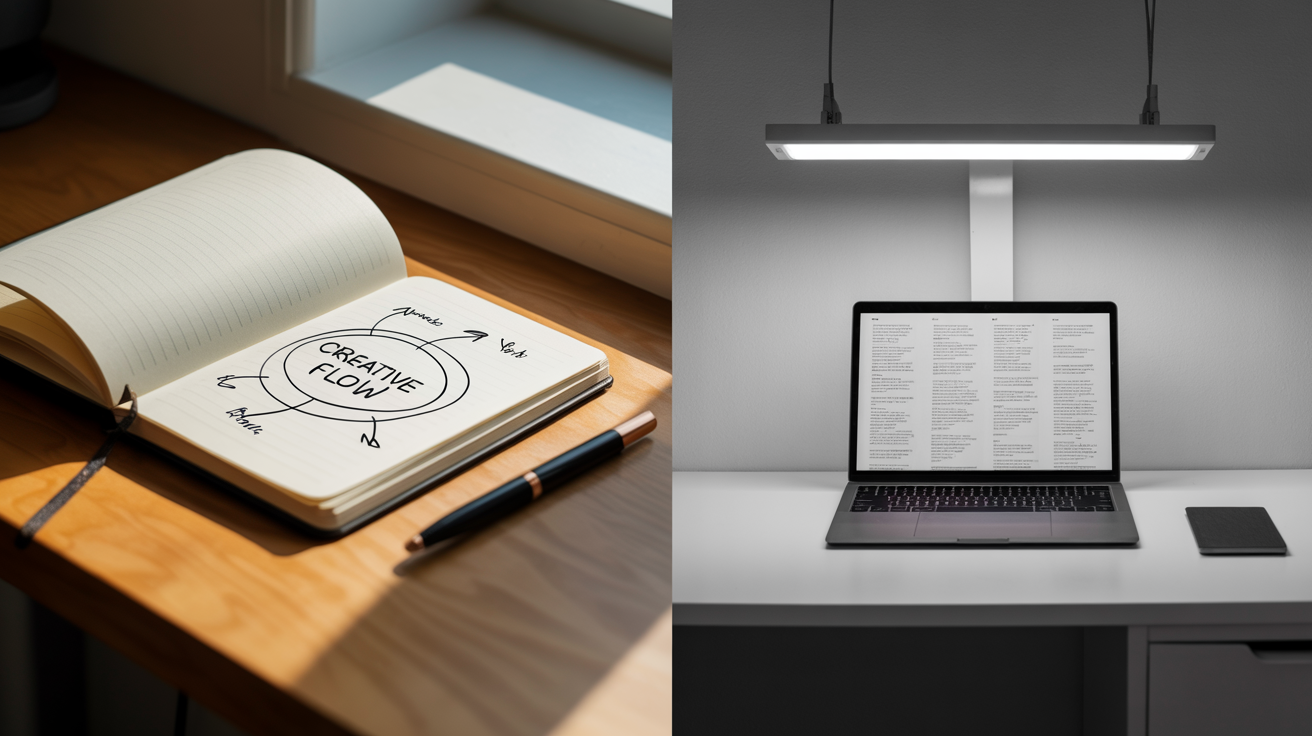
Cognitive science shows us there are two fundamentally different ways we take notes: transcriptive and generative. Understanding the difference is key to understanding why so many of our notes fail us.
The Transcriber’s Trap
Transcriptive note-taking is what most of us do on a laptop. Our typing speed is fast enough to keep up with a speaker, so we become stenographers. We diligently capture everything that is said, word for word.
This feels productive. We end up with a complete, detailed record. The problem is, this process requires very little active thought. The information flows from our ears to our fingertips, completely bypassing the deep processing parts of our brain.

This is the transcriber's trap. We create a perfect record of "what was said," but we have very little memory or understanding of "what it meant." We’ve successfully offloaded the information to a document, but we failed to load it into our own minds.
The Power of Generative Thinking
Generative note-taking is the opposite. This is what happens when we use a slower tool, like a pen. Because we can't possibly write down every word, we are forced to listen, filter, and summarize in real-time.
We have to ask ourselves: What is the core idea here? How can I rephrase this in my own words?

This friction is actually a feature. That "desirable difficulty" forces our brain to engage, to process the information, and to form connections. The act of summarizing and restructuring is an act of learning. We walk away with fewer words on the page, but a much deeper and more durable understanding of the concepts.
Finding a Better Way
Here is the dilemma for the modern professional. We need the deep understanding that comes from generative thinking. But we also need the complete, searchable record that transcription provides. For decades, we’ve been forced to choose.
The future of productivity lies in tools that can finally resolve this conflict.

A new generation of tools is emerging that can handle the flawless transcription for us, freeing our minds from that cognitive tax. This allows us to remain fully present, listening and thinking, and elevates our role. We are no longer the transcriber. Our only job is to perform the purely generative act of identifying what matters with a simple, frictionless gesture.
This creates a new kind of partnership. The AI handles the transcription. The human handles the thinking. The result is a note that has both a perfect record and the deep, human insight that gives it meaning.

Join Zac on Peerlist!
Join amazing folks like Zac and thousands of other builders on Peerlist.
0
10
0