

You Have a Mountain of Voice Memos You'll Never Replay.
The Reason Why Is More Human Than You Think.

What’s the longest voice memo sitting on your phone right now? More importantly, have you ever actually listened to it?
If you’re like most people, your phone contains a growing collection of these audio files. They are captured effortlessly in meetings, during late-night drives, or as quick flashes of inspiration. We save them with the best of intentions, yet they often end up in a kind of digital attic. It becomes a cluttered space filled with forgotten ideas we swear we’ll get back to someday.
This widespread habit stems from deep-rooted human psychology, not personal failure.
The Psychology of a Digital Attic
We hoard these digital files for a few key reasons. A powerful driver is a simple fear of losing information. We keep things "just in case," hoping to avoid future regret. Over half of us admit to this mindset.
These voice memos also become emotional artifacts. They are memory cues that capture a tone of voice or a feeling that text never could. Deleting them can feel like erasing a piece of our personal history.

This creates a cycle. We save a file to ease our anxiety about forgetting. As hundreds of these unorganized files pile up, the digital clutter itself becomes a new source of stress. Each unlistened memo is a tiny cognitive debt, a task postponed. Together, they form a huge mental to-do list that weighs on our productivity.
When Our Tools Make It Worse
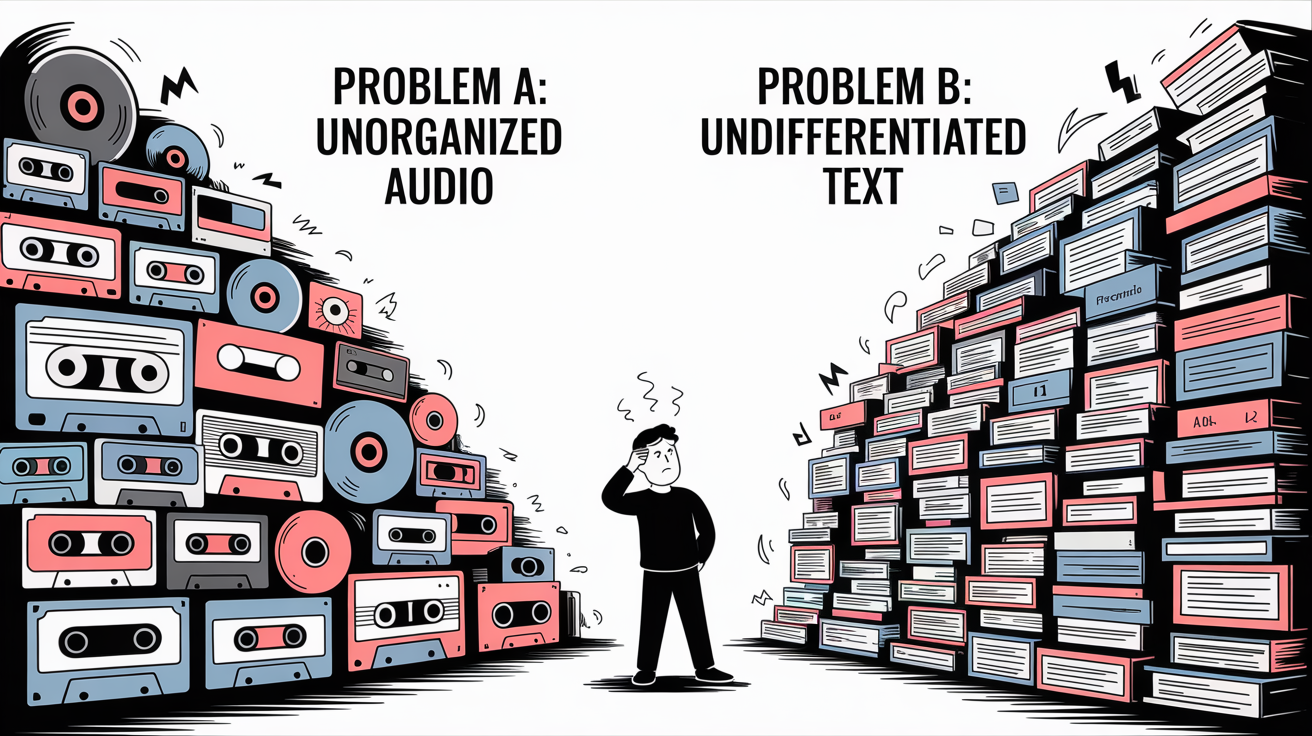
Our tools often amplify this problem. Native voice memo apps can be unreliable and are difficult to organize. You end up with thousands of files named after a location, which is rarely helpful.
AI transcription services seem like the next logical step. They turn the audio into a searchable wall of text. The issue is that you’ve just traded one form of information overload for another. Generic AI summaries often miss the point because they don't know what was important to you. You still have to do the heavy lifting of finding the key moments.
From Hoarder to Curator
The solution requires a shift in our role. We need to move from being passive hoarders of raw data to becoming active curators of our own insights, right at the moment of capture. This points to a smarter collaboration between human and AI.
First, we let the machine do what it does best. The AI can be the perfect archivist, flawlessly recording the entire stream of conversation. This frees our mind from the intense focus of transcription.
Second, we reclaim our most valuable role. As the human in the loop, our job is to listen, to understand, and to identify what matters. A truly intelligent system allows us to signal these important moments with a simple, frictionless gesture. A quick press on a device can tell the AI, “This part. This is the insight.”
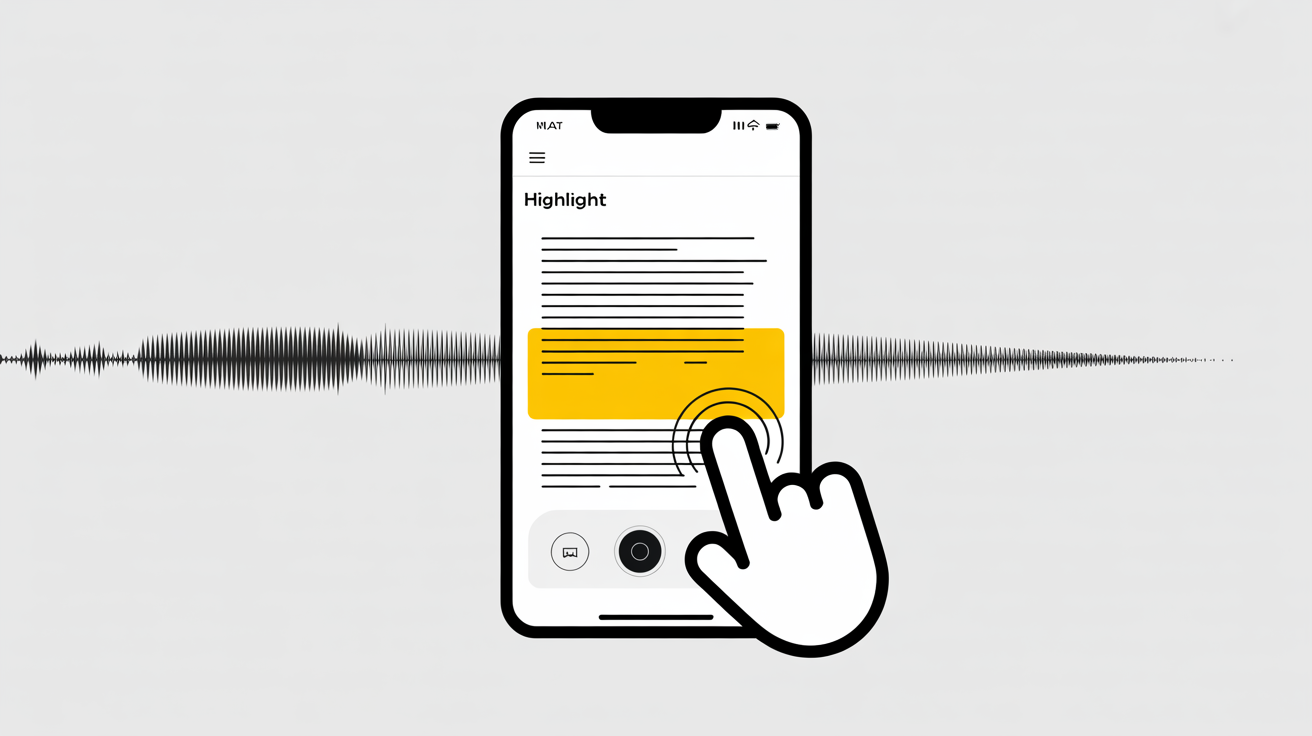
This simple act of curation changes everything. The AI is no longer guessing what’s important. It’s building a structured, intelligent summary guided by your intent. The output is a note that is focused, personal, and immediately useful.
The goal moves beyond just archiving files. It's about creating a dynamic library of actionable intelligence, where your conversations become your most valuable assets, not a source of digital clutter.

Join Zac on Peerlist!
Join amazing folks like Zac and thousands of other builders on Peerlist.
0
8
0