

Best YouTube Comments Downloader in 2026
YouTube has transcended its role as a mere video hosting platform to become a colossal engine for conversation, feedback, and community. The comments section, in particular, is a treasure trove of audience sentiment, content ideas, and valuable competitive intelligence. For researchers, content creators, marketers, and data analysts, the ability to extract and analyze these comments is crucial. However, YouTube's own interface is not designed for bulk data export, making YouTube comments downloader websites an essential tool.
The demand for these tools has led to a crowded market, ranging from simple, one-off downloaders to sophisticated, API-driven scraping platforms. Identifying the "best" can be challenging, as the ideal choice often depends on a user's specific needs—be it volume, data complexity, export format, or budget.
What Makes a "Best" Comments Downloader?
The utility of a YouTube comments downloader is measured by several key criteria. A truly best platform excels in these areas:
Data Completeness and Accuracy: The tool must reliably extract all available comments, including nested replies, timestamps, user details (like username and channel link), like counts, and pinned status. It should bypass the continuous loading ("infinite scroll") issue without missing data.
Export Formats: Flexibility is vital. The best services offer multiple export formats, with CSV (for easy spreadsheet analysis), Excel/XLSX (for familiar data management), and JSON (for developers and database integration) being the most common and necessary.
User-Friendliness: The platform should be intuitive. A simple process of "Paste URL -> Start Export -> Download File" is preferred, especially for non-technical users.
Speed and Scalability: For channels with tens of thousands of comments, the tool must be fast. Scalability, the ability to handle bulk downloads from multiple videos, playlists, or entire channels, is a critical feature for professional use.
Advanced Filtering and Analysis: Top-tier platforms often include pre-download filtering (e.g., by date, likes, or keywords) or built-in analytical features like sentiment analysis integration or random comment picking for contests.
Reliability and Anti-Scraping Measures: YouTube constantly updates its interface to prevent automated scraping. A reliable tool must employ sophisticated techniques, such as proxy rotation or headless browser simulation, to ensure consistent data extraction without getting blocked.
Cost: While many offer a free tier (often limited to the first 500 or 1,000 comments), professional users need to evaluate the pricing model (per-record, subscription, or one-time payment) against the volume of data they intend to process.
Leading Contenders in the Market
Based on the features and services available, the "best" tools generally fall into three categories: dedicated online scrapers, professional data extraction platforms, and open-source scripts.
0.YouTube Comments Downloader
https://youtubecommentsdownloader.app/
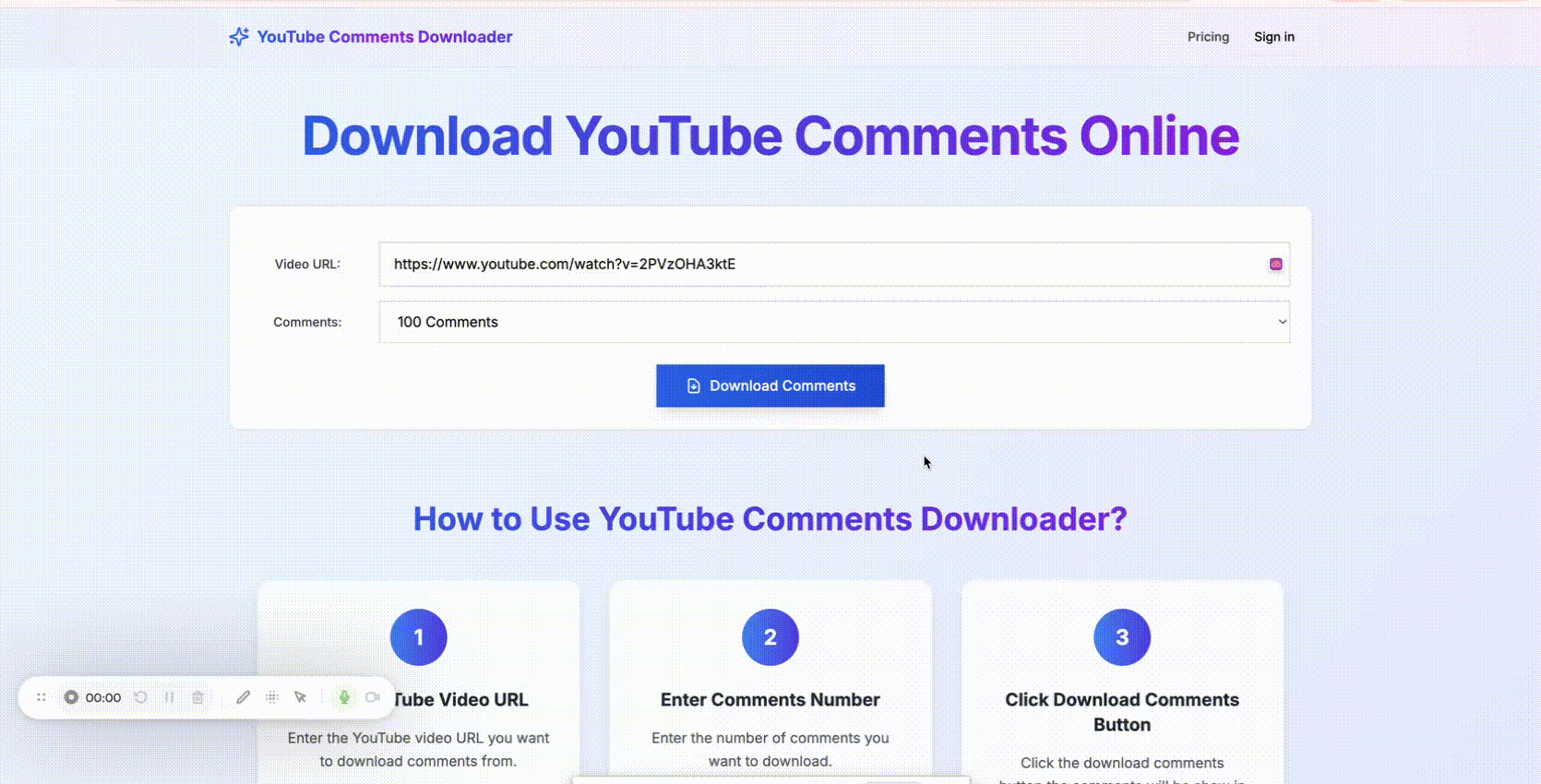
1. Dedicated Online Scrapers (Best for Ease of Use)
These platforms are designed to be a one-stop-shop for social media data extraction, often requiring just a video URL.
YouTube Comments Downloader / ExportComments.com: These sites prioritize simplicity and fast turnaround. They are excellent for content creators or small businesses who need quick, clean data. They typically offer the most popular formats (CSV, Excel) and are often the first stop for basic comment extraction. They usually have a generous free tier but may charge for high-volume, reply inclusion, or bulk channel downloads.
TheYouTubeTool.com: Positioned for audience understanding, this type of tool often blends downloading with on-site analysis features, allowing users to search and filter comments in real-time before export, making it highly valuable for content strategy.
2. Professional Data Extraction Platforms (Best for Scalability and Features)
These services are built on powerful web scraping infrastructure and are ideal for researchers, data scientists, and large enterprises. They treat YouTube comments as one data source among many.
Apify / Outscraper: These are cloud-based platforms that provide "Actors" or "Scrapers" specifically for YouTube comments.
Advantages: They offer superior scalability (handling thousands of videos), boast API access for integrating data directly into applications, and include advanced features like full metadata extraction (e.g., whether the comment was liked by the creator). They handle YouTube's anti-scraping measures by running on secure, proxied servers.
Pricing: They typically operate on a pay-per-use or subscription model, which is more costly but essential for high-volume, continuous data collection. They often provide a substantial Free Tier or free trial credits for new users.
DICloak YouTube Comment Scraper: This type of tool focuses on overcoming technical limitations. Its key selling points are bypassing anti-scraping measures with dynamic proxies and offering a comprehensive data set that can include comment translation options and badge roles. This level of data richness is often beyond what simpler online tools provide.
3. Browser Extensions (Best for Quick, Limited Extraction)
For users who need to scrape comments directly from the browser without navigating to an external site.
Comment Exporter for YouTube (Chrome Extension): This method integrates directly into the YouTube page. While highly convenient and often capable of exporting to CSV/JSON, extensions can be limited by browser memory and often struggle with extremely long comment threads (e.g., over 20,000 comments) compared to cloud-based scrapers. They are perfect for small to medium-sized data jobs.
Legal and Ethical Considerations: A Necessary Disclaimer
It is paramount to address the legal and ethical landscape. While the data being scraped (public comments) is generally considered publicly available, users must operate within the boundaries of YouTube's Terms of Service (ToS).
YouTube's ToS typically prohibit automated access to the platform (scraping) without explicit permission or a valid API key, which has strict rate limits. All third-party scrapers operate in a gray area by bypassing these official limitations.
Users must be mindful of the following:
Data Usage: The extracted data should only be used for non-commercial, academic, or internal business analysis (e.g., sentiment analysis for a client's video).
Privacy: Extracted usernames and profile links must be handled with care, adhering to global data protection regulations like GDPR, especially if the analysis is public.
Risk: Continuous, high-volume scraping can lead to IP bans or account restrictions from YouTube, which professional scrapers mitigate but do not fully eliminate.

Join zifang on Peerlist!
Join amazing folks like zifang and thousands of other builders on Peerlist.
0
9
0