

How to Check Fresh the date of manufacture of perfumes and cosmetics
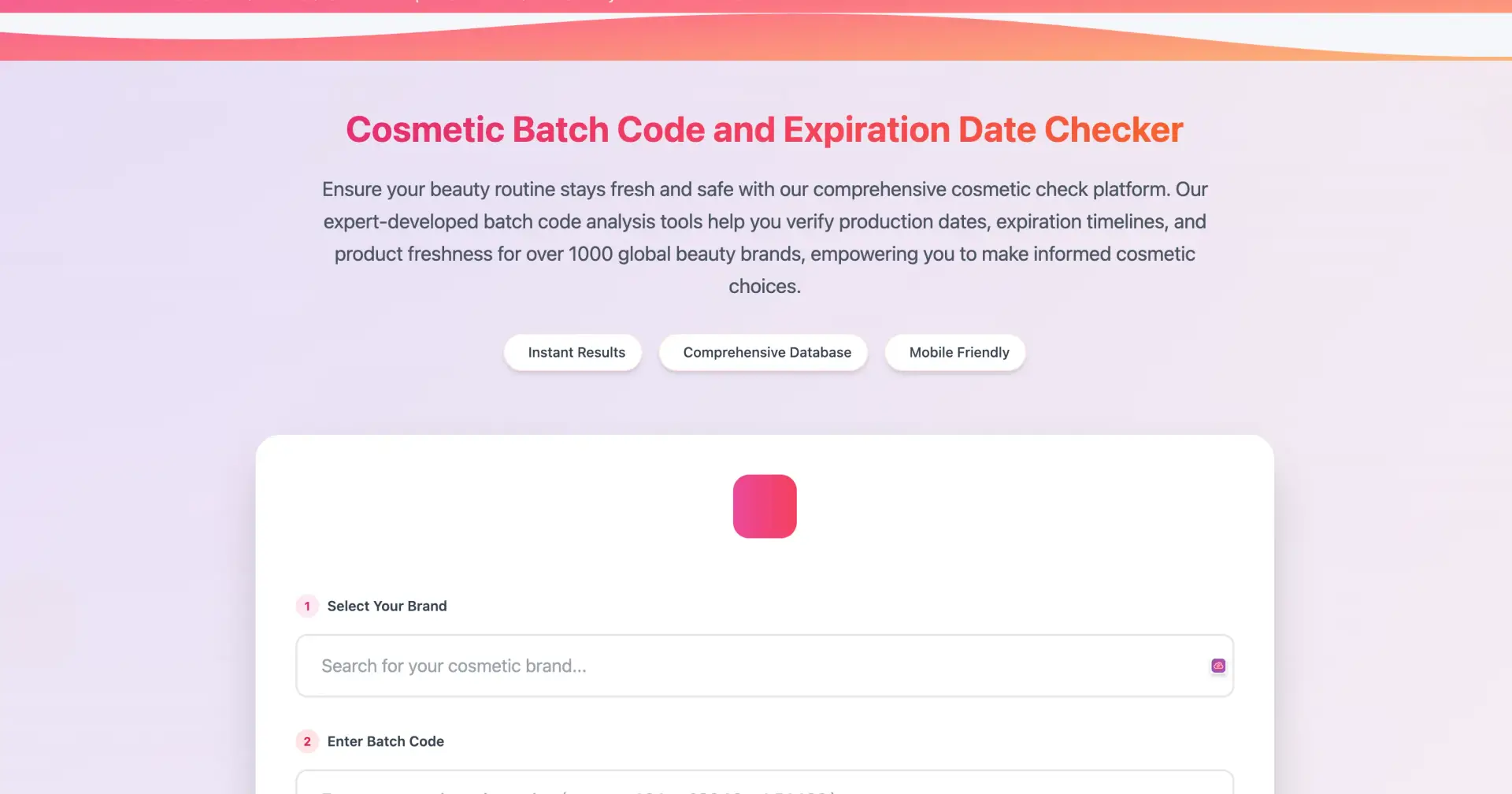
How to check batch code
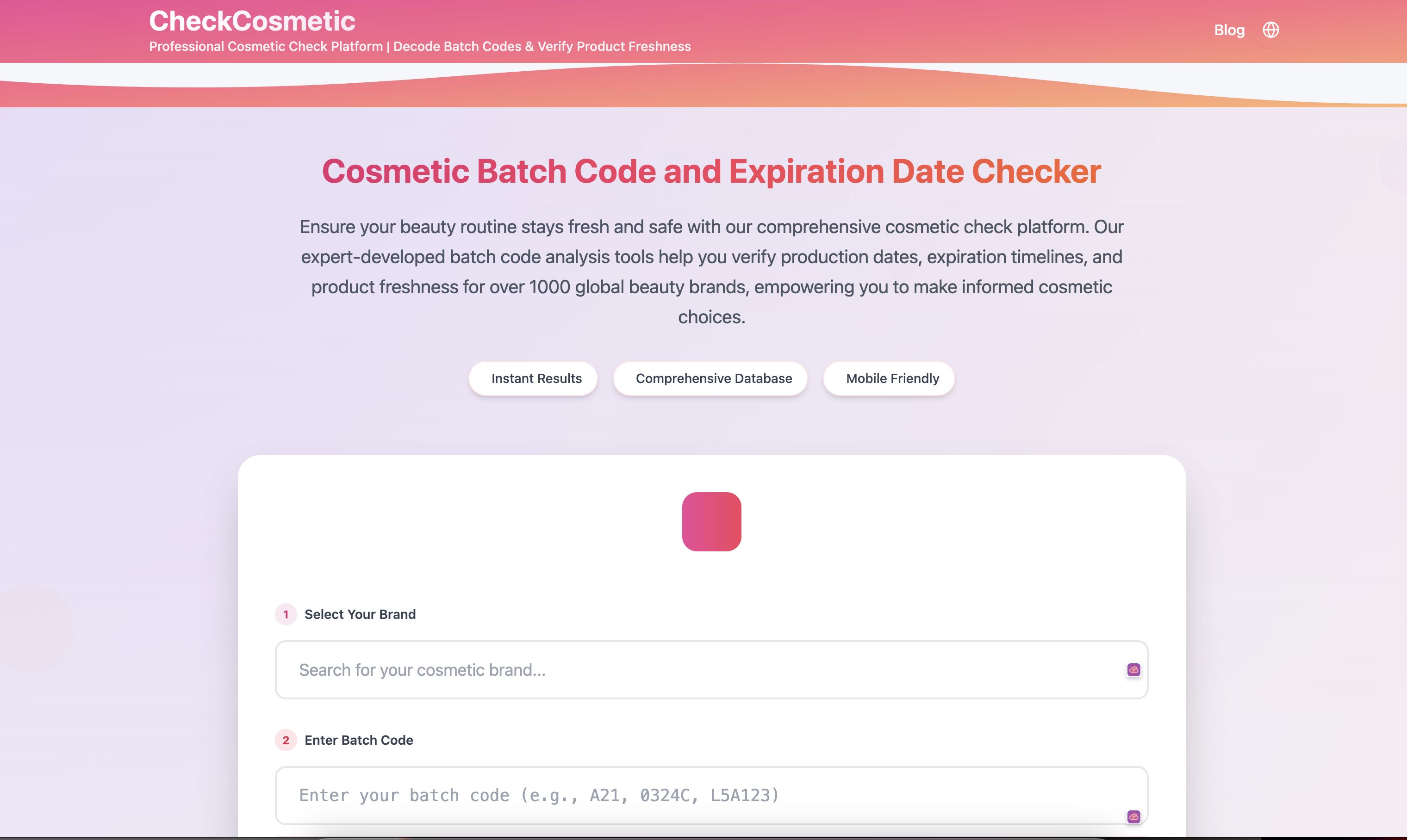
CheckFresh is a handy online tool that helps users determine the manufacture date of perfumes and cosmetics by using the product’s batch code. (https://checkcosmetic.online/) This article will walk you through what CheckFresh offers, how it works, its strengths and limitations, and how you might make the best use of it.
What exactly is check cosmetic?
check cosmetic is a website (and associated service) that allows you to:
https://checkcosmetic.online/blog/check-comestics-batch-code
Select the brand of your cosmetic or perfume.
Enter the batch code (sometimes called “lot number”) printed on the item’s packaging. (https://checkcosmetic.online/) or (https://batchcodechecker.org/)
Obtain a decoded or approximate production/manufacture date (and thereby gauge the “freshness” of the product).
Access guidance on how to find batch codes, how long cosmetics tend to last, and how to store them properly.
So in essence, CheckFresh is a batch-code to manufacture-date lookup tool for beauty products.
How it works (in broad terms)
Here’s a breakdown of the process:
Locate the batch code: On the product’s packaging (often bottom of bottle/box) you find a stamped or printed code. CheckFresh offers instructions for many brands.
Select the brand: On the website you choose the brand (where supported) or look up instructions.
Enter the batch code: Input the code
Interpret the result: CheckFresh returns an approximate production date based on the internal rules/database of that brand’s codes. This gives you a sense of how “old” the product is.
Use it for decision-making: You can then decide if the product is fresh enough to use, or whether you should be more cautious (depending on type of cosmetic, how it’s been stored, etc.). CheckFresh also gives guidance on shelf life.
Key features & benefits
Wide brand support: It supports many well-known perfume and cosmetics brands and provides brand-specific instructions.
User-friendly interface: The site is straightforward — choose brand, enter batch code, see result.
Educational content: Beyond simply giving a date, the site offers information about shelf life, how to store cosmetics properly, what affects freshness (light, heat, opening, etc.).
Free to use: The basic batch code lookup is freely available on the website.
Transparency and support: The site invites users/brands to submit info for new brands/code formats.
Limitations and what to watch out for
While CheckFresh is useful, it’s important to understand its limitations:
Not definitive authenticity check: A batch code lookup may tell you that a code corresponds to a production date pattern, but does not guarantee the product is genuine. As one community member put it:
“A batch code doesn’t prove anything… you can make a batch code by yourself and those sites will have information on your made up code.”
So while a fresh looking date is a positive sign, it is not a full proof of authenticity or proper storage.Incomplete brand database: Some brands may not be supported yet, in which case the tool may not decode the code or will indicate “not yet supported”.
Assumptions & approximations: The conversion from batch code to production date uses known patterns and user-submitted data. It may not always be 100% accurate especially for large or older batches.
Doesn’t replace good storage or smart buying: Even if a product was just produced, poor storage (heat, sunlight, humidity) can degrade the quality. CheckFresh nonetheless gives guidance on this.
How to make the most out of CheckFresh
Here are some tips for using CheckFresh effectively:
Check the batch code before purchasing (if possible) or as soon as you get the product.
Use the site’s brand-specific instructions to correctly find and interpret the batch code (some are printed differently).
Consider the product category: For example, perfumes may last longer unopened compared to delicate skincare items. CheckFresh gives rough shelf life reference: e.g., perfumes ~5 years from manufacture, skin care minimum ~3 years.
Check how the product has been stored: If you see signs of heat damage, sunlight exposure, or if the item was on display too long, then even a “recent” manufacture date might not guarantee optimal condition.
Use the tool as part of your decision-making, not your only tool. For example: packaging quality, authenticity indicators, vendor reputation still matter.
Be cautious if the batch code lookup gives dates that are inconsistent with your knowledge of when the product was released or sold — it might just indicate a format change or ambiguity in code, not necessarily a fake.
When buying second-hand or from less-verified sellers, use CheckFresh in combination with other verification steps.

Join zifang on Peerlist!
Join amazing folks like zifang and thousands of other builders on Peerlist.
0
5
0