

Medtech UX is broken. Everyone knows. Nobody says it.
Eight years in. Here's what I've stopped pretending I don't see.
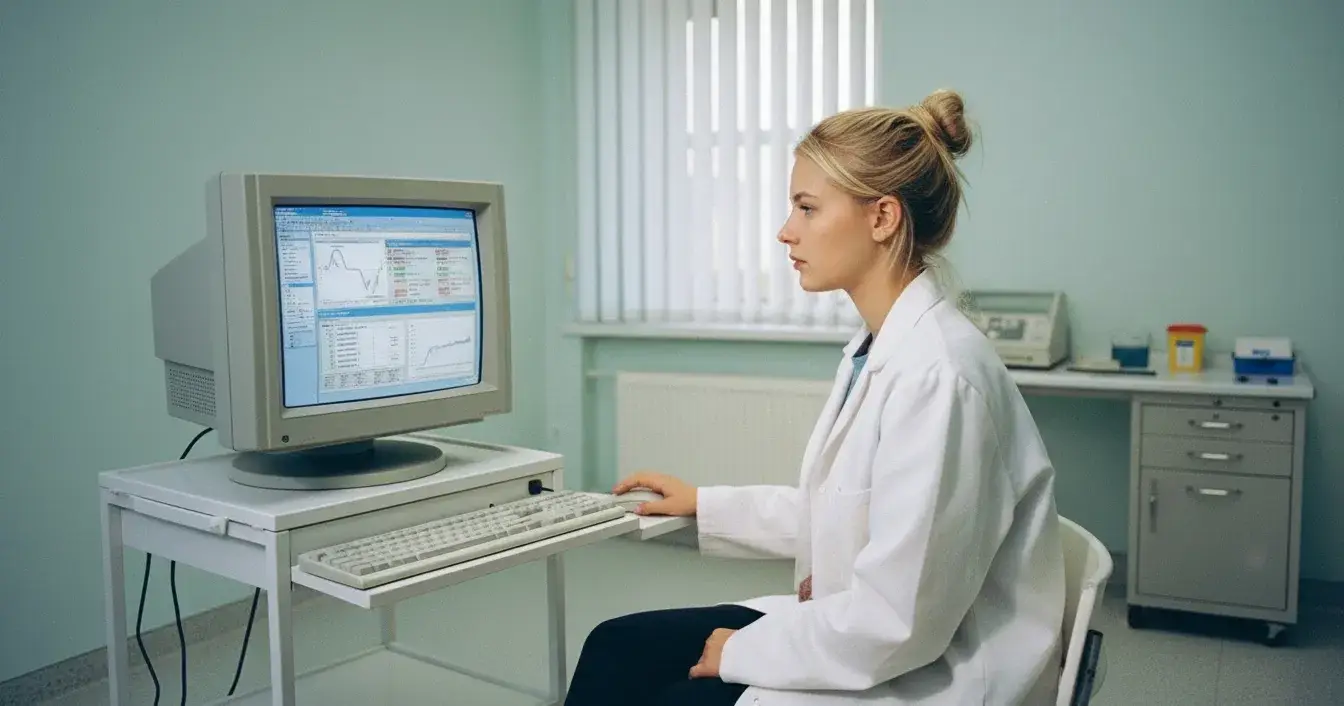
First week on a new project. I ask the lead nurse which part of the system she uses most. She opens a browser, navigates to the product, then immediately opens a second tab – a Google Sheet she built herself – and starts working across both simultaneously. I ask what the Sheet is for. She says: "oh, that's just how we do it." She's been doing this for three years. Her manager has been doing it for five. The onboarding doc for new staff includes instructions for the Sheet. Nobody has ever told the vendor.
That was four years ago. I still think about it.
The software is from 2007. The problems are from 2007. The silence is brand new.
Here's what I've seen with my own eyes, across eight years and more products than I'll name:
A patient intake form. Forty-three mandatory fields. One screen. No progress bar. No save state. Session timeout: twelve minutes. If you fill it out too slowly – say, because you're actually talking to the patient in front of you – the form wipes. Everything. Start over. The workaround: keep an identical blank form open in a second tab, fill that one first, then copy-paste field by field into the real one. The team had been doing this every single day for two years. I asked why nobody reported it. The person who used to report things left the company. After the third ticket went unanswered, she stopped filing them. Then she left.
A clinical dashboard. The metric the entire team checked first thing every morning – the one they made decisions from – was on tab three. Behind two screens of administrative data nobody had voluntarily opened since 2019. I asked why it wasn't on the first screen. Silence. Then: "that's just where it's always been." It was where it was in the original build from 2016. Nobody had ever questioned it. Not once. In eight years.
An error message, verbatim: NullReferenceException: object not set to an instance of an object. Shown to a senior consultant. Mid-patient review. Her response when I asked how she handles it: "I close it and try again." How long has this been happening? She thought about it. "Since the last update, I think. Maybe eighteen months?"
This is not exceptional. This is a Wednesday.
Why it never gets fixed
Nobody complains because nobody thinks complaining works.
I've watched clinicians develop full workaround ecosystems – WhatsApp groups where someone screenshots data out of the system to share it because the export function broke in the last update and nobody fixed it. Printed checklists kept in desk drawers because the in-app checklist loses its state. A shared Notes document – password on a Post-it on the monitor – because the product's notes feature doesn't support the format they actually need.
Each workaround took maybe an hour to build. Together they represent a second product, maintained for free by clinical staff, on clinical time, because the vendor hasn't fixed the first one.
And when I walk in and point this out, the room goes quiet in a very specific way. Not surprised quiet. Relieved quiet. Like I've said the thing everyone was thinking but nobody wanted to be the first to say.
Then compliance enters the conversation. FDA-cleared. CE-marked. The audit passed. The boxes are ticked. Questioning the UX starts to feel like questioning the safety – which it absolutely isn't, but the feeling is enough to end the conversation. Every time.
Then the ownership vacuum. The clinician can't fix it. The designer is six layers from the decision. The PM is focused on the next feature. The founder who signed off on the original build is now on their third company, raising a Series A on a demo that looks nothing like the actual product. Nobody has the authority, budget, or frankly the will to touch it.
So it stays.
And now there's AI. The intake form that wiped your data now has a chatbot in the corner. The broken search now has a natural language interface that confidently returns wrong results faster than before. I watched a team spend six months building AI-powered usability studies – synthetic users, heatmaps, confidence intervals, beautiful decks. The AI scored the prototype 78% intuitive. First real nurse in the pilot couldn't find the save button. Took her four minutes. Nobody in the room said anything.
The number nobody puts on a slide
One hour a week per person on workarounds. Twenty clinical staff. €22/hr. Fifty weeks.
€22,000 a year. One team. One shadow system.
Most products I've worked on had three or four. Do the math. It doesn't show up on any budget line because it's not paid by the vendor – it's paid in clinical time, invisibly, every day, by the people the product was supposed to help.
Then there's what it costs in designers. The good ones join wanting to fix things. They hit the wall – "that's certified," "that's out of scope," "that's how it's always been" – and leave within eighteen months. Replacement cost: €16–24k. Then the new hire hits the same walls. Has the same conversations. Leaves around the same time.
Medtech companies say they can't find good designers. They can find them fine. They can't keep them. Completely different problem. Much more expensive to ignore.
Why I'm still doing this
Because I'm the person who comes in, looks at what's there, and finds what's actually wrong. Not what looks wrong. What is wrong.
Eight years in. I've sat in product reviews where the interface – the thing real humans use every single day to do their jobs – was not on the agenda. Not deprioritised. Not tabled for next quarter. Not on the agenda. I've watched "we'll fix it in v2" become the most repeated lie in the industry. V2 doesn't come. Or it comes three years late with the wrong fixes because the person who remembered what was actually broken left eighteen months ago.
I'm writing this because the silence is the problem. Not the legacy code. Not the regulation. The collective, comfortable, industry-wide agreement to look at broken things and call them fine.
The bar is on the floor. Has been for years. Everyone steps over it so smoothly they've forgotten it's there.
Fix the thing. Not the AI layer on top of the thing. The thing.
Iryna Baranova – product and visual designer. Eight years in medtech. Embarrassingly high standards. Co-founder of UareUX. If your product is broken in ways your team has stopped noticing – [email protected]

Join Iryna on Peerlist!
Join amazing folks like Iryna and thousands of other builders on Peerlist.
0
1
0