

Beyond Whitepapers: Why Software Case Studies Deserve Comic Strips and Videos
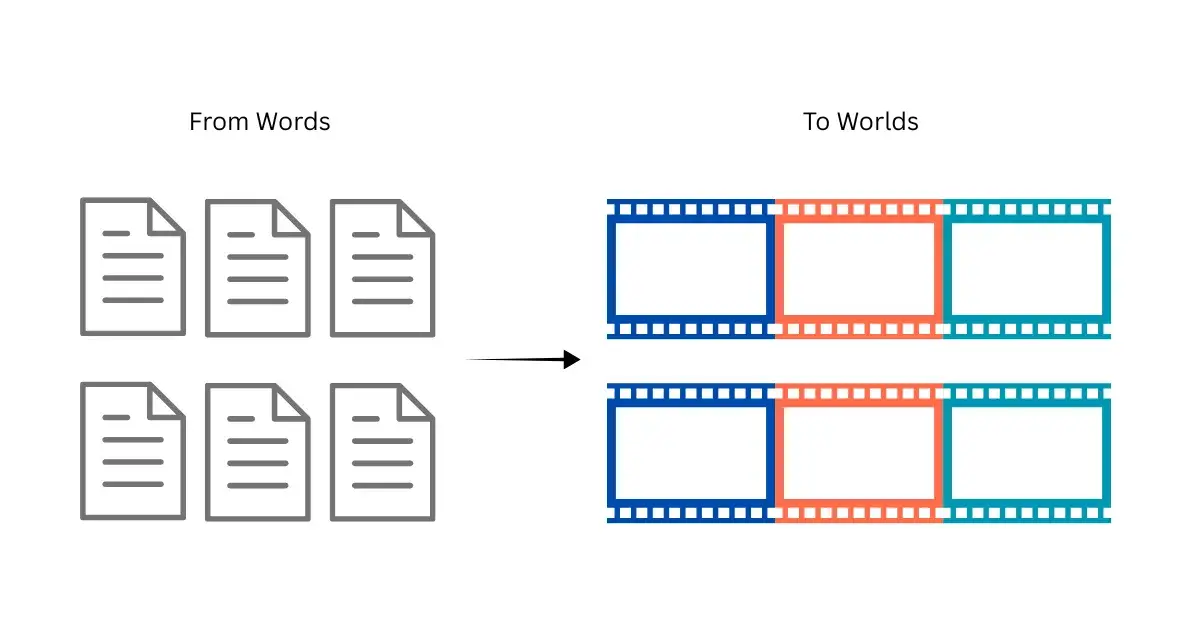
We live in a world where AI is generating entire cinematic movies. Whether that's artistic brilliance or artistic bankruptcy is debatable 🙂. But in one very practical space, I see huge potential for AI-generated visuals: illustrating project case studies.
Why Case Studies Often Fall Flat
Every software company swears by its case studies. They’re meant to be the crown jewels of marketing. Yet most case studies stumble because of a few familiar roadblocks:
Getting client approvals is hard. Even if you’ve solved something amazing, chances are you can’t name the client. So you end up with clumsy phrases like “a US-based online warehousing giant”. Not very compelling.
Writing case studies is harder. A solid case study needs a clear problem statement, solution details, metrics, and sometimes even testimonials. That takes a good technical writer, which many companies don’t have in-house.
They rarely capture the company’s voice. External writers often miss the persona and ethos of the company, so the case study feels sterile, or vanilla.
They are often a cumbersome read. In the age of short attention spans, a long read isn’t the easiest sell.
So case studies, while powerful, often fail to feel powerful.
Enter Visual Case Studies
What if, alongside the traditional write-up, companies also created a comic strip or a 2-minute explainer video of the same project?
Here are the upsides:
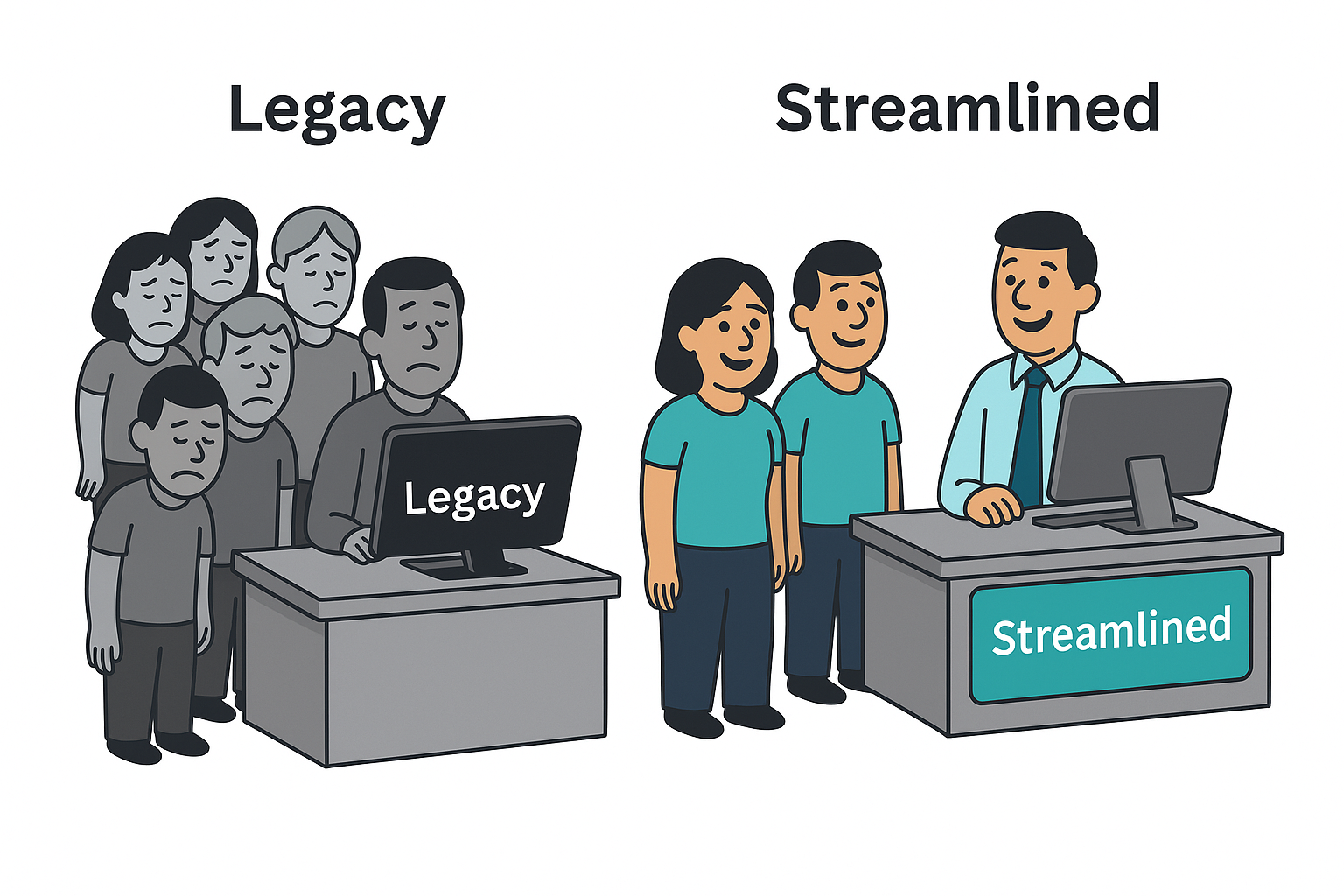
Engineers see business context more clearly — Written case studies often say things like “we improved checkout efficiency for a retail outlet.” But showing it — shoppers at checkout counters, queues shrinking as the system routes traffic, dashboards adjusting promotions in real time — instantly makes the impact tangible. Engineers can visualise the client’s world and see where their work fits.
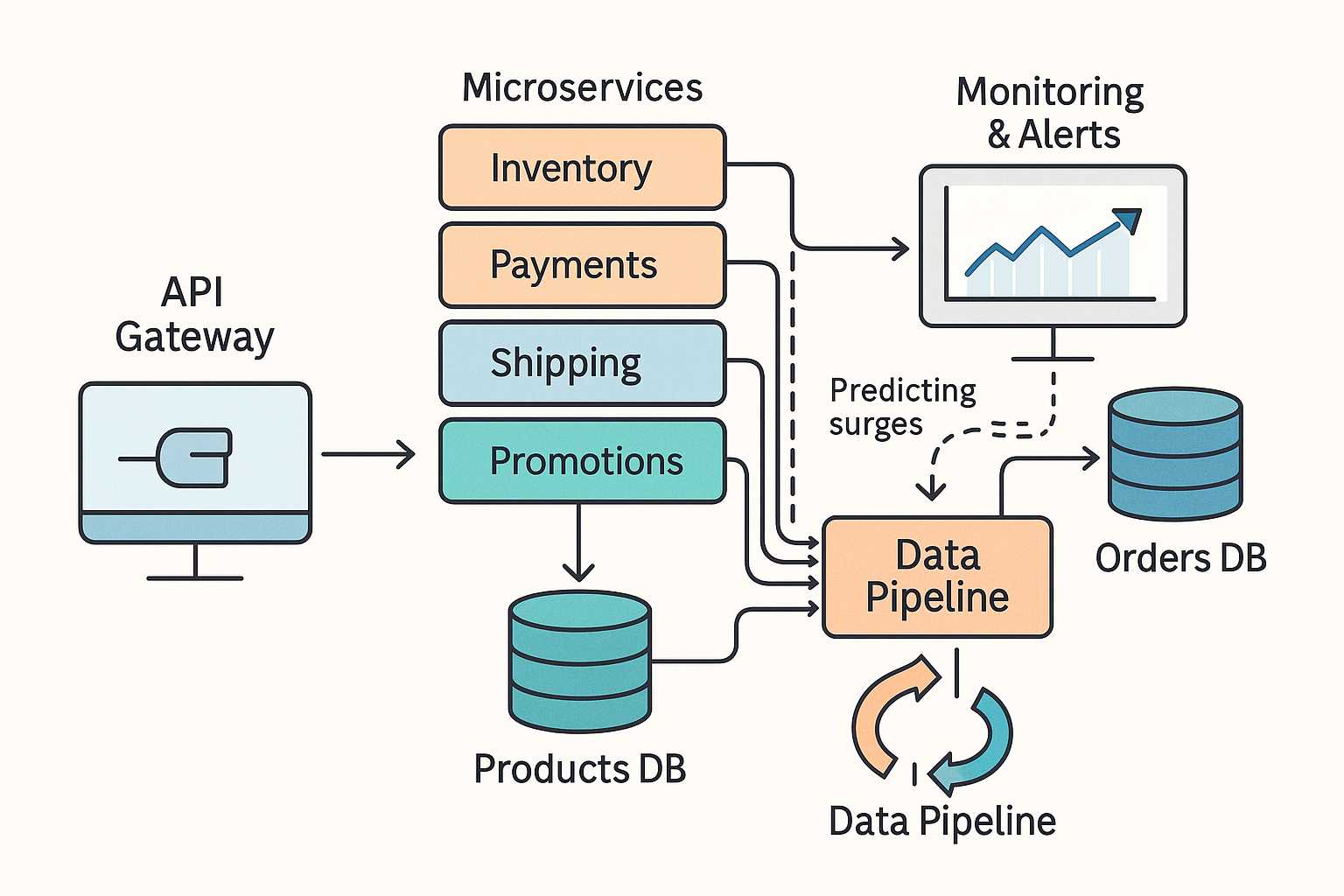
Engineers see technical context too — Zoom in further. Behind that smooth checkout lies the craft: microservices balancing traffic, data pipelines predicting surges, alerts firing before systems tip over. Teams already sketch these flows on whiteboards; visual case studies simply codify them. Yes, the story might shift from a storefront scene to a cutaway inside the software stack — but that’s exactly how engineers themselves think.
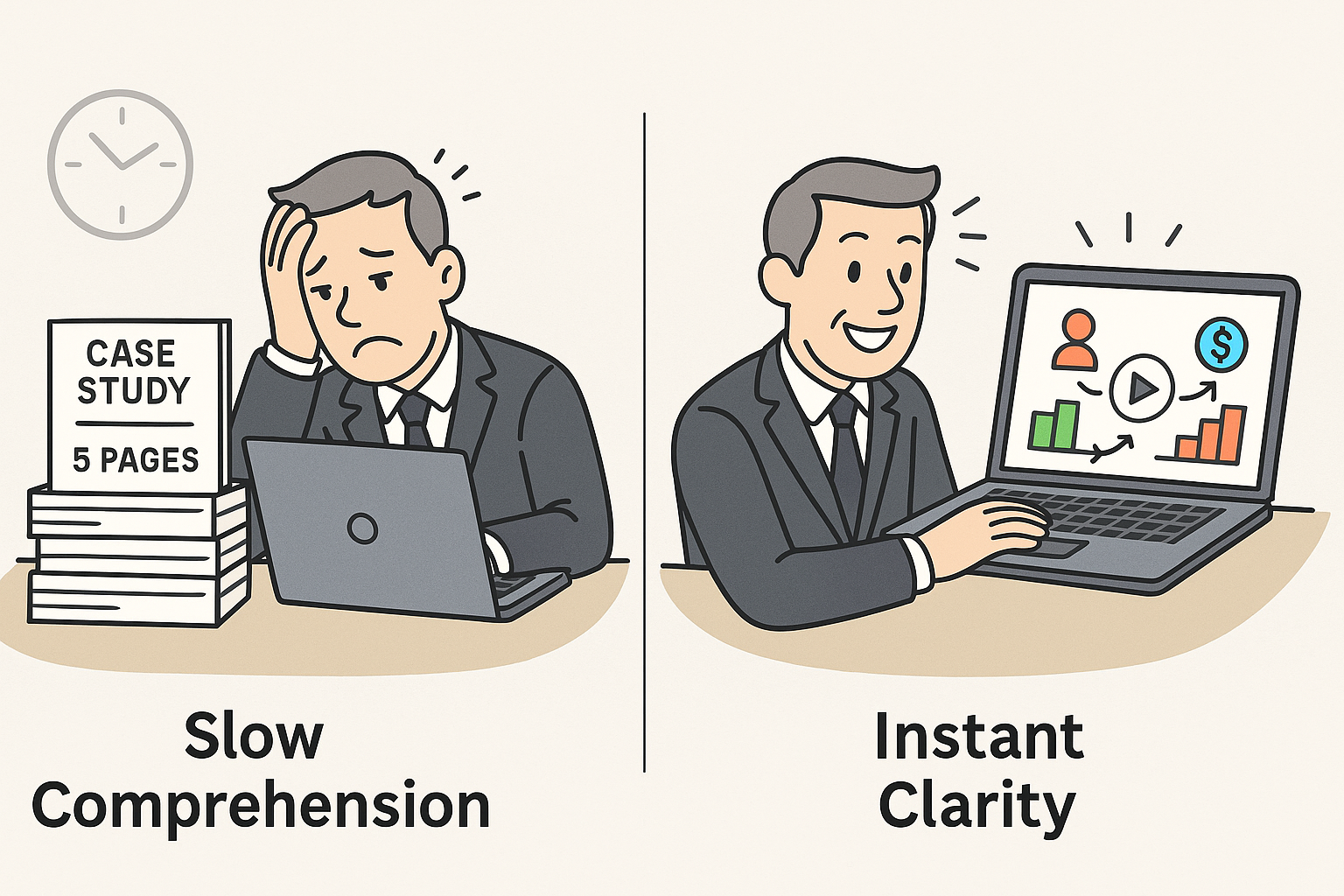
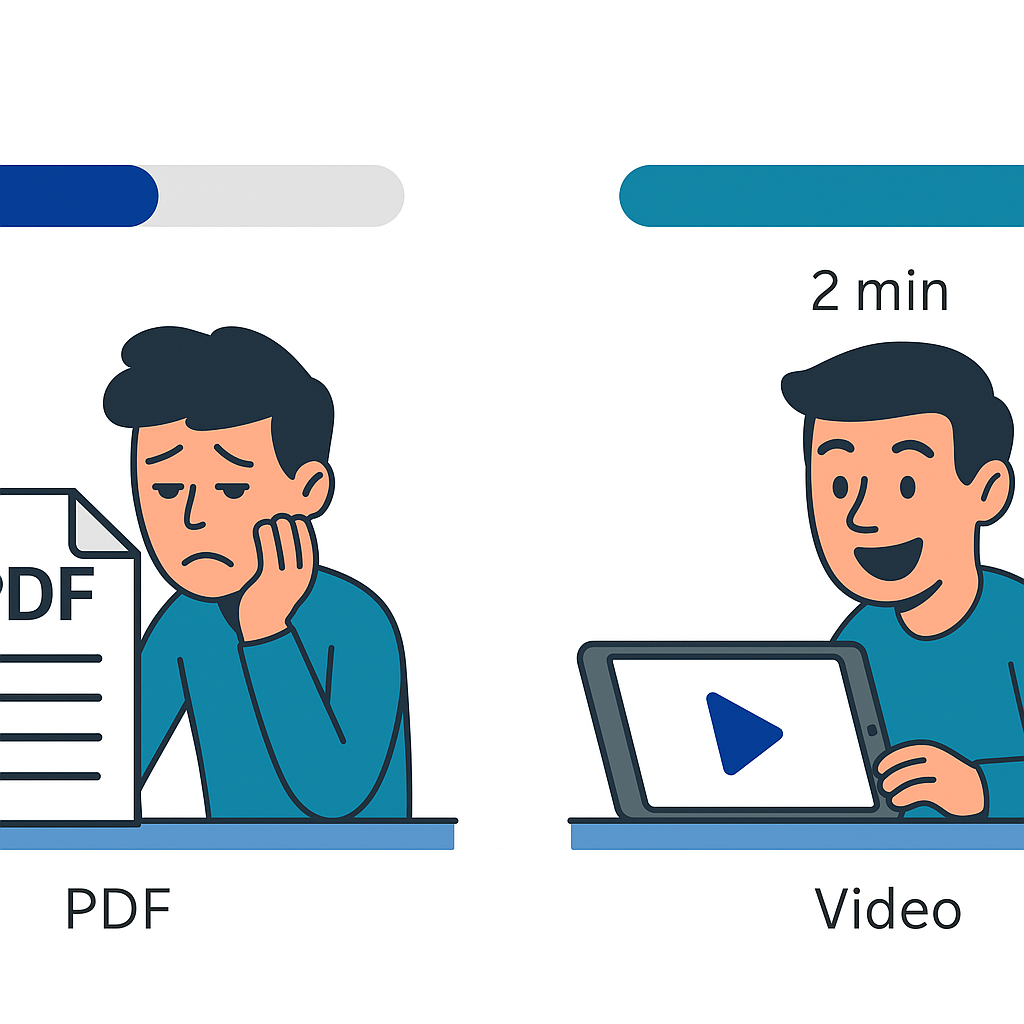
Clients grasp impact faster — Executives don’t want to wade through a 5-page PDF to grasp outcomes. A few panels or a short animation can instantly show where the software plugs into their ecosystem, what inputs it consumes, and what results it drives. For decision-makers, speed of comprehension is everything.
Readers retain attention longer — A two-minute video or an 8-panel strip is far more likely to be consumed than a long white paper. And once attention is captured, the detailed PDF can follow as the “deeper dive.”
This isn’t about replacing the written case study. It’s about complementing it.
But Isn't This A Huge Overhead?
Now, let’s be practical. Creating videos or comic strips during a project sounds like a massive overhead. Budgets are tight, timelines are tighter, and nobody wants “marketing distractions” slowing delivery down.
Fair enough. But here’s how you can do it without blowing budgets or timelines:
Don’t aim for Pixar-level animation 🙂. Think simple 2D explainer graphics or flat comic panels.
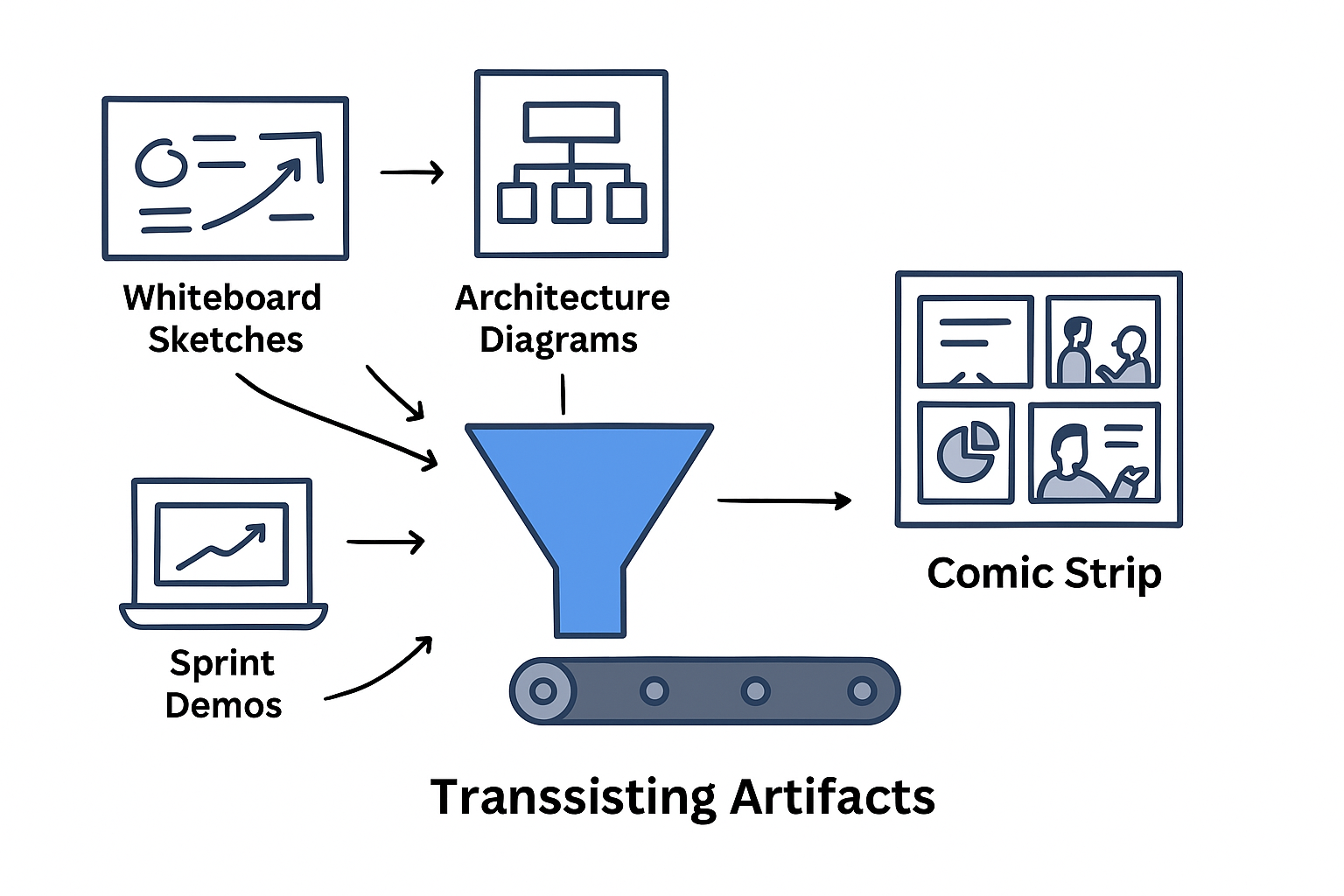
Reuse existing artefacts. Whiteboard sketches, architecture diagrams, sprint demos are already being created everyday. Why not convert them to visual snippets instead of creating from scratch?
Keep the frequency sane. Not every sprint needs a comic strip or video. That would become noise. But doing one lightweight artefact once per major release (or per milestone) is enough to capture the essence of what changed, why it matters, and how it ties back to business value. This way, you balance clarity with efficiency.
Importantly, think of it as an artefact of knowledge transfer. A short video or strip will help with onboarding new team members, or aligning stakeholders mid-project.
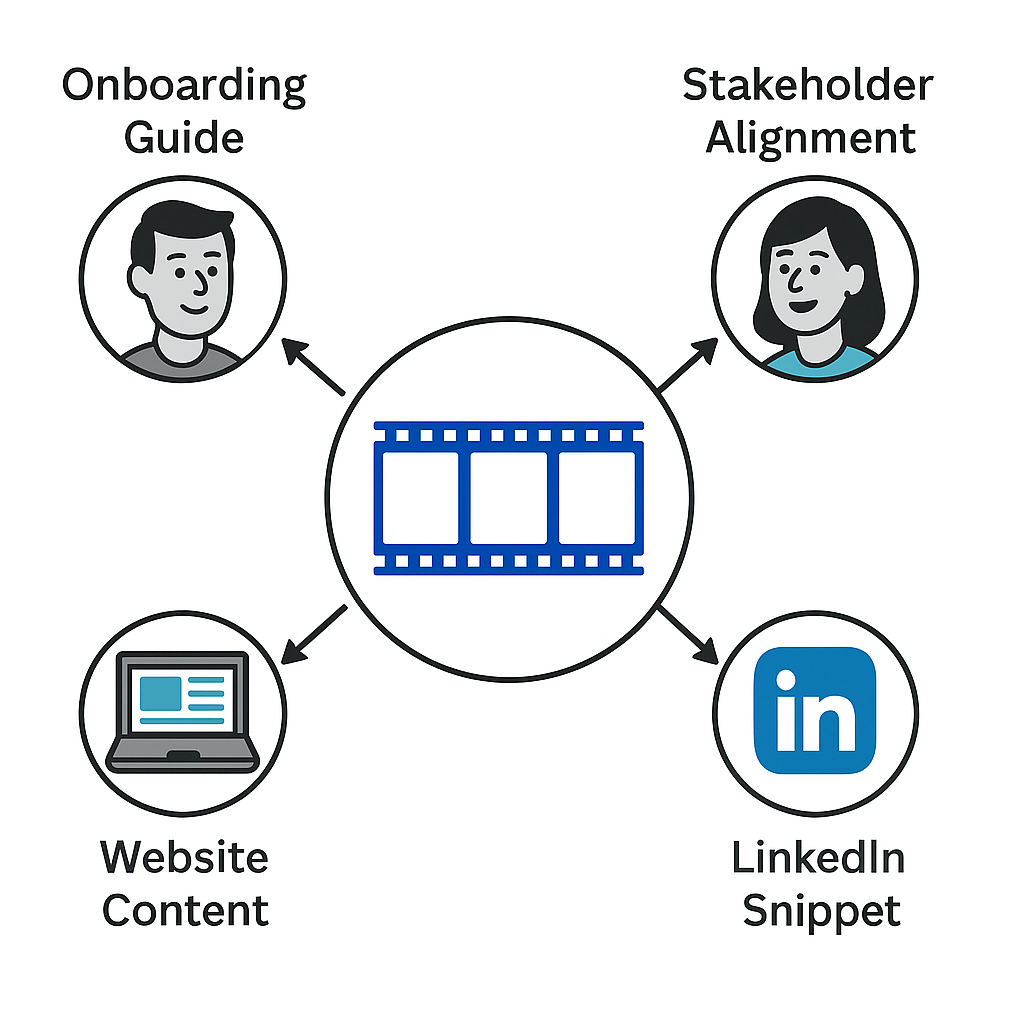
In other words, the output isn’t just for LinkedIn likes — it can serve project clarity and client communication too.
Why Now?
AI tools like Sora, Veo, or Canva aren’t magic buttons — the results still depend heavily on the skill of the person prompting them (exhibit A: the amateur DIY artwork in this article prompted by yours truly 😅). But these tools drastically lower the cost of experimentation.
What once required a hefty budget, a professional illustrator or studio, and days or weeks of work — can now be reasonably done by a project team with some imagination, a graphic designer on loan, and an AI tool, at a fraction of the cost.
That changes the equation. What was once “too expensive, time consuming, and distracting” is now “low-cost, quick, high-leverage.”
Bringing Case Studies to Life
Case studies are meant to be a software company’s proudest assets. But right now, too many are wordy PDFs prone to be ignored. Maybe it’s time to let them breathe — as videos, as comic strips, as illustrated narratives that engineers, clients, and even future hires can feel.
Not as replacements for words, but as companions. Because the story of software isn’t just told in code or text. Sometimes, the best way to explain it… is to draw it.

Join Mayank on Peerlist!
Join amazing folks like Mayank and thousands of other builders on Peerlist.
1
11
0