

Two Mirrors at Work: Impostor Syndrome and the Expert Mirage
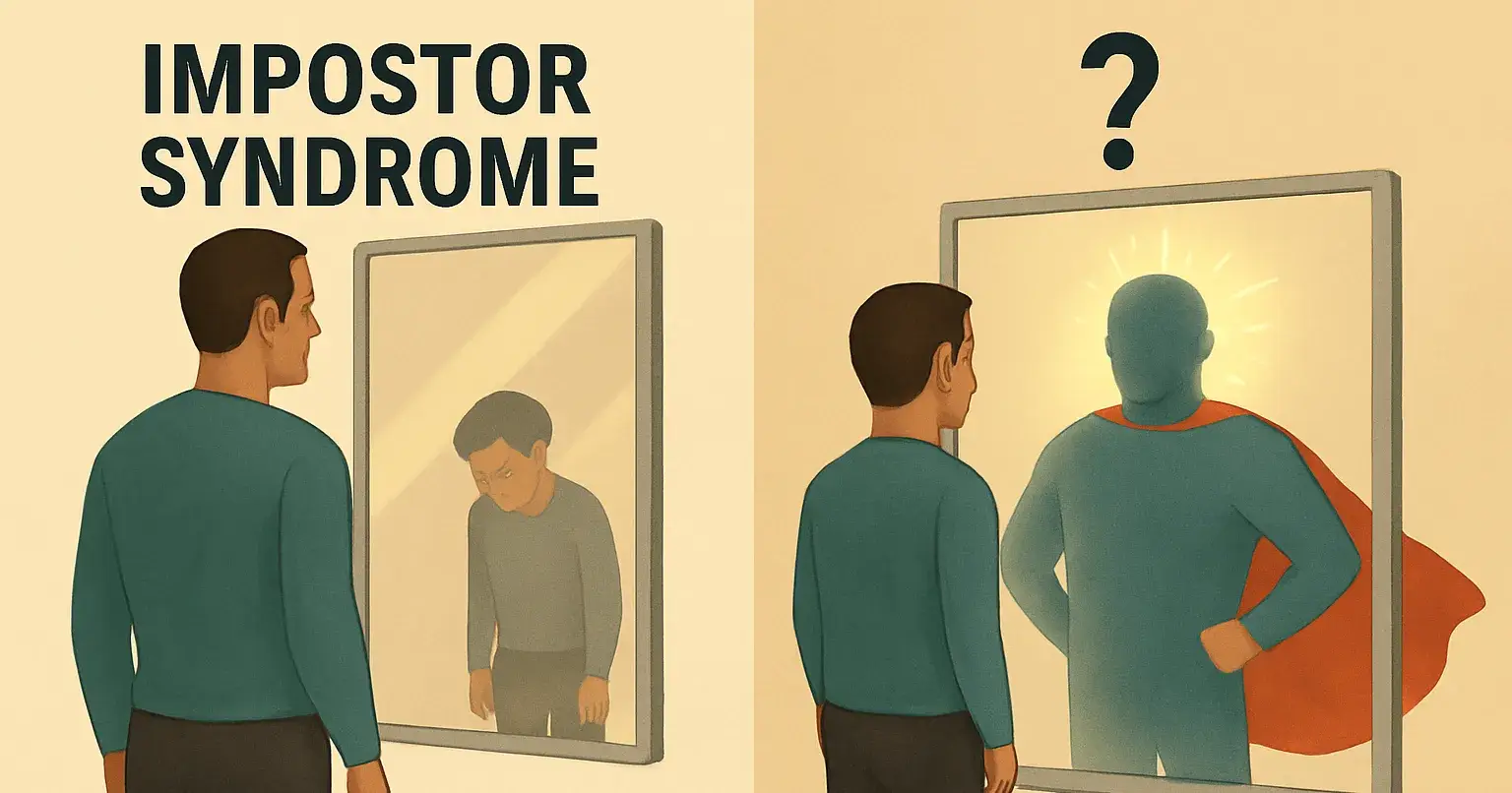
You might have probably heard of the term Impostor Syndrome.
It’s when you doubt your own skills, underestimate your own competence, or feel like your success is just luck. Often due to internal factors like low self-esteem, or external factors like lack of recognition, poor feedback, or constantly being surrounded by people you perceive as “smarter” or “more accomplished.”
In tech teams, it shows up often: in standups, code reviews, sprint meetings. A capable engineer hesitates to share an idea, thinking it’s not good enough — only to see someone else say the same thing later and get credit.
No surprise it’s part of so many conversations online: LinkedIn posts, HR forums, leadership talks. Also the remedies for it — especially positive reinforcement that encourages you to "believe in your abilities" — get a lot of visibility online.
But what about a problem that is, in a way, the opposite of Impostor Syndrome? We rarely ever talk about it.
The Dunning-Kruger effect, or as I call it — the "Expert Mirage"
Most of us have worked with people who...
talk with authority in design discussions but can’t back it up,
underestimate the complexity of a task that they’ve never touched, or
dominate decisions simply because they sound more confident.
These are people who overestimate their skills and competence in an area despite clearly lacking them.
This behaviour is called the Dunning–Kruger effect — named after psychologists David Dunning and Joseph Kruger who identified it. And it is probably even more prevalent, with just as serious ramifications, as the Impostor Syndrome.
But let's be honest; Dunning-Kruger effect sounds more like a phenomenon you would read in a Physics textbook 🙂
Which is why I believe it should be given a more accessible name. I personally like calling it the "Expert Mirage" — the illusion of competence that isn’t really there.
Why Impostor Syndrome gets the Spotlight, while Expert Mirage doesn't
Quite a few reasons:
It’s easier for you to tell someone that they suffer from impostor syndrome. Because you then play the role of a positive reinforcer. The conversation is emotional but relatively comfortable. You get thanked for encouraging them.
Contrast that with telling someone that it's their inflated self-view that's holding them back! You're probably not getting thanked for that conversation 🙂
It's more comfortable for people to accept that they might have impostor syndrome. It signals vulnerability, but also suggests that you’ve achieved something worth doubting. Also your journey out of it involves upliftment of self-image, aided by the feel-goodness of positive reinforcement
On the other hand, the expert mirage is built on the foundation of rarely accepting your shortcomings. If you could easily accept that you overestimate your competence, the mirage wouldn't exist 🙂. Also, your journey out of it involves breaking down your self-image, which is much harder to do.
The Ambiguity of Self-Doubt
Here’s the tricky part: self-doubt can mean two very different things.
A capable engineer undervaluing themselves (Impostor Syndrome).
An overconfident engineer finally stepping out of the Expert Mirage.
In the second case, the self doubt is actually a good thing. It means the person is recalibrating his view of his skills correctly. But people around him might misread it as the Impostor Syndrome and push him back into false confidence.
That’s why discernment matters: not every doubt is impostor syndrome; sometimes it’s the first crack in a mirage.
Why Both Mirrors Matter at Work
Both distortions mess with teams:
Impostor Syndrome → good ideas go unsaid, people hold back in reviews, talent hides in the background.
Expert Mirage → loud voices dominate, weak ideas slip through, decisions suffer.
Different problems, but the same outcome: reality gets distorted, and the team pays for it.
That’s why it’s important for workplaces to acknowledge and act upon both these behaviours. And both deserve equal attention online. Because both impact our day-to-day work, our collaborations, and the outcomes we deliver.
👉 What about you — in your teams, which mirror have you seen more often: Impostor Syndrome or the Expert Mirage?

Join Mayank on Peerlist!
Join amazing folks like Mayank and thousands of other builders on Peerlist.
0
5
0