

The Complete Guide to Supercloud Architecture: Layers, Advantages, and Implementation Tips
Understand how Supercloud simplifies multi-cloud complexity through unified orchestration, seamless integration, and AI-driven scalability.
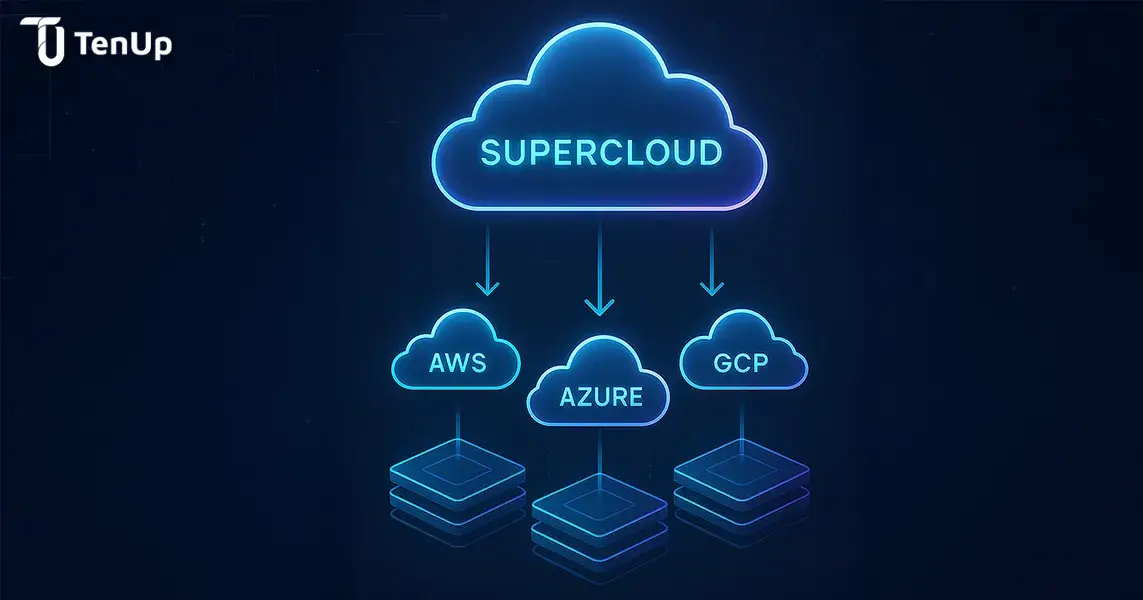
According to the Flexera 2024 State of the Cloud Report, nearly 9 out of 10 organizations (87%) rely on two or more cloud platforms. While this multi-cloud approach offers flexibility, it often brings challenges like rising costs, operational complexity, and reduced visibility.
This is where Supercloud architecture steps in. By creating a unified layer across all cloud environments, it simplifies integration, orchestration, and scalability, while enabling next-generation solutions like AI-driven Supercloud systems.
In this blog, we’ll break down how Supercloud works, explore its core layers, highlight the business value it delivers, and share best practices to ensure long-term success.
What Is Supercloud Architecture and Its Key Layers
Supercloud architecture is a modern approach that unifies multiple cloud platforms under a single layer. Instead of managing public, private, or hybrid clouds separately, it streamlines integration, orchestration, and management across environments. This framework enables seamless operations, reduces complexity, and enhances scalability while supporting advanced capabilities like AI-driven cloud solutions.
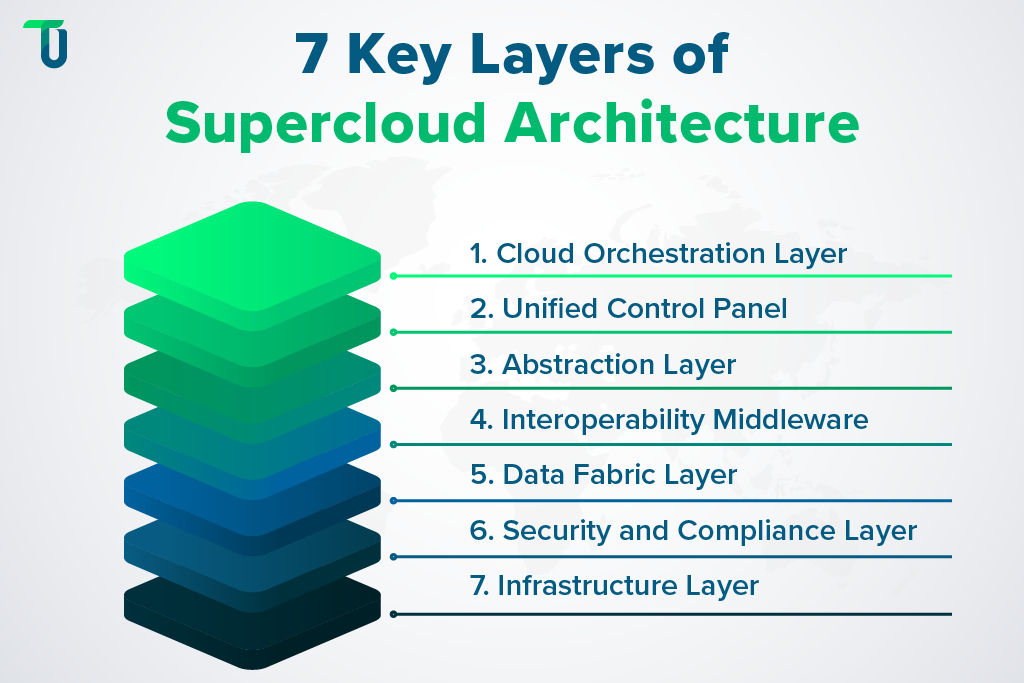
Visual Representation of Supercloud Layers
1. Cloud Orchestration Layer
Manages workloads across different cloud types by automating resource allocation, service deployment, and performance optimization. This results in faster operations, cost efficiency, and smooth multi-cloud coordination.
2. Unified Control Plane
Provides a single dashboard to monitor, enforce policies, and manage access across all clouds. It ensures visibility, governance, and consistency for teams handling complex environments.
3. Abstraction Layer
Eliminates provider-specific complexities by allowing developers to build once and deploy anywhere. It also powers AI Supercloud capabilities by linking ML tools with common APIs and standardized infrastructure.
4. Interoperability Middleware
Ensures compatibility between services by translating interfaces and connecting mismatched systems. This enables frictionless workload mobility across platforms without major code modifications.
5. Data Fabric Layer
Acts as the data backbone of Supercloud, ensuring real-time data consistency, availability, and accessibility. It supports analytics, reporting, and backups regardless of where data resides.
6. Security and Compliance Layer
Applies unified security policies across all environments, including encryption, access control, and audits. It enforces zero-trust principles and ensures compliance with both internal and industry standards.
7. Infrastructure Layer
Includes the fundamental resources—VMs, storage, and networking—that scale across multiple clouds and edge environments. This guarantees applications have the resources they need, even during fluctuating demand.
In essence, Supercloud architecture unifies all essential cloud layers, delivering greater visibility, flexibility, and scalability across platforms—making multi-cloud management more intelligent, secure, and seamless.
Supercloud Architecture Benefits for Modern Enterprises
Supercloud architecture empowers businesses to unify and manage multiple cloud platforms from a single framework. It delivers greater visibility, flexibility, and resilience while unlocking advanced AI-driven opportunities. Here’s a breakdown of the core advantages:
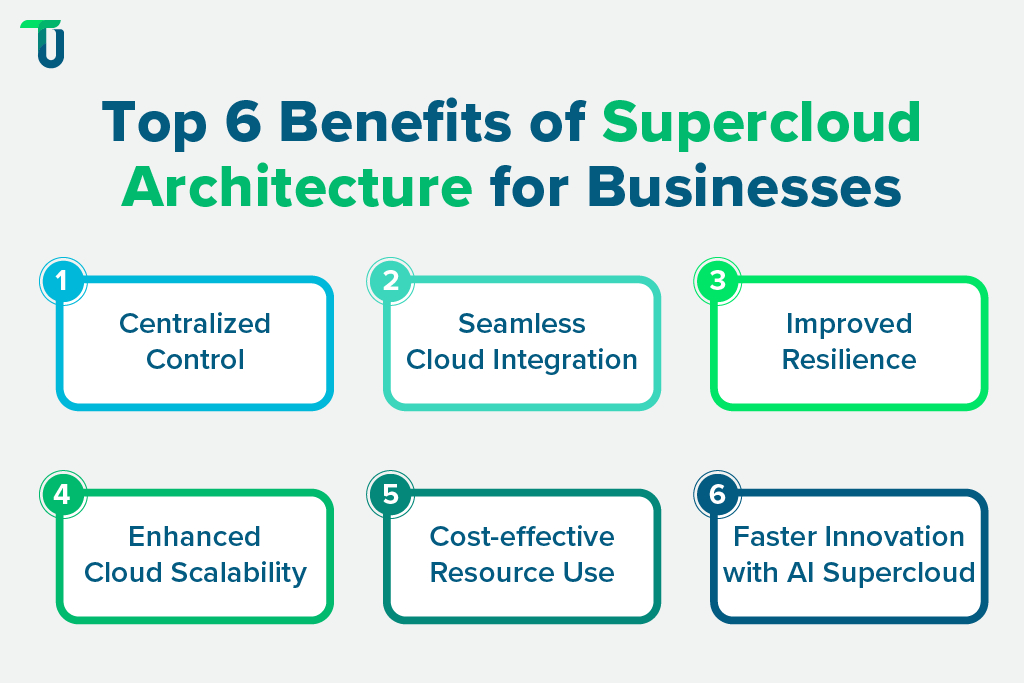
6 key benefits of Supercloud architecture for businesses
1. Unified Control and Visibility
Instead of juggling separate dashboards for AWS, Azure, Google Cloud, and others, Supercloud creates a single control layer. This centralization streamlines orchestration, enforces consistent security policies, and gives teams full visibility into cloud operations. The result is faster management with less complexity.
2. Effortless Multi-Cloud Integration
Supercloud uses an abstraction layer to connect services across providers without requiring manual configurations. Workloads and data flow seamlessly across environments, ensuring consistency and reducing the friction that often comes with multi-cloud management.
3. Greater Resilience and Reliability
By distributing workloads across multiple providers, Supercloud reduces dependency on any single vendor. If one cloud experiences downtime, applications can continue running elsewhere—boosting uptime, minimizing disruptions, and enhancing overall business continuity.
4. Elastic and Scalable Infrastructure
Supercloud enables businesses to scale resources across providers in real time. Whether traffic surges or AI workloads spike, the system automatically allocates resources where they’re needed most. This ensures performance stability while preventing waste from overprovisioning.
5. Optimized Cost Efficiency
With intelligent workload placement, Supercloud selects the most cost-effective environment for each task. This prevents overspending, balances performance with budget goals, and allows businesses to maximize ROI from their cloud investments.
6. Accelerated AI Innovation
Supercloud is designed to support AI and ML workloads at scale. By pooling resources across clouds, it provides the computing power needed for large models and machine learning pipelines. This not only speeds up experimentation but also ensures AI applications remain scalable and future-ready.
Adopting Supercloud architecture means simplified management, seamless integration, higher resilience, smarter scaling, cost savings, and faster AI-driven innovation—all within one unified ecosystem.
Supercloud Architecture Challenges and How to Solve Them
While Supercloud architecture promises unified control, scalability, and flexibility, it also introduces unique challenges that organizations must overcome. From multi-cloud integration complexity to security and compliance risks, here are six common obstacles—and proven strategies to address them.
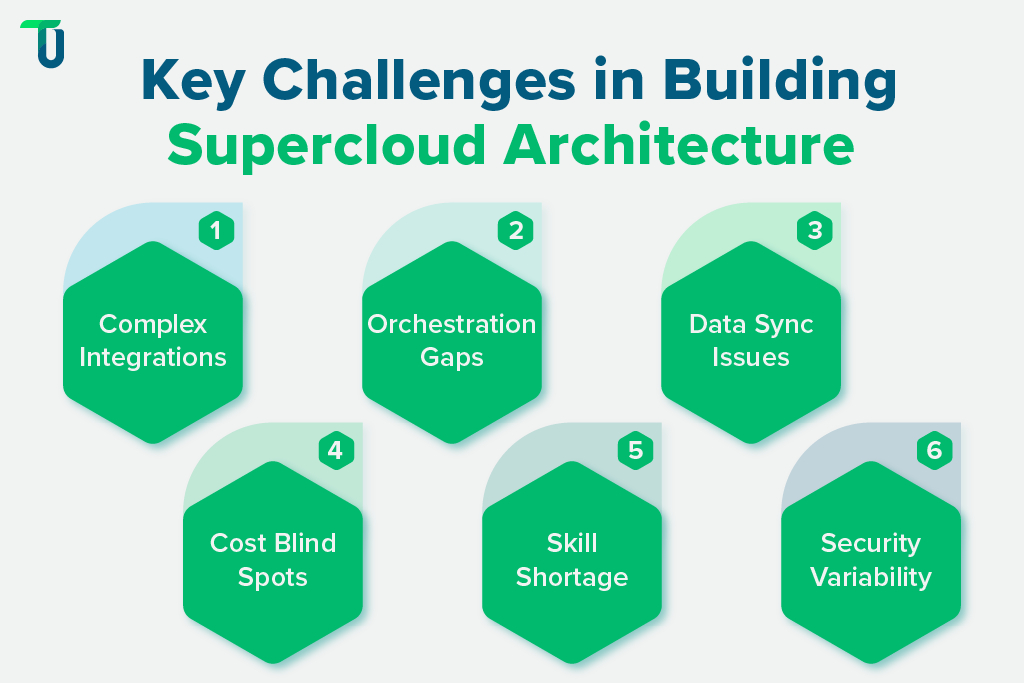
The challenges of building Supercloud architecture
Challenge 1: Complex Cloud Integration Across Multiple Platforms
Every cloud provider—AWS, Azure, GCP—uses its own APIs, formats, and tools, making multi-cloud interoperability slow and resource-heavy.
Solution: Implement a shared cloud integration layer that works across providers. This reduces custom development, improves compatibility, and ensures seamless data and workload synchronization.
Challenge 2: Inconsistent Orchestration Across Cloud Environments
Orchestration tools function differently on each platform, causing workflow misalignment and deployment errors.
Solution: Use multi-cloud orchestration platforms that standardize workflows. This ensures consistent deployment, scaling, and monitoring across all environments.
Challenge 3: Data Flow and Consistency Issues
Data often fails to sync properly due to latency, duplication, or outdated versions across platforms.
Solution: Build your Supercloud with a data fabric architecture that ensures real-time synchronization, conflict resolution, and reliable data integrity across regions.
Challenge 4: Limited Cost Visibility and Unpredictable Spending
Without unified tracking, cloud costs quickly spiral out of control across platforms.
Solution: Use cloud cost optimization tools with real-time dashboards, automated reporting, and budget alerts. This helps control resource usage, prevent overspending, and maximize cloud scalability at lower costs.
Challenge 5: Shortage of Supercloud Skills and Expertise
Managing a Supercloud requires expertise in cloud orchestration, integration, and security—a skill set that many teams lack.
Solution: Invest in cloud training and certifications while building cross-functional teams to share knowledge and maintain consistent performance across all cloud layers.
Challenge 6: Security and Compliance Gaps Across Providers
Each provider has different policies, leaving gaps in compliance and potential audit risks.
Solution: Enforce unified access control, adopt end-to-end encryption, and leverage cloud security monitoring tools that ensure compliance across multi-cloud environments.
Building a Supercloud architecture is complex, but entirely achievable with the right planning and tools. By addressing these challenges—integration, orchestration, data consistency, cost control, skills, and security—organizations can create a resilient, scalable, and secure Supercloud environment.
Pro Tip: Begin with a pilot Supercloud project—focusing on orchestration, integration, and security at a smaller scale. This lowers risks, builds confidence, and ensures smoother adoption before scaling across your full multi-cloud infrastructure.
Proven Strategies for Implementing Supercloud Architecture
Supercloud architecture offers powerful advantages, but its success depends on following the right setup practices. Here are 6 proven strategies to guide planning, deployment, and operations:
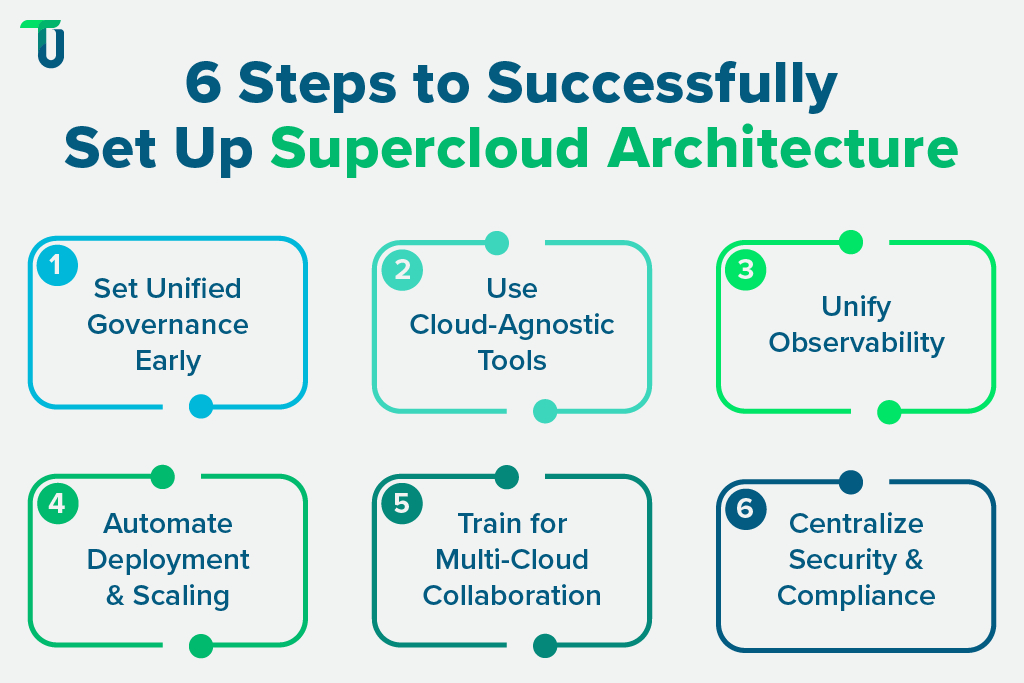
Supercloud architecture deployment
1. Establish governance and unified policies
Define consistent rules for security, access, and resource usage across all cloud vendors. Use centralized tools to enforce these policies, reducing misconfigurations and ensuring compliance from day one.
2. Adopt cloud-agnostic tools and standards
Prevent vendor lock-in by using cross-cloud technologies like Kubernetes, Terraform, or Istio. These tools provide flexibility, consistency, and easier workload management across environments.
3. Create a unified observability framework
Centralize logs, metrics, and traces from every platform. With shared dashboards, teams can track performance, detect issues quickly, and plan capacity effectively—ensuring reliability and cost efficiency.
4. Automate deployment and scaling
Use automation pipelines to deploy applications and scale resources seamlessly across multiple providers. This reduces manual effort, minimizes errors, and ensures smooth performance.
5. Strengthen team expertise and collaboration
Invest in training for multi-cloud orchestration, integration, and security. Foster collaboration across teams to improve troubleshooting speed and build confidence in managing Supercloud systems.
6. Enforce security and compliance centrally
Implement unified identity management, encryption, and audit controls across clouds. Consistent security measures simplify compliance and eliminate potential gaps.
By following these strategies, businesses can maximize the benefits of Supercloud—building a secure, flexible, and efficient multi-cloud ecosystem.
Is Supercloud Architecture the Right Choice for Your Business?
If your organization is juggling multiple cloud providers and struggling with scattered tools, rising costs, or limited control, adopting Supercloud architecture could be the game-changer you need. By unifying cloud operations across platforms like AWS, Azure, and GCP, Supercloud delivers:
● Seamless multi-cloud integration
● Centralized visibility and governance
● Enhanced scalability and performance
● Optimized cloud costs with better control
For growing teams and enterprises looking to modernize IT infrastructure, Supercloud provides the flexibility, efficiency, and security required to scale with confidence.
Ready to explore the next step? TenUp Software Services can help you design and implement a secure, scalable, and fully customized Supercloud solution tailored to your business goals. From strategy and planning to execution and optimization, we make your Supercloud journey smooth and future-ready.

Join Kaushal on Peerlist!
Join amazing folks like Kaushal and thousands of other builders on Peerlist.
0
2
0